


 Vista previa
 Compartir
 Compartir
 Ver detalles
 Guía
Guía

 Descargar
 Ver artículos similares
 Radiografía
 Presentación de diapositivas
 Estadísticas
La Mujer Lágrima
 Acrílico sobre lienzo
- Arte de pared
- Cubist Surrealism
 1937
1937- Modernismo
 60.0 x 49.0 cm
Una obra maestra surrealista de Pablo Picasso que captura el dolor y la angustia humana con colores vibrantes y formas distorsionadas. Descubre Guernica y otros iconos del arte moderno en Museo Picasso.
 Leer más
¡Explora el arte revolucionario de Pablo Picasso! Descubre el Cubismo, los Periodos Azul y Rosa, Guernica y su impacto perdurable en el arte moderno del siglo XX. #Picasso #Cubismo
La obra de arte que se muestra en esta página está protegida por las leyes de propiedad intelectual, lo que significa que no podemos crear ni vender legalmente una reproducción idéntica. Esta protección se hace cumplir en virtud de acuerdos internacionales como el Convenio de Berna y por las leyes nacionales, incluidas aquellas establecidas por el Ley de derechos de autor de los EE. UU. - Título 17.
Como una alternativa respetuosa y legal, ofrecemos obras de arte personalizadas y pintadas a mano inspiradas en la original. Nuestros expertos y profesionales del arte estudian cuidadosamente el estilo, el sentimiento y la esencia artística de la obra original para crear una pieza nueva y única que evoque la misma sensación, siendo al mismo tiempo una creación original por derecho propio.
Este método cumple plenamente con las normativas de derechos de autor, ya que no implica la copia ni la duplicación de la obra protegida. En su lugar, se trata de una reinterpretación creativa: una nueva pintura influenciada por la original, pero que no es idéntica a ella.
Reproducción al óleo hecha a mano
Óleo sobre lienzo pintado a mano en el tamaño y marco de su elección, realizado por encargo por nuestros artistas. ( Cambiar a formato impreso Ver versión en imagen digital)




P118B €10

P118H €10

P118W €10

P438Z €10

P508JH €12

P508YH €12

P805H €10

P805Z €10

P919BZ €10

P919G €10

P919XJ €10

P959ZH €10

P968JZ €12

W106C €8

W218G €10

W218JH €8

W218Y €10

W307PJ €10

W316G €10

W316PJ €8

W316Y €10

W398PJ €8

W4111J €10

W500HY €15

W500JH €15

W692G €12

W849H €8

W940BG €15

W953PJ €8




Estándar
personalizado
CM
INCH
Elija entre nuestros tamaños predefinidos que respetan las proporciones originales de la obra.
Loading sizes...

ancho
altura
Escriba el ancho y el alto que necesite para adaptarse a su marco o a su pared. Al ser una obra pintada a mano, para un tamaño con una forma distinta, el artista puede pintar un poco más alrededor de la imagen o recortar un poco; usted elige. Le enviaremos una maqueta digital para su aprobación antes de comenzar la pintura. La imagen que se muestra en esta página no refleja el resultado real; solo la maqueta lo hace.
Ejemplos de lo que se puede personalizar: Reemplace el rostro con una foto del cliente; Agregue una mascota (por ejemplo, cambie un gato por un perro); Incluya un mensaje oculto en el fondo; Cambie el paisaje o los elementos del fondo.
Tras realizar el pedido, el equipo de TopImpressionists.com enviará un correo electrónico al cliente para solicitar instrucciones y proporcionarle una vista previa del boceto.
Tras realizar el pedido, el equipo de TopImpressionists.com enviará un correo electrónico al cliente para solicitar instrucciones y proporcionarle una vista previa del boceto.
Envío a todo el mundo () en 3-4 semanas en lugar de las 5 semanas estándar. (25 octubre). Sin comprometer la calidad.

Envío exprés gratuito a todo el mundo

Lienzo de lino de alta calidad

Seguro de envío completo

Garantía de reembolso de impuestos aduaneros

Garantía de fidelidad cromática exacta

Política de devolución de 100 días (solo por defectos)

Garantía de devolución del 100% del dinero

Oferta por volumen
 La opción de vidrio solo está disponible en tamaños inferiores a 110 cm.

La Mujer Lágrima
Técnica de reproducción
Tamaño de la reproducción
-


Precio total
€ 236
Crying Woman: A Surrealist Icon of Suffering
The Crying Woman stands as one of Pablo Picasso’s most poignant and enduring creations, born from the crucible of wartime trauma and embodying the profound anxieties of his era. Painted in 1937, this monumental canvas—measuring 60 x 49 cm—immediately captivated audiences with its arresting visual language and unsettling psychological depth. It resides within the Museo Picasso Barcelona, a testament to Picasso’s legacy as a visionary artist who dared to confront the darkest aspects of human experience.Artistic Style and Composition
Picasso's masterful manipulation of form and color defines the painting's aesthetic. Executed in oil paint on canvas, it belongs firmly to the Surrealist movement, albeit imbued with Picasso’s distinctive Cubist sensibilities. The composition is deliberately fragmented—a deliberate rejection of traditional perspective—creating a sense of disorientation and mirroring the emotional turmoil depicted. Dominant hues are yellow and red, colors that evoke both warmth and danger, contributing to an overall atmosphere of unease. The figure's face is grotesquely distorted, reflecting Picasso’s fascination with exploring psychological states through visual abstraction. Notice how Picasso employs multiple viewpoints simultaneously, presenting a fractured representation of reality—a technique central to Cubism’s challenge to represent the world as it appears to the eye.Symbolism and Interpretation
Beyond its formal brilliance, “The Weeping Woman” resonates powerfully with symbolic meaning. The woman herself is interpreted as representing universal grief and sorrow, embodying the pain inflicted by loss and trauma—a direct response to the devastation caused by the bombing of Guernica during the Spanish Civil War. Her open mouth, rendered in a stylized manner, conveys an overwhelming expression of anguish, while her clenched fist symbolizes defiance against suffering. The handkerchief she clutches is a poignant emblem of futile attempts to absorb the unbearable pain of bereavement. Picasso’s deliberate use of symbolism elevates the painting beyond mere visual depiction, transforming it into a meditation on human emotion and resilience.Historical Significance
The genesis of “The Weeping Woman” lies in Picasso's profound engagement with the horrors unfolding during the Spanish Civil War. Commissioned by Juan Larrea, Picasso responded to the bombing of Guernica—a deliberate act of barbarism targeting civilians—with this emotionally charged artwork. The painting served as a powerful indictment of fascism and violence, capturing the collective trauma experienced by Spain at that moment. Its exhibition at the Paris International Exposition solidified its status as an icon of anti-war sentiment and cemented Picasso’s reputation as one of the foremost artists of his time. Furthermore, Dora Maar's influence on Picasso during this period is undeniable; her presence in Picasso’s life and studio profoundly shaped the painting's aesthetic and thematic concerns.Relevance and Legacy
“The Weeping Woman” continues to inspire artists and viewers alike, demonstrating Picasso’s enduring ability to communicate complex emotions through visual art. Its haunting imagery—the distorted face, the anguished gaze—remains remarkably relevant today, prompting contemplation on themes of grief, vulnerability, and the human condition. Reproductions of this masterpiece are available at TopImpressionists.com, allowing collectors and enthusiasts worldwide to experience Picasso’s artistic genius firsthand. Consider commissioning a high-quality oil painting reproduction to bring this iconic artwork into your home or studio—a tangible connection to one of art history's most unforgettable images.- Pablo Picasso: Crying woman (60 x 49 cm, Surrealism)
- Pablo Picasso
- The Berardo Collection Museum (Portugal) - A Comprehensive Guide
Preguntas y respuestas
¿Qué forma y dimensiones tiene "La Mujer Lágrima" de Pablo Picasso?
"La Mujer Lágrima" de Pablo Picasso tiene las proporciones de una obra en Vertical de 60 x 49 cm.
¿A qué periodo histórico pertenece "La Mujer Lágrima" de Pablo Picasso?
El periodo histórico de "La Mujer Lágrima" de Pablo Picasso es Modernismo. Esta clasificación sitúa la obra en la historia del arte.
¿A qué etapa de la carrera de Pablo Picasso corresponde la fecha de 1937 de "La Mujer Lágrima"?
Dada su fecha de 1937, "La Mujer Lágrima" se sitúa en el Mature Surrealism de Pablo Picasso.
Biografía del artista
Pablo Picasso: Un Artista Revolucionario
Vida Temprana y Formación (1881-1904)
- Nacido el 25 de octubre de 1881 en Málaga, España, Pablo Ruiz y Picasso demostró un talento artístico desde muy temprana edad.
- Su padre, José Ruiz y Blasco, era profesor de arte quien proporcionó a su hijo una formación inicial. Se dice que las primeras palabras de Picasso fueron “piz, piz” – intentando decir ‘lápiz’.
- Picasso rápidamente superó las habilidades de su padre, mostrando una habilidad notable en representaciones naturalistas.
- La familia se mudó a A Coruña y luego a Barcelona tras la trágica pérdida de la hermana de Picasso.
- En Barcelona, asistió a la Escuela de Bellas Artes pero a menudo chocaba con las instrucciones académicas tradicionales. Estudió brevemente en la Real Academia de San Fernando en Madrid, encontrándola sofocante y prefiriendo estudiar a los maestros como Velázquez y Goya por su cuenta.
Los Períodos Azul y Rosa (1901-1906)
- El Período Azul (aproximadamente 1901-1904) se caracteriza por pinturas sombrías dominadas por tonos de azul y verde azulado.
- Estas obras a menudo representan figuras marginadas – mendigos, ciegos, prostitutas – reflejando melancolía y comentario social. Ejemplos clave incluyen La Vie (1903) y El Guitarrista Viejo (1903-1904).
- Después de esto, surgió el Período Rosa (1904-1906) con tonos más cálidos – rosas, naranjas y rojos.
- Este período refleja una perspectiva más optimista, a menudo representando artistas de circo, harlequines y acróbatas. Familia de Saltimbanques (1905) ejemplifica este cambio.
Los Años Revolucionarios: Cubismo y Más Allá (1907-1919)
- 1907 marcó un momento decisivo con Les Demoiselles d'Avignon, influenciado por la escultura iberica y las máscaras africanas. Esta pintura rompió con la perspectiva tradicional, allanando el camino para el Cubismo.
- Trabajando en estrecha colaboración con Georges Braque, Picasso cofundó el Cubismo, alterando fundamentalmente la forma en que los artistas representaban la realidad.
- Cubismo Analítico (1909-1912) presentaba formas fragmentadas, colores apagados y una disección de objetos en formas geométricas.
- Cubismo Sintético (1912-1919) incorporó elementos de collage – recortes de periódicos, retazos de tela – para crear superficies texturizadas y nuevas capas visuales.
Neoclasicismo y Surrealismo (Década de 1920 - Década de 1930)
- La década de 1920 vio a Picasso explorar estilos neoclásicos con figuras monumentales que enfatizaban las formas clásicas.
- También se involucró con el movimiento surrealista, aunque nunca se alineó completamente con sus principios. Su obra combinaba estilos anteriores con imágenes surrealistas y perspectivas distorsionadas.
Años Posteriores y Legado (1940-1973)
- Durante la Segunda Guerra Mundial, Picasso permaneció en Francia, produciendo declaraciones anti-guerra poderosas como Guernica (1937), una respuesta visceral al bombardeo de Guernica durante la Guerra Civil Española.
- Guernica se convirtió en un símbolo perdurable del horror de la guerra y sigue siendo una de sus obras más celebradas.
- A lo largo de las décadas de 1950 y 60, Picasso continuó experimentando con diversos medios – cerámica, escultura, grabado – demostrando una versatilidad notable.
- Se casó con Jacqueline Roque en 1961. Murió el 8 de abril de 1973 en Mougins, Francia.
Influencias y Significado Histórico
- El desarrollo artístico de Picasso estuvo moldeado por los maestros españoles como Velázquez y Goya, la escultura iberica, el arte africano y Henri Matisse.
- Su impacto en el arte del siglo XX es inmenso. Co-fundó el Cubismo, pionero en el collage y la escultura construida, y desafió constantemente las convenciones artísticas.
- La experimentación incansable de Picasso rediseñó el arte moderno y continúa inspirando a los artistas hoy en día.
- Su prolífica producción – estimada en más de 50.000 obras – consolida su posición como uno de los artistas más importantes e influyentes de la historia.

Pablo Picasso
1881 - 1973 , España
Datos clave
- Artistas Que Influyeron:
- Velázquez
- Goya
- Henri Matisse
- Fecha De Muerte: 8 de abril de 1973
- Fecha De Nacimiento: 25 de octubre de 1881
- Influencia En Artistas: ['Numerosos artistas modernos']
- Lugar De Nacimiento: Málaga, España
- Movimiento Artístico: Cubismo, Surrealismo
- Nacionalidad: Española
- Nombre Completo: Pablo Ruiz y Picasso
- Obras Notables:
- Guernica
- La Vie
- El Guitarrista Viejo
- Familia de Saltimbanques
- Les Demoiselles d'Avignon
Artículos relacionados
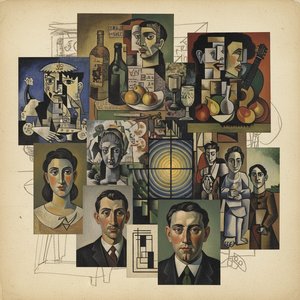
Los 10 Maestros del Cubismo: Obras que Revolucionaron el Arte | TopImpressionists
Descubre los 10 lienzos cubistas que revolucionaron el arte moderno. Explora las obras maestras de Picasso, Braque y Gris en TopImpressionists.com. Reproducciones de alta calidad para tu hogar.

Mastering Cubism: An Essential Guide to the Revolutionary Artworks of Pablo Picasso
Explore the profound evolution of Cubism through an expert analysis of Pablo Picasso's revolutionary works. From Analytical to Synthetic Cubism, discover the techniques that redefined modern art and learn how to curate these iconic masterpieces for your private collection.

Los 10 Retratos Cubistas Esenciales que Revolucionaron el Arte Moderno | TopImpressionists
Descubre los 10 retratos cubistas esenciales de Picasso, Braque y otros maestros. Explora la historia, técnica y significado de este revolucionario movimiento artístico. Encuentra reproducciones de arte exclusivas en TopImpressionists.com.

Pablo Picasso: A Revolutionary Vision – Cubism, Symbolism & Enduring Legacy
Explore the revolutionary art of Pablo Picasso with TopImpressionists.com. Discover Cubism's origins, symbolism in his masterpieces & investment insights for collectors. Expert appraisal & custom reproductions available.

Los 10 Maestros del Cubismo Expresionista: Obras que Transformaron el Arte | TopImpressionists
Descubre los 10 lienzos cubistas más influyentes de Picasso, Braque y otros maestros. Explora la historia, técnica y significado del movimiento artístico que revolucionó el arte moderno. Reproducciones de alta calidad en TopImpressionists.com.
Explore obras de arte organizadas por temas, estilos y características.


