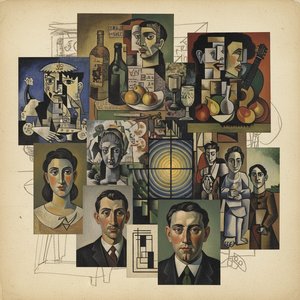
Sada Yacco: A Dance of Mystery in Picasso’s Early Surrealism
Pablo Picasso's ‘Sada Yacco’, painted in 1901, stands as a pivotal work demonstrating the nascent stages of his groundbreaking surrealist explorations. Measuring 40 x 31 cm, this gouache painting transcends mere representation, inviting viewers into a realm of enigmatic beauty and hinting at profound artistic intentions. It’s more than just an image; it's a glimpse into Picasso’s evolving vision during a transformative period in art history.
The Oriental Influence: Echoes of Japonism
‘Sada Yacco’ is deeply rooted in the influence of Japonism—the Western fascination with Japanese aesthetics and artistic traditions that flourished at the turn of the century. The deliberate inclusion of Chinese characters adds to the painting's exotic allure, reflecting Picasso’s intellectual curiosity and his desire to synthesize diverse cultural elements into a singular artistic expression. This stylistic choice wasn’t arbitrary; it mirrored broader trends within European art circles eager to embrace new perspectives.
The Subject: Sada Yacco – A Portrait of Grace
At the heart of ‘Sada Yacco’ is
Sada Yacco herself—a Japanese actress who captivated audiences in Paris during Picasso's time. The artist captures her movement with remarkable dynamism, portraying her outstretched arms as if reaching for something or someone – perhaps a man whose presence remains unseen within the canvas. Her serene gaze conveys elegance and grace, embodying the spirit of artistic contemplation. Picasso skillfully utilizes color to convey emotion and mood.
Artistic Technique: Gouache’s Bold Palette
Picasso's masterful use of gouache—an opaque watercolor paint—contributes significantly to ‘Sada Yacco’’s distinctive visual character. Unlike traditional watercolors, gouache allows for vibrant hues that retain their intensity even after drying, resulting in a rich and luminous surface. The surreal quality of the painting is further enhanced by its dreamlike setting and abstracted forms – hallmarks of Picasso's early surrealist endeavors. This technique underscores his commitment to experimenting with innovative materials and pushing artistic boundaries.
Context in Modern Art: Breaking Free from Tradition
‘Sada Yacco’ represents a crucial step away from academic conventions prevalent during the period, aligning perfectly with the avant-garde spirit of the time. It embodies Picasso's contribution to the evolution of surrealism and foreshadowed its impact on subsequent artistic movements. The painting serves as a testament to Picasso’s willingness to challenge established norms and forge new paths for artistic expression—a legacy that continues to inspire artists today.
Collection and Exhibition
The artwork is proudly displayed in
The Berardo Collection Museum in Lisbon, Portugal—a repository of exceptional modern and contemporary art. This museum offers a comprehensive panorama of 20th-century artistic movements, providing invaluable insight into Picasso’s influence and the broader context of surrealist aesthetics.
Conclusion
‘Sada Yacco’ by Pablo Picasso remains an enduring symbol of artistic innovation and stylistic experimentation. Its harmonious blend of oriental influences and groundbreaking technique solidifies its place as a cornerstone of modern art history—a captivating piece that invites contemplation and celebrates the transformative power of creative vision. For those eager to explore more works by Picasso,
Pablo Picasso: Sada Yacco awaits on TopImpressionists. To delve deeper into the captivating world of surrealism and modern art movements, visit
The Berardo Collection Museum (Portugal) - A Comprehensive Guide on TopImpressionists.



 Vista previa
 Cambiar a pintura hecha a mano
 Compartir
 Compartir
 Ver detalles

 Descargar
 Ver similares
 Radiografía
 Presentación de diapositivas


 Leer más






































 La opción de vidrio solo está disponible en tamaños inferiores a 110 cm.