


 Vista previa
 Compartir
 Compartir
 Ver detalles
 Guía
Guía

 Descargar
 Ver artículos similares
 Radiografía
 Presentación de diapositivas
 Estadísticas
Chateau de Madan


Paul Cézanne’s ‘Château de Madan’ (1881) is a serene watercolor landscape showcasing Impressionistic brushwork & atmospheric perspective. Explore this tranquil scene of nature & rural France – a captivating piece for art lovers.
 Leer más
Explora el arte revolucionario de Paul Cézanne (1839-1906), un maestro del Postimpresionismo que conectó el Impresionismo y el Cubismo. Descubre sus formas geométricas, pinceladas únicas, pinturas de bodegones e impacto duradero en el arte moderno. #Cézanne #PostImpres
Reproducción al óleo hecha a mano
Óleo sobre lienzo pintado a mano en el tamaño y marco de su elección, realizado por encargo por nuestros artistas. ( Cambiar a formato impreso Ver versión en imagen digital)




P118B €10

P118H €10

P118W €10

P438Z €10

P508JH €12

P508YH €12

P805H €10

P805Z €10

P919BZ €10

P919G €10

P919XJ €10

P959ZH €10

P968JZ €12

W106C €8

W218G €10

W218JH €8

W218Y €10

W307PJ €10

W316G €10

W316PJ €8

W316Y €10

W398PJ €8

W4111J €10

W500HY €15

W500JH €15

W692G €12

W849H €8

W940BG €15

W953PJ €8




Estándar
personalizado
CM
INCH
Elija entre nuestros tamaños predefinidos que respetan las proporciones originales de la obra.
Loading sizes...

ancho
altura
Escriba el ancho y el alto que necesite para adaptarse a su marco o a su pared. Al ser una obra pintada a mano, para un tamaño con una forma distinta, el artista puede pintar un poco más alrededor de la imagen o recortar un poco; usted elige. Le enviaremos una maqueta digital para su aprobación antes de comenzar la pintura. La imagen que se muestra en esta página no refleja el resultado real; solo la maqueta lo hace.
Ejemplos de lo que se puede personalizar: Reemplace el rostro con una foto del cliente; Agregue una mascota (por ejemplo, cambie un gato por un perro); Incluya un mensaje oculto en el fondo; Cambie el paisaje o los elementos del fondo.
Tras realizar el pedido, el equipo de TopImpressionists.com enviará un correo electrónico al cliente para solicitar instrucciones y proporcionarle una vista previa del boceto.
Tras realizar el pedido, el equipo de TopImpressionists.com enviará un correo electrónico al cliente para solicitar instrucciones y proporcionarle una vista previa del boceto.
Envío a todo el mundo () en 3-4 semanas en lugar de las 5 semanas estándar. (25 octubre). Sin comprometer la calidad.

Envío exprés gratuito a todo el mundo

Lienzo de lino de alta calidad

Seguro de envío completo

Garantía de reembolso de impuestos aduaneros

Garantía de fidelidad cromática exacta

Política de devolución de 100 días (solo por defectos)

Garantía de devolución del 100% del dinero

Oferta por volumen
 La opción de vidrio solo está disponible en tamaños inferiores a 110 cm.

Chateau de Madan
Técnica de reproducción
Tamaño de la reproducción
-


Precio total
€ 236
Chateau de Madan: A Glimpse into Cézanne’s Developing Vision
Painted in 1881, *Chateau de Madan* offers a captivating window into Paul Cézanne's artistic evolution during a pivotal period. This watercolor landscape isn’t merely a depiction of a rural scene; it’s a testament to the artist’s burgeoning exploration of form, light, and the very essence of perception – themes that would define his groundbreaking contributions to modern art.Subject & Composition: Rural Tranquility
The artwork presents a serene vista featuring trees dominating the foreground, with the distant silhouette of Chateau de Madan and other buildings hinting at human presence within the landscape. The composition is deliberately asymmetrical, guiding the viewer’s eye towards the horizon line where the verticality of the trees contrasts beautifully with the expansive sky. This creates a sense of depth while simultaneously flattening perspective – a characteristic Cézanne would refine throughout his career. It's an intimate observation of the Provençal countryside, a region deeply ingrained in Cézanne’s artistic identity.Style & Technique: Impressionistic Roots, Post-Impressionist Seeds
While demonstrably rooted in Impressionism, *Chateau de Madan* already reveals the seeds of Cézanne's unique style that would blossom into Post-Impressionism. The loose brushstrokes and focus on capturing atmospheric effects are hallmarks of the Impressionist movement. However, unlike his contemporaries who prioritized fleeting moments of light, Cézanne begins to emphasize underlying structure. The watercolor technique itself – employing wet-on-wet application – allows for a beautiful blending of colors, creating soft washes and a grainy texture that evokes a sense of atmosphere. The muted color palette further enhances the feeling of tranquility and observation.Historical Context: A Bridge Between Movements
1881 was a crucial year in Cézanne’s development. He had recently connected with Émile Zola, who encouraged him to exhibit his work, and was absorbing influences from artists like Paul Gauguin and Georges Seurat. This period saw him moving away from the purely optical concerns of Impressionism towards a more analytical approach – an attempt to understand and represent the fundamental geometric forms that underpin reality. *Chateau de Madan* stands as evidence of this transition; it’s not simply what Cézanne sees, but how he begins to construct what he sees.Symbolism & Emotional Impact: Peaceful Contemplation
The symbolism within *Chateau de Madan* is subtle yet profound. The landscape itself represents a connection to nature, offering a respite from the burgeoning industrialization of the era. The distant chateau suggests human civilization existing in harmony with its surroundings. More broadly, the artwork evokes feelings of peaceful contemplation and quiet observation. It invites viewers to pause, breathe, and appreciate the beauty of the natural world – a sentiment that resonates deeply even today.Cézanne’s Legacy
Paul Cézanne (1839-1906) is now recognized as a pivotal figure in the development of modern art. His exploration of form and structure paved the way for Cubism and profoundly influenced generations of artists. *Chateau de Madan*, while an early work, provides valuable insight into the genesis of his revolutionary vision – a vision that continues to inspire and captivate audiences worldwide. This piece is not just a beautiful landscape; it’s a foundational step towards the artistic language of the 20th century.Preguntas y respuestas
¿Cuál es el tono predominante de "Chateau de Madan" de Paul Cézanne?
Un tono Ochre to Sepia recorre "Chateau de Madan" de Paul Cézanne.
¿Está disponible una descarga para "Chateau de Madan"?
Puede descargar "Chateau de Madan" de Paul Cézanne desde la página de Descargar de la obra, como descarga de una imagen digital en alta resolución.
¿A qué edad creó Paul Cézanne "Chateau de Madan"?
Paul Cézanne tenía 42 años cuando creó "Chateau de Madan" en 1881. La edad se calcula a partir del año de nacimiento del artista, 1839.


Biografía del artista
vida temprana e influencias
paul cézanne, un pintor postimpresionista francés, nació el 19 de enero de 1839 en Aix-en-Provence, Francia. Su vida temprana estuvo marcada por una fuerte conexión con la empresa bancaria de su familia, lo que le proporcionó seguridad financiera. Esto le permitió concentrarse en sus aspiraciones artísticas sin la carga del estrés financiero. les nabis, neoimpresionismo y simbolismo influyeron en el trabajo temprano de Cézanne, que se caracterizó por su énfasis en las formas geométricas y una paleta de colores limitada. Su interés en las obras de paul gauguin y georges seurat fortaleció aún más su estilo postimpresionista.estilo artístico y técnicas
El uso innovador de Cézanne de los planos de color y pequeños trazos repetitivos creó campos complejos que transmitían su intenso estudio de los temas. Su enfoque a menudo exploratorio del arte condujo al desarrollo de un nuevo lenguaje pictórico, que enfatizaba la estructura subyacente de los objetos en una composición.- características clave:
- formas geométricas y facetado
- paleta de colores reducida
- énfasis en la esencia constructiva del mundo físico
- múltiples perspectivas y simultaneidad
- obras influyentes:
- el estanque de jas de bouffan (1880)
- retrato de emile zola (1866)
- bosque (1892)
- museos que exhiben el trabajo de Cézanne:
- museo marmottan monet en París, Francia
- el museo de bellas artes en Houston, Estados Unidos
legado e impacto
El trabajo pionero de Cézanne en el postimpresionismo allanó el camino para diversos movimientos vanguardistas, incluyendo cubismo, fauvismo y surrealismo. Su influencia se puede ver en las obras de pablo picasso, henri matisse y georges braque. El legado de Cézanne continúa inspirando a artistas y entusiastas del arte por igual, consolidando su lugar como una figura fundamental en la historia del arte moderno.- movimientos artísticos relacionados:
- vea las obras de Cézanne:

Paul Cézanne
1839 - 1906 , Francia
Datos clave
- Artistas Que Influyeron:
- Paul Gauguin
- Georges Seurat
- Estilo Artístico: Postimpresionismo
- Fecha De Muerte: Octubre 22, 1906
- Fecha De Nacimiento: 19 de enero de 1839
- Influenciado A Artistas:
- Pablo Picasso
- Henri Matisse
- Georges Braque
- Lugar De Nacimiento: Aix-en-Provence, Francia
- Nacionalidad: Francés
- Nombre Completo: Paul Cézanne
- Obras Notables:
- El estanque de Jas de Bouffan
- Retrato de Émile Zola
- Bosque
- Grandes Bañistas
Artículos relacionados

Capturing the Soul: The Most Emotionally Moving Impressionist and Post-Impressionist Masterpieces
Discover the profound emotional depth of Impressionist and Post-Impressionist masterpieces. Explore how legends like Monet, Van Gogh, and Gauguin captured light and soul through evocative landscapes and vibrant brushwork for a timeless connection to art history.

The Beauty of Impermanence: Capturing Decay through Impressionist Eyes
Explore the profound beauty of impermanence through Impressionist and Post-Impressionist eyes. Discover how masters like Monet and Van Gogh captured fleeting light and the poetic essence of nature's transitions in our deep dive into art history and emotional landscapes.

Capturing Light: The Ethereal Beauty and Timeless Legacy of Watercolor Landscapes
Embark on a visual journey through the ethereal beauty of watercolor landscapes. Discover how Impressionist masters captured light and emotion, and learn to bring this timeless, luminous elegance into your home with expert art curation and hand-painted reproductions.

Beyond the Light: Capturing Raw Emotion and Subjective Vision in Post-Impressionist Landscapes
Explore the profound emotional depth of Post-Impressionist landscapes. Discover how masters like Van Gogh moved beyond light to capture raw human feeling through vibrant color and expressive texture in this expert art history retrospective.
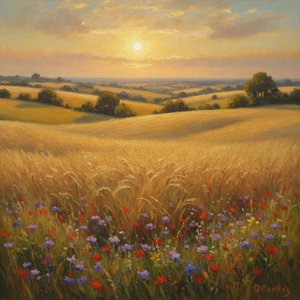
Golden Fields & Sun-Drenched Meadows: Capturing the Soul of Impressionist Landscapes
Immerse yourself in the luminous world of Impressionist landscapes. Discover how masters like Monet and Gauguin captured ephemeral light through plein air painting, and learn to bring the soul of sun-drenched meadows into your home with exquisite, hand-painted oil reproductions.
Explore obras de arte organizadas por temas, estilos y características.


