


 Ver en contexto
 Enviar
 Compartir
 Detalles
 Guía
Guía

 Descargar
 Similares
 Radiografía
 Presentación de diapositivas
 Estadísticas
Chrysanthemums (vase fleuri)


Una obra maestra de Cézanne que captura la belleza floral con colores vibrantes y una composición innovadora, reflejada en el Museo Formerly Collection Bernhard Koehler.
 Ver más
Explora el arte revolucionario de Paul Cézanne (1839-1906), un maestro del Postimpresionismo que conectó el Impresionismo y el Cubismo. Descubre sus formas geométricas, pinceladas únicas, pinturas de bodegones e impacto duradero en el arte moderno. #Cézanne #PostImpres
Reproducción al óleo hecha a mano
Óleo sobre lienzo pintado a mano en el tamaño y marco de su elección, realizado por encargo por nuestros artistas. ( Cambiar a impresiones Cambiar a imagen digital)




P118B €10

P118H €10

P118W €10

P438Z €10

P508JH €12

P508YH €12

P805H €10

P805Z €10

P919BZ €10

P919G €10

P919XJ €10

P959ZH €10

P968JZ €12

W106C €8

W218G €10

W218JH €8

W218Y €10

W307PJ €10

W316G €10

W316PJ €8

W316Y €10

W398PJ €8

W4111J €10

W500HY €15

W500JH €15

W692G €12

W849H €8

W940BG €15

W953PJ €8




Tamaño estándar
a medida
CM
INCH
Elija entre nuestros tamaños predefinidos que respetan las proporciones originales de la obra.
Loading sizes...

ancho
altura
Indique el ancho y el alto que necesite para adaptarse a su marco o pared. Al tratarse de una obra pintada a mano, si requiere un tamaño con una proporción distinta, el artista puede pintar un poco más alrededor de la imagen o recortarla ligeramente; usted elige. Le enviaremos una maqueta digital para su aprobación antes de comenzar la pintura. La imagen que se muestra en esta página no refleja el resultado real; solo la maqueta lo hace.
Ejemplos de lo que se puede personalizar: Reemplace el rostro con una foto del cliente; Agregue una mascota (por ejemplo, cambie un gato por un perro); Incluya un mensaje oculto en el fondo; Cambie el paisaje o los elementos del fondo.
Tras realizar el pedido, el equipo de TopImpressionists.com enviará un correo electrónico al cliente para solicitar instrucciones y proporcionarle una vista previa del boceto.
Tras realizar el pedido, el equipo de TopImpressionists.com enviará un correo electrónico al cliente para solicitar instrucciones y proporcionarle una vista previa del boceto.
Envío a todo el mundo () en 3-4 semanas en lugar de las 5 semanas estándar. (27 octubre). Sin comprometer la calidad.

Envío exprés gratuito a todo el mundo

Lienzo de lino de alta calidad

Seguro de envío total

Garantía de reembolso de aranceles aduaneros

Garantía de fidelidad cromática exacta

Política de devolución de 100 días (solo por defectos)

Garantía de devolución del 100% del dinero

Descuento por cantidad
 La opción de vidrio solo está disponible en tamaños inferiores a 110 cm.

Chrysanthemums (vase fleuri)
Técnica de reproducción
Dimensiones de la reproducción
-


Precio total final
€ 237
Paul Cézanne: A Revolutionary Vision
Paul Cézanne, born on January 19, 1839, in Aix-en-Provence, France, was a pivotal figure in the transition from late 19th-century Impressionism to early 20th-century Cubism. His father was a successful hatmaker who later became a banker, providing Cézanne with financial security that allowed him to pursue his artistic passions without immediate economic pressure. Initially intended to follow in his father’s footsteps and enter the legal profession, Cézanne eventually abandoned these plans to dedicate himself fully to art.
Early influences included Romanticism and the Barbizon school of landscape painting. He studied briefly at the Académie Suisse in Paris but largely developed his style independently. The works of Vincent van Gogh and Georges Seurat, particularly their explorations of color and form, also played a significant role in shaping Cézanne’s artistic direction.
Composition and Color
In the realm of still life painting, few artists have captured the essence and beauty of flowers as masterfully as Paul Cézanne. His 1900 work, 'Chrysanthemums (Vase Fleuri)', is a testament to his skill in transforming everyday subjects into extraordinary works of art. This painting, now housed at the The Museum Formerly Collection Bernhard Koehler (Berlin, Germany), showcases Cézanne’s unique approach to color and composition.
The painting features a stunning arrangement of chrysanthemums in a white vase set against a vibrant red background. The flowers are depicted in various colors, including yellow, orange, and red, creating a visually striking display. Cézanne's use of color is not merely decorative; it serves to create depth and harmony within the composition. The arrangement of the flowers fills the entire vase, drawing the viewer’s eye into the heart of the painting. An additional smaller vase on the right side of the canvas adds complexity and balance to the scene.
Artistic Influence
Cézanne's work in still life was influenced by his contemporaries, such as Vincent Van Gogh, who also explored the genre with great passion. Van Gogh's 'Still Life French Novels' (available at /art/list/?Filter=5ZKGQJ-Vincent-Van-Gogh-Still-Life-French-Novels) demonstrates a similar emphasis on color and everyday subjects.
Legacy
'Cézanne's 'Chrysanthemums (Vase Fleuri)' is not only a beautiful painting but also a significant contribution to the development of Post-Impressionism. His innovative approach to still life paved the way for future generations of artists, including Silvia Rubinson (https://TopImpressionists.com/@/Silvia-Rubinson), who continues to explore themes of identity and visual representation in her work.
For those interested in exploring more of Cézanne's works or other notable pieces, TopImpressionists.com offers high-quality reproductions of famous paintings, including 'Untitled (518)' by Paul Cézanne /art/list/?Filter=9GF6QP-Paul-Cezanne-untitled-(518)).
- Key Points:
- Cézanne’s ‘Chrysanthemums (Vase Fleuri)’ is a cornerstone of Post-Impressionism, marking a decisive break from Impressionistic conventions.
- The painting's striking composition—a vase brimming with chrysanthemums against a bold red backdrop—highlights Cézanne’s masterful manipulation of color and form.
- Influenced by Van Gogh’s expressive style, Cézanne championed the depiction of ordinary subjects with profound emotional resonance.
Photo Description: The painting portrays a vase filled with chrysanthemums bathed in a vibrant crimson hue. Cézanne meticulously renders the flowers' varied shades—yellow, orange, and red—creating an immersive visual experience. Complementing the central vase is a smaller vessel on the right side, adding textural depth and balance to the artwork’s overall aesthetic. Cézanne’s deliberate brushstrokes contribute to the painting’s palpable sense of stillness and contemplation.
Preguntas y respuestas
¿Los colores de "Chrysanthemums (vase fleuri)" de Paul Cézanne son intensos o tenues?
"Chrysanthemums (vase fleuri)" de Paul Cézanne presenta una saturación de Presencia de color clara y una intensidad de Vívido.
¿Puedo examinar "Chrysanthemums (vase fleuri)" con más detalle?
"Chrysanthemums (vase fleuri)" puede examinarse capa por capa en la página Radiografía de la obra, un visor inspirado en una mesa de luz de restauración que ofrece once lecturas ópticas de la imagen.
¿Qué origen nacional sustenta el Post-Impressionism de "Chrysanthemums (vase fleuri)"?
"Chrysanthemums (vase fleuri)" fue creada por Paul Cézanne, nacido en Francia, dentro del movimiento Post-Impressionism. El origen del artista vincula la obra al Post-Impressionism tal como lo practicaban los artistas de Francia.
Biografía del artista
vida temprana e influencias
paul cézanne, un pintor postimpresionista francés, nació el 19 de enero de 1839 en Aix-en-Provence, Francia. Su vida temprana estuvo marcada por una fuerte conexión con la empresa bancaria de su familia, lo que le proporcionó seguridad financiera. Esto le permitió concentrarse en sus aspiraciones artísticas sin la carga del estrés financiero. les nabis, neoimpresionismo y simbolismo influyeron en el trabajo temprano de Cézanne, que se caracterizó por su énfasis en las formas geométricas y una paleta de colores limitada. Su interés en las obras de paul gauguin y georges seurat fortaleció aún más su estilo postimpresionista.estilo artístico y técnicas
El uso innovador de Cézanne de los planos de color y pequeños trazos repetitivos creó campos complejos que transmitían su intenso estudio de los temas. Su enfoque a menudo exploratorio del arte condujo al desarrollo de un nuevo lenguaje pictórico, que enfatizaba la estructura subyacente de los objetos en una composición.- características clave:
- formas geométricas y facetado
- paleta de colores reducida
- énfasis en la esencia constructiva del mundo físico
- múltiples perspectivas y simultaneidad
- obras influyentes:
- el estanque de jas de bouffan (1880)
- retrato de emile zola (1866)
- bosque (1892)
- museos que exhiben el trabajo de Cézanne:
- museo marmottan monet en París, Francia
- el museo de bellas artes en Houston, Estados Unidos
legado e impacto
El trabajo pionero de Cézanne en el postimpresionismo allanó el camino para diversos movimientos vanguardistas, incluyendo cubismo, fauvismo y surrealismo. Su influencia se puede ver en las obras de pablo picasso, henri matisse y georges braque. El legado de Cézanne continúa inspirando a artistas y entusiastas del arte por igual, consolidando su lugar como una figura fundamental en la historia del arte moderno.- movimientos artísticos relacionados:
- vea las obras de Cézanne:

Paul Cézanne
1839 - 1906 , Francia
Datos clave
- Artistas Que Influyeron:
- Paul Gauguin
- Georges Seurat
- Estilo Artístico: Postimpresionismo
- Fecha De Muerte: Octubre 22, 1906
- Fecha De Nacimiento: 19 de enero de 1839
- Influenciado A Artistas:
- Pablo Picasso
- Henri Matisse
- Georges Braque
- Lugar De Nacimiento: Aix-en-Provence, Francia
- Nacionalidad: Francés
- Nombre Completo: Paul Cézanne
- Obras Notables:
- El estanque de Jas de Bouffan
- Retrato de Émile Zola
- Bosque
- Grandes Bañistas
Artículos relacionados

Beyond the Light: Discovering the Soul and Emotional Depth of Post-Impressionism
Embark on a cultural journey through Post-Impressionism. Discover the profound emotional depth of masters like Van Gogh and Cézanne, exploring how they moved beyond light to capture the very soul of human experience through vibrant color and symbolic form.
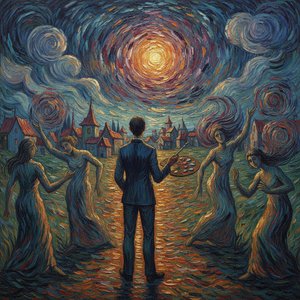
Beyond the Light: Capturing Emotion Through the Expressive Soul of Post-Impressionism
Explore the profound emotional depth of Post-Impressionism. Discover how masters like Van Gogh and Cézanne moved beyond light to capture raw feeling through color and texture. A journey into art history for the true connoisseur.
Explore obras de arte organizadas por temas, estilos y características.


