


 Ver en contexto
 Enviar
 Compartir
 Detalles
 Guía
Guía

 Descargar
 Similares
 Radiografía
 Presentación de diapositivas
 Estadísticas
El Fumador
 Acrílico sobre lienzo
- Arte de pared
- Post-Impressionism
 1890
1890 90.0 x 72.0 cm
Paul Cézanne's "El Fumador" captura la esencia del impresionismo tardío con colores audaces y formas geométricas que reflejan una visión innovadora de la vida cotidiana en Rusia. Una obra maestra inspiradora.
 Ver más
Explora el arte revolucionario de Paul Cézanne (1839-1906), un maestro del Postimpresionismo que conectó el Impresionismo y el Cubismo. Descubre sus formas geométricas, pinceladas únicas, pinturas de bodegones e impacto duradero en el arte moderno. #Cézanne #PostImpres
Giclée / Impresión de arte
Impresiones giclée o en lienzo de calidad de museo con producción rápida y opciones de acabado flexibles. ( Comprar pintura hecha a mano Cambiar a imagen digital)




P118B €10

P118H €10

P118W €10

P438Z €10

P508JH €12

P508YH €12

P805H €10

P805Z €10

P919BZ €10

P919G €10

P919XJ €10

P959ZH €10

P968JZ €12

W106C €8

W218G €10

W218JH €8

W218Y €10

W307PJ €10

W316G €10

W316PJ €8

W316Y €10

W398PJ €8

W4111J €10

W500HY €15

W500JH €15

W692G €12

W849H €8

W940BG €15

W953PJ €8




Tamaño estándar
a medida
CM
INCH
Elija entre nuestros tamaños predefinidos que respetan las proporciones originales de la obra.
Loading sizes...

ancho
altura
Introduzca el ancho y el alto que necesite para adaptarse a su marco o pared. Una impresión solo puede recortarse, nunca hacerse más grande que la imagen original, por lo que un tamaño con una forma distinta perderá parte de la obra. Le enviaremos una maqueta digital para su aprobación antes de realizar cualquier impresión. La imagen que se muestra en esta página no refleja el recorte real; solo la maqueta lo hace.
Envío a todo el mundo () en 2 semanas en lugar de las 4/5 semanas estándar. (25 octubre)

Envío exprés gratuito a todo el mundo

Lienzo de lino de alta calidad

Seguro de envío total

Garantía de reembolso de aranceles aduaneros

Garantía de fidelidad cromática exacta

Política de devolución de 100 días (solo por defectos)

Garantía de devolución del 100% del dinero

Descuento por cantidad
 La opción de vidrio solo está disponible en tamaños inferiores a 110 cm.

El Fumador
Giclée / Impresión de arte
Dimensiones de la reproducción
-


Precio total final
€ 61
The Smoker
Paul Cézanne's The Smoker is a captivating oil on canvas painting that exemplifies the artist’s unique style and contribution to the Post-Impressionist movement. Created in 1890, this work measures 90 x 72 cm and is currently housed at The State Hermitage Museum in Russia.A Profound Scene of Contemplation
The painting depicts a bearded man smoking a pipe, seated in front of a table adorned with apples, a bottle, and two wine glasses. A chair is positioned behind him, adding depth to the composition. The subject's hands are clasped under his chin, conveying a sense of introspection and calmness. This seemingly simple tableau holds immense significance—it’s not merely an observation of everyday life but a deliberate exploration of stillness and contemplation, mirroring Cézanne’s broader artistic preoccupation with capturing the essence of human experience.Artistic Influences and Style
Cézanne's early influences included Romanticism and Realism, evident in works like the murals at Jas de Bouffan. However, he later developed a distinctive style by scrutinizing Impressionist techniques and incorporating elements of Cubism. This transition is reflected in The Smoker, where Cézanne’s use of bold colors and geometric forms creates a sense of structure and harmony. He rejected the fleeting effects of light favored by Impressionists in favor of solid shapes and flattened planes—a revolutionary departure from artistic convention that would pave the way for future avant-garde movements. The artist meticulously rendered each element, prioritizing form over color to achieve an unparalleled level of visual precision.Post-Impressionist Movement
As a pioneering figure in Post-Impressionism, Cézanne played a crucial role in bridging the gap between 19th-century Impressionism and 20th-century Cubism. His innovative approach to art challenged traditional notions of representation and profoundly impacted subsequent generations of artists. He sought to express inner emotions and psychological states through visual language—a daring ambition that distinguished him from his contemporaries. Cézanne’s influence extended far beyond painting, inspiring sculptors and architects alike with his groundbreaking explorations of spatial relationships and structural principles.Relevance and Legacy
The Smoker is a testament to Cézanne’s enduring influence on modern art. The painting's themes of contemplation and everyday life continue to resonate with audiences today—a reminder that beauty can be found in the simplest of gestures and observations. For those interested in exploring more of Cézanne’s works, Still Life with Curtain and Flowered Pitcher is another notable piece by the artist—a similarly masterful depiction of domestic tranquility and geometric precision.- The Smoker by Paul Cézanne
- Smoker by Paul Cézanne
- Vincent van Gogh
Preguntas y respuestas
¿Qué color predomina en la composición de "El Fumador" de Paul Cézanne?
El Café espresso (#605934) es el color predominante de "El Fumador" de Paul Cézanne.
¿Existe una ficha informativa sobre "El Fumador" de Paul Cézanne para estudiantes?
La página Ficha informativa de "El Fumador" de Paul Cézanne ofrece una ficha informativa imprimible de dos páginas: la obra con su ficha técnica, una línea de tiempo por décadas que la sitúa en la vida del artista, otras obras del mismo autor, la paleta de colores extraída de la pieza y citas listas para copiar en cuatro estilos diferentes.
¿Es "El Fumador" de Paul Cézanne de dominio público y por qué?
"El Fumador" de Paul Cézanne es de en el dominio público: sus derechos de autor han expirado. Los términos de derechos de autor se calculan a partir del fallecimiento del artista, y Paul Cézanne murió en 1906.
Biografía del artista
vida temprana e influencias
paul cézanne, un pintor postimpresionista francés, nació el 19 de enero de 1839 en Aix-en-Provence, Francia. Su vida temprana estuvo marcada por una fuerte conexión con la empresa bancaria de su familia, lo que le proporcionó seguridad financiera. Esto le permitió concentrarse en sus aspiraciones artísticas sin la carga del estrés financiero. les nabis, neoimpresionismo y simbolismo influyeron en el trabajo temprano de Cézanne, que se caracterizó por su énfasis en las formas geométricas y una paleta de colores limitada. Su interés en las obras de paul gauguin y georges seurat fortaleció aún más su estilo postimpresionista.estilo artístico y técnicas
El uso innovador de Cézanne de los planos de color y pequeños trazos repetitivos creó campos complejos que transmitían su intenso estudio de los temas. Su enfoque a menudo exploratorio del arte condujo al desarrollo de un nuevo lenguaje pictórico, que enfatizaba la estructura subyacente de los objetos en una composición.- características clave:
- formas geométricas y facetado
- paleta de colores reducida
- énfasis en la esencia constructiva del mundo físico
- múltiples perspectivas y simultaneidad
- obras influyentes:
- el estanque de jas de bouffan (1880)
- retrato de emile zola (1866)
- bosque (1892)
- museos que exhiben el trabajo de Cézanne:
- museo marmottan monet en París, Francia
- el museo de bellas artes en Houston, Estados Unidos
legado e impacto
El trabajo pionero de Cézanne en el postimpresionismo allanó el camino para diversos movimientos vanguardistas, incluyendo cubismo, fauvismo y surrealismo. Su influencia se puede ver en las obras de pablo picasso, henri matisse y georges braque. El legado de Cézanne continúa inspirando a artistas y entusiastas del arte por igual, consolidando su lugar como una figura fundamental en la historia del arte moderno.- movimientos artísticos relacionados:
- vea las obras de Cézanne:

Paul Cézanne
1839 - 1906 , Francia
Datos clave
- Artistas Que Influyeron:
- Paul Gauguin
- Georges Seurat
- Estilo Artístico: Postimpresionismo
- Fecha De Muerte: Octubre 22, 1906
- Fecha De Nacimiento: 19 de enero de 1839
- Influenciado A Artistas:
- Pablo Picasso
- Henri Matisse
- Georges Braque
- Lugar De Nacimiento: Aix-en-Provence, Francia
- Nacionalidad: Francés
- Nombre Completo: Paul Cézanne
- Obras Notables:
- El estanque de Jas de Bouffan
- Retrato de Émile Zola
- Bosque
- Grandes Bañistas
Artículos relacionados
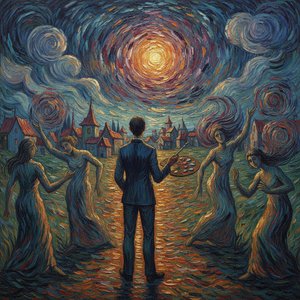
Beyond the Light: Capturing Emotion Through the Expressive Soul of Post-Impressionism
Explore the profound emotional depth of Post-Impressionism. Discover how masters like Van Gogh and Cézanne moved beyond light to capture raw feeling through color and texture. A journey into art history for the true connoisseur.
Explore obras de arte organizadas por temas, estilos y características.


