

Shown: · With its frame:
 Ver en contexto
 Enviar
 Compartir
 Detalles
 Guía
Guía

 Descargar
 Similares
 Radiografía
 Presentación de diapositivas
 Q&A
Q&A Estadísticas
- 51.0 x 65.0 cm


€ 239
Reproducción al óleo hecha a mano
Óleo sobre lienzo pintado a mano en el tamaño y marco de su elección, realizado por encargo por nuestros artistas. ( Cambiar a impresiones Cambiar a imagen digital)
Size
·Tamaño estándar
a medida
CM
INCH
Elija entre nuestros tamaños predefinidos que respetan las proporciones originales de la obra.
Loading sizes...

ancho
altura
Indique el ancho y el alto que necesite para adaptarse a su marco o pared. Al tratarse de una obra pintada a mano, si requiere un tamaño con una proporción distinta, el artista puede pintar un poco más alrededor de la imagen o recortarla ligeramente; usted elige. Le enviaremos una maqueta digital para su aprobación antes de comenzar la pintura. La imagen que se muestra en esta página no refleja el resultado real; solo la maqueta lo hace.
 Leer más información
Finish
·
White €1

Blurside €1

Extended €1

P118B €10

P118H €10

P118W €10

P438Z €10

P508JH €12

P508YH €12

P805H €10

P805Z €10

P919BZ €10

P919G €10

P919XJ €10

P959ZH €10

P968JZ €12

W106C €8

W218G €10

W218JH €8

W218Y €10

W307PJ €10

W316G €10

W316PJ €8

W316Y €10

W398PJ €8

W4111J €10

W500HY €15

W500JH €15

W692G €12

W849H €8

W940BG €15

W953PJ €8

H24-GOLD €30

H24-SILVER €30

H36-GOLD €45

H36-SILVER €45
Shipped in a protective tube, ready for your own framer.
Above 105 cm the frame is shipped as a kit for a professional framer — read the details.
Extras
optionalWhat do the extras include?
Examples of what can be changed: Replace face with customer photo; Add pet (e.g., replace cat with dog); Include hidden message in background; Change background landscape or elements.
After order, TopImpressionists.com team will email client for instructions and provide a mockup preview
After order, TopImpressionists.com team will email client for instructions and provide a mockup preview
Envío a todo el mundo () en 3-4 semanas en lugar de las 5 semanas estándar. (1 noviembre). Sin comprometer la calidad.
Barniz protector
Cartela
Detalles de la placa de bronce grabada
This elegant plaque features the artist's name and the title of the artwork, finely engraved for a timeless presentation.
It is made from bronze with a refined, elegant finish. The text is precisely laser-engraved for a sharp and permanent result. Measuring 9x2 cm, the plaque is compact yet easy to read. It's built to be durable and scratch-resistant, offering a professional, museum-quality look. Mounting is simple thanks to the included adhesive backing.
Detalles de la placa de acrílico transparente
The plaque includes essential engraved details such as the artist's name, the title of the artwork, the date it was created, the type of media used-like oil on canvas or watercolor-a brief description of the piece, and a QR code that links to the complete artwork information.
It is crafted from clear acrylic, offering a sleek, modern appearance. The text is UV-engraved in black to ensure strong visual contrast. With a size of 10x15 cm, it ensures optimal readability. It comes equipped with two metal hooks for secure wall mounting. The plaque is designed to be weather-resistant, making it suitable for various environments, and it includes interactive features that work seamlessly with smartphone scanning.
Detalles de la placa de acrílico negro
This elegant plaque includes engraved information such as the artist's name, the title of the artwork, the date it was created, the type of media used (like oil on canvas or watercolor), a short description of the artwork, and a QR code for quick access to more information.
The plaque itself is made from refined black acrylic with a premium finish. The text is laser-engraved in white for high contrast and readability. Its size is 10x15 cm, designed to be easy to read. It comes with two metal hooks for professional mounting. The design is sleek and fits any interior style. It is also weather-resistant and durable, with built-in digital integration for mobile compatibility.
La opción de vidrio solo está disponible en tamaños inferiores a 110 cm.
 La opción de vidrio solo está disponible en tamaños inferiores a 110 cm.
- Envío exprés gratuito a todo el mundo
- Lienzo de lino de alta calidad
- Seguro de envío total
- Garantía de reembolso de aranceles aduaneros
- Garantía de fidelidad cromática exacta
- Política de devolución de 100 días (solo por defectos)
- Garantía de devolución del 100% del dinero
- Descuento por cantidad


Descripción del objeto
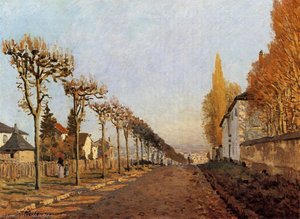
Experience the vibrant Post-Impressionist energy of Paul Sérusier's Avenue de Neuilly, capturing a warm, bustling street scene with bold color and texture; discover this masterpiece today.
Biografía del artista
Descubre a Paul Sérusier (1864-1927), pintor postimpresionista francés y pionero de la abstracción. Explora su estilo cloisonnista, influencia en los Nabis y obras clave como 'El Talismán'.
About the painting
A Luminous Journey Through Parisian Life
To gaze upon Paul Sérusier's Avenue de Neuilly is to step directly into a sun-drenched moment of late nineteenth-century Paris, filtered through the vibrant lens of Post-Impressionism. This painting is far more than a mere depiction of an avenue; it is an immersion into atmosphere, energy, and the burgeoning spirit of modern art. The scene unfolds with remarkable vitality, capturing the rhythm of daily life—the gentle passage of horse-drawn carriages mingling with the purposeful stride of pedestrians. From the warm wash of yellows and oranges that seem to emanate from the very cobblestones, one feels the palpable warmth of a low sun casting long shadows across the urban expanse.
The Brushwork of Modern Vision
Technically, the work is a masterclass in expressive application. Sérusier’s visible brushstrokes are not incidental; they are integral to the painting's narrative texture. They lend a palpable physicality to the scene, allowing the viewer to sense the impasto and the energy with which the paint was laid down. This textural quality is a hallmark of the Post-Impressionist movement, signaling a shift where the act of painting itself became as important as the subject matter. The foliage lining the avenue, rendered with spirited dabs of color, seems almost alive, vibrating with captured light and shadow.
Echoes of Symbolism and Influence
As a key member of the Nabi movement, Sérusier was deeply engaged in pushing art beyond mere imitation. While the subject is recognizably urban—the architecture suggesting a grand, established Parisian thoroughfare—the emotional resonance elevates it to something symbolic. The composition guides the eye deep into the vanishing point, creating a sense of journey or destiny along the avenue. Influenced by masters like Gauguin, Sérusier imbues the scene with an inner light, suggesting that the beauty captured here is not just topographical, but deeply felt and interpreted.
Bringing Parisian Vibrancy Home
For the collector or designer seeking to infuse a space with artistic depth and historical romance, this reproduction offers unparalleled character. The combination of bold color theory, dynamic composition, and palpable texture makes it an immediate focal point. Owning a piece inspired by Avenue de Neuilly is acquiring not just art, but a tangible connection to the revolutionary spirit of early modernism—a vibrant echo of Parisian life captured forever in oil on panel.
Preguntas y respuestas
¿Cuál es la atmósfera general de "Avenue de Neuilly" de Paul Sérusier?
"Avenue de Neuilly" transmite una atmósfera Nostalgic.
¿Qué representa "Avenue de Neuilly" de Paul Sérusier?
Los temas presentes en "Avenue de Neuilly" de Paul Sérusier incluyen street scene, avenue, post-impressionism, urban life, warm colors, figures, carriages, los cuales resumen la temática de la obra.
¿Cuál es la técnica y las dimensiones de "Avenue de Neuilly" de Paul Sérusier?
"Avenue de Neuilly" fue realizada en Oil On Panel y mide 51 x 65 cm en su formato original.
Quick facts and art quiz
About Paul Sérusier

Paul Sérusier
1864 - 1927, Francia
Biografía del artista
Primeros años y educación
Paul Sérusier, nacido Louis-Paul-Henri Sérusier el 9 de noviembre de 1864 en París, fue un pintor francés que se convirtió en pionero del arte abstracto e inspiró el movimiento vanguardista los nabis, sintetismo y cloisonnismo. Estudió en la Académie Julian, donde se convirtió en monitor a mediados de la década de 1880. Esto marcó el comienzo de su viaje artístico.
Carrera artística
En el verano de 1888, Sérusier viajó a Pont-Aven, donde se unió a un pequeño grupo de artistas centrado en Paul Gauguin. Bajo la estrecha supervisión de Gauguin, Sérusier pintó "El Talismán", un ejercicio extremo en cloisonnismo que se aproximaba a la pura abstracción. Esta obra mostró su estilo innovador y su disposición a experimentar con nuevas técnicas.
Como pintor postimpresionista, Sérusier formó parte del grupo Les Nabis, junto con Pierre Bonnard, Édouard Vuillard y Maurice Denis. Aunque no tan reconocido como algunos de sus compañeros, las contribuciones de Sérusier al desarrollo del arte abstracto son innegables.
Obras notables y legado
Algunas de las obras más destacadas de Sérusier incluyen:
- L'Averse (1893), Museo d’Orsay, París
- Retrato de Paul Ranson (1890), Museo d’Orsay, París
- Melancolía (1890)
- Las serpientes comiendo (1894), Muzeum Narodowe, Varsovia
En sus últimos años, Sérusier enseñó en la Académie Ranson y publicó su libro "ABC de la pintura" en 1921. Falleció el 7 de octubre de 1927 en Morlaix.
Movimiento artístico e influencia
El trabajo de Sérusier estuvo influenciado por el cloisonnismo, un estilo caracterizado por formas audaces y planas separadas por contornos oscuros. Este movimiento, que surgió a fines del siglo XIX, jugó un papel importante en la configuración del desarrollo del arte moderno.
- Explore más sobre el cloisonnismo: el movimiento artístico cloisonnista
- Descubra la obra de Sérusier: Paul Sérusier | TopImpressionists.com
- Infórmese sobre el movimiento los nabis: el movimiento artístico los nabis
Desarrollo y logros
Sérusier se alejó del concepto de arte como imitación del mundo visible, introduciendo elementos más conceptuales y evocadores en su pintura, especialmente en la disolución de las formas y el uso de colores no descriptivos. La idea era primordial en su obra y la colocaba por encima de la representación: si percibía el cielo amarillo, lo pintaba como amarillo y no azul. Buscando una verdad representativa más allá del mundo de las apariencias, estuvo influenciado tanto por artistas postimpresionistas anteriores como Paul Gauguin, como por pensamientos místicos conectados con la Teosofía.
Sérusier se esforzó por sintetizar tres elementos clave dentro de sus obras: la apariencia del mundo natural, la sensación que le producía y la forma en que elegía representar. Al equilibrar estos tres elementos, Sérusier también se centró en aplanar las formas en sus obras.
La abstracción de formas en la búsqueda de traducir emoción y percepción al lienzo no solo lo distinguió de los artistas anteriores, sino que también inspiró a otros. Los historiadores, así como sus contemporáneos, datan el comienzo del movimiento Nabi con la obra de Sérusier, El Talismán.
Sérusier animó a mayores experimentos hacia la abstracción en un intento de "liberar la forma y el color de sus funciones descriptivas tradicionales para expresar emociones e verdades espirituales personales". Este principio rector de la sensación a través del color fue una innovación asombrosa que resonó con futuras generaciones de coloristas, incluyendo Helen Frankenthaler, Mark Rothko y Josef Albers.
Quick facts about Paul Sérusier
- Artistas Que Influyeron:
- Paul Gauguin
- Émile Bernard
- Estilo Artístico: Postimpresionismo, Cloisonnismo
- Fecha De Fallecimiento: 7 de octubre de 1927
- Fecha De Nacimiento: 9 de noviembre de 1864
- Influenciado A:
- Les Nabis
- Movimiento abstracto
- Lugar De Nacimiento: París, Francia
- Nacionalidad: Francesa
- Nombre Completo: Paul Sérusier (Louis-Paul-Henri)
- Obras Notables:
- L'Averse (1893)
- Retrato de Paul Ranson (1890)
- Melancolía (1890)
- Las Comedoras de Serpientes (1894)
Obras relacionadas




Explore obras de arte organizadas por temas, estilos y características.


Paul Sérusier
Avenue de Neuilly
() ·
With its frame: · Hand-painted in oil on linen
Total