


 Ver en contexto
 Enviar
 Compartir
 Detalles
 Guía
Guía

 Descargar
 Similares
 Radiografía
 Presentación de diapositivas
 Q&A
Q&A Estadísticas
The Grammar


Paul Sérusier's 'The Grammar' (1892) is an iconic Cloisonnism painting, pioneering abstract art & inspiring the Nabis movement. Explore its symbolism and artistic innovation.
 Ver más
Descubre a Paul Sérusier (1864-1927), pintor postimpresionista francés y pionero de la abstracción. Explora su estilo cloisonnista, influencia en los Nabis y obras clave como 'El Talismán'.
Giclée / Impresión de arte
Impresiones giclée o en lienzo de calidad de museo con producción rápida y opciones de acabado flexibles. ( Comprar pintura hecha a mano Cambiar a imagen digital)




P118B €10

P118H €10

P118W €10

P438Z €10

P508JH €12

P508YH €12

P805H €10

P805Z €10

P919BZ €10

P919G €10

P919XJ €10

P959ZH €10

P968JZ €12

W106C €8

W218G €10

W218JH €8

W218Y €10

W307PJ €10

W316G €10

W316PJ €8

W316Y €10

W398PJ €8

W4111J €10

W500HY €15

W500JH €15

W692G €12

W849H €8

W940BG €15

W953PJ €8




Tamaño estándar
a medida
CM
INCH
Elija entre nuestros tamaños predefinidos que respetan las proporciones originales de la obra.
Loading sizes...

ancho
altura
Introduzca el ancho y el alto que necesite para adaptarse a su marco o pared. Una impresión solo puede recortarse, nunca hacerse más grande que la imagen original, por lo que un tamaño con una forma distinta perderá parte de la obra. Le enviaremos una maqueta digital para su aprobación antes de realizar cualquier impresión. La imagen que se muestra en esta página no refleja el recorte real; solo la maqueta lo hace.
Envío a todo el mundo () en 2 semanas en lugar de las 4/5 semanas estándar. (30 octubre)

Envío exprés gratuito a todo el mundo

Lienzo de lino de alta calidad

Seguro de envío total

Garantía de reembolso de aranceles aduaneros

Garantía de fidelidad cromática exacta

Política de devolución de 100 días (solo por defectos)

Garantía de devolución del 100% del dinero

Descuento por cantidad
 La opción de vidrio solo está disponible en tamaños inferiores a 110 cm.

The Grammar
Giclée / Impresión de arte
Dimensiones de la reproducción
-


Precio total final
€ 61
The Grammar: A Pioneering Exploration of Abstraction
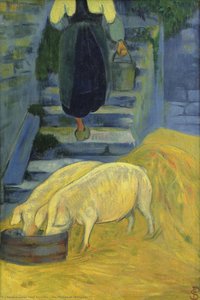
Paul Sérusier’s “Grammar,” painted in 1892, stands as a pivotal work not just within the artist's oeuvre but also as a foundational piece in the development of modern art. More than simply a portrait, it’s an intensely personal and experimental exploration of color, form, and the very nature of representation – a bold step towards abstraction that profoundly influenced generations of artists to come. The painting depicts a woman seated on the ground, absorbed in reading a book, a scene rendered with remarkable intimacy and a deliberate departure from traditional academic styles.
Sérusier’s artistic journey was deeply intertwined with the burgeoning Nabis movement, a group of Symbolist painters who sought to move beyond mere imitation of nature towards expressing inner emotions and spiritual truths. He initially studied at the Académie Julian, but it was his summer sojourn in Pont-Aven, Brittany, that proved transformative. There, under the tutelage of Paul Gauguin – a figure whose influence extended far beyond technique – Sérusier encountered the revolutionary approach of Cloisonnism, championed by Gauguin himself. This style, characterized by sharply defined outlines and areas of flat color applied in small, separate strokes, aimed to mimic the appearance of stained glass, creating a sense of luminous clarity and symbolic resonance.
Cloisonnism and the Language of Color
“Grammar” exemplifies this Cloisonnism technique with striking precision. The woman’s figure is not rendered through subtle gradations of tone but rather defined by bold, distinct outlines – a deliberate simplification that prioritizes color and form over meticulous detail. Sérusier employs a vibrant palette, dominated by deep blues, greens, and ochres, creating an atmosphere both serene and slightly melancholic. The colors aren’t blended; instead, they are applied in small, separate strokes, building up layers of hue and texture. This technique, combined with the flattened perspective, creates a sense of immediacy and directness, as if the painting is capturing a fleeting moment of contemplation.
Crucially, Sérusier’s use of color isn't merely descriptive; it carries symbolic weight. The blues evoke a sense of introspection and mystery, while the greens suggest connection to nature – a key theme in Symbolist art. The muted ochres contribute to the painting’s overall feeling of quietude and contemplation. The deliberate choice of colors, rather than realistic representation, is central to the work's expressive power.
A Study in Form and Abstraction
Beyond its technical mastery, “Grammar” represents a significant shift towards abstraction. While not entirely devoid of recognizable forms – the woman’s figure, the book, the surrounding objects – the painting prioritizes the exploration of color and form over strict representation. The simplified shapes, flattened perspective, and emphasis on pure color anticipate later developments in abstract art, foreshadowing the work of artists like Kandinsky and Mondrian. It's a deliberate move away from photographic realism towards a more subjective and expressive approach to visual language.
The painting’s title, “Grammar,” is particularly intriguing. It suggests that Sérusier was not simply depicting a scene but rather exploring the fundamental building blocks of artistic expression – the elements of color, line, and form – in a way that transcends traditional representation. The book itself becomes a symbol of knowledge and contemplation, inviting the viewer to engage with the painting on a deeper level.
Legacy and Inspiration
“Grammar” remains a vital work in the history of modern art, demonstrating Sérusier’s pioneering spirit and his profound influence on subsequent generations. It's a testament to the power of abstraction to convey emotion, ideas, and spiritual truths. Reproductions of this evocative painting continue to inspire artists and collectors alike, offering a glimpse into the heart of artistic innovation and the enduring quest for new forms of visual expression.
Preguntas y respuestas
¿Puedo usar la realidad aumentada para ver "The Grammar" de Paul Sérusier en mi habitación?
Puedes visualizar "The Grammar" de Paul Sérusier en tu propia pared con la página de Vista previa en RA de la obra, utilizando realidad aumentada en un dispositivo compatible.
¿De qué manera el estilo de "The Grammar" se relaciona con la época de su creador?
"The Grammar" de Paul Sérusier pertenece al movimiento Cloisonnism / Nabis, dentro de la era Siglo XIX de su creador.
¿Qué nivel de saturación e intensidad presenta "The Grammar" de Paul Sérusier?
La paleta cromática de "The Grammar" presenta una saturación de Muted y una intensidad de Monochromatic.




Biografía del artista
Primeros años y educación
Paul Sérusier, nacido Louis-Paul-Henri Sérusier el 9 de noviembre de 1864 en París, fue un pintor francés que se convirtió en pionero del arte abstracto e inspiró el movimiento vanguardista los nabis, sintetismo y cloisonnismo. Estudió en la Académie Julian, donde se convirtió en monitor a mediados de la década de 1880. Esto marcó el comienzo de su viaje artístico.
Carrera artística
En el verano de 1888, Sérusier viajó a Pont-Aven, donde se unió a un pequeño grupo de artistas centrado en Paul Gauguin. Bajo la estrecha supervisión de Gauguin, Sérusier pintó "El Talismán", un ejercicio extremo en cloisonnismo que se aproximaba a la pura abstracción. Esta obra mostró su estilo innovador y su disposición a experimentar con nuevas técnicas.
Como pintor postimpresionista, Sérusier formó parte del grupo Les Nabis, junto con Pierre Bonnard, Édouard Vuillard y Maurice Denis. Aunque no tan reconocido como algunos de sus compañeros, las contribuciones de Sérusier al desarrollo del arte abstracto son innegables.
Obras notables y legado
Algunas de las obras más destacadas de Sérusier incluyen:
- L'Averse (1893), Museo d’Orsay, París
- Retrato de Paul Ranson (1890), Museo d’Orsay, París
- Melancolía (1890)
- Las serpientes comiendo (1894), Muzeum Narodowe, Varsovia
En sus últimos años, Sérusier enseñó en la Académie Ranson y publicó su libro "ABC de la pintura" en 1921. Falleció el 7 de octubre de 1927 en Morlaix.
Movimiento artístico e influencia
El trabajo de Sérusier estuvo influenciado por el cloisonnismo, un estilo caracterizado por formas audaces y planas separadas por contornos oscuros. Este movimiento, que surgió a fines del siglo XIX, jugó un papel importante en la configuración del desarrollo del arte moderno.
- Explore más sobre el cloisonnismo: el movimiento artístico cloisonnista
- Descubra la obra de Sérusier: Paul Sérusier | TopImpressionists.com
- Infórmese sobre el movimiento los nabis: el movimiento artístico los nabis
Desarrollo y logros
Sérusier se alejó del concepto de arte como imitación del mundo visible, introduciendo elementos más conceptuales y evocadores en su pintura, especialmente en la disolución de las formas y el uso de colores no descriptivos. La idea era primordial en su obra y la colocaba por encima de la representación: si percibía el cielo amarillo, lo pintaba como amarillo y no azul. Buscando una verdad representativa más allá del mundo de las apariencias, estuvo influenciado tanto por artistas postimpresionistas anteriores como Paul Gauguin, como por pensamientos místicos conectados con la Teosofía.
Sérusier se esforzó por sintetizar tres elementos clave dentro de sus obras: la apariencia del mundo natural, la sensación que le producía y la forma en que elegía representar. Al equilibrar estos tres elementos, Sérusier también se centró en aplanar las formas en sus obras.
La abstracción de formas en la búsqueda de traducir emoción y percepción al lienzo no solo lo distinguió de los artistas anteriores, sino que también inspiró a otros. Los historiadores, así como sus contemporáneos, datan el comienzo del movimiento Nabi con la obra de Sérusier, El Talismán.
Sérusier animó a mayores experimentos hacia la abstracción en un intento de "liberar la forma y el color de sus funciones descriptivas tradicionales para expresar emociones e verdades espirituales personales". Este principio rector de la sensación a través del color fue una innovación asombrosa que resonó con futuras generaciones de coloristas, incluyendo Helen Frankenthaler, Mark Rothko y Josef Albers.

Paul Sérusier
1864 - 1927 , Francia
Datos clave
- Artistas Que Influyeron:
- Paul Gauguin
- Émile Bernard
- Estilo Artístico: Postimpresionismo, Cloisonnismo
- Fecha De Fallecimiento: 7 de octubre de 1927
- Fecha De Nacimiento: 9 de noviembre de 1864
- Influenciado A:
- Les Nabis
- Movimiento abstracto
- Lugar De Nacimiento: París, Francia
- Nacionalidad: Francesa
- Nombre Completo: Paul Sérusier (Louis-Paul-Henri)
- Obras Notables:
- L'Averse (1893)
- Retrato de Paul Ranson (1890)
- Melancolía (1890)
- Las Comedoras de Serpientes (1894)
Artículos relacionados

The Soul of Color: A Journey into the Emotional Resonance of Lyrical Abstraction
Embark on a cultural journey through Lyrical Abstraction. Explore how masters like Kandinsky used color and motion to translate emotion into visual poetry. Discover the profound beauty of abstract expressionism and learn to curate emotional resonance in your own art collection.
Explore obras de arte organizadas por temas, estilos y características.


