


 Ver en contexto
 Enviar
 Compartir
 Detalles
 Guía
Guía

 Descargar
 Similares
 Radiografía
 Presentación de diapositivas
 Q&A
Q&A Estadísticas
Una dama tamil
 Óleo
Óleo- Arte de pared
- Pintura indo-británica
 1900
1900- Siglo XIX
 48.0 x 32.0 cm
 La Fundación del Patrimonio de Raja Ravi Varma
Descubre A Tamil Lady de Raja Ravi Varma (1900). Este óleo captura la gracia y belleza de una mujer tamil con detalle exquisito.
 Ver más
Raja Ravi Varma: un pionero de la pintura india que fusionó tradición y modernidad. Su arte, lleno de mitología y emoción, transformó la identidad visual de su país.
Reproducción al óleo hecha a mano
Óleo sobre lienzo pintado a mano en el tamaño y marco de su elección, realizado por encargo por nuestros artistas. ( Cambiar a impresiones Cambiar a imagen digital)




P118B €10

P118H €10

P118W €10

P438Z €10

P508JH €12

P508YH €12

P805H €10

P805Z €10

P919BZ €10

P919G €10

P919XJ €10

P959ZH €10

P968JZ €12

W106C €8

W218G €10

W218JH €8

W218Y €10

W307PJ €10

W316G €10

W316PJ €8

W316Y €10

W398PJ €8

W4111J €10

W500HY €15

W500JH €15

W692G €12

W849H €8

W940BG €15

W953PJ €8




Tamaño estándar
a medida
CM
INCH
Elija entre nuestros tamaños predefinidos que respetan las proporciones originales de la obra.
Loading sizes...

ancho
altura
Indique el ancho y el alto que necesite para adaptarse a su marco o pared. Al tratarse de una obra pintada a mano, si requiere un tamaño con una proporción distinta, el artista puede pintar un poco más alrededor de la imagen o recortarla ligeramente; usted elige. Le enviaremos una maqueta digital para su aprobación antes de comenzar la pintura. La imagen que se muestra en esta página no refleja el resultado real; solo la maqueta lo hace.
Ejemplos de lo que se puede personalizar: Reemplace el rostro con una foto del cliente; Agregue una mascota (por ejemplo, cambie un gato por un perro); Incluya un mensaje oculto en el fondo; Cambie el paisaje o los elementos del fondo.
Tras realizar el pedido, el equipo de TopImpressionists.com enviará un correo electrónico al cliente para solicitar instrucciones y proporcionarle una vista previa del boceto.
Tras realizar el pedido, el equipo de TopImpressionists.com enviará un correo electrónico al cliente para solicitar instrucciones y proporcionarle una vista previa del boceto.
Envío a todo el mundo () en 3-4 semanas en lugar de las 5 semanas estándar. (28 octubre). Sin comprometer la calidad.

Envío exprés gratuito a todo el mundo

Lienzo de lino de alta calidad

Seguro de envío total

Garantía de reembolso de aranceles aduaneros

Garantía de fidelidad cromática exacta

Política de devolución de 100 días (solo por defectos)

Garantía de devolución del 100% del dinero

Descuento por cantidad
 La opción de vidrio solo está disponible en tamaños inferiores a 110 cm.

Una dama tamil
Técnica de reproducción
Dimensiones de la reproducción
-


Precio total final
€ 237
El resplandor de la tradición: un vistazo a la visión de Raja Ravi Varma
En la tranquila intimidad de Una dama tamil, nos encontramos con algo más que un simple retrato; entramos en un momento congelado en el tiempo por la mano maestra de Raja Ravi Varma. Pintada alrededor de 1900, este óleo sobre lienzo sirve como un testimonio impresionante de la capacidad única del artista para casar la grandeza de la herencia india con el sofisticado realismo de las tradiciones académicas europeas. El sujeto, una mujer de profunda gracia, contempla al espectador con una expresión que es a la vez serena y profundamente conmovedora. Su largo y oscuro cabello, recogido en una delicada coleta, enmarca un rostro iluminado por una luz suave y natural que parece emanar del interior del propio lienzo. Ataviada con un vibrante vestido rojo que simboliza vitalidad y auspiciosidad, luce joyas que hablan de su identidad cultural y posición social, convirtiendo la pintura en una ventana a la elegancia aristocrática de la India de principios del siglo XX.
Contemplar esta obra es presenciar una clase magistral de claroscuro: el dramático juego entre la luz y la sombra. Varma utiliza la pintura al óleo para lograr una cualidad luminosa, particularmente en la forma en que la luz captura el brillo de sus ornamentos y los suaves pliegues de su atuendo carmesí. Cada pincelada es deliberada, contribiendo a una sensación de realidad táctil que permite al espectador casi sentir el peso del oro y la suavidad de la seda. Esta meticulosa atención a la textura y la luz proyecta la figura hacia adelante desde el fondo, creando una experiencia inmersiva que transforma un simple retrato en una presencia tridimensional dentro de cualquier espacio.
Un legado de síntesis cultural
Comprender esta pieza es comprender la importancia histórica del propio Raja Ravi Varma. Nacido en el linaje real de Kilimanoor, Varma actuó como un puente cultural durante una era transformadora en la historia de la India. Tomó los temas clásicos de la mitología india y la vida cortesana y los infundió con una técnica que resonaba con los movimientos artísticos globales de su tiempo. Su habilidad para combinar las tradiciones de la Escuela de Tanjore de su juventud con el realismo académico de Occidente le permitió crear una iconografía que resultaba profundamente familiar para el alma india y, al mismo tiempo, sorprendentemente moderna en su ejecución.
Para el coleccionista exigente o el diseñador de interiores, Una dama tamil ofrece más que una mera decoración; proporciona un punto focal de profunda profundidad histórica. La pintura conlleva un peso emocional que habla de dignidad, herencia y la belleza perdurable de la tradición. Ya sea colocada en el entorno de una galería curada o como pieza central en un hogar contemporáneo sofisticado, esta reproducción trae consigo el prestigio de la Raja Ravi Varma Heritage Foundation y el encanto atemporal de una era pasada de la realeza india.
Preguntas y respuestas
¿Qué sentimiento y emoción transmite "Una dama tamil" de Raja Ravi Varma?
En "Una dama tamil", un ambiente Clásico acompaña a una emoción Romántico.
¿Cómo se combinan la técnica y el movimiento en "Una dama tamil"?
En "Una dama tamil", la técnica de Óleo se funde con el movimiento Pintura indo-británica.
¿Cómo puedo conseguir una lámina de "Una dama tamil" de Raja Ravi Varma?
"Una dama tamil" está disponible como una impresión de bellas artes sobre lienzo de algodón o papel de lienzo de archivo. Puede realizar su pedido en su página Impresión de arte de bellas artes, en el tamaño que prefiera.
Biografía del artista
The Princely Brush: Raja Ravi Varma and the Dawn of Modern Indian Painting
Raja Ravi Varma, a name that resonates with artistic innovation in India, emerged from the royal lineage of Kilimanoor Palace in Kerala during the mid-19th century. Born on April 29, 1848, his life was steeped in both aristocratic tradition and an innate creative spirit. He wasn’t merely a painter; he was a cultural bridge, skillfully blending European academic techniques with the rich tapestry of Indian mythology and aesthetics. His family's long-standing connection to the Travancore royal house – indeed, two of his daughters were later adopted into that very family – provided both privilege and a deep understanding of Indian courtly life, which would profoundly influence his artistic vision. From an early age, Ravi Varma displayed a remarkable aptitude for art, nurtured by his uncle Raja Raja Varma, who initiated him into the world of drawing and painting, primarily within the Tanjore School tradition. However, young Ravi’s ambition extended beyond imitation; he sought to master techniques that would allow him to capture not just likeness but also emotion and narrative depth.Early Life & Background
Raja Ravi Varma was born into a noble family residing in Kilimanoor Palace, Travancore (present-day Kerala). His father, Ezhumavil Neelakanthan Bhattatiripad, was a respected scholar of Sanskrit and Ayurveda, hailing from the Ernakulam district. Uma Ambabayi Thampuratty, his mother, belonged to the baronial family that governed Kilimanoor Estate within the Travancore kingdom. She possessed considerable literary talent and penned *Parvati Swayamvaram*, which was published posthumously. Ravi Varma’s upbringing fostered a unique blend of artistic sensibilities—influenced by both European academic art and classical Indian traditions. Recognizing his exceptional talent, his uncle Raja Raja Varma, who served as Maharaja of Travancore, championed his artistic pursuits, enrolling him in formal training with Rama Swamy Naidu, a prominent painter from Tanjore. This mentorship instilled in Ravi Varma the foundational skills necessary for mastering watercolor and later, oil painting under Theodor Jenson, a Dutch artist stationed in India. At the tender age of 14, he began his artistic journey by sketching on the palace walls with charcoal—a practice that would foreshadow his lifelong dedication to visual art.A Fusion of Worlds: Technique and Inspiration
Raja Ravi Varma’s artistic trajectory took an unprecedented turn when he encountered the works of European masters during his travels abroad. He was captivated by the realism and meticulous precision characteristic of academic painting, diligently studying its principles—perspective, anatomy, light, and shadow—to elevate his own artistic endeavors. Unlike many contemporaries who merely replicated Western styles, Ravi Varma skillfully adapted these techniques to imbue Indian subjects with profound emotional resonance. His canvases became vibrant stages for scenes from the Ramayana, Mahabharata, and Puranas, populated by gods and goddesses rendered with remarkable naturalism. This transformative approach distinguished him from his peers and established a precedent for blending Eastern and Western artistic traditions. He didn’t merely depict religious narratives; he infused them with human emotion and psychological complexity—a hallmark of his distinctive style. Consider *Shakuntala*, where Ravi Varma portrays Shakuntalá’s longing gaze and delicate posture, conveying an unparalleled depth of feeling previously absent in Indian art.Lithographs and Public Appeal
Recognizing that original paintings were inaccessible to the majority of Indians, Raja Ravi Varma embarked on a visionary endeavor: establishing the Raja Ravi Varma Fine Arts Lithographic Press in 1894. This pioneering initiative revolutionized artistic dissemination by facilitating the mass production of affordable lithographs based on his masterpieces. Suddenly, images of Hindu deities and mythological narratives transcended social strata and geographical boundaries, adorning homes across India—a testament to Ravi Varma’s commitment to democratizing art. The lithographs weren’t mere reproductions; they were carefully crafted interpretations that captured the essence of Varma’s originals—further enhancing their visual impact and broadening their reach. This transformative step solidified his legacy as a champion of artistic accessibility and profoundly shaped public perceptions of Hindu iconography.Legacy and Enduring Influence
Raja Ravi Varma passed away in 1906, leaving behind an indelible mark on Indian art history. His groundbreaking fusion of European academic methods with Indian mythological themes irrevocably altered the course of artistic expression—establishing him as a pivotal figure who ushered in the era of modern Indian painting. His influence continues to resonate today, evident in the works of subsequent generations of artists who sought to forge a distinctly national artistic identity. Museums like The Raja Ravi Varma Heritage Foundation and The Ganesh Shivaswamy Foundation diligently preserve and celebrate his art—ensuring that his visionary spirit persists for posterity. His paintings remain powerful embodiments of beauty, spirituality, and cultural richness—masterpieces that encapsulate the transformative legacy of Raja Ravi Varma.
Raja Ravi Varma
1848 - 1906 , India
Datos clave
- Artistic Movement Or Style: Académico y fusión india
- Artists Or Movements Influenced By This Artist: ['Arte moderno indio']
- Artists Who Influenced This Artist: ['Maestro europeo']
- Date Of Birth: 29 abril 1848
- Date Of Death: 2 octubre 1906
- Full Name: Raja Ravi Varma
- Nationality: Indio
- Notable Artworks:
- Hansa Damayanthi
- Maharani de Travancore
- Retrato de un caballero
- Place Of Birth: Kilimanjaro, India
Artículos relacionados
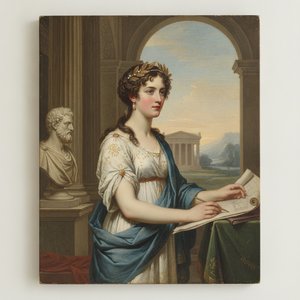
The Revival of Antiquity: Exploring Ideals of Beauty & Power in Neoclassical Portraiture
Explore the captivating world of Neoclassical portraiture! Discover the power & ideals behind masterpieces by David, Girodet & more. Expert analysis, custom reproductions & art appraisal at TopImpressionists.

El Renacimiento de la Antigüedad: Explorando los Ideales y el Legado Duradero del Arte Neoclásico
Descubre el Neoclasicismo: su historia, características clave y legado artístico. Explora la influencia de la antigüedad greco-romana en la pintura, escultura y arquitectura con TopImpressionists.

The Enduring Echo of Antiquity: Classical Ideals in Art from Renaissance to Modernism
Explore the lasting impact of classical ideals on art from the Renaissance to Modernism. Discover key movements, iconic artists & find museum-quality reproductions at TopImpressionists.

The Revival of Antiquity: Exploring the Neoclassical Movement & its Enduring Legacy
Explore the revival of classical art with our deep dive into Neoclassicism! Discover key artists like Jacques-Louis David, Enlightenment influences & lasting impact on art history. High-quality reproductions at TopImpressionists.

Raja Ravi Varma: Bridging Tradition & Modernity in 19th-Century Indian Art
Explore the life & art of Raja Ravi Varma, a pioneer who fused European techniques with Indian iconography. Discover his iconic paintings, lasting legacy, and influence on modern Indian art at TopImpressionists.
Explore obras de arte organizadas por temas, estilos y características.


