Ver en contexto
 Enviar
 Compartir
 Detalles
 Guía
Guía

 Descargar
 Similares
 Radiografía
 Presentación de diapositivas
 Estadísticas
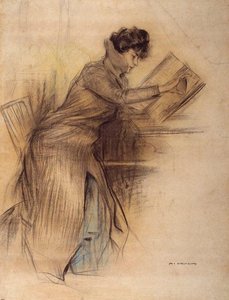
Julia
 Oil On Canvas
- WallArt
- Modernisme
 19th Century
 67.0 x 85.0 cm
 Museo Carmen Thyssen Málaga
Discover Ramon Casas’ captivating portrait of Julia, a stunning example of Spanish Modernisme. Explore its vibrant colors, provocative pose & artistic influences.
 Ver más
Descubre a Ramón Casas i Carbó (1866-1932), artista catalán del Modernismo, conocido por sus retratos vibrantes y escenas de la vida española. ¡Explora su estilo único!
Reproducción al óleo hecha a mano
Óleo sobre lienzo pintado a mano en el tamaño y marco de su elección, realizado por encargo por nuestros artistas. ( Cambiar a impresiones Cambiar a imagen digital)




P118B €10

P118H €10

P118W €10

P438Z €10

P508JH €12

P508YH €12

P805H €10

P805Z €10

P919BZ €10

P919G €10

P919XJ €10

P959ZH €10

P968JZ €12

W106C €8

W218G €10

W218JH €8

W218Y €10

W307PJ €10

W316G €10

W316PJ €8

W316Y €10

W398PJ €8

W4111J €10

W500HY €15

W500JH €15

W692G €12

W849H €8

W940BG €15

W953PJ €8




Tamaño estándar
a medida
CM
INCH
Elija entre nuestros tamaños predefinidos que respetan las proporciones originales de la obra.
Loading sizes...

ancho
altura
Indique el ancho y el alto que necesite para adaptarse a su marco o pared. Al tratarse de una obra pintada a mano, si requiere un tamaño con una proporción distinta, el artista puede pintar un poco más alrededor de la imagen o recortarla ligeramente; usted elige. Le enviaremos una maqueta digital para su aprobación antes de comenzar la pintura. La imagen que se muestra en esta página no refleja el resultado real; solo la maqueta lo hace.
Ejemplos de lo que se puede personalizar: Reemplace el rostro con una foto del cliente; Agregue una mascota (por ejemplo, cambie un gato por un perro); Incluya un mensaje oculto en el fondo; Cambie el paisaje o los elementos del fondo.
Tras realizar el pedido, el equipo de TopImpressionists.com enviará un correo electrónico al cliente para solicitar instrucciones y proporcionarle una vista previa del boceto.
Tras realizar el pedido, el equipo de TopImpressionists.com enviará un correo electrónico al cliente para solicitar instrucciones y proporcionarle una vista previa del boceto.
Envío a todo el mundo () en 3-4 semanas en lugar de las 5 semanas estándar. (26 octubre). Sin comprometer la calidad.

Envío exprés gratuito a todo el mundo

Lienzo de lino de alta calidad

Seguro de envío total

Garantía de reembolso de aranceles aduaneros

Garantía de fidelidad cromática exacta

Política de devolución de 100 días (solo por defectos)

Garantía de devolución del 100% del dinero

Descuento por cantidad
 La opción de vidrio solo está disponible en tamaños inferiores a 110 cm.

Julia
Técnica de reproducción
Dimensiones de la reproducción
-


Precio total final
€ 236
A Vision of Spanish Spirit: The Captivating Presence of Julia
In the storied annals of Catalan Modernisme, few portraits possess the magnetic vitality found in Ramon Casas i Carbó’s Julia. This masterpiece is far more than a mere likeness; it is a profound encounter with a woman who embodied both personal passion and cultural archetype. The subject, Julia Peraire, was not just a frequent model for Casas but his lifelong companion, a woman whose beauty and spirited nature left an indelible mark on the artist's soul. In this particular work, Casas captures her in a pose that is simultaneously defiant and alluring, seated with hands resting upon her hips in a manner that commands the viewer's immediate attention. The painting breathes with the energy of a bygone era, inviting us into a moment where personal intimacy meets the grand theatricality of Spanish tradition.
The brilliance of the composition lies in its masterful use of color and the striking espagnolade aesthetic. Casas dresses Julia in the iconic attire of a matador, featuring a vibrant red jacket intricately embroidered with black thread and silver accents. This choice of costume is not accidental; it serves to connect the sitter to the broader cultural identity of Spain, blending the sensual allure of the female form with the rugged, heroic symbols of Spanish folk tradition. The rich, saturated reds of her jacket harmonize exquisitely with the floral elements in her hair and the delicate comb, creating a visual rhythm that guides the eye across the canvas. Against a muted, atmospheric background that recedes into soft shadows, the subject emerges with a luminous clarity, making the painting an ideal focal point for any sophisticated interior.
Technique and the Mastery of Light
To behold Julia is to witness the technical prowess of a painter who could seamlessly bridge the gap between the precision of Realism and the emotive fluidity of Impressionism. Casas employs a layered oil technique, utilizing subtle glazes to achieve a breathtaking luminosity within the skin tones and the metallic sheen of the embroidery. The brushwork is deliberate yet expressive; while the contours of Julia’s face and the structural details of her jacket are rendered with academic rigor, there is an underlying softness in the textures of her hair and the surrounding atmosphere that prevents the work from feeling static. This interplay between sharp detail and soft, diffused light creates a sense of three-dimensional depth, pulling the viewer into the very space Julia occupies.
For the discerning collector or interior designer, this reproduction offers an unparalleled opportunity to introduce a sense of historical grandeur and emotional warmth into a living space. The painting’s ability to evoke both strength and vulnerability makes it a versatile piece of art, capable of anchoring a room with its bold color palette while providing a sophisticated narrative element. It is a work that does not merely decorate a wall but tells a story of love, identity, and the enduring beauty of the human spirit, making it a timeless investment for those who appreciate the profound legacy of the Modernisme movement.
Preguntas y respuestas
¿Está disponible una descarga en alta resolución de "Julia"?
Puede adquirir una imagen digital de "Julia" de Ramon Casas i Carbó en su página de Imagen digital de alta resolución: descarga de una imagen digital en alta resolución.
¿Para qué ocasión se recomienda "Julia" de Ramon Casas i Carbó como regalo?
"Julia" de Ramon Casas i Carbó es una recomendación ideal como regalo para Anniversary. Se puede obsequiar una reproducción de la obra de arte.
¿Cómo se integra "Julia" en los temas y el estilo de Ramon Casas i Carbó?
"Julia" pertenece a la etapa Modernisme de Ramon Casas i Carbó, cuyos temas recurrentes incluyen spanish identity, vibrant culture, erotic allure, social commentary, lottery vendor, everyday beauty.
Biografía del artista
Ramon Casas i Carbó: Una Vida Dedicada al Modernismo Catalán
Ramon Casas i Carbó (Barcelona, 4 de enero de 1866 – Barcelona, 5 de febrero de 1932) fue una figura clave del Modernismo catalán, un artista versátil que destacó como pintor, dibujante, cartelista y escultor. Su obra refleja la efervescencia cultural y artística de finales del siglo XIX y principios del XX en Cataluña.
Primeros Años y Formación Artística
Casas nació en una familia acomodada; su padre había amasado una fortuna en Cuba, mientras que su madre provenía de una familia catalana adinerada. En 1877, abandonó los estudios regulares para dedicarse al arte bajo la tutela de Joan Vicens. Esta decisión marcó el inicio de su carrera artística. Rápidamente demostró un talento excepcional, destacándose en retratos y caricaturas que capturaban la esencia de la élite catalana, española y francesa. Su habilidad para representar personajes con vivacidad y humor le valió reconocimiento desde temprana edad.
Desarrollo Artístico y Obras Destacadas
La obra de Casas evolucionó a lo largo de su carrera, mostrando una notable versatilidad. Sus primeros trabajos se centraron en retratos y caricaturas, pero pronto exploró otros géneros como la pintura de género y el diseño gráfico.
- Autorretrato como Flamenco (1883): Esta obra temprana ya revelaba su estilo único y le valió una invitación para unirse a la Societé d'Artistes Français.
- Corrida de Toros (1884): Una representación vibrante y dinámica de una escena taurina, demostrando su capacidad para capturar el ambiente y la emoción de las multitudes.
- Interior del Moulin de la Galette (1891): Esta pintura, realizada durante su estancia en París, evidencia su crecimiento artístico y le otorgó una medalla en la Exposición Internacional de Berlín.
- Retrato del Sr. Domínguez (1899): Un dibujo a lápiz que ejemplifica su maestría en el retrato y su estilo modernista caracterizado por líneas sueltas y sombreados sutiles.
Además de estas obras, Casas fue un prolífico cartelista, creando diseños impactantes para espectáculos teatrales, eventos deportivos y otros fines publicitarios. Sus carteles se distinguen por su colorido, dinamismo y originalidad.
Influencias y Colaboraciones
Casas estuvo influenciado por el Impresionismo y el Postimpresionismo, aunque desarrolló un estilo propio que integraba elementos del Modernismo catalán. Su obra refleja la influencia de artistas como Degas y Toulouse-Lautrec, especialmente en sus representaciones de escenas urbanas y personajes populares.
Colaboró estrechamente con otros artistas importantes de su época, como Santiago Rusiñol, con quien viajó por Cataluña en 1889. Su asociación con la Societé d'Artistes Français le permitió exponer su obra sin necesidad de pasar por un jurado.
Legado e Importancia Histórica
Ramon Casas i Carbó dejó un legado artístico significativo como uno de los principales exponentes del Modernismo catalán. Su obra se encuentra en importantes museos, incluyendo el Museu Nacional d'Art de Catalunya (MNAC) y el Cau Ferrat Museum (Sitges). Su capacidad para capturar la vida cotidiana, sus retratos vibrantes y su innovador diseño gráfico lo convierten en una figura clave en la historia del arte español. Su trabajo contribuyó a definir la estética modernista catalana y sigue siendo admirado por su originalidad y vitalidad.

Ramon Casas i Carbó
1866 - 1932 , España
Datos clave
- Fecha De Nacimiento: 4 de enero de 1866
- Influencias Artísticas: ['Joan Vicens']
- Lugar De Nacimiento: Barcelona, España
- Movimiento Artístico: Modernismo catalán
- Nacionalidad: Española
- Nombre Completo: Ramón Casas i Carbó
- Obras Notables:
- Autorretrato como bailaor
- Corrida de toros
- Interior del molino
- Isaac Albéniz
Artículos relacionados

Crimson Threads of Narrative: Exploring Symbolism & Representation in Artworks Featuring the Red Dress
Explore the rich symbolism of the red dress in art history! From ancient power displays to iconic portraits like Cézanne’s 'Madame Cezanne', discover the cultural and artistic significance behind this captivating color. Expert analysis & insights.

Rafael de Penagos: A Study in Spanish Portraiture & Artistic Identity
Explore the life & art of Rafael de Penagos, a leading Spanish Art Deco illustrator. Discover his iconic 'Penagos Woman', commercial work, and lasting legacy. Learn about this pivotal figure in 20th-century Spanish art history.

The Golden Age Reforged: Dramatic Realism & Religious Zeal in Spanish Baroque Art
Explore the dramatic world of Spanish Baroque art! Discover masters like Zurbarán & the powerful influence of religious zeal on painting techniques – a guide for collectors and enthusiasts.

El Siglo XIX en el Arte: 10 Obras Maestras para Decorar con Historia y Estilo
Descubre 10 obras maestras del siglo XIX: Monet, Goya y más. Explora el impresionismo, realismo y romanticismo que definieron una época. Encuentra reproducciones de arte exclusivas para decorar tu hogar con estilo en TopImpressionists.com.

Josep Cusachs i: Exploring Catalan Modernism Through Social Commentary & Artistic Innovation
Explore the captivating world of Josep Cusachs i, a key figure in Catalan Modernism. Discover his realist paintings, social commentary, and influence on 19th-century Spanish art. Hand-painted reproductions available at TopImpressionists.
Explore obras de arte organizadas por temas, estilos y características.