

 Vista previa
 Compartir
 Compartir
 Ver detalles
 Guía
Guía

 Descargar
 Ver artículos similares
 Radiografía
 Presentación de diapositivas
 Estadísticas
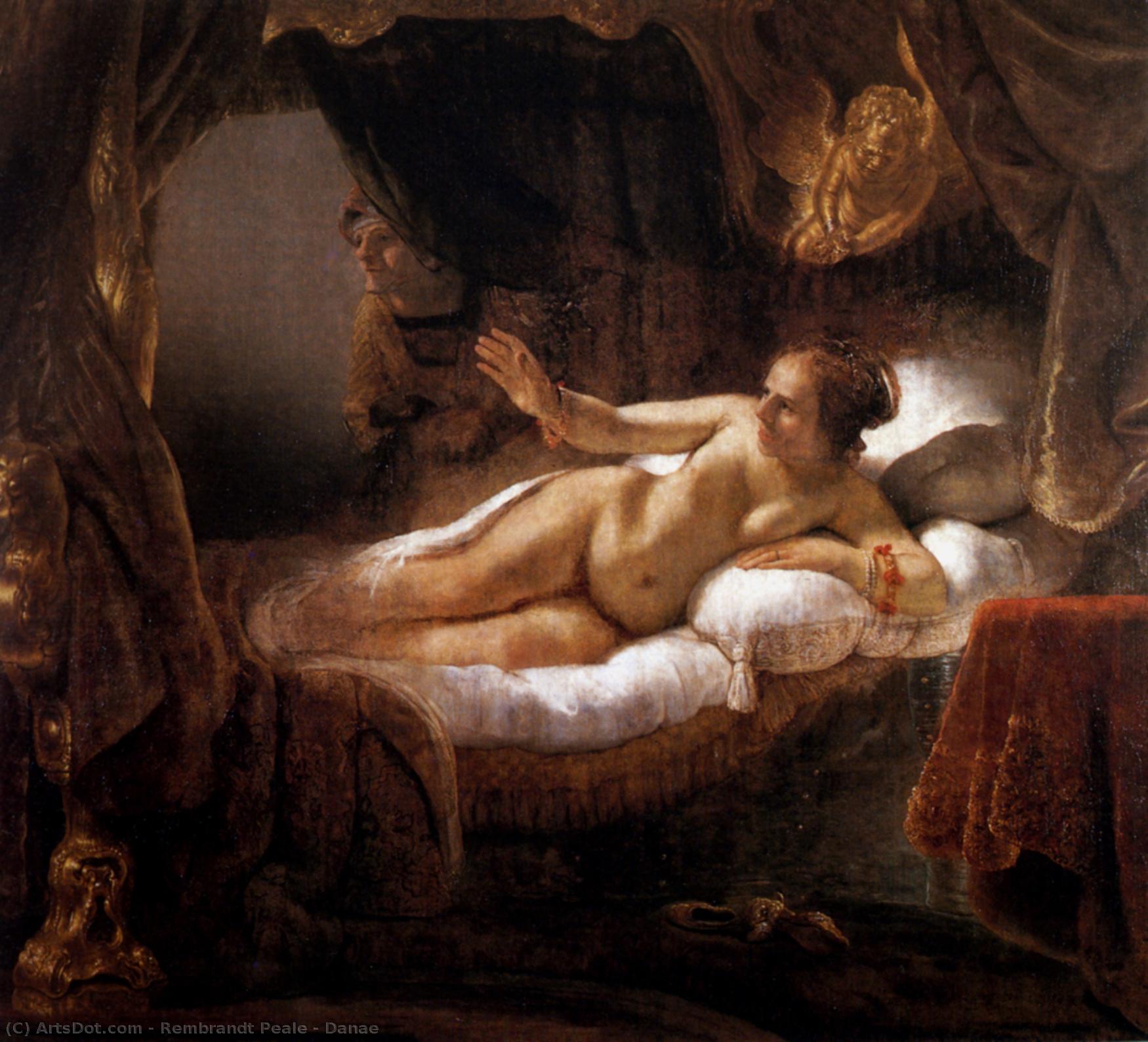
Danae
 Óleo sobre lienzo
- Arte de pared
- Baroque Painting
 1643
1643 203.0 x 185.0 cm
 Museo del Hermitage
Descubre 'Danae' de Rembrandt Peale: un drama barroco con la caída dorada de Zeus sobre Danaé. Chiaroscuro, mitología y lujo en una obra maestra del arte americano.
 Leer más
Descubre a Rembrandt Peale (1778-1860), artista neoclásico estadounidense famoso por retratos de Washington y Jefferson. ¡Explora su legado museístico y réplicas detalladas!
Adquiera una imagen digital de alta resolución y optimizada, muy superior a la vista previa en línea.
Cada archivo es preparado meticulosamente por nuestros especialistas internos mediante el uso de herramientas avanzadas y un experto retoque manual. Nos aseguramos de que cada imagen posea una claridad excepcional, una precisión cromática impecable y un detalle minucioso.
El archivo final se entrega por correo electrónico en un plazo de 72 horas, optimizado para su uso inmediato en entornos profesionales, editoriales y de impresión. Esta es la misma calidad en la que confían los estudios de diseño, las editoriales y las galerías de primer nivel.
Imagen Digital
Descarga un archivo de alta resolución para exhibición personal, impresión y proyectos creativos. ( Cambiar a formato impreso Encargar reproducción pintada a mano)
Incluido en cada pedido de imágenes digitales
Entrega digital experta, garantizada.
Al elegir TopImpressionists.com, no solo está adquiriendo una imagen; está recibiendo una obra de arte digital mejorada profesionalmente, elaborada con precisión y respaldada por una garantía de satisfacción. Esto es todo lo que incluye su pedido, automáticamente:

Entrega inmediata por email
Recibirá su archivo de imagen digital en alta resolución por correo electrónico en un plazo de 72 horas tras realizar su pedido, listo para su uso inmediato.

Archivo digital optimizado por IA
Su obra de arte se optimiza profesionalmente mediante herramientas avanzadas de IA y edición manual, garantizando el máximo detalle, claridad y precisión cromática.

Reenvío gratuito de por vida
¿Has borrado o perdido tu archivo por error? No te preocupes: te lo volveremos a enviar en cualquier momento, sin coste adicional.

Sin gastos de importación, siempre
Disfrute de su obra de arte al instante sin aduanas, aranceles ni gastos de envío; las descargas digitales siempre están libres de impuestos.

Garantía de precisión de color
Garantizamos que su imagen digital refleje los colores originales con la mayor fidelidad posible, mediante el uso de herramientas profesionales y gestión del color.

Garantía de satisfacción de 100 días
Si no está satisfecho con su imagen digital, la revisaremos o le reembolsaremos el 100% en un plazo de 100 días, sin preguntas.

100% Garantía de devolución de dinero
¿No está satisfecho? Obtenga un reembolso completo dentro de los 100 días posteriores a la recepción de su archivo digital, sin preguntas.

Descuentos por volumen
Compra 3 imágenes, ahorra 10% - Compra 5, ahorra 15% - Compra 10+, ahorra 20%. Ideal para proyectos creativos, galerías y agencias.
Danae: Unraveling Desire and Divine Intervention in Rembrandt Peale’s Baroque Masterpiece
Rembrandt Peale's "Danae," painted in 1643, is not merely a depiction of Greek mythology; it’s a profound exploration of desire, vulnerability, and the unsettling power of divine intervention. This oil on canvas work immediately captivates with its dramatic chiaroscuro – a masterful manipulation of light and shadow that plunges the scene into an atmosphere of both opulent luxury and impending doom. Peale skillfully employs a pyramidal composition, anchoring Danaë at its apex, drawing the viewer’s eye directly to her central position and amplifying her role as the focal point of this intensely emotional narrative.
The painting unfolds within a richly appointed interior, likely a chamber or private room, overflowing with draped fabrics in deep crimson and gold, ornate furniture hinting at immense wealth, and architectural details that speak to the power and status of its inhabitants. However, it’s not the material splendor that commands attention but rather the central scene: Danaë, reclining on a bed adorned with pillows and a sumptuous textile, partially veiled by a sheer curtain. Through this delicate barrier, we witness the descent of golden rain – Zeus in his guise as a divine gift, yet simultaneously a potent symbol of both fertility and potential corruption.
A Baroque Symphony of Light and Shadow
Peale’s technique is a testament to the Baroque period's emphasis on drama and realism. He achieves this through meticulous layering of paint – an impasto brushstroke that builds up thick areas, particularly in the drapery and the shimmering golden rain itself. This tactile quality invites us to almost feel the weight and texture of the fabrics, while the light source is dramatically directional, illuminating Danaë’s face and upper body with a radiant glow, contrasting sharply with the enveloping darkness behind her. The flattened perspective, prioritizing emotional impact over strict realism, further enhances this sense of heightened drama.
The artist's use of lines is equally deliberate. Flowing draperies create a dynamic movement, while sharp lines define the architectural elements and the edges of objects, adding structure to the otherwise fluid composition. The shapes are predominantly organic – mirroring the curves of the body and fabrics – yet punctuated by geometric forms in the architecture, creating a compelling visual dialogue between the natural and the constructed.
Symbolism and Mythological Resonance
Beyond its technical brilliance, “Danae” is rich in symbolic meaning. The golden rain, as mentioned, represents Zeus’s intervention, a gift bestowed upon Danaë while she was vulnerable and unprotected. This act of divine desire carries with it the inherent danger of corruption and transgression. The shadowy figure of Zeus, observing from behind, embodies the power and detachment of the gods, highlighting Danaë's position as both recipient and victim of their influence. The painting subtly explores themes of vulnerability, desire, and the consequences of challenging established order – a potent narrative rooted in the timeless mythology of Greek legend.
A Legacy of Likeness: Rembrandt Peale’s American Contribution
Rembrandt Peale (1778-1860) stands as a pivotal figure in the development of American art, building upon his father Charles Willson Peale's legacy. As a painter, museum founder, and scientist, Charles Willson Peale was instrumental in establishing America’s first public museum, fostering a culture of artistic appreciation and scientific inquiry. Rembrandt inherited this passion for both art and knowledge, becoming renowned for his stunning portraits – particularly those depicting prominent figures like George Washington and Thomas Jefferson. His style, influenced by French neoclassicism after a period in Paris, combined meticulous realism with an emotional depth that resonated deeply with the American public. “Danae,” therefore, represents not only a masterful example of Baroque technique but also a significant contribution to the burgeoning artistic landscape of early America, reflecting both European influences and a distinctly American sensibility.
Preguntas y respuestas
¿Cuál es el color dominante de "Danae" de Rembrandt Peale?
El Negro (#140a09) es el color predominante de "Danae" de Rembrandt Peale.
¿Puedo examinar "Danae" con más detalle?
"Danae" puede examinarse capa por capa en la página Rayos X de la obra, un visor inspirado en una mesa de luz de restauración que ofrece once lecturas ópticas de la imagen.
¿Qué sentimiento transmiten los colores de "Danae" de Rembrandt Peale?
"Danae" de Rembrandt Peale combina una paleta de Tonos tierra con un tono Melancólico.
Biografía del artista
Primeros años y formación
Rembrandt Peale, un artista y conservador de museo estadounidense, nació el 22 de febrero de 1778 en Bucks County, Pensilvania. Fue el tercer hijo de seis hijos sobrevivientes de su madre, Rachel Brewer, y su padre, Charles Willson Peale, un artista notable. El nombre de Rembrandt fue inspirado por el pintor y grabador holandés del siglo XVII Rembrandt Harmenszoon van Rijn. Su padre enseñó a todos sus hijos a pintar paisajes y retratos, y tutorizó a Rembrandt en las artes y las ciencias.Carrera artística
El estilo de Peale fue influenciado por el neoclasicismo francés después de una estancia en París a principios de los treinta. Comenzó a dibujar a la edad de 8 años y completó su primer autorretrato a los 13, mostrando su dominio temprano. La prolífica carrera de Peale incluyó más de 70 réplicas detalladas, incluyendo retratos de los presidentes George Washington y Thomas Jefferson.- Obras notables:
- George Washington (tipo portilla) (1795), ahora en la Galería Nacional de Retratos (Londres, Reino Unido), [https://TopImpressionists.com/@@/d44spg-rembrandt-peale-george-washington-(porthole-type)](pintura de 'Rembrandt Peale' | Rembrandt Peale: George Washington (tipo portilla))
- Hombre con barba (sin fecha), [https://TopImpressionists.com/@@/d329cc-rembrandt-peale-man-with-a-beard](pintura de 'Rembrandt Peale' | Rembrandt Peale: Hombre con barba)
- Retrato del Rev. John Pierpont (1785-1866), [https://TopImpressionists.com/@@/d4nqk5-rembrandt-peale-portrait-of-the-rev-john-pierpont-(1785-1866)](pintura de 'Rembrandt Peale' | Rembrandt Peale: Retrato del Rev. John Pierpont (1785-1866))
Museo y legado
Peale lanzó su primer museo en Baltimore, Maryland, el 15 de agosto de 1814, que posteriormente sirvió como el segundo ayuntamiento de Baltimore y finalmente fue restaurado como el Museo Peale. Su legado continúa siendo celebrado a través de sus numerosos retratos, ahora forman parte de varias colecciones de museos, incluyendo la Galería Nacional de Retratos (Washington, Estados Unidos), [https://TopImpressionists.com/@/rembrandt-peale](artista: Rembrandt Peale | 243 obras de arte).Conclusión
La prolífica carrera de Rembrandt Peale como artista y conservador de museo estadounidense ha dejado un impacto duradero en el mundo del arte. Sus numerosos retratos, incluyendo los de George Washington y Thomas Jefferson, continúan siendo celebrados por su significado histórico y valor artístico.
Rembrandt Peale
1778 - 1860 , Estados Unidos de América
Datos clave
- Artistas Que Influyeron:
- Rembrandt Harmenszoon van Rijn
- Charles Willson Peale
- Lugar De Nacimiento: Bucks County, EE. UU.
- Movimiento Artístico: Neoclasicismo
- Nacionalidad: Estadounidense
- Nombre Completo: Rembrandt Peale
- Notable Obras:
- George Washington (tipo portilla)
- Hombre con barba
- Retrato del Rev. John Pierpont