Ver en contexto
 Enviar
 Compartir
 Detalles
 Guía
Guía

 Descargar
 Similares
 Radiografía
 Presentación de diapositivas
 Q&A
Q&A Estadísticas
Interior

- 127.0 x 174.0 cm


Gillies’ artistic development was significantly shaped by his exposure to Cubist principles and the visionary aesthetics of Paul Klee.
 Ver más
Explore W.G. Gillies' Scottish landscapes & still lifes. Descubra sus influencias cubistas, sus vínculos con el grupo 1922, su legado en la Escuela de Edimburgo y su profundo impacto en el arte del siglo XX.
La obra de arte que se muestra en esta página está protegida por las leyes de propiedad intelectual, lo que significa que no podemos crear ni vender legalmente una reproducción idéntica. Esta protección se hace cumplir en virtud de acuerdos internacionales como el Convenio de Berna y por las leyes nacionales, incluidas aquellas establecidas por el Ley de derechos de autor de los EE. UU. - Título 17.
Este método cumple plenamente con las normativas de derechos de autor, ya que no implica la copia ni la duplicación de la obra protegida. En su lugar, se trata de una reinterpretación creativa: una nueva pintura influenciada por la original, pero que no es idéntica a ella.
Giclée / Impresión de arte
Impresiones giclée o en lienzo de calidad de museo con producción rápida y opciones de acabado flexibles. ( Comprar pintura hecha a mano Cambiar a imagen digital)




P118B €10

P118H €10

P118W €10

P438Z €10

P508JH €12

P508YH €12

P805H €10

P805Z €10

P919BZ €10

P919G €10

P919XJ €10

P959ZH €10

P968JZ €12

W106C €8

W218G €10

W218JH €8

W218Y €10

W307PJ €10

W316G €10

W316PJ €8

W316Y €10

W398PJ €8

W4111J €10

W500HY €15

W500JH €15

W692G €12

W849H €8

W940BG €15

W953PJ €8




Tamaño estándar
a medida
CM
INCH
Elija entre nuestros tamaños predefinidos que respetan las proporciones originales de la obra.
Loading sizes...

ancho
altura
Introduzca el ancho y el alto que necesite para adaptarse a su marco o pared. Una impresión solo puede recortarse, nunca hacerse más grande que la imagen original, por lo que un tamaño con una forma distinta perderá parte de la obra. Le enviaremos una maqueta digital para su aprobación antes de realizar cualquier impresión. La imagen que se muestra en esta página no refleja el recorte real; solo la maqueta lo hace.
Envío a todo el mundo () en 2 semanas en lugar de las 4/5 semanas estándar. (31 octubre)

Envío exprés gratuito a todo el mundo

Lienzo de lino de alta calidad

Seguro de envío total

Garantía de reembolso de aranceles aduaneros

Garantía de fidelidad cromática exacta

Política de devolución de 100 días (solo por defectos)

Garantía de devolución del 100% del dinero

Descuento por cantidad
 La opción de vidrio solo está disponible en tamaños inferiores a 110 cm.

Interior
Giclée / Impresión de arte
Dimensiones de la reproducción
-


Precio total final
€ 61
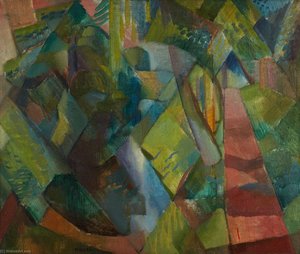
A Window Into Domestic Tranquility: Exploring William Gillies’ “Interior”
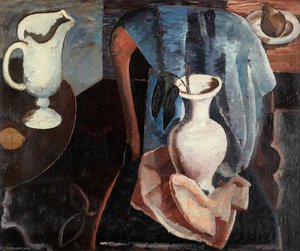
William George Gillies (1898 – 1973), a Scottish painter whose career spanned decades of artistic exploration, remains an enduring figure in British Modernism. His work embodies a quiet contemplation of everyday life, capturing the essence of domestic serenity with remarkable precision and subtle emotional resonance. “Interior,” completed in 1938, exemplifies Gillies’ distinctive approach – blending influences from Cézanne and Picasso with a burgeoning fascination for Paul Klee’s imaginative use of colour.
Subject Matter & Composition: The painting depicts a familial scene within a living room. A man and woman stand attentively near a window, bathed in diffused light—a deliberate choice that underscores the importance of natural illumination in Gillies' aesthetic vision. Two children are present, one playfully holding a ball, injecting an element of youthful energy into the otherwise tranquil composition. The arrangement is carefully considered, prioritizing balance and visual harmony.
Style & Technique: Gillies’ style leans heavily towards Cézanne’s geometric simplification and Picasso’s muted palette, yet he transcends mere imitation. He achieves a remarkable level of realism through meticulous observation—evident in the depiction of textures like the worn upholstery of the armchair and the smooth surface of the vases. However, unlike purely representational art, Gillies imbues his canvases with an underlying sense of abstraction. The fragmented planes of colour and form subtly suggest movement and depth, mirroring the complexities hidden beneath the surface of domestic life.
Historical Context: “Interior” was created during a period of significant artistic experimentation in Britain following World War I. Gillies’ engagement with Cubism reflected the broader intellectual currents of the time—a desire to challenge traditional perspectives and embrace new visual languages. Simultaneously, his encounter with Klee signaled a shift towards incorporating childlike spontaneity and emotional expression into his art – a reaction against the perceived rigidity of earlier artistic movements.
Symbolism & Emotional Impact: Beyond its formal qualities, “Interior” speaks to deeper themes of family connection and domestic comfort. The window serves as a visual metaphor for openness and contemplation—a reminder that beauty can be found in simplicity and stillness. The carefully placed objects – vases, bowls, apples – contribute to the overall atmosphere of refined elegance. Ultimately, Gillies’ masterpiece evokes a feeling of warmth, tranquility, and understated joy—capturing the quiet dignity of everyday life with an artist's unwavering eye.
Reproductions & Inspiration: Today, “Interior” continues to inspire artists and designers alike. High-quality reproductions allow viewers to appreciate Gillies’ masterful technique and capture the painting’s evocative mood. Consider incorporating elements of Cézanne’s geometric precision alongside Picasso’s muted palette into your own interior design projects – a testament to the enduring legacy of this remarkable Scottish painter.
Preguntas y respuestas
¿Es "Interior" de Sir William George Gillies una pintura, un dibujo o un grabado?
En el catálogo, "Interior" de Sir William George Gillies está clasificado como WallArt. Esta categoría permite localizar obras similares.
¿Qué relevancia tiene "Interior" dentro de Cubist Influences?
Dentro del movimiento Cubist Influences, "Interior" posee un nivel de popularidad Recognized.
¿Quién es el autor de "Interior" y a qué movimiento pertenece?
"Interior" fue creada por Sir William George Gillies bajo el estilo Cubist Influences. El artista y el movimiento definen la tradición de la obra.
Obras relacionadas


Biografía del artista
Sir William George Gillies: Una Vida en el Arte Escocés
Infancia y Educación Temprana
- Nacido: Haddington, East Lothian, Reino Unido, 1898.
- Gillies se matriculó inicialmente en la Escuela de Arte de Edimburgo, pero sus estudios fueron interrumpidos por el servicio en la Primera Guerra Mundial con los Ingenieros Reales.
- Tras la guerra, regresó para completar su educación en la Escuela de Arte de Edimburgo, donde se graduó y posteriormente se convirtió en un dedicado profesor allí durante más de 40 años.
Desarrollo Artístico e Influencias
- El viaje artístico de Gillies comenzó con una exploración del Cubismo después de estudiar bajo André Lhote en París (1923) y viajar a Italia (1924).
- Las obras tempranas, como “Dos Olla, Vaso y Fruta” (1933), demuestran esta influencia, mostrando una disposición inspirada en Cézanne con paletas de colores sobrias de Braque y Picasso.
- Un momento decisivo llegó en 1934 cuando se encontró con el trabajo de Paul Klee, lo que le inspiró a adoptar un uso más imaginativo del color y cualidades infantiles en sus composiciones.
- Gradualmente se alejó del Cubismo estricto, desarrollando un estilo distintivo arraigado en las tradiciones escocesas de paisajes y bodegones.
El Grupo 1922 y Espíritu Colaborativo
- En 1922, Gillies cofundó el “Grupo 1922” junto con otros artistas como William Crozier, William Geissler y William MacTaggart.
- Esta sociedad de exposiciones proporcionó una plataforma para que los artistas escoceses emergentes mostraran su trabajo en la New Gallery de Edimburgo durante diez años.
- El grupo fomentó un sentido de comunidad e innovación dentro del panorama artístico escocés.
Temas y Materia Prima
- Paisajes: Gillies es conocido por sus representaciones de las regiones de Lothian, Fife y Border de Escocia. Capturó la esencia de estos paisajes con un ojo sensible.
- Bodegones: Los bodegones fueron otro enfoque significativo, a menudo presentando cerámicas creadas por su hermana menor, Emma Smith Gillies, cuya muerte prematura en 1936 lo afectó profundamente.
- Retratos: Si bien experimentó con retratos al principio de su carrera, los paisajes y bodegones se convirtieron en sus temas principales.
Logros y Reconocimientos Importantes
- Gillies sirvió como Principal de la Escuela de Arte de Edimburgo desde 1959 hasta su jubilación en 1966.
- Su prolífica producción y dedicación a la enseñanza tuvieron una profunda influencia en las generaciones de pintores escoceses.
- Fue elegido Académico Real (RA), lo que significaba un reconocimiento significativo dentro del mundo del arte.
Significado Histórico e Legado
- Sir William George Gillies se considera uno de los pintores más importantes del siglo XX en Escocia.
- Su obra cierra la brecha entre el modernismo temprano y una identidad artística escocesa distintiva.
- Legado: Su influencia se extiende más allá de sus pinturas, dando forma a la dirección del arte escocés a través de su enseñanza y mentoría.
- Murió en 1973, dejando atrás un rico cuerpo de trabajo que sigue siendo celebrado por su belleza, sensibilidad y relevancia perdurable.

Sir William George Gillies
1898 - 1973 , United Kingdom
Datos clave
- Artistic Movement Or Style: Cubism, Scottish Colourists
- Artists Who Influenced This Artist:
- André Lhote
- Cézanne
- Braque
- Picasso
- Paul Klee
- Country: United Kingdom
- Date Of Birth: 1898
- Full Name: Sir William George Gillies
- Nationality: Scottish
- Notable Artworks:
- Young Boy with a Teapot
- Mediterranean Landscape with Overcast Sky
- Still Life – Yellow Jug and Striped Cloth
- The Origin of the Milky Way (after Jacopo Tintoretto)
- Place Of Birth: Haddington
Artículos relacionados

Capturing the Highlands: A Guide to Iconic Scottish Landscape Paintings and the Romantic Tradition
Explore the profound beauty of the Scottish Highlands through the lens of Romanticism. Discover the history, technique, and atmospheric mastery behind iconic landscape paintings from the Old Masters to museum-quality oil reproductions for collectors.

Maestría y Forma: Las 25 Mejores Obras de Paul Cézanne
Explora las 25 obras maestras de Paul Cézanne y su legado postimpresionista. ¡Descubre toda la colección en TopImpressionists.com!

Paisajes Románticos: 10 Obras Maestras que Definieron un Movimiento Artístico
Descubre los 10 paisajes románticos más influyentes de artistas como Caspar David Friedrich y Turner. Explora la belleza, el simbolismo y las técnicas del movimiento romántico. Reproducciones de arte exclusivas en TopImpressionists.com.

Las 25 mejores obras de John Constable: Un viaje al corazón del paisaje inglés
Descubre las 25 obras maestras de John Constable y su alma romántica. Explora la colección completa en TopImpressionists.com.

Sir William George Gillies: A Scottish Colourist's Journey Through Landscape & Abstraction
Explore the captivating world of Sir William George Gillies, a leading Scottish Colourist. Discover his journey from Cubism to iconic landscapes & still lifes. Expert insights for collectors and art enthusiasts.
Explore obras de arte organizadas por temas, estilos y características.