

Shown: · With its frame:
 Ver en contexto
 Enviar
 Compartir
 Detalles
 Guía
Guía

 Descargar
 Similares
 Radiografía
 Presentación de diapositivas
 Q&A
Q&A Estadísticas

€ 239
Reproducción al óleo hecha a mano
Óleo sobre lienzo pintado a mano en el tamaño y marco de su elección, realizado por encargo por nuestros artistas. ( Cambiar a impresiones Cambiar a imagen digital)
Size
·Tamaño estándar
a medida
CM
INCH
Elija entre nuestros tamaños predefinidos que respetan las proporciones originales de la obra.
Loading sizes...

ancho
altura
Indique el ancho y el alto que necesite para adaptarse a su marco o pared. Al tratarse de una obra pintada a mano, si requiere un tamaño con una proporción distinta, el artista puede pintar un poco más alrededor de la imagen o recortarla ligeramente; usted elige. Le enviaremos una maqueta digital para su aprobación antes de comenzar la pintura. La imagen que se muestra en esta página no refleja el resultado real; solo la maqueta lo hace.
 Leer más información
Finish
·
White €1

Blurside €1

Extended €1

P118B €10

P118H €10

P118W €10

P438Z €10

P508JH €12

P508YH €12

P805H €10

P805Z €10

P919BZ €10

P919G €10

P919XJ €10

P959ZH €10

P968JZ €12

W106C €8

W218G €10

W218JH €8

W218Y €10

W307PJ €10

W316G €10

W316PJ €8

W316Y €10

W398PJ €8

W4111J €10

W500HY €15

W500JH €15

W692G €12

W849H €8

W940BG €15

W953PJ €8

H24-GOLD €30

H24-SILVER €30

H36-GOLD €45

H36-SILVER €45
Shipped in a protective tube, ready for your own framer.
Above 105 cm the frame is shipped as a kit for a professional framer — read the details.
Extras
optionalWhat do the extras include?
Examples of what can be changed: Replace face with customer photo; Add pet (e.g., replace cat with dog); Include hidden message in background; Change background landscape or elements.
After order, TopImpressionists.com team will email client for instructions and provide a mockup preview
After order, TopImpressionists.com team will email client for instructions and provide a mockup preview
Envío a todo el mundo () en 3-4 semanas en lugar de las 5 semanas estándar. (31 octubre). Sin comprometer la calidad.
Barniz protector
Cartela
Detalles de la placa de bronce grabada
This elegant plaque features the artist's name and the title of the artwork, finely engraved for a timeless presentation.
It is made from bronze with a refined, elegant finish. The text is precisely laser-engraved for a sharp and permanent result. Measuring 9x2 cm, the plaque is compact yet easy to read. It's built to be durable and scratch-resistant, offering a professional, museum-quality look. Mounting is simple thanks to the included adhesive backing.
Detalles de la placa de acrílico transparente
The plaque includes essential engraved details such as the artist's name, the title of the artwork, the date it was created, the type of media used-like oil on canvas or watercolor-a brief description of the piece, and a QR code that links to the complete artwork information.
It is crafted from clear acrylic, offering a sleek, modern appearance. The text is UV-engraved in black to ensure strong visual contrast. With a size of 10x15 cm, it ensures optimal readability. It comes equipped with two metal hooks for secure wall mounting. The plaque is designed to be weather-resistant, making it suitable for various environments, and it includes interactive features that work seamlessly with smartphone scanning.
Detalles de la placa de acrílico negro
This elegant plaque includes engraved information such as the artist's name, the title of the artwork, the date it was created, the type of media used (like oil on canvas or watercolor), a short description of the artwork, and a QR code for quick access to more information.
The plaque itself is made from refined black acrylic with a premium finish. The text is laser-engraved in white for high contrast and readability. Its size is 10x15 cm, designed to be easy to read. It comes with two metal hooks for professional mounting. The design is sleek and fits any interior style. It is also weather-resistant and durable, with built-in digital integration for mobile compatibility.
La opción de vidrio solo está disponible en tamaños inferiores a 110 cm.
 La opción de vidrio solo está disponible en tamaños inferiores a 110 cm.
- Envío exprés gratuito a todo el mundo
- Lienzo de lino de alta calidad
- Seguro de envío total
- Garantía de reembolso de aranceles aduaneros
- Garantía de fidelidad cromática exacta
- Política de devolución de 100 días (solo por defectos)
- Garantía de devolución del 100% del dinero
- Descuento por cantidad


Descripción del objeto
Explore "Etude de têtes" by Thomas Couture – a captivating portrait reflecting Romanticism's influence and the artist’s innovative approach to painting. Discover its historical context and artistic significance.
Biografía del artista
Descubre a Thomas Couture (1815-1879), pintor francés clave del Romanticismo y Realismo. Maestro de Manet, explora sus obras históricas como 'Romans en la Decadencia' y su legado artístico.
About the painting
A Portrait of Contemplation: Unveiling the Layers of “Etude de têtes”
Thomas Couture’s “Etude de têtes,” a captivating study in portraiture, transcends mere likeness to become a profound meditation on identity and the complexities of human interaction. Painted circa 1850-1855 during the twilight years of the French Empire, this work embodies the burgeoning Realism that was challenging the dominance of Romanticism within the Parisian art world. It’s not simply a depiction of two men; it's an exploration of gaze, gesture, and the subtle dance between subject and observer – a visual poem brimming with quiet intensity.
The painting immediately draws the eye to the pair seated before us. Dressed in meticulously rendered 17th-century costumes—a rich velvet doublet for one man, a more subdued brocade robe for the other—they are presented as figures emerging from a bygone era. Their attire isn’t merely decorative; it's a deliberate choice that anchors them within a specific historical context, hinting at courtly intrigue and perhaps even a shared secret. The details of their clothing – the lace collars, the elaborate hats, the carefully positioned swords – speak volumes about status, profession, and the conventions of their time.
The Brushstroke and the Atelier: Couture’s Innovative Technique
Couture was a revolutionary figure in 19th-century painting. He deliberately rejected the rigid rules of the École des Beaux-Arts, establishing his own independent atelier—a space dedicated to fostering artistic freedom and experimentation. This commitment is vividly reflected in “Etude de têtes.” Couture’s brushwork is remarkably fluid and expressive, eschewing the smooth, polished surfaces favored by academic painters. Notice the loose, gestural strokes that define the contours of their faces, particularly the subtle shifts in light and shadow that capture the nuances of their expressions. He employed a technique he called “pointillé,” using small, distinct brushstrokes to build up color and texture—a method borrowed from Japanese prints, reflecting his fascination with Eastern art.
The composition itself is carefully constructed. The figures are positioned in a triangular arrangement, creating a sense of balance and stability while simultaneously suggesting a dynamic tension. Their eyes meet across the canvas, establishing a direct connection between the viewer and the subjects—a deliberate invitation to contemplate their shared moment. Couture’s use of color is equally restrained yet effective. He favors muted earth tones – browns, ochres, and grays – which lend the painting an air of solemnity and timelessness.
Symbolism and the Weight of Conversation
Beyond its technical merits, “Etude de têtes” resonates with layers of symbolic meaning. The act of conversation itself is laden with significance. What are these men discussing? Are they sharing a secret, debating an important matter, or simply enjoying each other’s company? Couture deliberately leaves the narrative ambiguous, allowing the viewer to project their own interpretations onto the scene. The slight furrow in one man's brow and the subtle turn of his head suggest a moment of contemplation—a pause within the flow of dialogue.
The painting can also be interpreted as an exploration of masculinity and social roles. The two men represent different facets of male identity – perhaps representing intellect and action, or formality and intimacy. Their attire and posture subtly reinforce these distinctions, inviting us to consider the complexities of gender dynamics within 19th-century society.
A Legacy of Innovation: Couture’s Enduring Influence
Thomas Couture's “Etude de têtes” stands as a testament to his artistic vision and his willingness to challenge convention. His work paved the way for later Realist painters, such as Manet, and helped to usher in a new era of artistic expression. Today, this captivating portrait continues to fascinate viewers with its quiet intensity, masterful technique, and profound exploration of human nature. It’s a piece that rewards careful observation and invites us to lose ourselves in the subtle nuances of a timeless conversation.
Preguntas y respuestas
¿Puedo ver una radiografía de "Etude de têtes (Titre d'usage)" de Thomas Couture?
La vista de rayos X de "Etude de têtes (Titre d'usage)" de Thomas Couture se encuentra en la página Radiografía de la obra: un examen interactivo de la imagen a través de once capas ópticas.
¿Qué paleta de colores utiliza "Etude de têtes (Titre d'usage)"?
La paleta de "Etude de têtes (Titre d'usage)" de Thomas Couture se describe como Earthy. Es una descripción concisa de los colores de la obra.
¿Qué lugar ocupa "Etude de têtes (Titre d'usage)" entre los temas recurrentes de Thomas Couture?
Entre los temas recurrentes de Thomas Couture —romanticism, rebellion, atelier, tradition, innovation, decadence, empires, new artistry— "Etude de têtes (Titre d'usage)" aporta su propio enfoque sobre portraits, men, conversation, costumes, 17th century, gold frame, heads.
Quick facts and art quiz
About Thomas Couture

Thomas Couture
1815 - 1879, Francia
Biografía del artista
temprana vida y educación
thomas couture, una figura destacada en el mundo del arte, nació el 21 de diciembre de 1815 en senlis, oise, francia. A la edad de 11 años, su familia se mudó a parís, donde estudiaría en la escuela industrial de artes y oficios (école des arts et métiers) y posteriormente en la école des beaux-arts.carrera artística
a pesar de enfrentar rechazos iniciales, couture perseveró y finalmente ganó el prestigioso premio de roma en 1837. Comenzó a exhibir sus cuadros históricos y de género en el salón de parís en 1840, obteniendo varias medallas por sus obras, incluyendo su obra maestra romanos durante la decadencia (1847). poco después de este éxito, couture abrió un taller independiente destinado a desafiar la école des beaux-arts formando a los mejores nuevos pintores históricos.enseñanza e influencia
la técnica innovadora de couture atrajo una atención significativa y recibió encargos del gobierno y de la iglesia para murales durante las décadas de 1840 y 1850. También enseñó a numerosos artistas notables, incluyendo édouard manet, henri fantin-latour, john la farge, pierre puvis de chavannes y karel javůrek.vida posterior y legado
en 1860, couture dejó parís para su ciudad natal de senlis, donde continuó enseñando a jóvenes artistas. Publicó un libro sobre sus ideas y métodos de trabajo, méthode et entretiens d'atelier, en 1867. esta obra también se tradujo como conversaciones sobre métodos de arte en 1879, el año de su fallecimiento.- vea las obras de thomas couture en TopImpressionists.com
- lea más sobre thomas couture en wikipedia
- explore el musée des beaux-arts de carcassonne, un museo que presenta obras de artistas franceses y europeos, incluyendo aquellos influenciados por el estilo de couture: descubriendo el musée des beaux-arts de carcassonne (francia)
Quick facts about Thomas Couture
- Estilo Artístico: Romanticismo y Realismo
- Fecha De Muerte: 30 de marzo de 1879
- Fecha De Nacimiento: 21 de diciembre de 1815
- Influenciado A:
- Édouard Manet
- Henri Fantin-Latour
- Pierre Puvis de Chavannes
- Lugar De Nacimiento: Senlis, Francia
- Nacionalidad: Francesa
- Nombre Completo: Thomas Couture
- Obras Notables:
- Romans durante la decadencia
- El duelo tras el baile enmascarado
- Un abogado camino al tribunal
Explore obras de arte organizadas por temas, estilos y características.

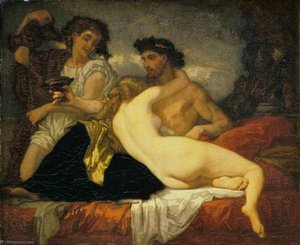


Thomas Couture
Etude de têtes (Titre d'usage)
() ·
With its frame: · Hand-painted in oil on linen
Total