


 Vista previa
 Compartir
 Compartir
 Ver detalles
 Guía
Guía

 Descargar
 Ver artículos similares
 Radiografía
 Presentación de diapositivas
 Estadísticas
Baco y Ariadna
 Óleo sobre lienzo
- Arte de pared
- Manierismo
 1523
1523- Renacimiento
 176.0 x 191.0 cm
El 'Baco y Ariadna' de Tiziano: Una vibrante obra maestra del Renacimiento. Explora el amor, la mitología y el estilo manierista en este icónico cuadro de óleo de 1523. Descubre su rico simbolismo y su belleza cautivadora.
 Leer más
Tiziano Vecellio, conocido como Titian, fue el pintor más destacado de la pintura veneciana del siglo XVI y pionero en el uso del color, dejando un legado artístico eterno.
Giclée / Impresión de arte
Impresiones giclée o en lienzo de calidad de museo con producción rápida y opciones de acabado flexibles. ( Encargar reproducción pintada a mano Ver versión en imagen digital)




P118B €10

P118H €10

P118W €10

P438Z €10

P508JH €12

P508YH €12

P805H €10

P805Z €10

P919BZ €10

P919G €10

P919XJ €10

P959ZH €10

P968JZ €12

W106C €8

W218G €10

W218JH €8

W218Y €10

W307PJ €10

W316G €10

W316PJ €8

W316Y €10

W398PJ €8

W4111J €10

W500HY €15

W500JH €15

W692G €12

W849H €8

W940BG €15

W953PJ €8




Estándar
personalizado
CM
INCH
Elija entre nuestros tamaños predefinidos que respetan las proporciones originales de la obra.
Loading sizes...

ancho
altura
Introduzca el ancho y el alto que necesite para adaptarse a su marco o pared. Una impresión solo puede recortarse, nunca hacerse más grande que la imagen original, por lo que un tamaño con una forma distinta perderá parte de la obra. Le enviaremos una maqueta digital para su aprobación antes de realizar cualquier impresión. La imagen que se muestra en esta página no refleja el recorte real; solo la maqueta lo hace.
Envío a todo el mundo () en 2 semanas en lugar de las 4/5 semanas estándar. (24 octubre)

Envío exprés gratuito a todo el mundo

Lienzo de lino de alta calidad

Seguro de envío completo

Garantía de reembolso de impuestos aduaneros

Garantía de fidelidad cromática exacta

Política de devolución de 100 días (solo por defectos)

Garantía de devolución del 100% del dinero

Oferta por volumen
 La opción de vidrio solo está disponible en tamaños inferiores a 110 cm.

Baco y Ariadna
Giclée / Impresión de arte
Tamaño de la reproducción
-


Precio total
€ 61
Una Obra Maestra Renacentista de Amor y Abandono
Pintada en 1523 por Tiziano (Tiziano Vecellio), esta monumental obra de arte captura un momento crucial de la mitología clásica – el encuentro entre Baco, el dios del vino y los festines, y Ariadna, abandonada en la isla de Naxos. Más que una simple ilustración de un mito, es una vibrante exploración de la pasión, la intervención divina y el poder embriagador de las emociones.
Narrativa Mitológica y Contexto Histórico
La escena representa el desengaño de Ariadna tras ser abandonada por Pítamo, contrastado con la repentina llegada de Baco entre una frenética procesión. Encargada para Alfonso I de Este, Duque de Ferrara, como parte de una serie decorando el Camerino d'Alabastro, esta pintura refleja la fascinación renacentista por la literatura clásica y su potencial alegórico. Originalmente destinada a llenar un dormitorio privado, fue diseñada para inspirar contemplación y evocar una sensación de grandeza.
Una Sinfonía de Color y Técnica
La maestría de Tiziano es evidente en su impresionante uso del color. Drapajes carmesíes ricos, dorados luminosos y azules fríos crean una interacción dinámica que atrae la mirada a través del lienzo. Empleó capas de pintura al óleo con técnicas de temple magistrales, logrando una profundidad y luminosidad notables. El trazo visible del pincel añade textura y vitalidad, mientras que el dramático claroscuro – el contraste entre luz y sombra – intensifica la intensidad emocional de la escena.
Innovación Estilística: Abrazando el Manierismo
Si bien está arraigada en los principios del Renacimiento, esta obra muestra características emergentes del Manierismo. Observe las figuras alargadas, las poses exageradas y una sutileza artificial que se desvía de un naturalismo estricto. Tiziano prioriza la transmisión de emoción y movimiento sobre la precisión anatómica, lo que resulta en una composición que se siente tanto dinámica como onírica.
Simbolismo y Resonancia Emocional
Más allá de su narrativa, la pintura está llena de simbolismo. Los guepardos que arrastran al carro de Baco eran símbolos de estatus exóticos para el Duque de Ferrara, mientras que la constelación de Ariadna sobre su cabeza presagia su inmortalización. Profundamente, la obra de arte explora temas de abandono, rescate y amor transformador. La energía frenética de los seguidores de Baco encarna una entrega extática, contrastando con el miedo inicial y la eventual aceptación de la gracia divina de Ariadna.
Llevando la Grandiosidad Renacentista a tu Espacio
Esta obra icónica es más que un cuadro; es una ventana a la brillantez artística del Renacimiento italiano. Una reproducción permite infundir tu hogar u oficina con su belleza atemporal, su cautivador esquema de colores y su profunda profundidad emocional. Ya sea buscando una pieza llamativa para un salón grande o un punto focal inspirador para un estudio, esta obra de arte promete elevar cualquier interior.
Preguntas y respuestas
¿Qué ubicación se adapta mejor al formato de "Baco y Ariadna" de Tiziano?
Con su formato Cuadrado, se sugiere una reproducción de "Baco y Ariadna" para un Salón principal.
¿Qué alias o nombres alternativos tiene Tiziano?
Otros nombres registrados para Tiziano, creador de "Baco y Ariadna", incluyen Ticiano.
¿Qué tamaño debería elegir para imprimir "Baco y Ariadna" en mi habitación?
La combinación recomendada para "Baco y Ariadna" de Tiziano: una impresión de Gran formato en un/a Salón principal.
Biografía del artista
Tiziano Vecellio: The Venetian Titan
Tiziano Vecellio, universally known as Titian, stands as a monumental figure of the Italian Renaissance—perhaps its most celebrated colorist and a master who redefined the possibilities of oil painting. Born around 1490 in Pieve di Cadore, nestled amidst the dramatic landscapes of the Venetian Alps, his journey from humble beginnings to international acclaim is a testament to prodigious talent and an unwavering dedication to artistic innovation. The exact date of Titian’s birth remains elusive, debated by scholars, but contemporary sources and his early stylistic development converge on estimates between 1488 and 1490.
His father, Gregorio Vecellio, was a military man—a profession that instilled in young Tiziano a disciplined spirit and an appreciation for observation. Lucia, his mother, nurtured him with affection and fostered his artistic inclinations. Recognizing their sons’ potential, the family arranged for Tiziano and Francesco to apprentice with Sebastiano Zuccato, a mosaicist—a decision that would irrevocably alter the course of art history. This formative experience exposed them to the meticulous craftsmanship required for creating intricate decorative panels, shaping their aesthetic sensibilities from an early age.
Titian’s artistic training continued under Giovanni Bellini, who was then Venice’s most prominent painter and a revered teacher. Bellini’s workshop fostered a tradition of Venetian painting characterized by lyrical beauty and subtle tonal harmonies—influences that would permeate Titian’s oeuvre throughout his life. Notably, he collaborated closely with Giorgione—a fellow Venetian artist whose groundbreaking style championed atmospheric perspective and psychological depth.
A Master's Early Style: Giorgione's Influence
The partnership between Titian and Giorgione proved pivotal in shaping Titian’s artistic vision. Their collaboration on the exterior frescoes for the Fondaco dei Tedeschi—a bustling trading post frequented by German merchants—established a stylistic precedent that would endure for decades. The paintings showcased a remarkable sensitivity to light and color, reflecting Giorgione’s pioneering exploration of atmospheric perspective—a technique that aimed to convey the illusion of depth and realism.
Titian’s early works embody this Giorgionesque aesthetic—characterized by hazy landscapes, muted palettes, and an emphasis on capturing mood rather than precise detail. Paintings like *A Man with a Quilted Sleeve* exemplify his burgeoning talent for portraiture, skillfully portraying not only the physical likeness of his subjects but also their inner character—a hallmark of Venetian Renaissance painting.
Expanding Horizons: Bellini's Legacy and Artistic Maturity
Following Giorgione’s untimely death in 1510, Titian continued his artistic development under Giovanni Bellini’s guidance—though Bellini himself was gradually withdrawing from active painting. This period witnessed a gradual shift toward bolder compositions and more assertive color palettes—reflecting Titian’s growing confidence as an independent artist.
His monumental altarpiece for Santa Maria Gloriosa dei Frari—commissioned in 1518—marked a watershed moment in Venetian painting history. The ambitious undertaking demanded mastery of technique, compositional innovation, and chromatic brilliance—qualities that Titian possessed in abundance. This masterpiece cemented his reputation as Venice’s foremost painter and established him as a pioneer of monumental fresco painting.
The Venetian School's Dominance
Titian’s influence extended far beyond his own lifetime, shaping the artistic landscape of Europe for centuries to come. He became a cornerstone of the Venetian school—a movement that championed coloristic realism and psychological depth—inspiring artists across generations. From Rubens and Rembrandt to Delacroix and Monet, Titian’s techniques—particularly his innovative layering of pigments and his masterful manipulation of light—became models for aspiring painters.
His legacy endures not only in the masterpieces he created but also in the enduring fascination with color and emotion that characterizes Venetian art. Tiziano Vecellio—Titian—remains an unparalleled figure in the history of painting, a testament to artistic genius and an embodiment of the Renaissance spirit.

Tiziano
1490 - 1576 , Italia
Datos clave
- Artistic Movement Or Style: Renacimiento Veneciano
- Artists Or Movements Influenced By This Artist:
- Rubens
- Delacroix
- Artists Who Influenced This Artist:
- Giovanni Bellini
- Giorgione
- Date Of Birth: c. 1490
- Date Of Death: 1576
- Full Name: Tiziano Vecellio
- Nationality: Italiano
- Notable Artworks:
- La Schiavona
- Venus de Urbino
- Place Of Birth: Pieve di Cadore, Italia
Artículos relacionados
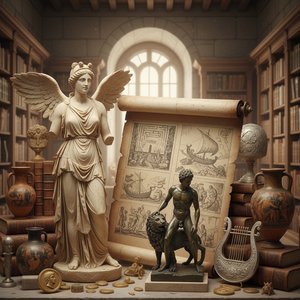
Timeless Legends: A Curated Guide to the Eternal Allure of Mythological Masterpieces
Embark on a sophisticated journey through the eternal allure of mythological art. Discover how master painters breathe life into ancient legends, from Greek deities to Baroque masterpieces, and learn to curate these timeless narratives within your own exquisite art collection.

Echoes of Olympus: Mythological Narratives in Western Art Through the Ages
Explore the captivating history of mythological narratives in Western art! From ancient Greece to modern masterpieces, discover iconic artworks & symbolism. Expert analysis and high-quality reproductions at TopImpressionists.

Los 25 Tesoros del Hermitage: Arte Clásico para tu Hogar | TopImpressionists
Descubre los 25 tesoros del Museo Hermitage de San Petersburgo. Explora la historia y belleza de Rembrandt, Leonardo da Vinci y más. Reproducciones de arte en TopImpressionists.com para decorar tu hogar con obras maestras.

Titian: Innovation, Technique & the Venetian Renaissance Portrait Tradition
Explore the revolutionary techniques & enduring legacy of Titian, the master of Venetian Renaissance portraiture. Discover insights for collectors & appreciate his impact on art history.

Los 25 Tesoros del Uffizi: Arte Renacentista para tu Hogar | TopImpressionists
Descubre los 25 tesoros del Uffizi en Florencia: Botticelli, Leonardo da Vinci y más. Explora la historia, el arte renacentista y encuentra reproducciones de alta calidad para tu hogar. ¡Inspírate con TopImpressionists.com!
Explore obras de arte organizadas por temas, estilos y características.


