Vista previa
 Compartir
 Compartir
 Ver detalles
 Guía
Guía

 Descargar
 Ver artículos similares
 Radiografía
 Presentación de diapositivas
 Estadísticas
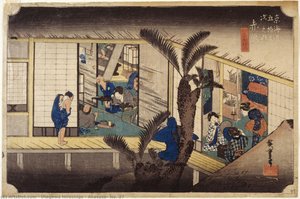
Wakasa


Utagawa Hiroshige’s “Wakasa” depicts a picturesque fishing boat traversing calm waters, populated by thirteen figures enjoying the day. Inspired by the Fifty-Three Stations of the Tokaido highway, this masterpiece embodies Hiroshige's signature style—a harmonious blend of observation and artistic interpretation—influencing Impressionist painters like Monet and Van Gogh.
 Leer más
Descubre la serenidad de Hiroshige (1797-1858), último gran maestro ukiyo-e japonés. Explora sus paisajes icónicos, estilo poético e influencia en el Impresionismo.
Giclée / Impresión de arte
Impresiones giclée o en lienzo de calidad de museo con producción rápida y opciones de acabado flexibles. ( Encargar reproducción pintada a mano Ver versión en imagen digital)




P118B €10

P118H €10

P118W €10

P438Z €10

P508JH €12

P508YH €12

P805H €10

P805Z €10

P919BZ €10

P919G €10

P919XJ €10

P959ZH €10

P968JZ €12

W106C €8

W218G €10

W218JH €8

W218Y €10

W307PJ €10

W316G €10

W316PJ €8

W316Y €10

W398PJ €8

W4111J €10

W500HY €15

W500JH €15

W692G €12

W849H €8

W940BG €15

W953PJ €8




Estándar
personalizado
CM
INCH
Elija entre nuestros tamaños predefinidos que respetan las proporciones originales de la obra.
Loading sizes...

ancho
altura
Introduzca el ancho y el alto que necesite para adaptarse a su marco o pared. Una impresión solo puede recortarse, nunca hacerse más grande que la imagen original, por lo que un tamaño con una forma distinta perderá parte de la obra. Le enviaremos una maqueta digital para su aprobación antes de realizar cualquier impresión. La imagen que se muestra en esta página no refleja el recorte real; solo la maqueta lo hace.
Envío a todo el mundo () en 2 semanas en lugar de las 4/5 semanas estándar. (22 octubre)

Envío exprés gratuito a todo el mundo

Lienzo de lino de alta calidad

Seguro de envío completo

Garantía de reembolso de impuestos aduaneros

Garantía de fidelidad cromática exacta

Política de devolución de 100 días (solo por defectos)

Garantía de devolución del 100% del dinero

Oferta por volumen
 La opción de vidrio solo está disponible en tamaños inferiores a 110 cm.

Wakasa
Giclée / Impresión de arte
Tamaño de la reproducción
-


Precio total
€ 60
A Poetic Vision of Edo Japan: The Life and Art of Utagawa Hiroshige
Utagawa Hiroshige (1797-1858) stands as an unparalleled luminary in the realm of *ukiyo-e*, or “pictures of the floating world,” forever etching his name into the annals of Japanese art history. More than merely capturing visual impressions, Hiroshige possessed a singular ability to distill the spirit of Edo Japan—a period characterized by burgeoning urban growth, social stratification, and an evolving cultural landscape—into breathtaking landscapes imbued with profound emotional resonance. His artistic journey began humbly, apprenticed under Utagawa Toyohiro, mastering the intricate craft of woodblock printing while simultaneously cultivating a deeply personal aesthetic rooted in observation and contemplation. This formative experience would ultimately shape his distinctive style and propel him to become Japan’s final great *ukiyo-e* master, leaving an indelible mark on both Japanese artistic tradition and its subsequent influence on Western art movements like Impressionism.- Subject Matter & Composition: Hiroshige's canvases rarely depict grand narratives or heroic figures; instead, he favored serene scenes of nature—mountain vistas, riverscapes, cherry blossoms in bloom—often populated by solitary travelers or fishermen. These subjects were deliberately chosen to evoke feelings of tranquility and contemplation, mirroring the philosophical currents prevalent during his time.
- Style & Technique: Hiroshige’s signature style is defined by its meticulous attention to detail and masterful use of perspective—particularly *ma*, or negative space—to create a sense of depth and atmosphere. He employed a technique known as *bokashi*, blending tonal gradations with subtle shading to achieve remarkable realism while simultaneously conveying an ethereal quality.
The Fifty-Three Stations of the Tōkaidō: A Journey Through Time & Landscape
Perhaps Hiroshige’s most celebrated series, “The Fifty-Three Stations of the Tōkaidō,” exemplifies his artistic prowess and captures the essence of Edo Japan's commercial artery. This ambitious undertaking involved painstakingly documenting each station along the Tokaido highway—the main route connecting Kyoto and Tokyo—resulting in sixty-six prints that offer a panoramic view of the region’s topography, flora, and fauna. Each print is rendered with breathtaking precision, capturing not only the physical environment but also the subtle nuances of daily life—farmers tending their fields, merchants traversing the road, pilgrims embarking on sacred pilgrimages.- Symbolism & Emotion: Hiroshige’s landscapes are laden with symbolic meaning. Cherry blossoms represent impermanence and beauty fleetingly grasped; mountains symbolize strength and resilience—themes central to Zen Buddhism, which profoundly influenced Japanese culture during Hiroshige's lifetime.
- Influence on Impressionism: Hiroshige’s innovative use of *ma* and tonal gradations captivated European artists like Claude Monet and Vincent van Gogh who were experimenting with new approaches to painting. They recognized in Hiroshige’s work a kindred spirit—a desire to capture the immediacy of experience and convey emotion through color and light, mirroring the core tenets of Impressionism.
Hiroshige's Legacy: An Enduring Aesthetic Influence
Despite the decline of *ukiyo-e* by the late 19th century due to shifting economic conditions and Western artistic dominance, Hiroshige’s influence continues to resonate today. His landscapes remain admired for their beauty, tranquility, and masterful execution—inspiring artists and designers alike. Reproductions of his prints adorn homes and galleries worldwide, testifying to the enduring power of his vision—a testament to a Japanese artist who transformed landscape painting into an art form capable of conveying profound emotional depth and capturing the sublime spirit of Edo Japan.Preguntas y respuestas
¿Qué atmósfera transmite "Wakasa"?
El ambiente general de "Wakasa" de Utagawa Hiroshige es Serene. Esta atmósfera describe la esencia general de la obra.
¿Cuál es el tamaño de impresión recomendado para "Wakasa" de Utagawa Hiroshige?
Se sugiere una reproducción de Large para "Wakasa" de Utagawa Hiroshige. El tamaño puede ajustarse manteniendo las proporciones.
¿Dónde puedo comprar una imagen digital de "Wakasa" de Utagawa Hiroshige?
"Wakasa" está disponible como descarga de una imagen digital en alta resolución, que puede adquirirse directamente en su página de Imagen Digital.
Biografía del artista
biografía de un ícono del arte japonés
Utagawa Hiroshige, un renombrado artista ukiyo-e japonés, vivió de 1797 a 1858. Es ampliamente considerado como el último gran maestro de este género tradicional. La obra de Hiroshige se caracteriza por su enfoque poético y ambiental, lo que la distingue de las impresiones más audaces y formales de sus contemporáneos.estilo artístico y técnicas
El uso del color por parte de Hiroshige fue sutil pero esencial en sus grabados. A menudo empleaba múltiples impresiones en el mismo área, utilizando la técnica de bokashi (gradación de color), que era laboriosa pero resultó en un efecto visual único. Sus obras más famosas incluyen las cincuenta y tres estaciones del Tōkaidō y las cien vistas famosas de Edo, ambas mostrando su dominio de las series de paisajes.influencia en el arte occidental
La obra de Hiroshige tuvo un profundo impacto en el arte occidental, particularmente durante la tendencia japonista a finales del siglo XIX. Artistas como Édouard Manet y Claude Monet fueron influenciados por los grabados japoneses, mientras que los postimpresionistas como Vincent van Gogh coleccionaron y estudiaron las composiciones de Hiroshige.legado y desarrollo
Tras la muerte de Hiroshige en 1858, el género ukiyo-e experimentó un rápido declive debido a la occidentalización tras la restauración Meiji de 1868. Sin embargo, su influencia en el arte occidental sigue siendo significativa, con muchos artistas que continúan inspirándose en sus obras.- el movimiento artístico ukiyo-e - descubre más sobre el género que definió la obra de Hiroshige.
- ukiyo-e en wikipedia - explora la historia y la importancia del ukiyo-e en el arte japonés.
- museo de arte fuji - descubre un museo renombrado que exhibe tanto el arte japonés como el occidental, incluyendo obras inspiradas en el estilo de Hiroshige.

Utagawa Hiroshige
1797 - 1858 , Japón
Datos clave
- Artistas Que Influyeron: ['Katsushika Hokusai']
- Estilo Artístico: Ukiyo-e
- Fecha De Fallecimiento: 1858
- Fecha De Nacimiento: 1797
- Influencia En Artistas:
- Édouard Manet
- Claude Monet
- Vincent van Gogh
- Lugar De Nacimiento: Tokio, Japón
- Nacionalidad: Japonés
- Nombre Completo: Utagawa Hiroshige
- Obras Notables:
- Las 53 estaciones del Tokaido
- 100 vistas famosas de Edo
Artículos relacionados

Zen on Canvas: The Timeless Artistry and Spiritual Depth of Japanese Landscape Painting
Explore the profound beauty of Japanese landscape painting. From Hokusai's iconic vistas to Zen-inspired compositions, discover the spiritual depth and historical mastery of Ukiyo-e art in this expert cultural retrospective.

Ephemeral Landscapes: Hiroshige's Poetics of Transient Beauty in Edo Japan
Explore the captivating world of Utagawa Hiroshige's ukiyo-e landscapes. Discover his artistic innovations, influence on Western art, and the poetics of transient beauty in Edo period Japan. A guide for collectors & enthusiasts.

Katsushika Hokusai: Las 25 Obras Maestras del Ukiyo-e que Transformaron el Arte Japonés | TopImpressionists
Descubre las 25 obras maestras de Katsushika Hokusai, el genio del ukiyo-e. Explora 'La Gran Ola', paisajes japoneses y su impacto en el arte moderno. Reproducciones de alta calidad para tu hogar en TopImpressionists.com.

Ukiyo-e's Poetic Visionary: Hiroshige Ando & the Transformation of Landscape in 19th-Century Japan
Explore the life & art of Ando Hiroshige, Japan's last great ukiyo-e master. Discover his iconic landscapes, poetic style, and profound influence on Western Impressionism. Learn about The Fifty-Three Stations & more!

Beyond the Great Wave: The High-Impact Visual Revolution of Japanese Landscape Art
Go beyond Hokusai's Great Wave. Explore the high-impact, graphic world of Japanese Ukiyo-e landscapes and urban prints. Discover how these bold, vibrant woodblock masterpieces continue to shape modern pop culture and contemporary design aesthetics.
Explore obras de arte organizadas por temas, estilos y características.