Ver en contexto
 Enviar
 Compartir
 Detalles
 Guía
Guía

 Descargar
 Similares
 Radiografía
 Presentación de diapositivas
 Preguntas y respuestas
 Estadísticas
Untitled

- 47.0 x 63.0 cm


 Ver más
Giclée / Impresión de arte
Impresiones giclée o en lienzo de calidad de museo con producción rápida y opciones de acabado flexibles. ( Comprar pintura hecha a mano Cambiar a imagen digital)




P118B €10

P118H €10

P118W €10

P438Z €10

P508JH €12

P508YH €12

P805H €10

P805Z €10

P919BZ €10

P919G €10

P919XJ €10

P959ZH €10

P968JZ €12

W106C €8

W218G €10

W218JH €8

W218Y €10

W307PJ €10

W316G €10

W316PJ €8

W316Y €10

W398PJ €8

W4111J €10

W500HY €15

W500JH €15

W692G €12

W849H €8

W940BG €15

W953PJ €8




Tamaño estándar
a medida
CM
INCH
Elija entre nuestros tamaños predefinidos que respetan las proporciones originales de la obra.
Loading sizes...

ancho
altura
Introduzca el ancho y el alto que necesite para adaptarse a su marco o pared. Una impresión solo puede recortarse, nunca hacerse más grande que la imagen original, por lo que un tamaño con una forma distinta perderá parte de la obra. Le enviaremos una maqueta digital para su aprobación antes de realizar cualquier impresión. La imagen que se muestra en esta página no refleja el recorte real; solo la maqueta lo hace.
Envío a todo el mundo () en 2 semanas en lugar de las 4/5 semanas estándar. (4 noviembre)

Envío exprés gratuito a todo el mundo

Lienzo de lino de alta calidad

Seguro de envío total

Garantía de reembolso de aranceles aduaneros

Garantía de fidelidad cromática exacta

Política de devolución de 100 días (solo por defectos)

Garantía de devolución del 100% del dinero

Descuento por cantidad
 La opción de vidrio solo está disponible en tamaños inferiores a 110 cm.

Untitled
Giclée / Impresión de arte
Dimensiones de la reproducción
-


Precio total final
€ 62
The Soulful Geometry of Wassily Kandinsky’s Untitled
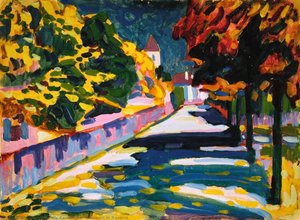
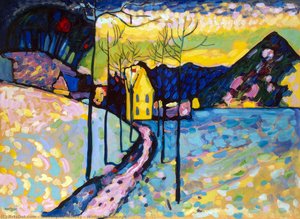
Wassily Kandinsky's “Untitled,” created in 1915 during a pivotal moment in his artistic evolution, isn’t merely a painting; it’s an invitation to a realm beyond the visible. This watercolor, measuring 47 x 63 cm, pulsates with a vibrant energy born from a radical departure from traditional representation – a cornerstone of Kandinsky's pioneering work in abstract art. More than just colors arranged on paper, this piece embodies his deeply held belief that art should directly evoke emotions and bypass the intellect, speaking instead to the viewer’s soul. It’s a testament to the burgeoning movement he helped define: Abstract Art, a courageous rejection of mimetic representation in favor of pure form and color as expressive vehicles. The painting's intricate patterns aren’t decorative; they are meticulously constructed visual rhythms designed to stimulate feeling and create a dynamic composition that seems to breathe with an inner life.A Pioneer’s Vision: Kandinsky and the Language of Art
Kandinsky’s artistic philosophy stemmed from his conviction that art could transcend the limitations of depicting reality. He sought to develop a new “language of art,” one where shapes, colors, and lines would communicate directly with the viewer's subconscious. This wasn’t about illustrating an object; it was about expressing an experience – joy, sorrow, longing, or perhaps even spiritual awakening. “Untitled” perfectly exemplifies this approach. The swirling forms, the bold color choices—particularly the interplay of blues, yellows, and reds—are not meant to represent anything concrete but rather to trigger specific emotional responses within the observer. His early influences, including Monet’s Impressionism and the music of Richard Wagner, profoundly shaped his desire to create a visual equivalent of musical harmony – a composition where colors and forms interact to produce an emotive effect. The painting's creation coincided with Kandinsky’s exploration of spirituality and his belief in the power of art to connect individuals to something greater than themselves.Watercolor’s Dance: Technique and Emotional Depth
The choice of watercolor as the medium for “Untitled” is crucial to understanding its emotional impact. Watercolor, known for its inherent fluidity and unpredictable nature, allowed Kandinsky to achieve a remarkable level of subtlety and nuance. The washes of color blend seamlessly, creating an ethereal quality that feels both spontaneous and carefully considered. Unlike the sharp lines of earlier works, this piece revels in soft edges and hazy transitions, mirroring the way emotions often bleed into one another. This technique isn’t simply about aesthetic beauty; it's a deliberate strategy to evoke a sense of dreamlike atmosphere and psychological depth. The layering of colors creates an illusion of movement and vibration, as if the painting itself is alive with energy. The artist masterfully utilizes the watercolor’s transparency to build up layers of color, creating a rich tapestry of visual sensation.A Legacy Preserved: Exhibition, Collection, and Reproductions
“Untitled” stands as one of many remarkable works housed in prestigious institutions worldwide, including The Solomon R. Guggenheim Museum in New York City – a fitting home for an artist who fundamentally challenged the conventions of art history. Kandinsky’s influence extends far beyond his own lifetime; he is considered a key figure in the development of abstract art and inspired generations of artists, including Sir Terry Frost, whose own explorations of color and form owe a significant debt to Kandinsky's pioneering work. Today, reproductions of “Untitled” are available through platforms like TopImpressionists.com, offering art enthusiasts the opportunity to bring this iconic piece into their homes. These meticulously crafted oil painting reproductions capture not only the visual essence of the original but also its emotional power, allowing viewers to experience Kandinsky’s vision firsthand. The availability of high-quality reproductions ensures that this groundbreaking work continues to inspire and resonate with audiences around the globe.Preguntas y respuestas
¿Qué tan armoniosos son los colores de "Untitled" de Wassily Wassilyevich Kandinsky?
"Untitled" de Wassily Wassilyevich Kandinsky presenta una armonía de color Unified Palette.
¿De qué país es la obra del Abstract Expressionism "Untitled"?
La obra de Abstract Expressionism "Untitled" fue realizada por un artista nacido en Rusia.
¿En qué estancia encaja mejor "Untitled" de Wassily Wassilyevich Kandinsky, considerando su paleta de colores?
Los colores de la paleta Pastels de "Untitled" de Wassily Wassilyevich Kandinsky armonizan con su espacio recomendado: un Living Room.
Biografía del artista
Wassily Wassilyevich Kandinsky: Pionero de la Abstracción
- Nacido: 16 de diciembre de 1866, Moscú, Rusia
- Fallecido: 13 de diciembre de 1944
- Nacionalidad: Ruso
Primeros Años y Desarrollo Artístico
- La vida temprana de Kandinsky se caracterizó por una educación diversa, inicialmente estudiando derecho y economía en la Universidad de Moscú.
- A los 30 años, se dedicó al arte, inscribiéndose en la Academia de Múnich bajo Franz von Stuck. Este cambio significó un profundo compromiso con la expresión artística.
- Sus primeras obras estuvieron influenciadas por el arte folclórico ruso, particularmente de su viaje de investigación etnográfica a la región de Vologda en 1889.
- Desarrolló un interés en el simbolismo del color y la psicología, lo que se convirtió en elementos fundamentales de sus posteriores composiciones abstractas.
Períodos y Estilos Artísticos Clave
- Expresionismo Temprano: Caracterizado por colores vibrantes e intensidad emocional, evidente en obras como "Papeln (Poplars)" (1902).
- Transición a la Abstracción: Kandinsky se alejó gradualmente del arte representacional, explorando la relación entre el color, la forma y la emoción.
- Abstracción Geométrica: Este período se centró en formas geométricas y composiciones, ejemplificado por "Several Circles" (140 x 140 cm).
- Abstracción Espiritual: Kandinsky creía que el arte podía expresar verdades espirituales a través de formas no representacionales. Sus obras buscaban evocar emociones y experiencias internas en lugar de representar la realidad externa.
Influencia y Legado
- Influencia Bauhaus: Como profesor en la escuela Bauhaus en Alemania, Kandinsky influyó profundamente en generaciones de artistas con sus teorías sobre el color, la forma y la abstracción.
- Escritos Teóricos: Sus escritos, particularmente "Sobre lo Espiritual en el Arte", articularon su filosofía artística y contribuyeron significativamente al desarrollo de la teoría del arte abstracto.
- Impacto en el Arte Moderno: Kandinsky es ampliamente reconocido como un pionero del arte abstracto, allanando el camino para numerosos movimientos y artistas posteriores.
- Colecciones de Museos: Sus obras se encuentran en importantes museos de todo el mundo, incluyendo la Galería Tretyakov en Moscú, que alberga su monumental "Composición VII".
Obras Notables
- Composición VII: Una obra abstracta a gran escala considerada como una culminación del desarrollo artístico de Kandinsky.
- Cuadrado Negro (en colaboración con Kazimir Malevich): Una obra fundamental en la historia de la abstracción, que representa una ruptura radical con las formas artísticas tradicionales.
- Several Circles: Demuestra su uso innovador de formas geométricas y colores vibrantes para crear composiciones dinámicas.
- Murnau con una Iglesia: Equilibra elementos abstractos con imágenes representacionales, mostrando su estilo en evolución.
- An Intimate Party: Una obra posterior que presenta abstracción geométrica e impasto en capas, reflejando su continua exploración de temas espirituales.

Wassily Wassilyevich Kandinsky
1866 - 1944 , Rusia
Datos clave
- Fecha De Fallecimiento: 13 de diciembre de 1944
- Fecha De Nacimiento: 16 de diciembre de 1866
- Lugar De Nacimiento: Moscú, Rusia
- Movimiento Artístico: Expresionismo abstracto
- Nacionalidad: Ruso
- Nombre Completo: Wassily Wassilyevich Kandinsky
- Obras Notables:
- Composición VII
- Cuadrado negro
- Varios círculos
- Murnau con iglesia
- An Intimate Party
Artículos relacionados

The Soul of Color: A Journey into the Emotional Resonance of Lyrical Abstraction
Embark on a cultural journey through Lyrical Abstraction. Explore how masters like Kandinsky used color and motion to translate emotion into visual poetry. Discover the profound beauty of abstract expressionism and learn to curate emotional resonance in your own art collection.
Explore obras de arte organizadas por temas, estilos y características.