

 Vista previa
 Compartir
 Compartir
 Ver detalles
 Guía
Guía

 Descargar
 Ver artículos similares
 Radiografía
 Presentación de diapositivas
 Estadísticas
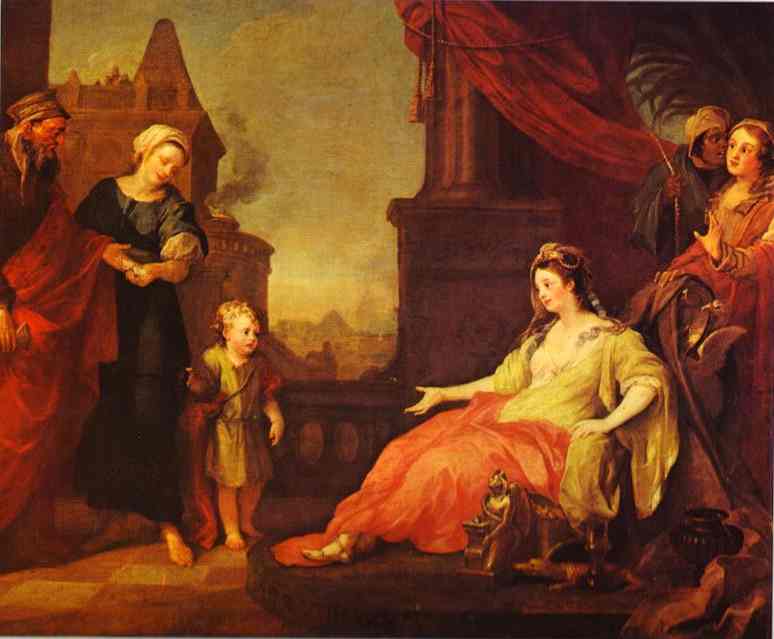
Moses Brought to Pharoah's Daughter


Una obra maestra de William Hogarth que combina realismo y sátira para criticar la sociedad inglesa del siglo XVIII, representando el encuentro entre Moisés y la hija del faraón.
 Leer más
William Hogarth (1697-1764) fue un artista inglés pionero conocido por sus obras satíricas de 'temas morales modernos' como *El progreso de la haragana* y *Matrimonio a la moda*. Explore sus grabados y pinturas—un crítico agudo de la sociedad del siglo XVIII. Descubra...
Giclée / Impresión de arte
Impresiones giclée o en lienzo de calidad de museo con producción rápida y opciones de acabado flexibles. ( Encargar reproducción pintada a mano Ver versión en imagen digital)




P118B $10

P118H $10

P118W $10

P438Z $10

P508JH $12

P508YH $12

P805H $10

P805Z $10

P919BZ $10

P919G $10

P919XJ $10

P959ZH $10

P968JZ $12

W106C $8

W218G $10

W218JH $8

W218Y $10

W307PJ $10

W316G $10

W316PJ $8

W316Y $10

W398PJ $8

W4111J $10

W500HY $15

W500JH $15

W692G $12

W849H $8

W940BG $15

W953PJ $8




Estándar
personalizado
CM
INCH
Elija entre nuestros tamaños predefinidos que respetan las proporciones originales de la obra.
Loading sizes...

ancho
altura
Puede introducir sus propias dimensiones para adaptarse a un marco o espacio específico. Si el tamaño seleccionado no coincide con las proporciones de la imagen original, recortaremos la obra de arte o extenderemos la imagen con un borde con efecto espejo o de color sólido. Se enviará una maqueta digital para su aprobación antes de que comience la producción.
Tenga en cuenta que la vista previa en pantalla no refleja el recorte o la extensión real. Solo la maqueta mostrará con precisión la composición final.
Aunque existen tamaños personalizados, recomendamos seleccionar una dimensión de la lista predefinida para preservar las proporciones originales.
Envío a todo el mundo () en 2 semanas en lugar de las 4/5 semanas estándar. (23 septiembre)

Envío exprés gratuito a todo el mundo

Lienzo de lino de alta calidad

Seguro de envío completo

Garantía de reembolso de impuestos aduaneros

Garantía de fidelidad cromática exacta

Política de devolución de 100 días (solo por defectos)

Garantía de devolución del 100% del dinero

Oferta por volumen
 La opción de vidrio solo está disponible en tamaños inferiores a 110 cm.

Moses Brought to Pharoah's Daughter
Giclée / Impresión de arte
Tamaño de la reproducción
-


Precio total
$ 69
A Vision of Biblical Majesty and Moral Depth
In the grand tapestry of eighteenth-century British art, few works command attention with such profound narrative weight as William Hogarth’s Moses Brought to Pharaoh's Daughter. Completed in 1746, this masterpiece transcends the boundaries of mere biblical illustration, offering instead a deeply layered study in moral allegory. At first glance, the viewer is swept into a moment of high drama: the discovery of an infant Moses by the Egyptian princess. Yet, beneath the surface of this historical encounter lies the unmistakable pulse of Hogarth’s genius—a keen, observant eye that seeks to find the universal human condition within the extraordinary tales of antiquity. The scene is alive with movement and presence, as the princess and her attendants surround the child, creating a composition that feels both intimate and monumental.
The painting serves as a window into a world where the sacred meets the terrestrial. Hogarth, often celebrated for his biting social satires like A Rake's Progress, demonstrates here a remarkable capacity for a more serious, elevated tone. He utilizes the Rococo influence of his era to infuse the scene with a certain grace and decorative splendor, yet he anchors this elegance with a grounded, almost tactile realism. The textures of fabric, the warmth of skin tones, and the subtle interplay of light and shadow work in harmony to create an atmosphere that is simultaneously regal and deeply emotive, inviting the observer to contemplate the weight of destiny unfolding within a single, quiet moment.
Symbolism and the Art of Narrative Detail
To gaze upon this work is to embark on a journey through Hogarth’s intricate symbolic language. Every element within the frame has been meticulously placed to contribute to the painting's overarching moral compass. The presence of animals—the watchful dogs near the center and the periphery—adds a layer of domesticity and life, grounding the divine narrative in the natural world. Even the subtle inclusion of a bird on the left or the ticking presence of a clock on the wall serves as a poignant reminder of the inexorable passage of time and the unfolding of providence. These details are not mere ornaments; they are whispers of the artist's intent to connect the ancient past with the fleeting present.
For the discerning collector or interior designer, this piece offers an unparalleled opportunity to introduce a sense of historical gravity and intellectual depth into a space. The painting’s ability to balance complex themes of power, class, and religious destiny makes it a conversation piece of the highest order. It does not merely decorate a wall; it enriches the environment with a sense of storytelling and philosophical inquiry. Whether placed in a library, a formal study, or a grand salon, a high-quality reproduction of this work brings with it the enduring legacy of Hogarth’s vision—a vision that celebrates the beauty of the human story through the lens of profound moral reflection.
Biografía del artista
vida temprana e influencias
William Hogarth, un artista inglés multifacético, nació el 10 de noviembre de 1697 en Londres. Su vida temprana estuvo marcada por su aprendizaje como grabador a cargo de Ellis Gamble en Leicester Fields, donde desarrolló sus habilidades en la grabado de carteles publicitarios. Esta experiencia influyó significativamente en su tono artístico, frecuentemente notado por su filo crítico y agudo.carrera artística
El rango creativo de Hogarth abarcó desde el retrato realista hasta las pioneras series pictóricas de tipo cómico, denominadas "sujetos morales modernos". Es famoso por sus obras A Harlot's Progress, A Rake's Progress y Marriage a-la-Mode. Su estilo distintivo se volvió tan influyente que las ilustraciones políticas satíricas similares a menudo se denominan "hogarthianas".obras notables y su significado
- El Contrato Matrimonial (clasicismo, óleo sobre lienzo): Esta pintura muestra la maestría de Hogarth en el sarcasmo, criticando las narrativas sociales de su tiempo. [https://TopImpressionists.com/@@/8bwmb6-william-hogarth-the-marriage-contract](https://TopImpressionists.com/@@/8bwmb6-william-hogarth-the-marriage-contract)
- A Harlot's Progress (arte satírico, grabado): Esta serie de pinturas es un testimonio de la capacidad de Hogarth para capturar la forma humana con gracia y poder, a menudo incorporando contenido sexualmente explícito. [https://TopImpressionists.com/@/william-hogarth](https://TopImpressionists.com/@/william-hogarth)
legado e influencia
El arte de Hogarth ganó una inmensa popularidad y fue producido masivamente a través de grabados, convirtiéndolo en el artista inglés más importante de su tiempo. Charles Lamb, el ensayista, comentó famoso que las imágenes de Hogarth eran como libros para leer en lugar de simplemente mirarlos.museos y colecciones
El Museo Británico, con su extensa colección de objetos artísticos culturales y antigüedades, es una institución importante del Reino Unido. [https://en.wikipedia.org/wiki/british_museum](https://en.wikipedia.org/wiki/british_museum) Aunque no se centra específicamente en el trabajo de Hogarth, representa el contexto más amplio del arte y la cultura británicos.conclusión
El legado de William Hogarth como artista satírico continúa influyendo en el mundo del arte. Sus obras, tales como El Contrato Matrimonial y A Harlot's Progress, siguen siendo significativas no solo por su valor artístico sino también por su crítica aguda de las narrativas sociales. Explore más del trabajo de Hogarth en [https://TopImpressionists.com/@/william-hogarth](https://TopImpressionists.com/@/william-hogarth).
William Hogarth
1697 - 1764 , Reino Unido
Datos clave
- Artistas Influenciados:
- James Gillray
- George Cruikshank
- Artistas Que Influyeron:
- Pieter de Hooch
- Jonathan Swift
- Fecha De Muerte: 1764
- Fecha De Nacimiento: 10 de noviembre de 1697
- Lugar De Nacimiento: Londres, Reino Unido
- Movimiento Artístico: Arte satírico, Realismo
- Nacionalidad: Británico
- Nombre Completo: William Hogarth
- Obras Notables:
- A Harlot's Progress
- A Rake's Progress
- Marriage A-la-Mode
Artículos relacionados

The Canvas of Virtue: Exploring Moral Lessons & Narrative Power in Art History
Explore the rich history of moral lessons & symbolism in art! Discover how Renaissance masters like Bosch used allegory to convey virtue & vice. Expert analysis for collectors and enthusiasts.

El Siglo XVIII en el Arte: 10 Obras Maestras para Decorar con Historia y Elegancia
Descubre 10 obras maestras del siglo XVIII: Goya, Fragonard y más. Explora la historia, el arte barroco, rococó y neoclasicismo que inspiran decoración elegante. Reproducciones de alta calidad en TopImpressionists.com.

Unveiling Hidden Meanings: Allegory in Western Art History
Explore the rich history of allegory in Western art! Discover hidden meanings in masterpieces from Giotto to Bosch & beyond. Expert insights for collectors and enthusiasts at TopImpressionists.

The Weight of Virtue and Vice: Exploring Moral Themes in Art History
Explore the captivating world of moral allegory in art history! Discover how Renaissance masters like Bosch, Botticelli & Lotto depicted virtue & vice. Expert analysis and stunning reproductions at TopImpressionists.

Hieronymus Bosch: Las 25 Obras Maestras del Genio Medieval | Arte y Decoración
Descubre las 25 obras maestras de Hieronymus Bosch, el enigmático pintor medieval. Explora 'El Jardín de las Delicias' y su simbolismo único. Reproducciones de arte de alta calidad para tu hogar en TopImpressionists.com.
Explore obras de arte organizadas por temas, estilos y características.


