


 Ver en contexto
 Enviar
 Compartir
 Detalles
 Guía
Guía

 Descargar
 Similares
 Radiografía
 Presentación de diapositivas
 Estadísticas
Children Roller Skating


William Glackens' "Children Roller Skating" (1918) captures a lively street scene of kids enjoying their pastime, showcasing the artist’s signature realism and vibrant style.
 Ver más
Descubre las realistas pinturas de William James Glackens (1870-1938), pionero del Ashcan School. Vibrantes escenas de Nueva York y París, capturando la vida cotidiana con detalle.
Reproducción al óleo hecha a mano
Óleo sobre lienzo pintado a mano en el tamaño y marco de su elección, realizado por encargo por nuestros artistas. ( Cambiar a impresiones Cambiar a imagen digital)




P118B €10

P118H €10

P118W €10

P438Z €10

P508JH €12

P508YH €12

P805H €10

P805Z €10

P919BZ €10

P919G €10

P919XJ €10

P959ZH €10

P968JZ €12

W106C €8

W218G €10

W218JH €8

W218Y €10

W307PJ €10

W316G €10

W316PJ €8

W316Y €10

W398PJ €8

W4111J €10

W500HY €15

W500JH €15

W692G €12

W849H €8

W940BG €15

W953PJ €8




Tamaño estándar
a medida
CM
INCH
Elija entre nuestros tamaños predefinidos que respetan las proporciones originales de la obra.
Loading sizes...

ancho
altura
Indique el ancho y el alto que necesite para adaptarse a su marco o pared. Al tratarse de una obra pintada a mano, si requiere un tamaño con una proporción distinta, el artista puede pintar un poco más alrededor de la imagen o recortarla ligeramente; usted elige. Le enviaremos una maqueta digital para su aprobación antes de comenzar la pintura. La imagen que se muestra en esta página no refleja el resultado real; solo la maqueta lo hace.
Ejemplos de lo que se puede personalizar: Reemplace el rostro con una foto del cliente; Agregue una mascota (por ejemplo, cambie un gato por un perro); Incluya un mensaje oculto en el fondo; Cambie el paisaje o los elementos del fondo.
Tras realizar el pedido, el equipo de TopImpressionists.com enviará un correo electrónico al cliente para solicitar instrucciones y proporcionarle una vista previa del boceto.
Tras realizar el pedido, el equipo de TopImpressionists.com enviará un correo electrónico al cliente para solicitar instrucciones y proporcionarle una vista previa del boceto.
Envío a todo el mundo () en 3-4 semanas en lugar de las 5 semanas estándar. (26 octubre). Sin comprometer la calidad.

Envío exprés gratuito a todo el mundo

Lienzo de lino de alta calidad

Seguro de envío total

Garantía de reembolso de aranceles aduaneros

Garantía de fidelidad cromática exacta

Política de devolución de 100 días (solo por defectos)

Garantía de devolución del 100% del dinero

Descuento por cantidad
 La opción de vidrio solo está disponible en tamaños inferiores a 110 cm.

Children Roller Skating
Técnica de reproducción
Dimensiones de la reproducción
-


Precio total final
€ 236
William James Glackens’ “Children Roller Skating” – A Snapshot of Urban Joy
“Children Roller Skating,” painted in 1918 by William James Glackens, isn't merely a depiction of children enjoying an afternoon pastime; it’s a vibrant distillation of early 20th-century American life—a fleeting moment of unadulterated joy captured amidst the grit and bustle of New York City. Glackens, a key figure in the Ashcan School movement, rejected the idealized portrayals favored by the National Academy of Design, instead choosing to focus on the realities of everyday existence, often portraying it with a distinctive, almost frenetic energy. This painting exemplifies his talent for imbuing ordinary scenes with an extraordinary sense of life and movement.
The scene unfolds on a busy city street, likely in Greenwich Village, a neighborhood known for its bohemian spirit during this period. A group of children, rendered in Glackens’ characteristic bold brushstrokes and rich, dark palette, are engaged in spirited roller skating. Their faces are alight with laughter and excitement, their limbs moving with an infectious energy that spills out onto the canvas. The composition is dynamic—a swirling mass of movement and color—reflecting the lively atmosphere of the street. Glackens masterfully uses loose brushwork to convey a sense of spontaneity and immediacy, as if he’s capturing the scene in real-time.
A Window into the Ashcan School
Glackens' work is deeply rooted in the principles of the Ashcan School, an artistic movement that emerged in New York City around 1908. Rejecting the polished surfaces and mythological subjects favored by academic art, the Ashcan artists sought to portray the realities of urban life—the crowded streets, the working-class neighborhoods, and the everyday struggles of ordinary people. Glackens’ “Children Roller Skating” perfectly embodies this ethos. It's a far cry from the carefully staged portraits that dominated the art world at the time; instead, it offers an unfiltered glimpse into the lives of New Yorkers.
The painting’s style is distinctly American—a blend of realism and impressionism. Glackens employs a vibrant color palette, using dark blues, greens, and browns to create a sense of depth and atmosphere. He also utilizes broken brushstrokes and contrasting colors to capture the movement and energy of the scene. The figures are not rendered with meticulous detail but rather suggested through loose brushwork and expressive gestures. This technique contributes to the painting’s overall dynamism and immediacy.
Symbolism and Context
Beyond its immediate depiction of children roller skating, the painting carries a subtle layer of symbolism. Roller skating was a popular pastime in early 20th-century America, particularly among young people. It represented freedom, recreation, and a break from the constraints of Victorian society. The scene captures a moment of carefree joy—a reminder that even amidst the challenges of urban life, there is always room for laughter and play.
Furthermore, the painting reflects the changing social landscape of New York City at the turn of the century. The city was undergoing rapid industrialization and urbanization, leading to overcrowding, poverty, and social unrest. However, despite these challenges, there was also a sense of optimism and progress—a belief in the potential for a brighter future. “Children Roller Skating” captures this duality—the juxtaposition of hardship and hope, chaos and joy.
A Timeless Image of American Life
“Children Roller Skating” is more than just a painting; it’s a snapshot of a bygone era—a vibrant testament to the spirit of New York City in 1918. Glackens' masterful use of color, brushwork, and composition creates an image that is both captivating and emotionally resonant. It invites us to step back in time and experience the joy and energy of a group of children roller skating on a busy city street. Reproductions of this work offer a beautiful way to bring a piece of American history into your home or office, reminding us of the simple pleasures of life and the enduring power of art.
Preguntas y respuestas
¿Los colores de "Children Roller Skating" de William James Glackens son intensos o tenues?
Los colores de "Children Roller Skating" de William James Glackens presentan una saturación Clear Color Presence con una intensidad Vivid.
¿Qué color predomina en "Children Roller Skating"?
El Walnut (#705535) es el color predominante de "Children Roller Skating" de William James Glackens.
¿Qué sentimiento transmite "Children Roller Skating"?
"Children Roller Skating" de William James Glackens transmite un tono emocional Nostalgic.


Biografía del artista
Un Pionero de la Escuela Ashcan
William James Glackens, una figura prominente en el arte americano, dejó una huella indeleble en la historia del arte con sus cautivadoras pinturas realistas. Nacido en Filadelfia, Pensilvania, en 1870, el viaje artístico de Glackens fue un testimonio de su inquebrantable pasión por capturar la esencia de la vida cotidiana.Vida Temprana e Influencias
Los primeros años de Glackens estuvieron marcados por una inclinación innata hacia el arte, lo que le llevó a inscribirse en la Academia de Bellas Artes de Pensilvania. Bajo la tutela de Thomas Anshutz, un renombrado realista, Glackens perfeccionó sus habilidades, convirtiéndose finalmente en uno de los fundadores de la Escuela Ashcan. Este movimiento rechazó las convenciones artísticas tradicionales, centrándose en cambio en las realidades ásperas de la vida metropolitana.Trayectoria Artística
El trabajo de Glackens se caracteriza por sus vibrantes escenas callejeras y representaciones de la vida cotidiana en el Nueva York y París pre-Primera Guerra Mundial, con tonos oscuros. Sus obras posteriores, influenciadas por Renoir, exhibieron un tono más brillante, reflejando su crecimiento como artista. Notablemente, Glackens también trabajó como ilustrador para periódicos y revistas en Filadelfia y Nueva York.- Vista de Haarlem con terrenos de blanqueo, una pintura de Jacob Isaakszoon van Ruisdael (Ruisdael), ejemplifica el nivel de detalle y artesanía que define el trabajo de Glackens. Esta pieza ahora forma parte de la colección del Museo Chrysler.
- La obra maestra de Glackens, Los Compradores, es un testimonio de su habilidad para capturar la esencia de la vida urbana. Esta pintura se puede encontrar en la colección del Nuevo Realismo en TopImpressionists.com.
Legado e Impacto
Las contribuciones de Glackens al arte americano son multifacéticas, que se extienden más allá de su propio trabajo. Jugó un papel fundamental ayudando a Albert C. Barnes a adquirir pinturas europeas para la Fundación Barnes en Filadelfia. Esta colección se ha convertido en una piedra angular de la historia del arte americano. Obras clave y colecciones: * Los Compradores (Nuevo Realismo, óleo sobre lienzo, Museo Chrysler) * Vista de Haarlem con terrenos de blanqueo (Ruisdael, Castillo Sforza, Milán, Italia) Lecturas recomendadas: * [https://TopImpressionists.com/@/william-james-glackens](https://TopImpressionists.com/@/william-james-glackens) - explore la extensa colección de obras de Glackens en TopImpressionists.com. * [https://en.wikipedia.org/wiki/william_glackens](https://en.wikipedia.org/wiki/william_glackens) - profundice en la biografía detallada de William James Glackens en Wikipedia.
William James Glackens
1870 - 1938 , Estados Unidos de América
Datos clave
- Artistas Influyentes:
- Thomas Anshutz
- Renoir
- Fecha De Nacimiento: 1870
- Lugar De Nacimiento: Filadelfia, EE. UU.
- Movimiento Artístico: Ashcan School, Realismo americano
- Nacionalidad: Estadounidense
- Nombre Completo: William James Glackens
- Nombres Alternativos: William J Glackens
- Obras Notables:
- The Shoppers
- Vista de Haarlem
Artículos relacionados

Capturing the Light: A Journey Through the Soul of American Impressionism and the Hudson River School
Explore the luminous beauty of American Impressionism and the Hudson River School. Discover a curated journey through light, landscape, and history, celebrating the enduring legacy of masters through exquisite, hand-painted oil reproductions for the discerning art lover.
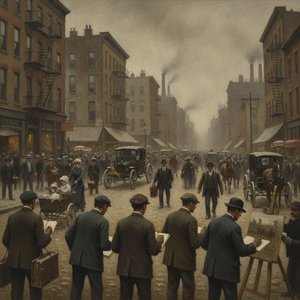
The Ashcan School: Capturing the Raw, Unfiltered Soul of Urban Life through American Realism
Discover the raw beauty of the Ashcan School. Explore how masters like Bellows and Henri captured the gritty, vibrant soul of early 20th-century New York through profound American Realism and evocative urban landscapes.

The Unvarnished Truth: A Cultural Journey Through the Soul of American Realism
Explore the profound beauty of American Realism. From the Ashcan School's urban grit to intimate portraits, discover how artists captured the authentic soul of a nation through unvarnished truth and masterful observation.
Explore obras de arte organizadas por temas, estilos y características.


