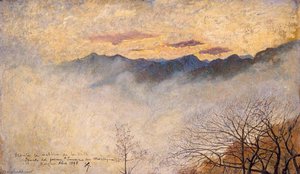
El Arquitecto Visionario de la Luz y el Color
Nacido en la vibrante y culta atmósfera de Milán en 1851, Vittore Grubicy De Dragon fue mucho más que un simple pintor; fue un profundo catalizador de cambio dentro del mundo del arte italiano. Criado en el seno de una familia adinerada donde el arte era un elemento esencial de la vida cotidiana, sus primeros años estuvieron impregnados de las tradiciones humanistas que más tarde informarían su intelecto crítico. Tras el fallecimiento de su padre en 1870, Grubicy se vio atraído por la órbita bohemia de la Scapigliatura, un movimiento de artistas y poetas milaneses dedicados a desdibujar las fronteras entre el arte y la existencia. Este periodo de intensa inmersión cultural sentó las bases de su doble legado, tanto como creador de imágenes evocadoras como un formidable formador de gustos que remodelaría la trayectoria de la pintura italiana de finales del siglo XIX.
Su espíritu emprendedor lo llevó a establecer la Galleria Fratelli Grubicy junto a su hermano, Alberto. Esta institución fue revolucionaria, operando bajo un concepto moderno temprano de representar a artistas vivos como clientes dedicados. Mientras su hermano gestionaba las complejidades financieras, Vittore actuaba como un explorador errante de lo nuevo, recorriendo las grandes capitales artísticas de Europa —desde Londres y París hasta Amberes— para identificar tendencias emergentes. Inicialmente, la galería defendió la estética suave y atmosférica de los maestros de la Scapigliatura, como Tranquillo Cremona y Daniele Ranzoni, pero el verdadero genio de Grubicy residía en su capacidad para reconocer el potencial de un movimiento floreciente que acabaría por definir una era.
El Amanecer del Divisionismo
Entre 1882 y 1885, los viajes de Grubicy lo llevaron a los Países Bajos, donde conoció la Escuela de La Haya. Fue allí donde su encuentro con Anton Mauve resultó transformador; Mauve se convirtió en un mentor que dirigió materialmente su aproximación al pincel. Esta exposición europea, combinada con un interés por las teorías ópticas del color, permitió a Grubicy tender un puente entre las tendencias internacionales y la sensibilidad italiana. A su regreso a Italia, comenzó a defender el Divisionismo, una técnica caracterizada por la separación de los colores en puntos o pinceladas individuales que el ojo luego mezcla ópticamente. No se limitó a promover este estilo; se convirtió en su guía teórica, traduciendo complejas teorías científicas de la luz a un lenguaje emocional para los pintores.
La influencia de Grubicy fue fundamental en las carreras de algunos de los artistas más célebres de Italia. Poseía una capacidad profética y poco común para reconocer el talento, asegurando contratos para maestros tales como:
- Giovanni Segantini, cuyos paisajes monumentales se convirtieron en sinónimo del movimiento;
- Emilio Longoni, quien aportó un profundo sentido de realismo a la técnica divisionista;
- Angelo Morbelli, cuyo toque delicado capturó la quietud de la vida contemporánea.
A través de sus escritos y su galería, convenció a estos artistas de abrazar la luz no solo como un fenómeno físico, sino como una fuerza emocional. Es célebre su insistencia en presionar a Segantini para refinar su enfoque, asegurando que el movimiento poseyera tanto rigor técnico como profundidad simbólica.
Un Legado de Luz y Simbolismo
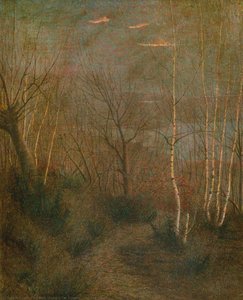
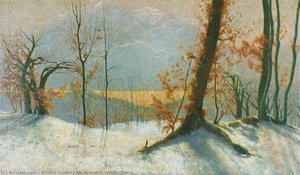
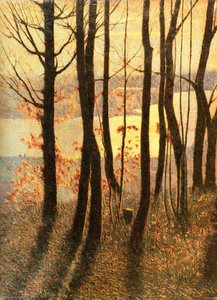
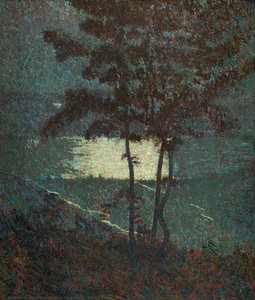
A medida que su carrera progresaba, la propia práctica pictórica de Grubicy se convirtió en una extensión de sus teorías críticas. Su obra a menudo reflejaba una profunda conexión con los paisajes del Lago de Como, particularmente alrededor de Lierna, donde trabajaba frecuentemente en plein air. En estas obras, se puede observar el matrimonio de la precisión divisionista con un alma simbolista. Sus lienzos suelen evocar una sensación de melancolía o trascendencia espiritual, utilizando tonos apagados y empastes texturizados para crear atmósferas que se sienten tanto tangibles como oníricas. Ya fuera capturando la quietud de un paisaje vespertino o la majestuosidad agreste de escenas montañosas, su pincelada buscaba capturar la esencia misma de la luminosidad.
La importancia histórica de Vittore Grubicy De Dragon es incalculable. Él fue el puente entre el viejo mundo del romanticismo y la nueva era de la ciencia óptica moderna. Al integrar las influencias de la Escuela de La Haya e incluso la energía floreciente de Van Gogh en el contexto italiano, garantizó que el arte italiano permaneciera a la vanguardia de la innovación europea. Aunque su vida terminó en 1920, su impacto permanece grabado en la luz vibrante y fracturada de cada obra maestra divisionista, un testimonio de un hombre que vio el mundo no solo como aparecía, sino como se sentía a través del prisma del color.
Preguntas y respuestas
¿Existe una cronología de la trayectoria de Vittore Grubicy De Dragon?
La trayectoria de Vittore Grubicy De Dragon se despliega etapa por etapa en la página Trayectoria: una línea de tiempo horizontal de sus obras, agrupadas en capítulos según sus periodos creativos.
¿A qué periodo histórico pertenecía Vittore Grubicy De Dragon?
Vittore Grubicy De Dragon trabajó durante el periodo Siglo XIX. Este periodo sitúa la actividad del artista en su contexto histórico.
¿Cómo puedo encontrar obras de Vittore Grubicy De Dragon por paleta de colores?
Puedes explorar las obras de Vittore Grubicy De Dragon por paleta de colores en la página de Por paletas de colores del artista.