
 Eelvaade
 Saada
Saada Jaga
Jaga
 Teave teose kohta
 Juhend

 Laadi alla
 Sarnased teosed
 Röntgenuuring
 Slaidietendus
 KÜSIMUSED JA VASTUSID
 Statistika
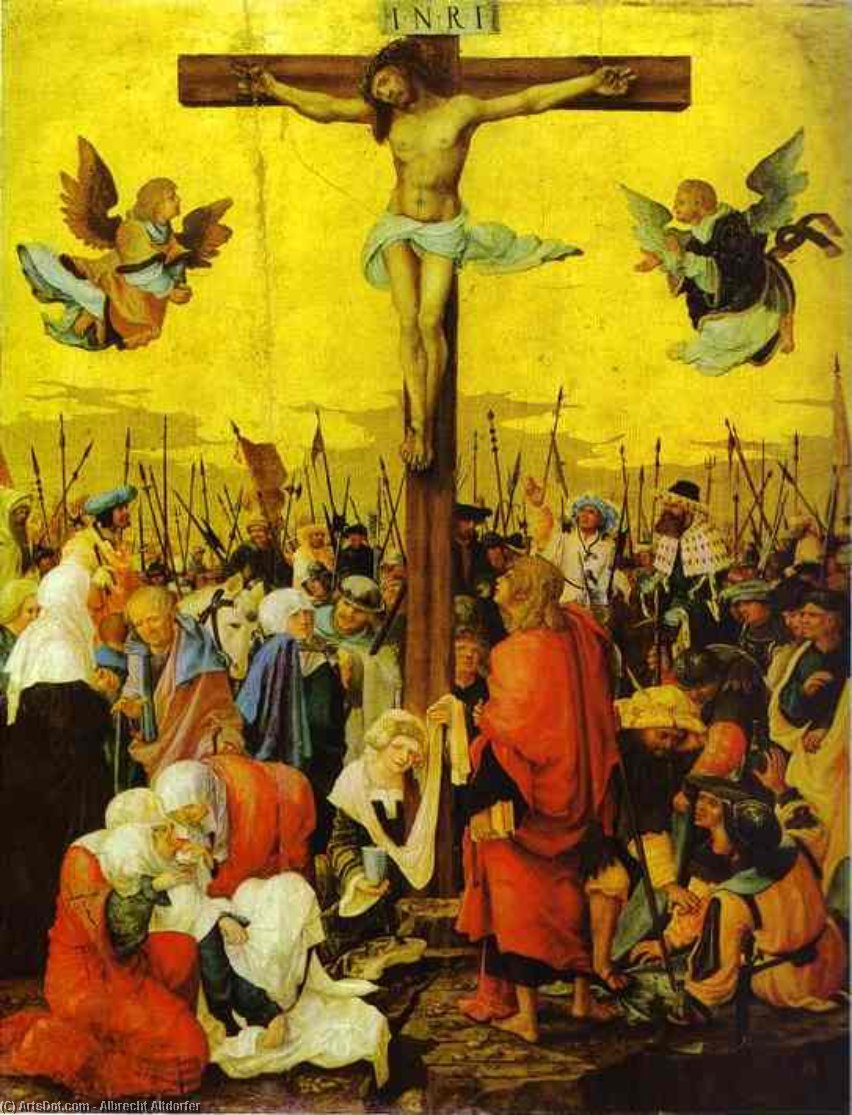
Crucifixion

- 29.0 x 21.0 cm


Albrecht Altdorfer's "Crucifixion" (1526) is a dramatic, evocative depiction of Christ’s suffering, showcasing the artist's pioneering landscape style and masterful use of color within the Northern Renaissance.
 Loe lähemalt
Albrecht Altdorfer (1480-1538): Saksa renessansi maastikukunstniku teerajaja ja Doonau kooli võtmeisik. Avastage tema graveeringuid, religioosseid töid ja uuenduslikku kunstistiili.
Hankige trükiivaldatav fail, mis on kvaliteedilt palju parem kui veebilehel näidatud eelvaade. Kõik meie müüdavad digitaalsed pildid pärinevad meie arhiivist kõrge resolutsiooniga originaalfailidest — tavaliselt 5000 kuni 15 000 pikslit laiust — nii et saate julgelt trükida suurematsat, lüüdist teha või detailset sisu reproduktsiooni teha.
Meie stuudiost ei lahtu ükski fail puutumatuna. Digiekpert võrdleb värve algsest maalistimusega ja vajadusel korrigeerib neid, seejärel parandab selgust ja detaile professionaalsete retušimisvahendite abil — püüdes alati jääda truudeks kunstniku pintoonile ja stiilile. Tulemuseks on pilt, mis näeb välja nagu maali, mitte nagu filtreeritud skann.
Teet kinnituse enne lõplikku valmimist: meie ekspert saadab pildi 72 tunni jooksul e-posti ülevaatamiseks. Ei ole rahul? Paluge parandusi või korrektsioone ning kui kvaliteet ei vasta ootustele, võite paluda tagastamist.
See on kvaliteet, millele tuguvad väljaandjad, disainistuudiod, galeriid ja trükikojad.
Digitaalne kunstiteos
Laadi alla kõrge resolutsiooniga fail isiklikuks vaatamiseks, trükkimiseks ja loomingulisteks projektideks. ( Lülita trükkitoodetele Osta käsitsi maalatud teos)
Sisse kuulub iga digitaalse pildi tellimusega
Eksperdi digitaalne kohaletoimetamine, garanteeritud
Valides TopImpressionists.com, ei saa sa lihtsalt pilti – saad professionaalselt parandatud digitaalse teose, mida on valmistatud täpsusega ja mis on toetatud rahuldamatusgarantiiga. Siin on kõik, mis sinu tellimusega automaatselt kaasneb:

Kiire digitaalne edastus
Teie kõrge resolutsiooniga digitaalne pildifail saadetakse teile e-posti 72 tunni jooksul pärast tellimist – kohe kasutamiseks valmis.

Tehisintellektiga täiustatud digitaalne fail
Teie teos on professionaalselt optimeeritud arenenud tehisintellekti tööriistade ja käsitsi redigeerimise abil, tagades maksimaalse detailitaseme, selguse ja värvitäpsuse.

Tasuta eluaegne uuesti saatmine
Kas kustutasid faili kogukalu unustamisel või kustutamisel? Puudub mure – saad selle uuesti igal ajal ilma lisatasuta.

Puuduvad importimaksud – alati
Nautige oma teoseid koheselt ilma tolli-, maksude või tarnimaskuludeta – digiletchargused on alati maksuvabadud.

Värvitäpsuse garantii
Me tagame, et teie digitaalne pilt kajastaks originaali värve professionaalsete tööriistade ja värvihalduse abil võimalikult täpselt.

100 päeva rahuldamatuse garantii
Kui te ei ole oma digitaalse pildi eest rahul, siis me parandame seda või tagastame 100% summast 100 päeva jooksul – küsimusteta.

100% raha tagastamise garantii
Ei ole rahul? Saate täielise tagastaja 100 päeva jooksul pärast digitaalse faili kättesaamist – ilma küsimusteta.

Suurema tellimuse soodustused
Osta 3 pilti, säästa 10% - Osta 5, säästa 15% - Osta 10+, säästa 20%. Sobib suurepäraselt loomingulisteks projektideks, galeriideks ja agentuurideks.
The Weight of Sorrow: Albrecht Altdorfer’s “Crucifixion”
Albrecht Altdorfer's "Crucifixion," painted in 1526, isn’t merely a depiction of a pivotal religious event; it’s a visceral experience. Emerging from the burgeoning German Renaissance, Altdorfer wasn’t simply replicating biblical narratives; he was forging a new visual language, one deeply rooted in the natural world yet imbued with profound spiritual intensity. This particular rendition transcends simple illustration, becoming a landscape saturated with grief and a haunting meditation on sacrifice. The painting immediately commands attention not through grand scale – it's remarkably intimate, measuring just 29 x 21 cm – but through its masterful manipulation of light, color, and composition to evoke an overwhelming sense of sorrow.
The scene unfolds against a dramatically rendered landscape—a brooding, almost primeval forest. The trees, rendered in thick, layered brushstrokes of deep greens, browns, and purples, seem to writhe with the weight of the event. This isn’t a picturesque vista; it's a wilderness imbued with an unsettling energy. Altdorfer deliberately eschews traditional depictions of serene backgrounds, instead presenting a landscape actively participating in the drama. The distant mountains, shrouded in mist and shadow, amplify the feeling of isolation and despair. Notice how the artist uses atmospheric perspective – lighter hues for objects further away – to create a sense of depth and distance, drawing the viewer’s eye into the heart of the scene.
A Pioneer of Landscape
Albrecht Altdorfer stands as a pivotal figure in art history, largely credited with establishing landscape painting as an independent artistic subject within Europe. Prior to his work, landscapes were typically relegated to mere backgrounds for religious or mythological scenes. However, Altdorfer recognized the power of the natural world to convey emotion and meaning. His meticulous observation of nature—evident in the detailed rendering of foliage, rocks, and atmospheric conditions—transformed the landscape from a passive backdrop into an active participant in the narrative. This shift was revolutionary, paving the way for later generations of landscape artists like Albert Bierstadt and Frederic Church.
His background as a town architect and council member further informs his artistic approach. Altdorfer possessed a keen eye for spatial relationships and a deep understanding of how to create a sense of harmony and balance within a composition. This skill is brilliantly demonstrated in “Crucifixion,” where the human figure—Jesus—is carefully positioned within the landscape, creating a dynamic interplay between the earthly realm and the divine.
Symbolism and Emotional Resonance
Beyond its technical brilliance, "Crucifixion" resonates deeply with viewers through its potent symbolism. The stark simplicity of Jesus’s pose – arms outstretched, head bowed – is profoundly moving. Altdorfer avoids any overtly dramatic or theatrical elements, opting instead for a quiet, understated portrayal of suffering. The figures surrounding the cross—angels and soldiers—are rendered in muted tones, emphasizing the central tragedy. Even the light itself seems to weep, casting long shadows across the landscape.
The choice of a dark, foreboding forest as the setting is particularly significant. Forests have historically been associated with death, mourning, and the unknown. In this context, it serves as a powerful metaphor for the spiritual darkness surrounding Jesus’s sacrifice. The painting isn't simply depicting an event; it’s exploring the profound emotional consequences of that event—the grief, despair, and sense of loss experienced by those who witnessed it.
A Timeless Masterpiece
“Crucifixion” is more than just a religious painting; it’s a testament to Altdorfer's artistic genius and his ability to capture the essence of human emotion. The meticulous detail, masterful use of color and light, and profound symbolism combine to create an unforgettable image that continues to resonate with viewers centuries after its creation. Reproductions, like this one, offer a remarkable opportunity to experience the power and beauty of this iconic work, bringing its haunting message into our own spaces.
Korduvad küsimused
Mis tüüpi teos on „Crucifixion“, autor Albrecht Altendorfer?
"Crucifixion" on WallArt teos.
Milliseid ühiseid elemente jagab teos "Crucifixion" Albrecht Altendorfer muud loominguga?
Teos "Crucifixion" jagab koos Albrecht Altendorfer teistega German Renaissance Landscape stiili ja korduvaid teemasid: danube school landscape influence, medieval religious symbolism strong, early renaissance artistic trends, german cultural identity depicted, altdorfer's innovative landscape role.
Kas teost "Crucifixion" peetakse kunstniku kodumaal?
Ei – teos asub välismaal. Albrecht Altendorfer sünnimaa on Saksamaa ning teose "Crucifixion" originaali hoiab endas muuseum, mis asub riigis Germany.
Kunstniku elulugu
Pioneer Altdorferi: Gootika ja Renessansi vaheline kunstnik
Albrecht Altdorfer, sündinud umbes 1480. aastal Regensburgis Saksamaal, on oluline figuur hilise gooti perioodi ja õitseva Saksa renessansi ühendamisel. Ta ei olnud oma aja *kunstnik*, vaid muutis aktiivselt selle kunstilist suunda, eriti maalikunstis. Altdorfer pärines kunstiliselt sügavalt juurdunud perekonnast – tema isa Ulrich Altdorfer oli maalija ja miniaturist – noorem Altdorfer eristas end kiiresti mitte järgijana, vaid uuendajana. Regensburg, vabariiklik linn strateegiliselt Doonau jõe ääres, pakkus tema kujunemisaastatel elavat kultuurilist tausta. See asukoht mõjutas sügavalt tema kunstilisi tundeid, soodustades seost loodusmaailmaga, mis sai tema loomingu keskseks elemendiks. Altdorferi talent ei piirdunud kunsti valdkonnaga; ta teenis nii linnaarhitektina kui ka raehaldurina – tunnistus tema mitmekülgsetest võimetestest. Kuid just tema kunst – eriti tema varased graveeringud ja joonistused umbes 1506. aastast, näiteks *Pühale Franziskusele ilmunud stigmata* ja *Pühale Jeremiale* – avaldasid esmakordselt unikaalset kunstilist häält, vihjates emotsionaalsele intensiivsusele ja täpssele detailile, mis iseloomustas tema küpset stiili.Doonau koolkond ja revolutsiooniline visioon
Altdorferit tunnustatakse kõige silmapaistvamalt Doonau koolkonna juhtiva liikmena, mõjukana kunstirühmana, kes tegutses Lõuna-Saksamaal 16. sajandi alguses. See kunstiringkond jagas ühist kirge maastiku väljendusvõime uurimisele, tõstes selle pelgalt taustaks olemisest keskseks teemaks iseenesest. Enne Altdorferit teenisid maastikud peamiselt religioossete või ajalooliste narratiivide lavadena; ta julges kujutada loodust *iseenesest*, täidetuna atmosfääri ja emotsionaalse resonantsiga. Transformeeriv reis Doonau jõel alla ja Alpidesse umbes 1511. aastal osutus tema kunstilisele arengule otsustavaks. Dramaatilised vaated, tihedad metsad ja imposantsed mäed süütasid temas kire kujutada loodust enneolematu täpsuse ja tunde abil. Ta sai argumendiks esimeseks moodsaks maastikumaalijaks, mitte lihtsalt nähtu replikeerides, vaid emotsionaalse vastukaja edasi andes – aukartust, müsteeriumi ja isegi vaimset ühendust. See ei olnud pelgalt topograafiline täpsus; tegemist oli *kogemuse* tabamisega maastikus olemisest. Tema töö, näiteks “Suur kuusk”, illustreerib seda nihket, pakkudes rahuliku ja keeruka pildi looduse ilu kohta.Meisterteosed ja kunstilised mõjud
Altdorferi karjääri jooksul valmis mitmekesine looming, mis hõlmas maale, graveeringuid, joonistusi ja arhitektuuridisaine. Tema tuntuimad saavutused on *Aleksandri lahing Issuse juures* (1529), mille tellis Baieri hertsog Wilhelm IV. See monumentaalne maal demonstreerib mitte ainult tema kompositsiooni ja detaili valdamist, vaid ka uuenduslikku maastiku kasutamist lahingustseenide dramaatilise pinge tõhustamiseks. Keerlevad pilved, jagged mäed ja kaos sõdurite seas loovad ülekaaluka energia ja spektakli tunde. Tema koostöö keiser Maximilian I-ga Innsbruckis 1513. aastal laiendas tema kunstilisi horisonte ja andis võimaluse suuremahulisteks projektideks. Altdorferi stiili ei kujunenud isolatsioonis; ta omandas mõjutusi erinevatest allikatest. Giorgione poeetiline lüürilisus, Lucas Cranach vanema väljendusvõimelised figuurid ja Albrecht Düreri täpne detail jätsid kõik oma jälje tema tööle. Ta sünteesistas need mõjud aga unikaalseks isiklikuks visiooniks, mida iseloomustas emotsionaalne intensiivsus, dramaatiline valgustus ja evokatiivsed maastikud. Tema graveeringud, näiteks “Veenus pärast vanni”, demonstreerivad tema oskust selles meediumis, pakkudes õrnu jooni ja keerukaid detaile.Pärand ja püsiv mõju
Albrecht Altdorferi kunstiline pärand ulatub kaugele 55 paneeli, 120 joonistuse ja arvukate graveeringute piiridest, mis ta oma eluea jooksul lõi. Ta muutis põhjalikult viisi, kuidas kunstnikud maastikumaali lähenesid, sillutades teed tulevastele põlvedele selle väljendusvõime uurimisel. Tema mõju on näha hilisemate Saksa romantiliste maalijate töödes, kes otsisid sarnaselt looduse sublime ilu ja emotsionaalset jõudu. Tänapäeval on Altdorferi kunst esindatud suuremates muuseumikollektsioonides üle maailma, sealhulgas Museum Ostdeutsche Galerie Saksamaal – mis majutab tema *Madonna (Ilus Maria Regensburgist)* – ja Kunstsammlungen und Museen Augsburg Austrias. Tema uuenduslik vaim, tehniline oskus ja sügav seos loodusega jätkavad kunstnike inspireerimist ja publiku lummistamist sajandeid pärast tema surma 1538. aastal. Ta jääb Saksa renessansi silmapaistvaks figuuriks, tõeliseks pioneeriks, kes julges näha maastikku mitte ainult stsenaariumi, vaid võimsa jõuna, mis on võimeline kutsuma esile sügavaid emotsioone ja vaimset tähendust. Tema töö on tunnistus kunsti püsivast jõust muuta meie maailma tajumist – pärand, mis jätkab resonantsi vaatajatega tänapäevalgi.Altdorferi mitmekesise looming uurimine
Lisaks oma ikoonilistele maastikele ja lahingustseenidele hõlmas Altdorferi kunstiline ulatus religioosseid teemasid, mütoloogilisi narratiive ja isegi arhitektuuridisaine. Tema piiblilugude kujutused, näiteks “Aabrahami ohver”, on täidetud dramaatilise intensiivsuse ja emotsionaalse sügavusega, mis eristavad neid varasematest tõlgendustest. Ta ei lihtsalt illustreerinud kirjutisi; ta uuris inimlikku olukorda usu läbi.- Graveeringud: Altdorferi graveeringud, näiteks “Mucius Scaevola põletab oma kätt”, demonstreerivad tema joone ja detaili valdamist, edastades sageli liikumise ja dramaatilise pinge tunde.
- Joonistused: Tema joonistused pakuvad intiimseid pilke tema loovprotsessi, paljastades tema hoolika tähelepanuvõime oskuse ja väljendusvõimelise varjutamise kasutamise.
- Arhitektuuridisainid: Regensburgi linnaarhitektina andis Altdorfer panust linna kindlustustesse ja linnaplaneerimisse, demonstreerides oma praktilisi kui ka kunstilisi võimeid.

Albrecht Altendorfer
1480 - 1538 , Saksamaa
Lühikesed faktid
- Artistic Movement Or Style: Danube koolkond, renessanss
- Artists Or Movements Influenced By This Artist: ['Saksa romantilised maalikunstnikud']
- Artists Who Influenced This Artist:
- Giorgione
- Lucas Cranach vanem
- Albrecht Dürer
- Date Of Birth: u 1480
- Date Of Death: 1538
- Full Name: Albrecht Altdorfer
- Nationality: Saksamaa
- Notable Artworks (List Of Titles):
- Alexander Issuse lahingus
- Suur kuusk
- Püha Georg ja lohe
- Place Of Birth (City And Country): Regensburg, Saksamaa