

 Vaata sisu
 Jaga teost
 Jaga
Jaga
 Detailid
 Õppekate juhend

 Laadi alla
 Sarnased teosed
 Röntgenuuring
 Slaidietendus
 Statistika
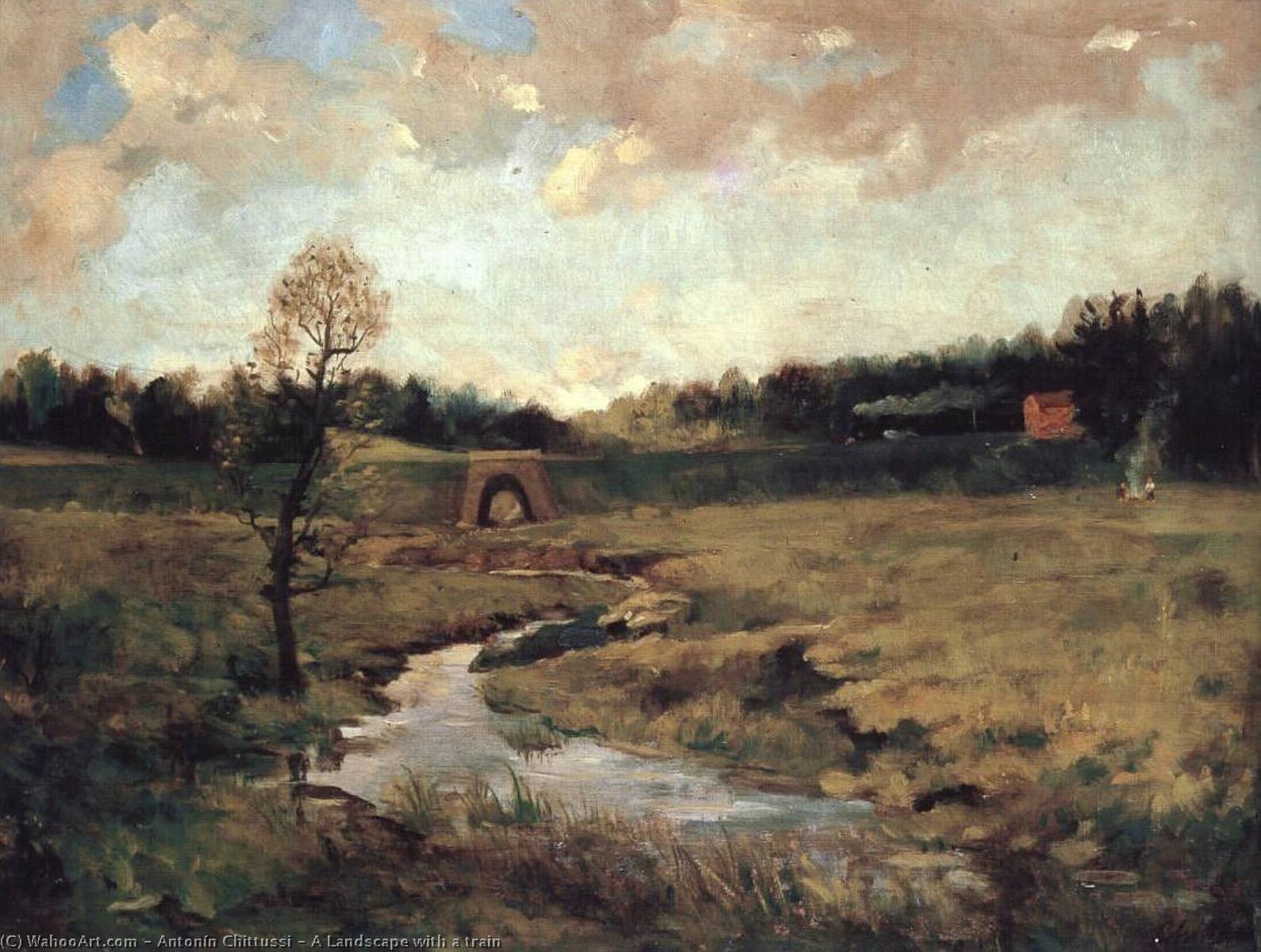
A Landscape with a train
 1884
1884 30.0 x 41.0 cm
 Národní Galerie v Praze
Discover Antonín Chittussi (1847-1891), a Czech Impressionist painter known for evocative landscapes & cityscapes. Explore his art, influenced by Barbizon School & Parisian styles.
 Loe lähemalt
Ostke kõrglahutusel ja täiustatud digitaalne pilt, mis on oluliselt parem kui veebilehel näidatud eelvaade.
Iga fail on meie spetsialistide poolt hoolikalt ette valmistatud, kasutades kaasaegseid tööriistu ja professionaalset käsitsi retušeerimist. Tagame, et igal pildil on erakordne selgus, täpne värvitäpsus ja peen detail.
Lõplik fail saadetakse e-posti teel 72 tunni jooksul ning on optimeeritud koheseks kasutamiseks professionaalsetes, toimetuslikes ja trüki keskkondades. See on sama kvaliteet, mida usaldavad tipptasemel disainistuudiod, kirjastused ja galeriid.
Digitaalne pilt
Laadi alla kõrge resolutsiooniga fail isiklikuks vaatamiseks, trükkimiseks ja loomingulisteks projektideks. ( Lülita trükkitoodetele Telli käsitsi maalitud reproduktsioon)
Sisse kuulub iga digitaalse pildi tellimusega
Professionaalne digitaalne kohaletoimetamine, garanteeritud
Valides TopImpressionists.com, ei saa sa lihtsalt pilti – saad professionaalselt parandatud digitaalse teose, mida on valmistatud täpsusega ja mis on toetatud rahuldamatusgarantiiga. Siin on kõik, mis sinu tellimusega automaatselt kaasneb:

Kiire e-posti edastus
Teie kõrge resolutsiooniga digitaalne pildifail saadetakse teile e-posti 72 tunni jooksul pärast tellimist – kohe kasutamiseks valmis.

Tehisintellektiga täiustatud digitaalne fail
Teie teos on professionaalselt optimeeritud arenenud tehisintellekti tööriistade ja käsitsi redigeerimise abil, tagades maksimaalse detailitaseme, selguse ja värvitäpsuse.

Tasuta eluaegne uuesti saatmine
Kas kustutasid faili kogukalu unustamisel või kustutamisel? Puudub mure – saad selle uuesti igal ajal ilma lisatasuta.

Puuduvad importimaksud – alati
Nautige oma teoseid koheselt ilma tolli-, maksude või tarnimaskuludeta – digiletchargused on alati maksuvabadud.

Värvitäpsuse garantii
Me tagame, et teie digitaalne pilt kajastaks originaali värve professionaalsete tööriistade ja värvihalduse abil võimalikult täpselt.

100 päeva rahuldamatuse garantii
Kui te ei ole oma digitaalse pildi eest rahul, siis me parandame seda või tagastame 100% summast 100 päeva jooksul – küsimusteta.

100% raha tagastamise garantii
Ei ole rahul? Saate täielise tagastaja 100 päeva jooksul pärast digitaalse faili kättesaamist – ilma küsimusteta.

Suurema tellimuse soodustused
Osta 3 pilti, säästa 10% - Osta 5, säästa 15% - Osta 10+, säästa 20%. Sobib suurepäraselt loomingulisteks projektideks, galeriideks ja agentuurideks.
Kunstniku biograafia
The Soul of the Bohemian Landscape: The Life of Antonín Chittussi
In the tapestry of nineteenth-century European art, few threads are as delicately woven as those of Antonín Chittussi. Born on December 1, 1847, in the quiet town of Ronov nad Doubravou, Chittussi was a painter whose very essence seemed to bridge the gap between the rustic, grounded traditions of the Barbizon School and the shimmering, light-drenched innovations of Parisian Impressionism. His lineage was one of movement and commerce; born to an Italian father from a merchant family that had migrated to Bohemia during the Napoleonic Wars, Chittussi carried within him a cosmopolitan spirit that would later drive him far beyond the borders of his homeland. Though his early life in Bohemia suggested a path toward the family business or perhaps engineering, a profound, innate talent for capturing the nuances of light and shadow beckoned him toward the easel.
His formative years were marked by a restless search for artistic truth. After initial studies in Kutná Hora under František Bohumír Zvěřina, where he mastered the foundational rigors of drawing, Chittussi found himself at odds with the rigid academicism prevalent in Prague. This dissatisfaction propelled him toward Munich and eventually to the heart of the art world: France. It was during his years spent in France, particularly between 1879 and 1884, that his style truly blossomed. Immersed in the atmosphere of the French landscape movement, he became a successor to the Barbizon masters, learning to observe the subtle shifts in atmospheric perspective and the tonal harmonies of the natural world. His work began to breathe with a new vitality, capturing not just the scenery, and landscapes, but the very air that surrounded them.
A Legacy Forged in Light and Defiance
Chittussi’s career was not merely a pursuit of aesthetic beauty; it was also deeply intertwined with the turbulent political currents of his era. He was a man of conviction, a trait famously demonstrated in 1876 when he participated in a courageous student protest against the nationalist sentiments of Professor Alfred Woltmann at Charles University. This act of defiance led to his expulsion from the Academy and even a brief period of imprisonment alongside the renowned Mikoláš Aleš. Such moments of historical friction served to galvanize his artistic identity, pushing him to seek independence and refine a voice that was uniquely his own—one that could navigate both the patriotic social circles of Prague and the avant-garde salons of Paris.
As his technique matured, Chittussi’s oeuvre became a testament to the beauty of plein air realism. His landscapes and cityscapes are characterized by an evocative ability to render the ephemeral qualities of light—the way it filters through a canopy of trees or reflects off a quarry at Champigny. Through his work, he contributed decisively to the establishment of landscape painting as a leading genre within the Czech context, elevating it from mere topographical recording to a profound emotional experience. His later years, spent working in both Bohemia and France, saw him perfecting a style that celebrated the quiet majesty of the natural world, leaving behind a legacy that remains a cornerstone of modern Czech art.
The enduring significance of his contributions can be summarized through several key artistic pillars:
- Synthesis of Styles: The seamless integration of Barbizon-style tonalism with the burgeoning dynamism of Impressionist light.
- Plein Air Mastery: A dedicated commitment to painting outdoors, capturing the authentic, unmediated essence of the landscape.
- Cultural Bridge: Acting as a vital link between the French landscape tradition and the development of Czech national art.
- Emotional Resonance: The ability to transform simple subjects—a train passing through a valley or a quiet quarry—into profound meditations on nature and time.

Antonín Chittussi
1847 - 1891
Kiired faktid
- Artistic Movement Or Style: Impressionism
- Artists Or Movements Influenced By This Artist: ['Parisian styles']
- Artists Who Influenced This Artist:
- František Bohumír Zwěřina
- Barbizon School
- Date Of Birth: 1847
- Date Of Death: 1891
- Full Name: Antonín Chittussi
- Nationality: Czech
- Notable Artworks:
- A Landscape with a Quarry at Champigny
- A Landscape with a train
- Place Of Birth: Ronov nad Doubravou, Bohemia