

 Jaga teost
 Jaga
Jaga
 Detailid
 Õppekate juhend

 Laadi alla
 Sarnased teosed
 Slaidietendus
 Statistika
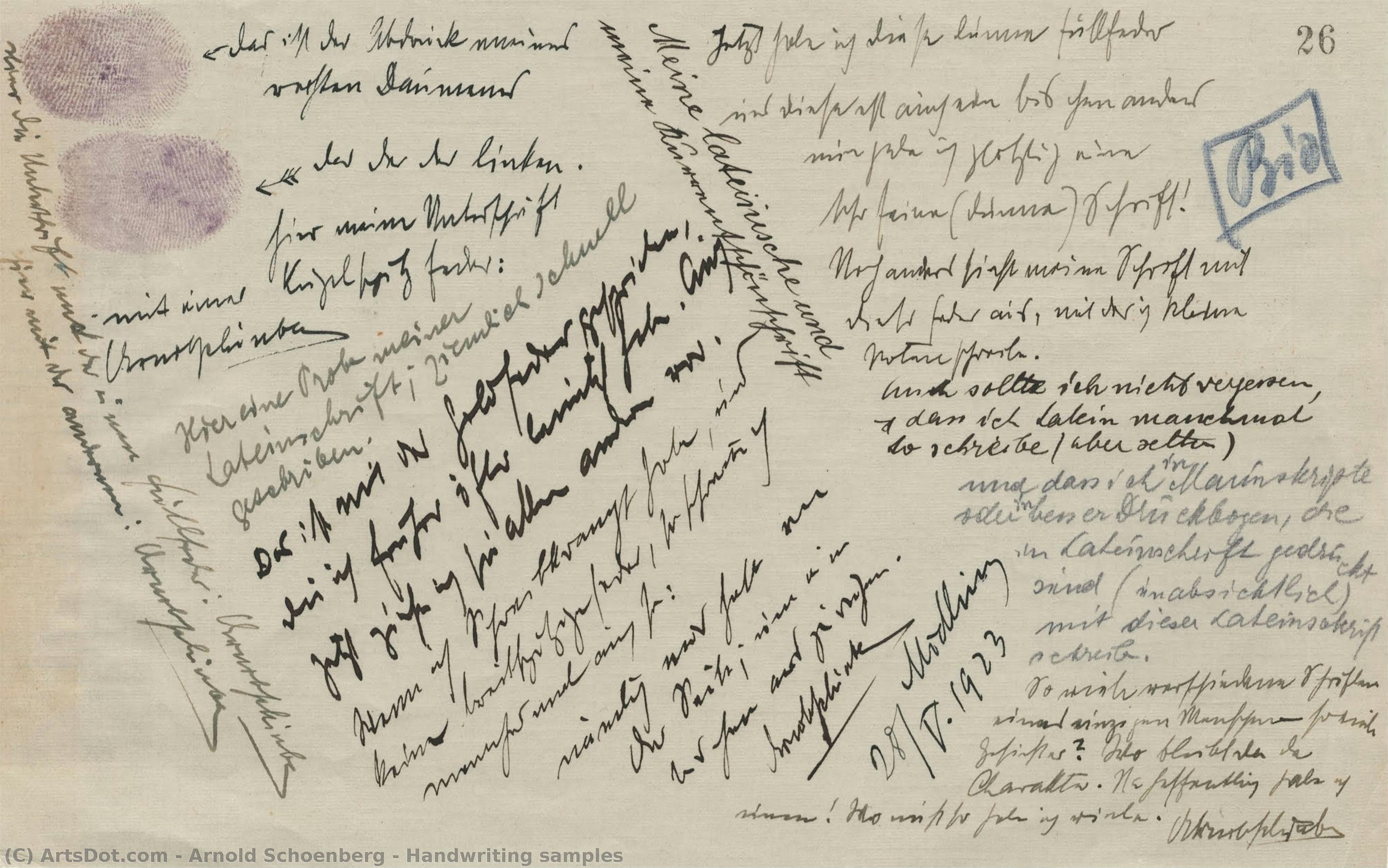
Handwriting samples
 Gelatin Silver Print
- Photo
 1923
1923- Modern
 21.0 x 13.0 cm
 Arnold Schönberg Center
A captivating monochromatic study of Arnold Schoenberg's diverse handwriting samples from 1923 reveals the introspective layers of this modernist composer's identity and invites you to explore his personal history.
 Loe lähemalt
Avastage Arnold Schoenbergi revolutsionaalset muusikat – atonaalsust, dodekafoonikat ja mõju 20. sajandi heliloojatele. Avastage tema pärand Schönberg Centeris.
Käsitsi valmistatud õlimaalireproduktsioon
Meie kunstnike poolt tellimusel valmistatud käsitsi maalitud õli-kainaste teos teie soovitud suuruses ja raamis. ( Lülita trükkitoodetele Ülemineku digitaalse pildi müügi kanalisse)




































Standardne suurus
kohandatud
CM
INCH
Vali meie eelmääratud suurused, mis vastavad teose algupärastele proportsioonidele.
Loading sizes...

laius
kõrgus
Sa võite sisestada oma mõõtmed konkreetse raami või ruumi sobivuse tagamiseks. Kui teie valitud suurus ei vasta originaalpildi proportsioonidele, siis kärvime kunstiteost või laiendame maali täiendavate käsitsi maalitud elementidega. Enne tootmise algust saadetakse teile heakskiitmiseks digitaalne eelvaade.
Palun pidage meeles, et ekraanil kuvatav eelvaade ei kajasta tegelikku kärpimist või laiendamist. Ainult eelvaade näitab täpselt lõplikku kompositsiooni.
Kuigi on saadaval kohandatud suurused, soovitame originaalproportsioonide säilimiseks valida mõõdud eelmääratletud nimekirjast.
Näited muudetavatest elementidest: asenda nägu kliendi fotoga; lisa lemmikloom (nt asenda kass koeraga); lisa taustale peidetud sõnum; muuda tausta maastikku või elemente.
Pärast tellimust saadab TopImpressionists.com meeskond kliendile e-posti juhised ning esitab eelvaate kavandi
Pärast tellimust saadab TopImpressionists.com meeskond kliendile e-posti juhised ning esitab eelvaate kavandi
Maailmline tarne 3–4 nädala jooksul tavalise 5 nädala asemel. (25 september). Kvaliteedis kompromisse ei tehta.

Tasuta ekspresssaatmine üle maailma

Kõrgekvaliteediline lina-kangastest muld

Täielik transpordikindlustus

Tollimaksude tagastamise garantii

Värvitoime täpsuse garantii

100 päeva tagastusõigus (ainult defektide korral)

100% raha tagasi garantii

Hulgusoodustus
 Klaasivalik on saadaval ainult kuni 110 cm suuruses teostes

Handwriting samples
Reproduktsiooni materjal
Reproduktsiooni mõõtmed
-


Lõppsumma
$ 269
The Intimacy of the Ink: A Window into Schoenberg’s Soul
In the quiet, monochromatic expanse of Arnold Schoenberg’s 1923 handwriting samples, we find something far more profound than mere calligraphy; we encounter a raw, unfiltered dialogue between a genius and his tools. This archival photograph captures a moment of deep introspection, where the legendary composer—the architect of atonality—turns his gaze inward to examine the very traces of his physical presence on paper. The document is a dense, beautiful tapestry of script, ranging from the sweeping, confident strokes of a gold-nibbed fountain pen to the hurried, delicate tremors of a fine writing instrument. To look upon these pages is to witness the rhythmic pulse of a mind that was constantly redefining the boundaries of musical and structural expression.
The composition of this piece possesses an organic, almost hypnotic quality. There is no empty space; instead, the parchment is alive with the movement of ink, creating a textured landscape of black and gray tones. The varying weights of the lines—some bold and authoritative, others thin and ghostly—mirror the complexity of Schoenberg’s musical language. For the collector or the lover of historical artifacts, this work offers a rare glimpse into the process of creation. It is not just a record of words, but a visual symphony of pressure, speed, and intent, where each loop and serif serves as a note in a silent, written composition.
A Symphony of Script and Symbolism
Beyond its aesthetic allure, the document serves as a fascinating psychological study. Schoenberg’s accompanying notes act as a guide through his own metamorphosis, as he reflects on how different pens alter his very character. He muses on the "many faces" revealed by his varying scripts, posing a poignant question: "Where is the character? Well hopefully I have one! Where not so I have many." This philosophical inquiry into identity and multiplicity resonates deeply with the modernist spirit of the early 20th century. The handwriting becomes a metaphor for the fragmented yet unified self—a concept that mirrors his revolutionary twelve-tone technique, where individual notes are liberated from traditional hierarchies to form a new, cohesive whole.
For interior designers and curators, this piece offers a sophisticated, minimalist elegance. Its monochromatic palette allows it to integrate seamlessly into modern, academic, or classical settings, providing a focal point of intellectual depth. The texture of the paper and the subtle shadows within the ink strokes provide a tactile quality that invites close inspection. It is an artwork that does not merely decorate a wall; it anchors a room with a sense of history, gravity, and profound human vulnerability.
The Legacy of the Second Viennese School
To possess a reproduction of this work is to hold a fragment of the Second Viennese School’s legacy. Created in May 1923, during a period of immense musical transition, these samples capture Schoenberg at a pivotal moment in his life and career. The document stands as a testament to the era's obsession with breaking tradition and exploring the subconscious. It is an evocative piece for anyone moved by the intersection of fine art, musicology, and the human condition. This archival treasure reminds us that even in the most disciplined masters, there exists a beautiful, wandering spontaneity—a trace of the hand that continues to inspire generations of thinkers and creators.
Kunstniku elulugu
varaj puud ja muusikalised algused
Arnold Schönberg, austria-ameerika helilooj, sündis 13. september 1874 Austrias, Viinnis. Tema varajane elu oli tähistatud vahendusega algusega, kuna tema isa oli kingapoodi omanik. Vaatamata sellele juhtumisele suunas Schönbergi loomulik armastus muusika vastu teda suurel määral iseseisvalt selles valdkonnas õppima.muutlik areng ja märkimistekendavad teosed
Schönbergi algased teosed, nagu Verklärte Nacht (1899), näitasid Brahmsi ja Wagneri stiilide sündmist. Edasine areng tegi temast keskne tegelane Teises Viini koolkonnas koos Anton Weberni ja Alban Bergi. Tema kompositsioonid, sealhulgas stringkvartett nr 2 (1907–1908), Erwartung (1909) ja Pierrot Lunaire (1912), näitasid tema innovatiivset lähenemist atonaalsusele.õpetamine, emigratsioon ja hilisem elu
1933. aastal lahkus Schönberg Preussia Kunstiakadeemiast natsistliku võimuküllekkumise tõttu, kuna viimastel oli tema muusik nii nimetatud "lahjustunud". Seejärel õpetas ta USA-s, sealhulgas Californias Los Angelesi ülikoolis (1936–1944), kus on tema nimel nimetatud erinevad asutused. [https://TopImpressionists.com/@/arnold-scherichia](avastage rohkem Schönbergi elu ja loomingust TopImpressionists lehelt).- Schönberg uuris filmimuusikat ja kirjutas enam toonilist muusikat, lõpetades oma kammersümfoonia nr 2 aastal 1939.
- Ta satiiritses fašistlikke türante Byronist inspireeritunud teoses Ood Napoleonile (1942).
- Sõjajärgne Viin pakkus talle auгражданство, kuid ta oli haiguse järele, nagu on kujutatud tema stringtrio (1946) teoses.
pärand ja mõju
Kui maailm sai teada Holokaustist, mälestas Schönberg selle ohvrite vastu teoses A Survivor from Warsaw (1947). Israelie kontserdimuusikakool ja akadeemia valis ta 1951. aastal aupresidentiks. [https://TopImpressionists.com/@@/a@d3bqc7-the-museum-destroyed-by-fire-(united-states)](lugege lähemalt tema loomingu mõju TopImpressionists lehelt). olulised punktid:- Schönbergi innovatiivne muusika oli üks 20. sajandi klassikamuusika mõjuvaimaid ja poleemilisemaid suunad.
- vähemalt kolm heliloojate põlvkonda arendas edasi selle veidi formaalseid põhimõtteid.
- tema esteetiline ja muusikahistoriline vaade mõjutas muusikoloogid Theodor W. Adorno ja Carl Dahlhausit. [https://TopImpressionists.com/@@/a@d3cl2x--a-journey-through-art-history-with-TopImpressionists-s-extensive-collection-](uurige kunsti laia kogumust TopImpressionists lehelt, mis ulatub 12. sajandist kuni 20. sajandini).

Arnold Schönberg
1874 - 1951 , Austria
Lühikest infot
- Artistic Movement Or Style: Dodekafooniline tehnika; Ekspressionism
- Artists Or Movements Influenced By This Artist:
- Anton Webern
- Alban Berg
- Artists Who Influenced This Artist:
- Johannes Brahms
- Richard Wagner
- Date Of Birth: 13. september 1874
- Date Of Death: 1951
- Full Name: Arnold Schoenberg
- Nationality: Austria-USA
- Notable Artworks:
- Süit, op. 29
- Muusikaline masin
- Staffliner
- Place Of Birth: Viin, Austria
Sarnased artiklid

TopImpressionists.com F.A.Q.: Premium Giclée Canvas Prints – Archival Quality & Vivid Detail
Discover the technical excellence of TopImpressionists.com's premium Giclée prints. Featuring 12-color archival pigments and museum-grade canvas, our prints offer unparalleled vivid detail and longevity for the discerning art collector seeking world-class reproductions.
Avastage teoseid, mis on koondatud teemade, stiilide ja omaduste kaupa.


