


 Vaata sisu
 Jaga teost
 Jaga
Jaga
 Detailid
 Õppekate juhend

 Laadi alla
 Sarnased teosed
 Röntgenuuring
 Slaidietendus
 Statistika
Weeping Willow (8)


 Loe lähemalt
Avastage impressionismi suurmeister Claude Moneti maailm, kes jäädvustas ikoonilistes maastikudes nagu Veeputked ja Høistud hävetava valguse ja värvi.
Giclée / Kunstiprint
Muuseumikvaliteediga giclée- või kangasprint kiire tootmisega ja paindlikud viimistlusvõimalused. ( Telli käsitsi maalitud reproduktsioon Ülemineku digitaalse pildi müügi kanalisse)




P118B €10

P118H €10

P118W €10

P438Z €10

P508JH €12

P508YH €12

P805H €10

P805Z €10

P919BZ €10

P919G €10

P919XJ €10

P959ZH €10

P968JZ €12

W106C €8

W218G €10

W218JH €8

W218Y €10

W307PJ €10

W316G €10

W316PJ €8

W316Y €10

W398PJ €8

W4111J €10

W500HY €15

W500JH €15

W692G €12

W849H €8

W940BG €15

W953PJ €8




Standardne suurus
kohandatud
CM
INCH
Vali meie eelmääratud suurused, mis vastavad teose algupärastele proportsioonidele.
Loading sizes...

laius
kõrgus
Sisestage vajalik laius ja kõrgus, et see sobiks teie raamile või seinale. Trükki saab ainult lõigata, seda ei saa kunagi pildist suuremaks teha, seega ka differentse vormiga suurus kaotab osa pildist. Enne trükkimist saadame teile kinnitamiseks digitaalse näidisprojektsiooni. Sellel lehel näidatud pilt ei kujuta reaalset lõiget — seda näitab ainult näidisprojekttsioon.
Ülemaailmne tarne () 2 nädala jooksul, tavalise 4/5 nädala asemel. (22 oktoober)

Tasuta ekspresssaatmine üle maailma

Kõrgekvaliteediline lina-kangastest muld

Täielik transpordikindlustus

Tollimaksude tagastamise garantii

Värvitoime täpsuse garantii

100 päeva tagastusõigus (ainult defektide korral)

100% raha tagasi garantii

Hulgusoodustus
 Klaasivalik on saadaval ainult kuni 110 cm suuruses teostes

Weeping Willow (8)
Giclée / Kunstiprint
Reproduktsiooni mõõtmed
-


Lõppsumma
€ 61
The Weeping Willow’s Silent Grief
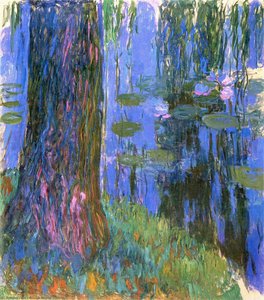
Claude Monet's "Weeping Willow (8)" isn’t merely a depiction of a tree; it’s a distilled essence of melancholy, a poignant meditation on loss rendered in the vibrant, shimmering language of Impressionism. Painted in 1918, during a period of profound personal upheaval for the artist – following the deaths of his beloved wife, Alice, and his son, Jean, amidst the horrors of World War I – this work transcends its subject matter to become a universal symbol of sorrow and remembrance. The painting captures not just the physical form of the willow, but also the emotional weight it carries, reflecting Monet’s own internal struggles with grief and the unsettling atmosphere of a world shattered by conflict.
Monet's genius lies in his ability to capture fleeting moments of light and color, transforming the ordinary into the extraordinary. Here, he employs a technique characterized by loose, broken brushstrokes—a hallmark of Impressionism—to create an effect of shimmering movement and atmospheric depth. The tree’s foliage is rendered in a riot of purples, blues, and greens, not with photographic realism but with a sensitivity to color relationships that evoke both the beauty and the sadness inherent in nature. Notice how Monet doesn't meticulously detail each leaf; instead, he uses dabs and dashes of paint to suggest their form and texture, creating an impression of movement and vitality despite the underlying melancholy.
The painting’s historical context is crucial to understanding its emotional resonance. Created during a period of immense national mourning in France following the devastating losses of World War I, "Weeping Willow (8)" can be interpreted as a direct response to this collective grief. Monet, deeply affected by the loss of his family and witnessing the widespread suffering around him, channeled his emotions into his art. The willow tree itself has long been associated with mourning and sorrow in Western culture—its drooping branches mirroring the downward trajectory of despair. The painting’s placement within a series of willow studies further emphasizes this theme, suggesting a deliberate exploration of the subject's symbolic power.
A Masterclass in Impressionist Technique
Monet’s masterful use of light and color is central to the painting’s impact. He doesn’t aim for precise representation but rather to capture the *impression* of the scene—the way light filters through the leaves, the shifting hues of the sky, and the overall atmosphere of the moment. The painting is dominated by a diffused, almost ethereal light, creating a sense of both beauty and fragility. Observe how he uses complementary colors – such as purple and yellow – to intensify the vibrancy of the foliage and create visual interest. The loose brushwork allows for a remarkable luminosity, as if the paint itself is shimmering with reflected light.
Technically, "Weeping Willow (8)" was executed in oil on panel, a medium that allowed Monet to achieve both delicate detail and expressive brushstrokes. The texture of the panel surface subtly contributes to the painting’s overall effect, adding another layer of visual interest. The composition is carefully balanced, with the tree occupying a central position while the surrounding landscape provides context and depth. The inclusion of subtle details—such as the suggestion of a distant figure observing the tree—adds a sense of narrative and invites the viewer to contemplate the scene’s meaning.
Symbolism and Emotional Depth
Beyond its technical brilliance, "Weeping Willow (8)" is rich in symbolism. The willow tree itself represents mourning, loss, and remembrance – themes that resonated deeply with Monet during this period of personal tragedy. Its drooping branches evoke a sense of vulnerability and sorrow, while its vibrant colors suggest the enduring beauty of nature even in the face of adversity. The painting’s title—"Weeping Willow (8)"—hints at a larger body of work exploring this subject, suggesting a deliberate and sustained engagement with the tree's symbolic power.
Furthermore, the painting can be interpreted as a reflection on the passage of time and the inevitability of loss. The willow’s ancient roots symbolize the enduring nature of memory, while its delicate branches represent the fragility of life. Monet’s ability to capture these complex emotions with such sensitivity is what makes "Weeping Willow (8)" a truly remarkable work of art—a poignant reminder of the beauty and sorrow that coexist in the human experience.
Reproductions and Artistic Legacy
Handmade oil painting reproductions of Monet's works, including “Weeping Willow (8),” are available on platforms like TopImpressionists.com, offering art enthusiasts and collectors a chance to own a piece of this iconic masterpiece. These reproductions meticulously capture the essence and beauty of the original painting, faithfully recreating Monet’s distinctive style and emotional depth. They serve as an accessible way to experience the power of Impressionism and appreciate Monet's profound artistic vision.
For those seeking further information on Claude Monet and his work, resources such as the Claude Monet page on TopImpressionists.com provide a wealth of biographical details, images, and scholarly articles. Additionally, museums like the Columbus Museum of Art (/art/list/?Filter=8YE8P6-Claude-Monet-Weeping-Willow) and the Allen Memorial Art Museum (/art/list/?Filter=A@D3C4WT-The-Allen-Memorial-Art-Museum-(United-States)) offer valuable collections and exhibitions dedicated to Monet’s legacy.
Küsimused ja vastused
Kas saan näha teose „Weeping Willow (8)“, autor Claude Monet röntgenpilti?
Teose „Weeping Willow (8)“, autor Claude Monet röntgenvaade on saadaval selle Röntgenkiirgus lehel: see on interaktiivne pildi uurimine läbi üheksateist optilise kihti.
Kuidas tehnika ja stiil teoses "Weeping Willow (8)" kokku saavad?
„Weeping Willow (8)“, autor Claude Monet ühendab endas Oil On Panel tehnikat ja Impressionism stiili. Tehnika ja suundumus kirjeldavad teose valmistusviisi ja stiili.
Kust saan leida statistikat teose „Weeping Willow (8)“, autor Claude Monet kohta?
Teose „Weeping Willow (8)“, autor Claude Monet lehe Statistika lehel on esitatud avalikud külastusstatistika: selle teose kuutlikud külastused, võrdlus kunstniku kõige vaadatavamate teostega ning külastajate päritolu.
Sarnased teosed



Kunstniku elulugu
Valgusest Üleandev Elu: Claude Monet Maailm
Oscar-Claude Monet, nimi, mis on sünkronneeritud impressionismiga, ei olnud pelgalt maastikumaalija; ta oli hävetavate hetkede kroonik, valguse ja värvi poet. Sündinud Pariisis 14. novembril 1840, võttis tema varane elu ootamatut suunda, kui tema pere kolis viieaastaselt Normandiasse, Le Havre’i. Kuigi isa lootis algselt poja suunduvat ärikarjäärile, tõusel noore Claude loomulik kunstiline talent kiiresti üles, välendudes esialgselt kohalikult müüdavate südamlikute südametutega füüsiliste karikatuuride näol – see oli tunnistus nii tema oskustest kui ka ettevõtlusvaimust. Siiski oli just kohtumine Eugène Boudiniga otsustav hetk. Boudin ei õpetanud Monetile lihtsalt seda, *kuud* maalida; ta sisemaas talle revolutsioonilise idee maalistamast en plein air – otse loodusest – praktikat, mis määras tema kogu kunstilist teekonda.
Moneti ametlik õpe algas Pariisis, esmalt lühikese aja Académie Suisse'is ja hiljem Charles Gleyre juhendamisel. Just siin sõlmis ta püsivaid sõprussuhteid teiste kunstnikega, nagu Auguste Renoir, luues sideme, mis põhines ühistel kunstilistel muredel ja soovil vabaneda traditsioonilise akadeemilise maali piirangutest. Tema varased teosed, kuigi näitasid tehnilist oskust, puudusid sellest eristavast häälest, mis peagi tema stiili iseloomustaks. Järgnes turbulente aega – Prantsus-Prantsia sõda sundis Monetit otsima peitu Londonist, kus ta süvenes inglise maastikukunstnike, nagu J.M.W. Turner, tööde uurimisele, imeldes nende atmosfäärilisi efekte ja värvi innovaatilist kasutamist.
Esteetilise revolutsiooni sünn\",\"p
Pärast Prantsusmaale naasmist sai Monet keskseks figuuriks kasvavas kunstilises rebelluses. Erinevalt konservatiivsetest standardidest Salonis, ühendas ta jõudud teiste sarnaste vaadanetega kunstnikud, et korraldada iseseisvaid näitusi. Näitus 1974. aastal tõuus esile murdepunktina mitte ainult Monetile, vaid kogu kunstimaailmale. Just siin eksponeeriti tema teost „Impression, soleil levant“ (Mulhet, tõuslev päike) – hämarat kujutlust Le Havre’i sadamast koit\", ning sellest sündis ka halvatud termin "impressionism". Kuid nimi juurdus ja arenes auastuseks liikumisele, mis püüdis tabada stseenist subjektiivset *muljet* rather than selle täpset esitamist.
Moneti iseloomulik stiil õitsines selle perioodi jooksul: lahtised, nähtavad pintooned, vibrantne ja sageli segamatu värv, mida rakendati külmikülgedele (tehnika tuntud kui „murdetud värv“) ning vankumatu keskendumine valguse ajutuste omaduste tabamisele. Ta jälgi väsimatult oma plein air praktikat, töötades kiiresti, et ülesvõtta oma vahetud tajumised enne kui muutuva olukord stseenit muutaks. See pühendumus ei olnud pelgalt selle kirjeldamine, mida ta *nägi*, vaid pigem selle, kuidas ta seda *tundis* – radikaalne kõrvalekaldumine kunstilistest konventsioonidest.
Giverny: Valguse ja peegelduste paradies
1883. aastal asustas Monet Pariisi loodvestas Givernys, raamatupaduna lootes luua kodu ja aia, mis saaks olla nii tema varjupaik kui ka suurim inspiratsiooniallikas. Ta transformaeritud kinnistus põhjalikult elaboraatseks paradisaks, täidetud eksootiliste lillede, nutrade ja kõige kuulsama veepudiga, mida sildas Jaapani sild. See ei olnud pelgalt dekoratiivne aed; see oli elav laboratoorium, kus Monet sai kontrollitud tingimustes uurida valguse mõju veele, lehtedele ja peegeldustele.
udTema elu viimased aastakümed olid peaaegu täielikult pühendatud Givernys asuva veepudaga maaliamisele. Ta alustas monumentaalset veepudide sarja (Nymphéas), luues hiiglaslikke linate, mis kujutasid veepudingu pindast pidevalt muutuvana värvide ja valguse kanga.
Pärand: Püsiv mõju kunstiloojale
Claude Moneti mõjul kunstiloojale on mõõdamatu. Ta ei olnud pelgalt impressionismi asutaja; ta muuts fundamentaalselt viisi, kuidas kunstnikud tajusid ja esitasid enda ümber olevat maailma. Tema rõhuasetus subjektiivsele kogemusele, plein air maaliarmastus ja innovatiivsed tehnikad tegid teed kaasaegse kunsti avastustele abstraksioonide ja mitte-esitavate vormide suunas.
Monet saavutas oma elu jooksul märkimisväärset kommersialist edu – see on oma ajastu avantgardistide puhul haruldane. Tema töö inspireerib edasi hämmasti ja võlustab publikut üle maailma, kinnitades tema positsiooni ühe olulisema West-Euroopa kunsti kujutajana. Ta surmas 5. detsembril 1926, jättes järele pärandi, mis kõlab läbi põlvkonnade kunstnike ja kunstihuviliste. Tema meistriteoste olulised kogumikud on säilitatud prestiižsetes institutsioonides nagu Musée d'Orsay ja Musée Marmottan Monet Pariisis, tagades, et tema visioon jätkab maailma valgustamist.
Olulised kunstilised tehnikad
- Plein Air maaliarmastus: Tema arengu keskne element, mis võimaldas otsest valguse ja atmosfääri jälgimist.
- Murdetud värv: Puhtade värvitoonide väikeste tõlgenduste rakendamine külmikülgedele optilise segunemise saavutamiseks.
- Sarjamaalimine: Sama teema kujutamine erinevates valgus- ja ilmastikuoludes – demonstreerides aja ja valguse transformatiivset jõudu.

Claude Monet
1840 - 1926 , Prantsusmaa
Lühikest infot
- Artistic Movement Or Style: Impressionism
- Artists Or Movements Influenced By This Artist: ['Modern Art']
- Artists Who Influenced This Artist:
- Eugène Boudin
- J.M.W. Turner
- Date Of Birth: 14. november 1840
- Date Of Death: 5. detsember 1926
- Full Name: Claude Monet
- Nationality: Prantsuse
- Notable Artworks:
- Impressioon, Tõusev päike
- Veilised
- Rukikuhilad
- Roueni katedraal
- Place Of Birth: Pariis, Prantsusmaa
Sarnased artiklid

Impressionism's Masterpieces: 10 Paintings That Defined a Movement | TopImpressionists
Journey through Impressionism's heart with 10 iconic paintings by Monet, Renoir & Degas. Explore light, color & the stories behind these masterpieces. Find museum-quality art reproductions and elevate your home decor on TopImpressionists.com.

Impressionistliku Maastiku Tipp 10 Meisterteost: Kunsti ja Disaini Klassika
Avasta impressionistliku maastikukunstiga 10 legendaarset meistriteost! Monet, Renoir jt. värvilised maailmad ja kunstnike lood – TopImpressionists.com pakub kaunite kunstide ajaloo klassikat seinakaunistuseks. Uuri kollektsiooni!

Claude Monet: 25 Meisterteost Valgusest ja Värvidest | TopImpressionists.com
Avastage Claude Monet 25 kõige ikoonilisemat teost! Sukelduge valgusest ja värvidest tulvil impressionismi maailma. Kunstiteosed, maalid ja seinakaunistused TopImpressionists.com-is. Avasta täielik kollektsioon online!

Evocations of Place: A Historical Journey Through Landscape Art
Explore the rich history of landscape art with TopImpressionists. Discover renowned artists, movements like Impressionism & tonalism, and expert guidance for collecting timeless pieces. Find your perfect serene escape today!

Impressionistic Landscapes: 10 Masterpieces That Changed Art & Decor
Journey into the heart of Impressionism! Explore 10 masterpieces by Monet, Renoir & Degas that revolutionized landscape art. Discover their stories, techniques & find museum-quality reproductions to elevate your home decor on TopImpressionists.com.
Avastage teoseid, mis on koondatud teemade, stiilide ja omaduste kaupa.


