


 Vaata sisu
 Jaga teost
 Jaga
Jaga
 Detailid
 Õppekate juhend

 Laadi alla
 Sarnased teosed
 Röntgenuuring
 Slaidietendus
 Statistika
Model


Cristóbal Balenciaga’s ‘Model’ (1967) captures a striking tweed suit – elegant, geometric & timeless. Explore this iconic fashion photograph and discover the legacy of the 'Master Couturier'.
 Loe lähemalt
Avastage Cristóbal Balenciaga Eizaguirre (Balenciaga) maailma, revolutsionaarse Hispaania kostumimeistri, kes tuntud on oma elegantsete skulpturaalsete disainide ja avantgardse mõjuga. Avastage maaliseid nagu 'Tree Roots'.
Sellel lehel kuvatav kunstiteos on kaitstud autoriõigusega, mis tähendab, et meil ei ole seaduslikku õigust luua või müüa identset reproduktsiooni. Seda kaitset rakendatakse rahvusvaheliste kokkulepete alusel, nagu näiteks Berne konventsioon ning riiklike seadustega, sealhulgas nendega, mida on sätestatud USA autoriõiguse seadus – 17. peatükk.
Austasena ja seaduslikuna alternatiivina pakume originaalist inspireeritud, käsitsi maalitud isikupärastatud teoseid. Meie osutavad ja professionalsed kunstnikud uurivad hoolikalt originaali stiili, meelemoi ja kunstilist olemust, et luua uus, ainulaadne teos, mis tekitab sama tunnet – olles samal ajal omaette originaalne looming.
See meetod järgib täielikult autoriõiguse reegleid, kuna see ei põhine kaitstud kunstiteose kopeerimisel või dupliteerimisel. Selle asemel on tegu loova reinterpreetatsiooniga – uue maaldisega, mis on algteosest inspireeritud, kuid ei ole sellest identiline.
Käsitsi valmistatud õlimaalireproduktsioon
Meie kunstnike poolt tellimusel valmistatud käsitsi maalitud õli-kainaste teos teie soovitud suuruses ja raamis. ( Lülita trükkitoodetele Ülemineku digitaalse pildi müügi kanalisse)




P118B €10

P118H €10

P118W €10

P438Z €10

P508JH €12

P508YH €12

P805H €10

P805Z €10

P919BZ €10

P919G €10

P919XJ €10

P959ZH €10

P968JZ €12

W106C €8

W218G €10

W218JH €8

W218Y €10

W307PJ €10

W316G €10

W316PJ €8

W316Y €10

W398PJ €8

W4111J €10

W500HY €15

W500JH €15

W692G €12

W849H €8

W940BG €15

W953PJ €8




Standardne suurus
kohandatud
CM
INCH
Vali meie eelmääratud suurused, mis vastavad teose algupärastele proportsioonidele.
Loading sizes...

laius
kõrgus
Sisestage vajalik laius ja kõrgus, et teos sobiks teie raamile või seinale. Kuna tegu on käsipainatud teosega, siis erineva kujuga suuruse korral võib kunstnik jätta pildi ümber veidi rohkem marginaali või lõigata osa ära — valik on teie. Enne maali alustamist saadame teile kinnitamiseks digitaalse näidisprojektsiooni. Sellel lehel näidatud pilt ei kajasta tegelikku tulemust — seda näitab ainult näidisprojekttsioon.
Näited muudetavatest elementidest: asenda nägu kliendi fotoga; lisa lemmikloom (nt asenda kass koeraga); lisa taustale peidetud sõnum; muuda tausta maastikku või elemente.
Pärast tellimust saadab TopImpressionists.com meeskond kliendile e-posti juhised ning esitab eelvaate kavandi
Pärast tellimust saadab TopImpressionists.com meeskond kliendile e-posti juhised ning esitab eelvaate kavandi
Maailmline tarne 3–4 nädala jooksul tavalise 5 nädala asemel. (24 oktoober). Kvaliteedis kompromisse ei tehta.

Tasuta ekspresssaatmine üle maailma

Kõrgekvaliteediline lina-kangastest muld

Täielik transpordikindlustus

Tollimaksude tagastamise garantii

Värvitoime täpsuse garantii

100 päeva tagastusõigus (ainult defektide korral)

100% raha tagasi garantii

Hulgusoodustus
 Klaasivalik on saadaval ainult kuni 110 cm suuruses teostes

Model
Reproduktsiooni materjal
Reproduktsiooni mõõtmed
-


Lõppsumma
€ 236
The Enigmatic Silhouette: Unpacking Cristóbal Balenciaga’s ‘Model’
Cristóbal Balenciaga’s 1966 photograph, “Model,” isn't merely a portrait; it’s a distilled essence of the designer’s revolutionary approach to fashion. The image captures a woman, her form enveloped in a striking tweed suit – a garment that immediately speaks of geometric precision and timeless elegance. Yet, beneath this surface simplicity lies a profound exploration of structure, proportion, and the very nature of representation. The photograph, often cited as one of Balenciaga’s most iconic works, transcends its status as a simple fashion image, offering a glimpse into the meticulous process and philosophical underpinnings of his design philosophy.
Balenciaga's genius wasn’t simply about creating beautiful clothes; it was about dissecting them, understanding their fundamental components, and rebuilding them with an almost architectural rigor. “Model” exemplifies this perfectly. The tweed itself is a deliberate choice – a robust, slightly stiff material that resists the drape of traditional fabrics, demanding a precise construction. Notice how the seams are barely visible, suggesting a layering technique designed to create volume without adding bulk. This restraint, this careful control over the fabric’s behavior, is characteristic of Balenciaga's work and reflects his deep understanding of materials – he considered himself more a craftsman than a designer in the conventional sense.
A Masterclass in Architectural Form
The suit’s silhouette isn’t simply flattering; it’s deliberately constructed to evoke a sense of solidity and strength. The fitted bodice, the subtly flared skirt – each element contributes to an overall impression of contained power. Balenciaga was deeply influenced by the art movements of his time, particularly Surrealism and Cubism, which encouraged him to deconstruct familiar forms and reassemble them in unexpected ways. This is evident in the suit’s sharp angles and its almost sculptural quality. The photograph itself becomes a study in form – a meditation on how shape can convey meaning and emotion.
The choice of David Bailey as the photographer further enhances the image's impact. Bailey, known for his stark, black-and-white portraits, captures the subject with an unflinching gaze, emphasizing her posture and the suit’s impeccable tailoring. The lighting is carefully controlled, highlighting the textures of the tweed and casting subtle shadows that accentuate the garment’s three-dimensional form. Bailey's skill lies in revealing the underlying structure of the image, mirroring Balenciaga’s own approach to design.
Echoes of a Lost Era: Context and Legacy
“Model” was created during a pivotal moment in fashion history – the mid-1960s. While Yves Saint Laurent was injecting youthful energy into Parisian couture with his Le Smoking tuxedo, Balenciaga remained steadfastly committed to his own vision of timeless elegance. His designs were often perceived as being ahead of their time, challenging conventional notions of beauty and femininity. The photograph serves as a reminder of this period of creative experimentation and the enduring influence of Balenciaga’s work.
The image also speaks to the broader cultural context of the era – a fascination with architecture, technology, and industrial design. Balenciaga's designs were often described as “architectural,” reflecting a growing interest in geometric forms and functional aesthetics. The photograph captures this spirit perfectly, suggesting that fashion could be both beautiful and intellectually stimulating.
A Timeless Icon: Reproduction and Inspiration
Today, “Model” remains one of the most recognizable images in the history of fashion photography. Its enduring appeal lies in its combination of technical skill, artistic vision, and emotional resonance. Reproductions of this photograph are highly sought after by collectors and interior designers alike, who appreciate its timeless elegance and its ability to evoke a sense of sophistication and refinement. When commissioning a hand-painted reproduction, it’s crucial to select an artist who understands Balenciaga's meticulous approach to detail and his commitment to capturing the essence of his designs.
Küsimused ja vastused
Millist tooni suundub "Model"?
Teose „Model“, autor Cristóbal Balenciaga Eizaguirre domineeriv toon on Amber to Saffron. See toon on paleti alusvärv.
Kust saan leida statistikat teose „Model“, autor Cristóbal Balenciaga Eizaguirre kohta?
Statistika teose „Model“, autor Cristóbal Balenciaga Eizaguirre kohta on saadaval teose Statistika lehel: teose kuukaudsed külastused, kunstniku teoste külastused ning viimaste külastajate riikide ja keelte jaotus.
Kas teosele „Model“, autor Cristóbal Balenciaga Eizaguirre on saadaval diapositatsioon?
Teost „Model“, autor Cristóbal Balenciaga Eizaguirre saab vaadata diapositena teose Slideshow lehel.
Kunstniku elulugu
varajärgi ja karjäär
Cristóbal Balenciaga Eizaguirre, see kuulus spanioleide moodekunstnik, sündis 1895. aastal Hispaania Getariasse. Ta on maailma tunnustatud eelkõige Balenciaga moemärgi asendajana, mis sai kõrgeloodusega haute couture ehk luksusmoe sümboliks. Balenciaga maine kompromissitu standardidega on talle andnud nii Christian Diori nimetuse "meie kõigi meistri" kui ka Coco Chanelini tunnustuse "ainult ainulaadne modist tõelises mõttes".kunstiline stiil ja mõjud
Balenciaga loomingut iseloomustasid elegants, lihtsus ja täiuslik tähelepanu detailidele. Tema tööd olid sügavalt mõjutatud avantgardistli kunstiliikumistest, mis peegeldus tema julgetes ja innovatiivsetes disainides.Tema silmapaistvate teoste hulka kuuluvad:
- "uuring laul laulule iv" (naivistlik kunst / primitivismus), maalidus, mis näitab tema eksperimentaalset lähenemist moele.
- "puujuurid" (50 x 100 cm, postimpressionism, õli kindel), teos, mis demonstreerib tema võimet tabada looduse olemust.
- "akrobaat" (surrealism, õli kindel), maalidus, mis rõhutab tema tahtlikku piiride laiendamist moemaailmas.
muuseumid ja kogumikud
Balenciaga loomingut on võimalik kohtata erinevates muuseumides ja kollektsioonides, sealhulgas:- Museo de Bellas Artes de Asturias (Hispaania), mis esitleb mitmekülgist Euroopa kunsti.
- Colección Andrés Blaisten (Meksiko), meksika kunstikogu, mis tutvustab Ladina-Ameerika teoseid.
- tulekahvuses hävinud muuseum (USA), tragöödia Ameerika kunstiloos.
pärand ja mõju
Balenciaga pärand ulatub kaugele tema moekujundustest. Ta on mõjutanud terveid disainerite põlvkondi ning tema tööd on jätkuvalt austatud nende ajatuse ja elegantsi eest. Cristóbal Balenciaga Eizaguirre on jäänud ikoniliseks kujundajaks haute couture maailmas.- vaadake rohkem teoseid autori Cristóbal Balenciaga Eizaguirre kohta aadressil https://TopImpressionists.com/@/cristobal-balenciaga-eizaguirre
- uurige Museo de Bellas Artes de Asturias kollektsiooni aadressil /et/art/show/art-d3atkt-et/
- saage rohkem teavet Colección Andrés Blaisten kohta aadressil https://TopImpressionists.com/@@/a@d3bqc7-the-museum-destroyed-by-fire-(united-states)

Cristóbal Balenciaga Eizaguirre
1895 - 1972 , Hispaania
Lühikest infot
- Artistic Movement Or Style: Avangardne kunst / Surrealism
- Artists Or Movements Influenced By This Artist: ['Hubert de Givenchy']
- Artists Who Influenced This Artist:
- Christian Dior
- Coco Chanel
- Date Of Birth: 21. jaanuar 1895
- Date Of Death: 23. märts 1972
- Full Name: Cristóbal Balenciaga Eizaguirre
- Nationality: Hispaania
- Notable Artworks:
- Uurimus teosele 'Näeks laul IV'
- Puujuurid
- Acrobaat
- Place Of Birth: Getaria, Hispaania
Sarnased artiklid

Gianfranco Ferré: Deconstructing Haute Couture – A Legacy of Architectural Form
Explore the revolutionary world of Gianfranco Ferré, 'the architect of fashion.' Discover his architectural approach to haute couture, iconic Dior designs, and lasting influence on luxury style. A deep dive for collectors & enthusiasts.

Cristóbal Balenciaga: Deconstructing Haute Couture's Architectural Legacy
Explore the revolutionary world of Cristóbal Balenciaga, the 'couturier's couturier'. Discover his architectural designs, lasting influence on haute couture, and guide to collecting rare pieces. A connoisseur’s resource.

Draped Narratives: Fashion as Symbol & Subject in Historical Art
Explore the fascinating history of fashion as a symbol of power & status in art! Discover masterpieces from Gainsborough to Tissot and learn how clothing shaped societal narratives. Find museum-quality reproductions at TopImpressionists.
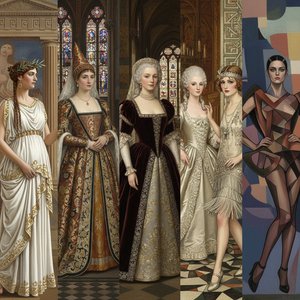
Style Through the Ages: Iconic Artworks That Defined the Evolution of Fashion Design
Explore the breathtaking intersection of fine art and high fashion. Discover how iconic masterpieces from Art Deco to Impressionism have shaped the world of luxury couture and timeless design in this curated visual journey.

The Lens of Luxury: A Visual Journey Through the Evolution and Artistry of Fashion Photography
Embark on a visual journey through the evolution of fashion photography. Discover how masters like Gianfranco Ferré blended geometry, surrealism, and texture to redefine high-fashion art for collectors and connoisseurs of luxury imagery.
Avastage teoseid, mis on koondatud teemade, stiilide ja omaduste kaupa.

