
 Eelvaade
 Saada
Saada Jaga
Jaga
 Teave teose kohta
 Juhend

 Laadi alla
 Sarnased teosed
 Röntgenuuring
 Slaidietendus
 Q&A
Q&A Statistika
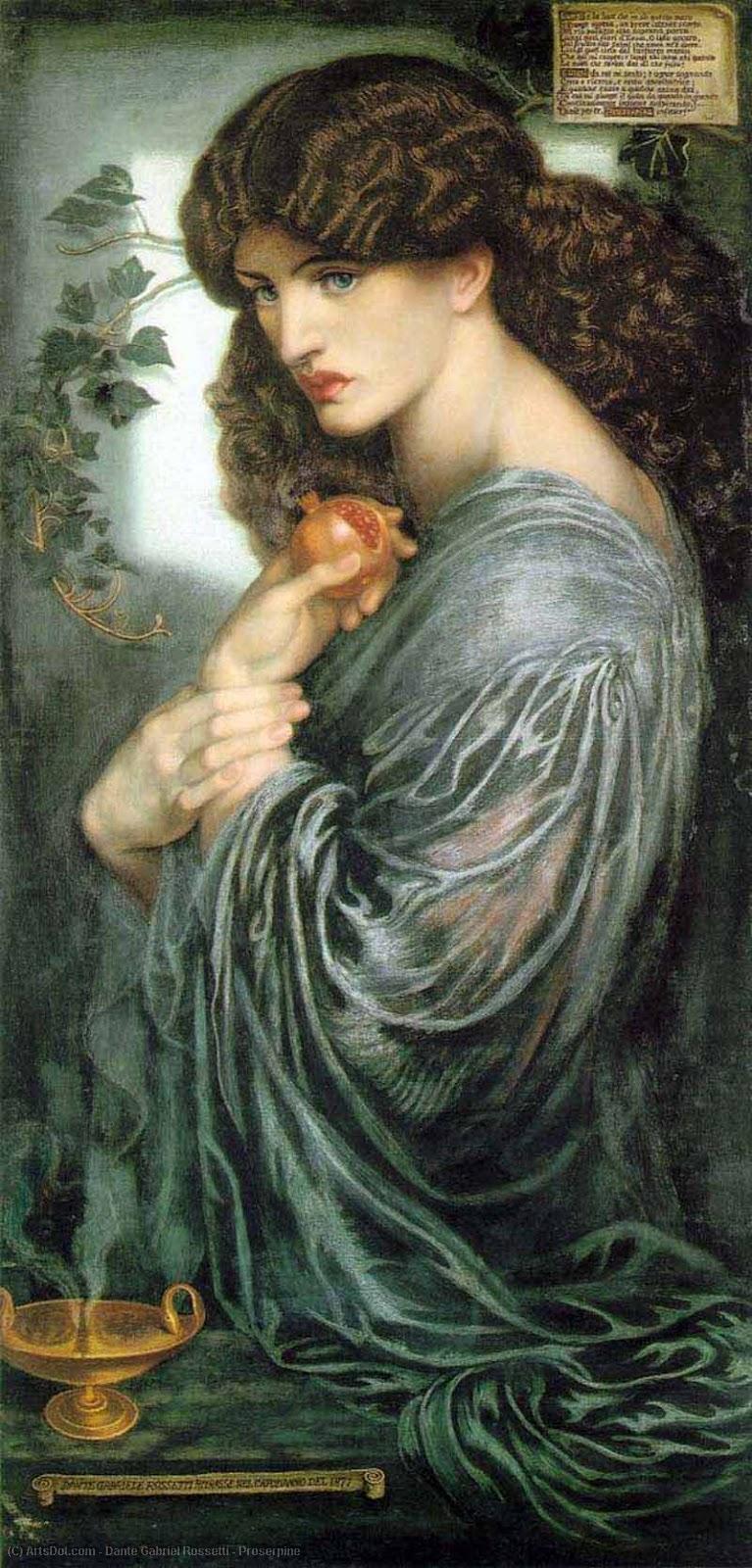
Proserpina

- 61.0 x 125.0 cm


Dante Gabriel Rossetti Proserpina on mütoloogiline ja igavene Pre-rafaeliidi teos. L Tutustu selle ajatusega meistriteosega oma kogumuses.
 Loe lähemalt
Dante Gabriel Rossetti oli suur romantik ja Pre-rafaeliitide liikme üks juhtiv mõtleja, kes kujundas viktoriaani kunstimaailma. Tema töö keskendus looduse täielikule tõelisele maalimisele ning sügavale emotsionaalsele väljendusele – oluline osa estetismi ja simbolismi liikmete maailmast.
Giclée / Kunstiprint
Muuseumikvaliteediga giclée- või kangasprint kiire tootmisega ja paindlikud viimistlusvõimalused. ( Osta käsitsi maalatud teos Lülita digitaalse pildi juurde)




P118B €10

P118H €10

P118W €10

P438Z €10

P508JH €12

P508YH €12

P805H €10

P805Z €10

P919BZ €10

P919G €10

P919XJ €10

P959ZH €10

P968JZ €12

W106C €8

W218G €10

W218JH €8

W218Y €10

W307PJ €10

W316G €10

W316PJ €8

W316Y €10

W398PJ €8

W4111J €10

W500HY €15

W500JH €15

W692G €12

W849H €8

W940BG €15

W953PJ €8




Standardne suurus
kohandatud
CM
INCH
Vali meie eelmääratud suurused, mis vastavad teose algupärastele proportsioonidele.
Loading sizes...

laius
kõrgus
Sisestage vajalik laius ja kõrgus, et see sobiks teie raamile või seinale. Trükki saab ainult lõigata, seda ei saa kunagi pildist suuremaks teha, seega ka erineva mustega suurus kaotab osa pildist. Enne trükkimist saadame teile kinnitamiseks digitaalse näidisprojektsiooni. Sellel lehel näidatud pilt ei kujuta reaalset lõiget — seda näitab ainult näidisprojektsioon.
Ülemaailmne tarne () 2 nädala jooksul, tavalise 4/5 nädala asemel. (1 november)

Tasuta ekspresssaatmine üle maailma

Kõrgekvaliteediline lina-kangas

Täielik transpordikindlustus

Tollimaksude tagastamise garantii

Värvitoime täpsuse garantii

100 päeva tagastusõigus (ainult valmistusdefektide korral)

100% raha tagasi garantii

Hulgusoodustus
 Klaasivalik on saadaval ainult kuni 110 cm suuruses teostes

Proserpina
Giclée / Kunstiprint
Reproduktsiooni suurus
-


Koguhind
€ 61
Alakinnituse kuninganna mümystika
Tate Britaini pühes hallsides avaneb akna maailma, kus müüt ja emotsioon kokku põrguvad: Dante Gabriel Rossetti Proserpina. See 1874. aastal maalis tippteos on palju enema kui pelgalt müüdiline kujustus; see on sügav meditaatsioon eksistentsi duaalsuse üle. Keskmine figuur, kade elegantses ja voolvatses sinises rõivas, vaatab välja pilguga, mis tabab igatsuse ja vaikse alistuse olemust. Kui kevadjumalanna on jäänud põrgu varjudesse kinni, kehastab Proserpina hingu, mis rippub kahe maailma vahel — Maapinna päikeseloote elu jõu ja Hadesi tumeda vaikuse kohal. Rossetti armastatud muuse, Jane Morrisi, näo kaudu infundeerib kunstnik jumalikku haavatavust korduvate inimlikkusega, luues portreedi, mis kõlastab igaühes, kes on kunagi tundnud ilusat vangistust.Pre-rafaeliitlik sümbolism meistriklass
Rossetti tehnika teoses Prolikna toimib pre-rafaeliitliku ja romantilistliku traditsiooni nurgakivina, kus iga pintoonimisel joon on täidetud sümbolilise tahtega. Edasine, lopsakas ja rohelane taust, mis on kujundatud sügavates rohelistes ja mullikatoodetes toonides, loob raske ja atmosfäärilise vaikusest koos ova teema. Tema kätes hoiab ta õuna — kiusatuse, teadmise ja kordumatute muutushetide võimsat sümbolit. See väike, füüline detail ankerib eteerilise stseen kättesaadavasse reaalsusesse. Valgus ja vari mäng tema heledal nahal ning sinise riietuse rikkalik tekstuur demonstreerivad Rossetti meisterlikkust värvi ja vormi valdkonnas. Isegi kivi pinnal restsav kuldse kausi peidetud vähimgi kohuslikkus lisab salapära, kutsumdes vaatajat mõtle jumalikale armule, mis on peitnud alla alamaailma varjud.Püsiv pärand kaasaegsetele interjööridele
Kunstikollektorile või sisustuskujundajale pakub Proserpina reproduktsioon palju enema kui pelda dekoratiivsust; see pakub sügava narratiivse sügavusega keskpunkti. Maalii rikkalik palett ja dramaatiline kompositsioon teevad sellest suurepärase lisanduse ruumidele, mis väärtustavad esteetikat ja romantilismit. Olgu see asetatud kaasaegses galeriistiilis ruumis või klassikus, rikkalikult tekstuuritud kabinetis, teos kütkub tähelepanu oma võimekuse järeel, mis kutsub peidetud mõttelust. See on teos, mis kutsub vestlust, tekitades dialooge ajalukust, müüdist ja ilu igaveneest jõust. Sellise teose omamine on kui tuua fragment viktoriaanlikust imest ja hingest modernsesse koju, tagades, et Rossetti visiiooni kurb-madal magic jätkab inspireerimist ka tulevates põlgedes.Korduvad küsimused
Kas ma saan teost „Proserpina“, autor Dante Gabriel Rossetti enne tellimist eelvaatata?
Teose „Proserpina“, autor Dante Gabriel Rossetti reproduktsiooni eelvaate saamiseks avage teose Eelvaade leht.
Millist atmosfääri toob ruumi „Proserpina“, autor Dante Gabriel Rossetti reproduktsioon?
Olles meeleoluult Romantiline, sobib teos "Proserpina" suurepäraselt ruumiks Elutuba.
Kuidas seda teost „Proserpina“, autor Dante Gabriel Rossetti saab kasutada kodukujunduses?
Teose „Proserpina“, autor Dante Gabriel Rossetti kohta on esitatud kaks soovitust: kasutus (Aktsentne element) ja ruum (Elutuba).
Kunstniku elulugu
A Life Immersed in Beauty: The World of Dante Gabriel Rossetti
Dante Gabriel Rossetti, born Gabriel Charles Dante Rossetti in 1828 London, was a figure profoundly shaped by the currents of his time—a Romantic spirit blossoming into the Victorian era. His lineage itself hinted at the artistic destiny that awaited him; his father, an Italian political refugee and scholar of Dante Alighieri, instilled within young Gabriel a deep reverence for literature and the arts. This early exposure, coupled with a mother who nurtured his intellectual curiosity, laid the foundation for a life dedicated to creative expression. Though initially considering a clerical career, Rossetti’s true calling lay in the realm of aesthetics—a path he would forge as a poet, illustrator, and, most notably, a painter whose works continue to captivate audiences today. His formative years were steeped in the literary giants of his age – Shakespeare, Dickens, Scott, Byron – all contributing to a rich imaginative landscape that would later define his artistic vision.Early Life and Artistic Beginnings
Gabriel Charles Dante Rossetti’s childhood was marked by intellectual stimulation and familial connections to the arts. His father, Gabriele Pasquale Giuseppe Rossetti, fled Italy after witnessing political upheaval—a refugee driven by convictions rooted in Dante Alighieri's humanist ideals. This heritage instilled within Gabriel a lifelong fascination with Italian literature and culture. Simultaneously, his mother, Frances Mary Lavinia Polidori, possessed a keen interest in the sciences and fostered Gabriel’s inquisitive spirit. He received a comprehensive education at King’s College School, where he honed his skills in German and immersed himself in classical texts—a formative experience that would shape his artistic sensibilities. Recognizing his innate talent for drawing from an early age, Rossetti pursued formal training at Sass's Drawing School, mastering techniques vital to the Pre-Raphaelite movement. This dedication to observation and meticulous craftsmanship became a hallmark of his artistic practice throughout his career.The Pre-Raphaelite Rebellion: A Return to Ideal Beauty
Dante Gabriel Rossetti’s artistic trajectory took an irreversible turn with the founding of the Pre-Raphaelite Brotherhood in 1848 alongside William Holman Hunt and John Everett Millais. Dissatisfied with the prevailing academic style—characterized by idealized forms and artificial colors—the Brotherhood sought inspiration from Italian and Flemish art *before* the High Renaissance, rejecting the conventions of the Royal Academy. This rebellious impulse stemmed from a shared conviction that true beauty resided in faithful representation of nature and spiritual truth. Rossetti’s early works exemplify this ethos, showcasing an astonishing level of detail alongside symbolic imagery drawn from religious texts—a testament to his unwavering commitment to artistic integrity. *The Girlhood of Mary Virgin*, arguably his most celebrated masterpiece, embodies the Brotherhood's aesthetic principles perfectly: luminous colors, precise draughtsmanship, and evocative symbolism convey a profound sense of serenity and contemplation. The painting’s meticulous depiction of Mary’s youthful innocence reflects Rossetti’s belief in the transformative power of beauty—a conviction that underpinned his entire artistic worldview.Poetry and Symbolism: Integrating Art and Literature
Beyond his visual art, Dante Gabriel Rossetti cultivated a prolific poetic career—producing volumes of verse infused with Romantic sensibilities and exploring themes of love, loss, and spiritual longing. His poems often served as companions to his paintings, creating a unified artistic experience that engaged both the eye and the mind—a characteristic feature of Pre-Raphaelite art. Rossetti’s stylistic evolution mirrored broader trends in Victorian culture—embracing psychological depth and delving into the complexities of human emotion. Influenced by poets like Keats and Blake, he experimented with unconventional forms and imagery, pushing boundaries of artistic expression. His masterful use of language—characterized by lyrical beauty and evocative symbolism—established him as one of the foremost lyric poets of his era. Poems such as *Goblin Market* and *The Blessed Damozel* exemplify Rossetti’s poetic genius—capturing moments of sublime wonder and conveying profound spiritual insights.Legacy and Influence: Shaping Aesthetic Vision
Dante Gabriel Rossetti's artistic legacy extends far beyond his own lifetime, profoundly impacting subsequent generations of artists and writers. He championed the Pre-Raphaelite movement’s pursuit of beauty and truth—challenging Victorian societal norms and advocating for a more imaginative approach to artmaking. His unwavering devotion to symbolism and emotional intensity paved the way for movements like Symbolism and Aestheticism—influences that resonate powerfully in contemporary artistic practice. Artists such as William Morris and Edward Burne-Jones drew inspiration from Rossetti’s aesthetic principles, incorporating them into their distinctive styles—a testament to his enduring influence on British art history. Dante Gabriel Rossetti remains an important figure in understanding not only the history of art but also the broader cultural context in which it was created—a period marked by intellectual ferment and a yearning for spiritual renewal. His unwavering belief in beauty’s transformative power continues to inspire artists and audiences alike, securing his place as one of the most significant voices in Victorian artistic culture.
Dante Gabriel Rossetti
1828 - 1882 , Ühenduvaimiriik
Lühikest infot
- Artistic Movement Or Style: Pre-Raphaelite
- Artists Who Influenced This Artist:
- John Keats
- William Blake
- Date Of Birth: May 12, 1828
- Date Of Death: April 9, 1882
- Full Name: Dante Gabriel Rossetti
- Nationality: British
- Notable Artworks:
- Proserpine
- Joan of Arc
- King Rene's Honeymoon
- Place Of Birth: London, UK
Sarnased artiklid

The Pre-Raphaelite Brotherhood: Rediscovering Beauty, Romance, and Medieval Magic in Victorian Art
Embark on a journey through the Pre-Raphaelite Brotherhood. Discover the romantic symbolism, medieval magic, and radical beauty of Rossetti and Burne-Jones in this expert exploration of Victorian art history.

Ethereal Beauty & Medieval Dreams: A Definitive Guide to Pre-Raphaelite Romanticism
Discover the ethereal world of Pre-Raphaelite Romanticism. Explore the rebellion, medieval beauty, and symbolic mastery of Rossetti, Waterhouse, and more in this expert guide for classical art lovers.

The Pre-Raphaelite Brotherhood: Reclaiming Beauty, Nature, and Medieval Romance in Victorian Art
Explore the enchanting world of the Pre-Raphaelite Brotherhood. Discover how these visionary artists reclaimed beauty through medieval romance, meticulous nature, and vibrant color. A deep dive into the soul of Victorian art for the true connoisseur.

The Pursuit of Sincerity: Truth and Rebellion in Pre-Raphaelite Painting
Explore the radical truth and vivid detail of Pre-Raphaelite masters. Discover the rebellion that redefined Victorian art today.

25 Masterpieces by Dante Gabriel Rossetti: The Soul of Pre-Raphaelite Art
Immerse yourself in the romantic beauty of Dante Gabriel Rossetti. Explore 25 iconic Pre-Raphaelite masterpieces, from symbolic portraits to lush mythological scenes. Find inspiration for museum-quality art reproductions and decor. Discover all masterpieces on TopImpressionists.com.
Avastage teoseid, mis on koondatud teemade, stiilide ja omaduste kaupa.


