

Näidatud: · koos raamiga:
 Eelvaade
 Saada
Saada Jaga
Jaga
 Teave teose kohta
 Juhend

 Laadi alla
 Sarnased teosed
 Röntgenuuring
 Slaidietendus
 KÜSIMUSED JA VASTUSID
 Statistika

€ 262
Käsitsi valmistatud õlimaalireproduktsioon
Meie kunstnike poolt tellimusel valmistatud käsitsi maalitud õli-kainaste teos teie soovitud suuruses ja raamis. ( Lülita trükkitoodetele Lülita digitaalse pildi juurde)
Suurus
·Standardne suurus
kohandatud
CM
INCH
Vali meie eelmääratud suurused, mis vastavad teose algupärastele proportsioonidele.
Suuruste laadimine...

laius
kõrgus
Sisestage vajalik laius ja kõrgus, et teos sobiks teie raamile või seinale. Kuna tegu on käsipainatud teosega, siis erineva kujuga suuruse korral võib kunstnik jätta pildi ümber veidi rohkem marginaali või lõigata osa ära — valik on teie. Enne maali alustamist saadame teile kinnitamiseks digitaalse näidisprojektsiooni. Sellel lehel näidatud pilt ei kajasta tegelikku tulemust — seda näitab ainult näidisprojektsioon.
 Loe lähemalt
Lõpuleviimine
·
Valge serv €1

häguse servaga lõppviimistlus €1

Laiendatud €1

P118B €10

P118H €10

P118W €10

P438Z €10

P508JH €12

P508YH €12

P805H €10

P805Z €10

P919BZ €10

P919G €10

P919XJ €10

P959ZH €10

P968JZ €12

W106C €8

W218G €10

W218JH €8

W218Y €10

W307PJ €10

W316G €10

W316PJ €8

W316Y €10

W398PJ €8

W4111J €10

W500HY €15

W500JH €15

W692G €12

W849H €8

W940BG €15

W953PJ €8

H24-GOLD €30

H24-SILVER €30

H36-GOLD €45

H36-SILVER €45
Saadetakse kaitsetorus, et te võiksite selle ise raamida.
Üle 105 cm suurust raami saadetakse komplektina professionaalse raamija jaoks — lugeege lisainfot.
Lisateenused
valikulineMida lisad sisaldavad?
Näited sellest, mida saab muuta: asendage nägu kliendi fotoga; lisage lemmikloom (nt asendage kass koega); lisage taustale peidetud sõnum; muutke tausta maastikku või elemente.
Pärast tellimust saadetab TopImpressionists.com meeskond klientile e-posti juhised ning esitab ette tasandatud eelvaate
Pärast tellimust saadetab TopImpressionists.com meeskond klientile e-posti juhised ning esitab ette tasandatud eelvaate
Maailmline tarne 3–4 nädala jooksul tavalise 5 nädala asemel. (7 november). Kvaliteedis kompromisse ei tehta.
Kaitsevärnitsus
Nimesildikiri
Graveeritud pronksplaadi üksikasjad
This elegant plaque features the artist's name and the title of the artwork, finely engraved for a timeless presentation.
It is made from bronze with a refined, elegant finish. The text is precisely laser-engraved for a sharp and permanent result. Measuring 9x2 cm, the plaque is compact yet easy to read. It's built to be durable and scratch-resistant, offering a professional, museum-quality look. Mounting is simple thanks to the included adhesive backing.
Läbipaistva akrüülplaadi üksikasjad
The plaque includes essential engraved details such as the artist's name, the title of the artwork, the date it was created, the type of media used-like oil on canvas or watercolor-a brief description of the piece, and a QR code that links to the complete artwork information.
It is crafted from clear acrylic, offering a sleek, modern appearance. The text is UV-engraved in black to ensure strong visual contrast. With a size of 10x15 cm, it ensures optimal readability. It comes equipped with two metal hooks for secure wall mounting. The plaque is designed to be weather-resistant, making it suitable for various environments, and it includes interactive features that work seamlessly with smartphone scanning.
Musta akrüülplaadiรายละเอียด (Note: The user provided "Musta akrüülplaadi detailid" as the current translation and asked for an improved version. Since "Musta akrüülplaadi
This elegant plaque includes engraved information such as the artist's name, the title of the artwork, the date it was created, the type of media used (like oil on canvas or watercolor), a short description of the artwork, and a QR code for quick access to more information.
The plaque itself is made from refined black acrylic with a premium finish. The text is laser-engraved in white for high contrast and readability. Its size is 10x15 cm, designed to be easy to read. It comes with two metal hooks for professional mounting. The design is sleek and fits any interior style. It is also weather-resistant and durable, with built-in digital integration for mobile compatibility.
Klaasivalik on saadaval ainult kuni 110 cm suuruses teostes
 Klaasivalik on saadaval ainult kuni 110 cm suuruses teostes
- Tasuta ekspresssaatmine üle maailma
- Kõrgekvaliteediline lina-kangas
- Täielik transpordikindlustus
- Tollimaksude tagastamise garantii
- Värvitoime täpsuse garantii
- 100 päeva tagastusõigus (ainult valmistusdefektide korral)
- 100% raha tagasi garantii
- Hulgusoodustus


Kogumisobjekti kirjeldus
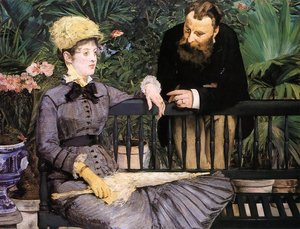
Explore Manet’s ‘In the Conservatory’! A captivating 1879 oil painting of a serene couple in a lush garden. Discover Impressionism, elegance & artistic detail.
Kunstniku elulugu
Avasta Édouard Manet (1832-1883), kes sillutas realismist impressionismini! Tutvu ikooniliste teostega nagu 'Eine murul' ja 'Olympia', ning tema püsiva mõjuga kaasaegse kunstile.
Teemal maalid
A Glimpse into Belle Époque Society: Edouard Manet’s “In the Conservatory”
- Subject and Composition: “In the Conservatory” (1879) presents a captivating scene of modern life – a couple engaged in quiet conversation within the lush, verdant setting of a conservatory. Manet masterfully captures an intimate moment between a formally dressed man and a woman adorned in lavish attire, suggesting their status within Parisian high society. The composition is carefully balanced, with potted plants creating depth and framing the figures, while strategically placed vases and a prominent clock subtly hint at the passage of time.
- Style and Technique: This painting exemplifies Manet’s unique transition between Realism and Impressionism. While retaining a commitment to depicting contemporary life with accuracy, he employs loose brushstrokes and a focus on capturing the interplay of light and shadow – hallmarks of the emerging Impressionist movement. The use of thin glazes builds color and form, creating a luminous quality that enhances the painting’s atmospheric depth. The organic lines of the foliage contrast beautifully with the more structured forms of the figures and bench.
- Historical Context: Created during the Belle Époque, a period of optimism, prosperity, and artistic innovation in France, “In the Conservatory” reflects the leisure activities and social interactions of the upper class. Conservatories were fashionable spaces – not merely greenhouses but elegantly decorated rooms for relaxation and socializing. Manet’s choice of subject matter provides a window into this world, documenting the lifestyle of his contemporaries.
- Symbolism and Interpretation: The conservatory itself symbolizes tranquility, beauty, and perhaps even a secluded space for intimacy or reflection. However, the painting is imbued with an intriguing ambiguity. As noted by critics, the couple’s detached gazes and physical separation create a sense of emotional distance, prompting questions about their relationship. Is this a portrait of contentment, polite formality, or underlying tension? The clock serves as a memento mori, reminding viewers of time's relentless march.
- Emotional Impact & Artistic Significance: “In the Conservatory” evokes a feeling of serene contemplation and understated elegance. Manet’s ability to capture the nuances of human interaction within a beautiful setting is remarkable. The painting isn’t simply a depiction of two people; it's an exploration of modern life, social dynamics, and the complexities of relationships. It stands as a significant work in Manet’s oeuvre, demonstrating his mastery of composition, color, and psychological insight.
- Related Works: For those interested in exploring further, consider Manet's “Madame Manet in the Conservatory,” which offers another perspective on conservatory life. Also noteworthy is "The House at Rueil," showcasing Manet’s skill in capturing everyday scenes with a similar attention to light and atmosphere.
For Collectors & Interior Designers
- A Statement Piece: “In the Conservatory” is more than just a painting; it’s a conversation starter, a window into history, and a testament to Manet's genius. Its sophisticated palette and elegant composition make it an ideal focal point for any discerning collection.
- Interior Harmony: The painting’s muted tones and botanical elements lend themselves beautifully to a variety of interior design styles – from classic and traditional to modern and eclectic. It would complement spaces with natural light, neutral color schemes, or lush greenery.
- Investment Potential: As a work by one of the most influential artists of the 19th century, “In the Conservatory” represents a valuable investment opportunity. High-quality reproductions allow art enthusiasts to enjoy Manet’s masterpiece without the expense of an original.
Korduvad küsimused
Milline „In the Conservatory“, autor Édouard Manet trükkimõõt sobib soovitud ruumile?
Teose „In the Conservatory“, autor Édouard Manet soovitatav trükimõõt Living Room jaoks on Large.
Kui intensiivsed on värvid teoses „In the Conservatory“, autor Édouard Manet?
Teose „In the Conservatory“, autor Édouard Manet värvid on Monochromatic intensiivsusega.
Millised teemad teoses „In the Conservatory“, autor Édouard Manet esile tõelve?
Teemad, mis teoses „In the Conservatory“, autor Édouard Manet esinevad, hõlmavad conservatory, portraiture, leisure, social scene, impressionism, manet, elegant, garden. Koos need kokkuvõtavad teose sisu.
Kiirinfo ja kunstiviktoriin
Info Édouard Manet kohta

Édouard Manet
1832 - 1883, Prantsusmaa
Kunstniku elulugu
Pariisi rebell: Édouard Maneti elu ja kunst
Édouard Manet, kes sündis 1832. aastal Pariisis jõukas ja heade sidemetega perekonnas, oli kõigest napilt vaba kunstniku elust, mis oleks muutnud kunsti ajalugu. Tema isa, austatud kohtunik, lootis pojale turvalist tulevikku õiguse või ehk mereväe teenistuses – auväärsed ametid, mis sobisid nende sotsiaalse seisuga. Siiski kuulus Maneti süda juba noorest peast kunstile. Üheteistaastaselt alustas ta formaalset joonistamist ja kuigi ta õppis mõnda aega akadeemilise maalija Thomas Couture'i käe all, leidis ta kiiresti, et Couture’i jäikud meetodid on piirduvad. See varajane vastupanu ennustas elu, mida veetis kunstiliste konventsioonidega võideldes. Manet ei soovinud lihtsalt minevikku reprodutseerida; ta püüdis tabada kaasaegse Pariisi elukirevust – ja mõnikord selle häirivat reaalsust. Ta külastas Louvre'i, mitte ainult vanade meistrite teoste koopiate tegemiseks, vaid nende tehnikate lahti võtmiseks, õppides Caravaggio ja Velázquez’ilt, kuidas valgus ja varjutus võivad vormi kujutada ja emotsioone esile kutsuda. Kuid tõeline pöördepunkt Maneti loomes oli Realismi tõus, mille pooldas Gustave Courbet. Courbet' viis lihtsustamata igapäevaelu kujutamine kõnetas Manetit sügavalt, vabastades ta ajalooliste või müütiliste teemade piirangutest.Pildistamatus ja innovatsioon: skandaalide ajastu
1860ndad olid Pariisis intensiivse kunstilise keemise aeg ning Manet leidis end selle keskpunktis. Jaapani prindivärkade – *ukiyo-e* – saabumine mõjutas sügavalt tema esteetilisi tundlikkusi. Ta oli lummatud nende tasandatud perspektiividest, julgetest kompositsioonidest ja silmapaistvast värvitoonide kasutamisest, mis said peagi iseloomulikuks tema stiilile. See mõjutus, koos akadeemilise viimistluse kasvava tagasilükkamisega, viis töödeni, mis šokeerisid ja skandaaliks muutsid Pariisi kunstimaailma. Le Déjeuner sur l'herbe (Murul lõuna), mille esitamine Salon des Refusés’il aastal 1863 – näitus teostele, mida ametlik Salon oli keelanud – sai vaidluste katalüsaatoriks. Maal, mis kujutas palja naist pidamas piknikku kahe riietatud mehega, ei puudutanud ainult alastust; see puudutas seda, *kui* alastus esitati. Maneti figuuridel polnud traditsiooniliste paljaste kujutiste idealiseeritud vorme ja müütilist konteksti. Nad olid kaasaegsed, asetades vaataja ees häiriva otsekohesusega. Skandaal Le Déjeuner’ga süvenes veel tema 1865. aasta meistriteosega, Olympia. See maal, mis oli otsene uusversioon Tiziani *Urbino Venuse*’st, esitas kaasaegse prostituudi, kes vaatas julgelt vaatajat silma. Vapustav realism ja provokatiivne teema kohtasid laialdast hukka-mõistmist. Kriitikud süüdistasid Manetit vulgaarsuses ja kunstilise ebapädevuse osas, kuid viha all peitus tunnustus, et ta muutis fundamentaalselt maalimiskeelt.Sild Impressionismile: valgus, pintslilöök ja kaasaegne elu
Kuigi Manet ei võtnud kunagi endasse “Impressionisti” etiketti, oli tema mõju liikumisele eelduseta. Ta jagas nende tagasilükkamist akadeemiliste konventsioonide suhtes ja pühendumust valguse ja atmosfääri lennukate efektide jäädvustamisele. Ta eksibitseris Monet’ga, Renoir’ga, Degas’ga ja teistega Impressionistidena nende iseseisvatel näitustel, kinnistades oma positsiooni avangardi peategelana. Maneti tehnika arenes lahtise pintslilöögiga, prioriteetides vormi muljet täpse detaili ees. Ta eksperimenteris värviga, kasutades sageli jõulisi kontraste dramaatiliste efektide loomiseks. Skandaalsete paljaste kujutuste kõrval uuris Manet laiemat valikut teemasid: portreede – sealhulgas silmapaistvaid kujutusi oma naisest Suzanne’st ja kunstnikust Émile Zola’st; Pariisi ööelu stseene, nagu A Bar at the Folies-Bergère, mis tabab suurepäraselt kaasaegse linnaelu võõrandumist ja vaatemängulisust; ning intiimseid koduseid stseene. Ta ei dokumenteerinud neid teemasid lihtsalt; ta küsitles neid, küsides ühiskondlikke norme ja väljakutsete konventsionaalsetele iluideedele.Pärand ja püsiv mõju
Édouard Maneti varajane surm 1883. aastal süüfilise tõttu lõpetas karjääri, mis oli juba muutnud kunstiajaloo käiku. Kuigi tema maine kasvas pärast surma oluliselt, oli tema mõju kohe tuntav noorematele kunstnikele, kes nägid temas vabastajat. Ta murdis piire, väljakutsete traditsioonilistele teemade, tehnikate ja kunstilise eesmärgi ideedele.- Tema kaasaegse elu tabamine rajas tee Impressionismile ja Post-Impressionismile.
- Tema innovatiivne pintslilöök ja värvitoonide kasutamine mõjutas põlvkondi maalijaid.
- Ta valmis silma vaatama ebameeldivatele tõdedele ühiskonnas, sundides vaatajaid küsima oma oletusi.
Kiirinfo Édouard Manet kohta
- Artistic Movement Or Style: Realism, Impressionism
- Artists Or Movements Influenced By This Artist:
- Claude Monet
- Pierre-Auguste Renoir
- Edgar Degas
- Impressionism
- Artists Who Influenced This Artist:
- Caravaggio
- Diego Velázquez
- Gustave Courbet
- Date Of Birth: 23. jaanuar 1832
- Date Of Death: 1883
- Full Name: Édouard Manet
- Nationality: Prantsuse
- Notable Artworks:
- Le Déjeuner sur l'herbe
- Olympia
- A Bar at the Folies-Bergère
- Place Of Birth: Pariis, Prantsusmaa
Sarnased teosed


Avastage teoseid, mis on koondatud teemade, stiilide ja omaduste kaupa.


Édouard Manet
In the Conservatory
() ·
koos raamiga: · Käsitööna õliga linale maaldud
Kokkuvõte