

Shown: · With its frame:
 Eelvaade
 Saada
Saada Jaga
Jaga
 Teave teose kohta
 Juhend

 Laadi alla
 Sarnased teosed
 Röntgenuuring
 Slaidietendus
 Q&A
Q&A Statistika

€ 237
Käsitsi valmistatud õlimaalireproduktsioon
Meie kunstnike poolt tellimusel valmistatud käsitsi maalitud õli-kainaste teos teie soovitud suuruses ja raamis. ( Lülita trükkitoodetele Lülita digitaalse pildi juurde)
Size
·Standardne suurus
kohandatud
CM
INCH
Vali meie eelmääratud suurused, mis vastavad teose algupärastele proportsioonidele.
Loading sizes...

laius
kõrgus
Sisestage vajalik laius ja kõrgus, et teos sobiks teie raamile või seinale. Kuna tegu on käsipainatud teosega, siis erineva kujuga suuruse korral võib kunstnik jätta pildi ümber veidi rohkem marginaali või lõigata osa ära — valik on teie. Enne maali alustamist saadame teile kinnitamiseks digitaalse näidisprojektsiooni. Sellel lehel näidatud pilt ei kajasta tegelikku tulemust — seda näitab ainult näidisprojektsioon.
 Loe lähemalt
Finish
·
White €1

Blurside €1

Extended €1

P118B €10

P118H €10

P118W €10

P438Z €10

P508JH €12

P508YH €12

P805H €10

P805Z €10

P919BZ €10

P919G €10

P919XJ €10

P959ZH €10

P968JZ €12

W106C €8

W218G €10

W218JH €8

W218Y €10

W307PJ €10

W316G €10

W316PJ €8

W316Y €10

W398PJ €8

W4111J €10

W500HY €15

W500JH €15

W692G €12

W849H €8

W940BG €15

W953PJ €8

H24-GOLD €30

H24-SILVER €30

H36-GOLD €45

H36-SILVER €45
Shipped in a protective tube, ready for your own framer.
Above 105 cm the frame is shipped as a kit for a professional framer — read the details.
Extras
optionalWhat do the extras include?
Examples of what can be changed: Replace face with customer photo; Add pet (e.g., replace cat with dog); Include hidden message in background; Change background landscape or elements.
After order, TopImpressionists.com team will email client for instructions and provide a mockup preview
After order, TopImpressionists.com team will email client for instructions and provide a mockup preview
Maailmline tarne 3–4 nädala jooksul tavalise 5 nädala asemel. (30 oktoober). Kvaliteedis kompromisse ei tehta.
Kaitsevärnitsus
Nimesildikiri
Graveeritud pronksplaadi üksikasjad
This elegant plaque features the artist's name and the title of the artwork, finely engraved for a timeless presentation.
It is made from bronze with a refined, elegant finish. The text is precisely laser-engraved for a sharp and permanent result. Measuring 9x2 cm, the plaque is compact yet easy to read. It's built to be durable and scratch-resistant, offering a professional, museum-quality look. Mounting is simple thanks to the included adhesive backing.
Läbipaistva akrüülplaadi üksikasjad
The plaque includes essential engraved details such as the artist's name, the title of the artwork, the date it was created, the type of media used-like oil on canvas or watercolor-a brief description of the piece, and a QR code that links to the complete artwork information.
It is crafted from clear acrylic, offering a sleek, modern appearance. The text is UV-engraved in black to ensure strong visual contrast. With a size of 10x15 cm, it ensures optimal readability. It comes equipped with two metal hooks for secure wall mounting. The plaque is designed to be weather-resistant, making it suitable for various environments, and it includes interactive features that work seamlessly with smartphone scanning.
Musta akrüülplaadiรายละเอียด (Note: The user provided "Musta akrüülplaadi detailid" as the current translation and asked for an improved version. Since "Musta akrüülplaadi
This elegant plaque includes engraved information such as the artist's name, the title of the artwork, the date it was created, the type of media used (like oil on canvas or watercolor), a short description of the artwork, and a QR code for quick access to more information.
The plaque itself is made from refined black acrylic with a premium finish. The text is laser-engraved in white for high contrast and readability. Its size is 10x15 cm, designed to be easy to read. It comes with two metal hooks for professional mounting. The design is sleek and fits any interior style. It is also weather-resistant and durable, with built-in digital integration for mobile compatibility.
Klaasivalik on saadaval ainult kuni 110 cm suuruses teostes
 Klaasivalik on saadaval ainult kuni 110 cm suuruses teostes
- Tasuta ekspresssaatmine üle maailma
- Kõrgekvaliteediline lina-kangas
- Täielik transpordikindlustus
- Tollimaksude tagastamise garantii
- Värvitoime täpsuse garantii
- 100 päeva tagastusõigus (ainult valmistusdefektide korral)
- 100% raha tagasi garantii
- Hulgusoodustus


Kogumisobjekti kirjeldus
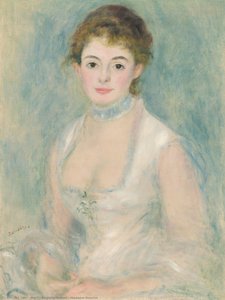
Explore Édouard Manet’s iconic Lady with a Bonnet – a masterful depiction of Parisian elegance and subtle observation. Discover exquisite hand-painted reproductions at TopImpressionists.
Kunstniku elulugu
Avasta Édouard Manet (1832-1883), kes sillutas realismist impressionismini! Tutvu ikooniliste teostega nagu 'Eine murul' ja 'Olympia', ning tema püsiva mõjuga kaasaegse kunstile.
About the painting
A Snapshot of Parisian Modernity: Examining Édouard Manet’s Lady with a Bonnet
Édouard Manet's “Lady with a Bonnet,” painted circa 1863, isn’t merely a portrait; it’s a carefully constructed provocation—a subtle rebellion against the artistic conventions dominating Impressionism and Academic painting alike. Captured in stark black and white, this deceptively simple composition speaks volumes about the anxieties and aspirations of late nineteenth-century Paris. The woman herself is presented with remarkable realism, eschewing idealized beauty for an unflinching portrayal of everyday life. Her gaze directs our attention outwards, away from the formal pose and towards something unseen—perhaps a memory, perhaps contemplation—a gesture that disrupts the viewer’s expectation of passive admiration.- Style & Technique: Manet's approach distinguishes him from his contemporaries. Rather than striving for luminous color palettes typical of Impressionists like Monet or Renoir, he employs a technique reminiscent of Velázquez and Rembrandt—a deliberate flattening of perspective achieved through careful shading and tonal modulation. This stylistic choice prioritizes capturing the essence of form over replicating visual impressions with accuracy.
- Historical Context: The painting emerged during a period of significant social upheaval in France. Rapid industrialization, urbanization, and changing societal norms challenged traditional values and artistic ideals. Manet’s refusal to adhere to academic standards reflects this broader cultural shift—a desire to depict the world as it truly is, unfiltered by romantic embellishment.
Symbolism Beyond Surface Appearance
Beyond its technical prowess lies a rich tapestry of symbolism. The bonnet itself – a garment worn primarily by women – represents femininity and domesticity, yet Manet places it squarely in the center of the composition, elevating it to prominence. This deliberate positioning subtly undermines conventional notions of female roles within society. Furthermore, the woman’s gaze is crucial; it embodies intellectual curiosity and challenges the viewer to consider what lies beyond the visible realm—a motif prevalent throughout Romantic art but reimagined with Manet's understated confidence. The muted palette contributes to this emotional resonance, conveying a sense of quiet introspection and melancholy.- Color Palette: Although monochrome, the tonal range is expertly crafted. Shades of gray subtly delineate form and create depth, mirroring the psychological complexities inherent in human experience.
- Compositional Considerations: The placement of the woman’s gaze—slightly off-center—creates visual tension and draws the eye beyond the immediate subject matter. This compositional element underscores Manet's intention to provoke thought and engage the viewer emotionally.
An Enduring Legacy – Why “Lady with a Bonnet” Matters Today
“Lady with a Bonnet” continues to fascinate art historians and collectors alike because it encapsulates the spirit of artistic innovation. It stands as a testament to Manet’s conviction that art should confront reality, not merely celebrate it. Its influence can be seen in subsequent generations of artists who sought to break free from stylistic constraints and explore new expressive possibilities. Reproductions offer an exceptional opportunity to appreciate this masterpiece's subtle beauty and intellectual depth—a timeless reminder that true artistry resides in challenging conventions and capturing the complexities of human emotion.Korduvad küsimused
Milline kunstnik ja milline stiil seisavad teose "Lady with a Bonnet" taga?
Édouard Manet lõi teose "Lady with a Bonnet" Impressionistic Realism suunaga.
Kas teos "Lady with a Bonnet" on ilma autoriõigusteta?
Teos „Lady with a Bonnet“, autor Édouard Manet on lubaõiguslikult avalikus õiguses – selle autoriõigud onหมดunud. See staatus reguleerib teose pildi reprodüseerimise võimalusi.
Milleks on teose „Lady with a Bonnet“, autor Édouard Manet reproduktsiooni soovitatud kasutada?
Teose „Lady with a Bonnet“, autor Édouard Manet reproduktsiooni kasutamist on soovitatav Accent jaoks. See soovituse on tulenev teose motiivist, meelelojast ja värvigabast.
Quick facts and art quiz
About Édouard Manet

Édouard Manet
1832 - 1883, Prantsusmaa
Kunstniku elulugu
Pariisi rebell: Édouard Maneti elu ja kunst
Édouard Manet, kes sündis 1832. aastal Pariisis jõukas ja heade sidemetega perekonnas, oli kõigest napilt vaba kunstniku elust, mis oleks muutnud kunsti ajalugu. Tema isa, austatud kohtunik, lootis pojale turvalist tulevikku õiguse või ehk mereväe teenistuses – auväärsed ametid, mis sobisid nende sotsiaalse seisuga. Siiski kuulus Maneti süda juba noorest peast kunstile. Üheteistaastaselt alustas ta formaalset joonistamist ja kuigi ta õppis mõnda aega akadeemilise maalija Thomas Couture'i käe all, leidis ta kiiresti, et Couture’i jäikud meetodid on piirduvad. See varajane vastupanu ennustas elu, mida veetis kunstiliste konventsioonidega võideldes. Manet ei soovinud lihtsalt minevikku reprodutseerida; ta püüdis tabada kaasaegse Pariisi elukirevust – ja mõnikord selle häirivat reaalsust. Ta külastas Louvre'i, mitte ainult vanade meistrite teoste koopiate tegemiseks, vaid nende tehnikate lahti võtmiseks, õppides Caravaggio ja Velázquez’ilt, kuidas valgus ja varjutus võivad vormi kujutada ja emotsioone esile kutsuda. Kuid tõeline pöördepunkt Maneti loomes oli Realismi tõus, mille pooldas Gustave Courbet. Courbet' viis lihtsustamata igapäevaelu kujutamine kõnetas Manetit sügavalt, vabastades ta ajalooliste või müütiliste teemade piirangutest.Pildistamatus ja innovatsioon: skandaalide ajastu
1860ndad olid Pariisis intensiivse kunstilise keemise aeg ning Manet leidis end selle keskpunktis. Jaapani prindivärkade – *ukiyo-e* – saabumine mõjutas sügavalt tema esteetilisi tundlikkusi. Ta oli lummatud nende tasandatud perspektiividest, julgetest kompositsioonidest ja silmapaistvast värvitoonide kasutamisest, mis said peagi iseloomulikuks tema stiilile. See mõjutus, koos akadeemilise viimistluse kasvava tagasilükkamisega, viis töödeni, mis šokeerisid ja skandaaliks muutsid Pariisi kunstimaailma. Le Déjeuner sur l'herbe (Murul lõuna), mille esitamine Salon des Refusés’il aastal 1863 – näitus teostele, mida ametlik Salon oli keelanud – sai vaidluste katalüsaatoriks. Maal, mis kujutas palja naist pidamas piknikku kahe riietatud mehega, ei puudutanud ainult alastust; see puudutas seda, *kui* alastus esitati. Maneti figuuridel polnud traditsiooniliste paljaste kujutiste idealiseeritud vorme ja müütilist konteksti. Nad olid kaasaegsed, asetades vaataja ees häiriva otsekohesusega. Skandaal Le Déjeuner’ga süvenes veel tema 1865. aasta meistriteosega, Olympia. See maal, mis oli otsene uusversioon Tiziani *Urbino Venuse*’st, esitas kaasaegse prostituudi, kes vaatas julgelt vaatajat silma. Vapustav realism ja provokatiivne teema kohtasid laialdast hukka-mõistmist. Kriitikud süüdistasid Manetit vulgaarsuses ja kunstilise ebapädevuse osas, kuid viha all peitus tunnustus, et ta muutis fundamentaalselt maalimiskeelt.Sild Impressionismile: valgus, pintslilöök ja kaasaegne elu
Kuigi Manet ei võtnud kunagi endasse “Impressionisti” etiketti, oli tema mõju liikumisele eelduseta. Ta jagas nende tagasilükkamist akadeemiliste konventsioonide suhtes ja pühendumust valguse ja atmosfääri lennukate efektide jäädvustamisele. Ta eksibitseris Monet’ga, Renoir’ga, Degas’ga ja teistega Impressionistidena nende iseseisvatel näitustel, kinnistades oma positsiooni avangardi peategelana. Maneti tehnika arenes lahtise pintslilöögiga, prioriteetides vormi muljet täpse detaili ees. Ta eksperimenteris värviga, kasutades sageli jõulisi kontraste dramaatiliste efektide loomiseks. Skandaalsete paljaste kujutuste kõrval uuris Manet laiemat valikut teemasid: portreede – sealhulgas silmapaistvaid kujutusi oma naisest Suzanne’st ja kunstnikust Émile Zola’st; Pariisi ööelu stseene, nagu A Bar at the Folies-Bergère, mis tabab suurepäraselt kaasaegse linnaelu võõrandumist ja vaatemängulisust; ning intiimseid koduseid stseene. Ta ei dokumenteerinud neid teemasid lihtsalt; ta küsitles neid, küsides ühiskondlikke norme ja väljakutsete konventsionaalsetele iluideedele.Pärand ja püsiv mõju
Édouard Maneti varajane surm 1883. aastal süüfilise tõttu lõpetas karjääri, mis oli juba muutnud kunstiajaloo käiku. Kuigi tema maine kasvas pärast surma oluliselt, oli tema mõju kohe tuntav noorematele kunstnikele, kes nägid temas vabastajat. Ta murdis piire, väljakutsete traditsioonilistele teemade, tehnikate ja kunstilise eesmärgi ideedele.- Tema kaasaegse elu tabamine rajas tee Impressionismile ja Post-Impressionismile.
- Tema innovatiivne pintslilöök ja värvitoonide kasutamine mõjutas põlvkondi maalijaid.
- Ta valmis silma vaatama ebameeldivatele tõdedele ühiskonnas, sundides vaatajaid küsima oma oletusi.
Quick facts about Édouard Manet
- Artistic Movement Or Style: Realism, Impressionism
- Artists Or Movements Influenced By This Artist:
- Claude Monet
- Pierre-Auguste Renoir
- Edgar Degas
- Impressionism
- Artists Who Influenced This Artist:
- Caravaggio
- Diego Velázquez
- Gustave Courbet
- Date Of Birth: 23. jaanuar 1832
- Date Of Death: 1883
- Full Name: Édouard Manet
- Nationality: Prantsuse
- Notable Artworks:
- Le Déjeuner sur l'herbe
- Olympia
- A Bar at the Folies-Bergère
- Place Of Birth: Pariis, Prantsusmaa
Sarnased teosed




Avastage teoseid, mis on koondatud teemade, stiilide ja omaduste kaupa.


Édouard Manet
Lady with a Bonnet
() ·
With its frame: · Hand-painted in oil on linen
Total