
Näidatud: · koos raamiga:
 Eelvaade
 Saada
Saada Jaga
Jaga
 Teave teose kohta
 Juhend

 Laadi alla
 Sarnased teosed
 Röntgenuuring
 Slaidietendus
 KÜSIMUSED JA VASTUSID
 Statistika
- 187.0 x 107.0 cm


€ 240
Käsitsi valmistatud õlimaalireproduktsioon
Meie kunstnike poolt tellimusel valmistatud käsitsi maalitud õli-kainaste teos teie soovitud suuruses ja raamis. ( Lülita trükkitoodetele Lülita digitaalse pildi juurde)
Suurus
·Standardne suurus
kohandatud
CM
INCH
Vali meie eelmääratud suurused, mis vastavad teose algupärastele proportsioonidele.
Suuruste laadimine...

laius
kõrgus
Sisestage vajalik laius ja kõrgus, et teos sobiks teie raamile või seinale. Kuna tegu on käsipainatud teosega, siis erineva kujuga suuruse korral võib kunstnik jätta pildi ümber veidi rohkem marginaali või lõigata osa ära — valik on teie. Enne maali alustamist saadame teile kinnitamiseks digitaalse näidisprojektsiooni. Sellel lehel näidatud pilt ei kajasta tegelikku tulemust — seda näitab ainult näidisprojektsioon.
 Loe lähemalt
Lõpuleviimine
·
Valge serv €1

häguse servaga lõppviimistlus €1

Laiendatud €1

P118B €10

P118H €10

P118W €10

P438Z €10

P508JH €12

P508YH €12

P805H €10

P805Z €10

P919BZ €10

P919G €10

P919XJ €10

P959ZH €10

P968JZ €12

W106C €8

W218G €10

W218JH €8

W218Y €10

W307PJ €10

W316G €10

W316PJ €8

W316Y €10

W398PJ €8

W4111J €10

W500HY €15

W500JH €15

W692G €12

W849H €8

W940BG €15

W953PJ €8

H24-GOLD €30

H24-SILVER €30

H36-GOLD €45

H36-SILVER €45
Saadetakse kaitsetorus, et te võiksite selle ise raamida.
Üle 105 cm suurust raami saadetakse komplektina professionaalse raamija jaoks — lugeege lisainfot.
Lisateenused
valikulineMida lisad sisaldavad?
Näited sellest, mida saab muuta: asendage nägu kliendi fotoga; lisage lemmikloom (nt asendage kass koega); lisage taustale peidetud sõnum; muutke tausta maastikku või elemente.
Pärast tellimust saadetab TopImpressionists.com meeskond klientile e-posti juhised ning esitab ette tasandatud eelvaate
Pärast tellimust saadetab TopImpressionists.com meeskond klientile e-posti juhised ning esitab ette tasandatud eelvaate
Maailmline tarne 3–4 nädala jooksul tavalise 5 nädala asemel. (10 november). Kvaliteedis kompromisse ei tehta.
Kaitsevärnitsus
Nimesildikiri
Graveeritud pronksplaadi üksikasjad
This elegant plaque features the artist's name and the title of the artwork, finely engraved for a timeless presentation.
It is made from bronze with a refined, elegant finish. The text is precisely laser-engraved for a sharp and permanent result. Measuring 9x2 cm, the plaque is compact yet easy to read. It's built to be durable and scratch-resistant, offering a professional, museum-quality look. Mounting is simple thanks to the included adhesive backing.
Läbipaistva akrüülplaadi üksikasjad
The plaque includes essential engraved details such as the artist's name, the title of the artwork, the date it was created, the type of media used-like oil on canvas or watercolor-a brief description of the piece, and a QR code that links to the complete artwork information.
It is crafted from clear acrylic, offering a sleek, modern appearance. The text is UV-engraved in black to ensure strong visual contrast. With a size of 10x15 cm, it ensures optimal readability. It comes equipped with two metal hooks for secure wall mounting. The plaque is designed to be weather-resistant, making it suitable for various environments, and it includes interactive features that work seamlessly with smartphone scanning.
Musta akrüülplaadiรายละเอียด (Note: The user provided "Musta akrüülplaadi detailid" as the current translation and asked for an improved version. Since "Musta akrüülplaadi
This elegant plaque includes engraved information such as the artist's name, the title of the artwork, the date it was created, the type of media used (like oil on canvas or watercolor), a short description of the artwork, and a QR code for quick access to more information.
The plaque itself is made from refined black acrylic with a premium finish. The text is laser-engraved in white for high contrast and readability. Its size is 10x15 cm, designed to be easy to read. It comes with two metal hooks for professional mounting. The design is sleek and fits any interior style. It is also weather-resistant and durable, with built-in digital integration for mobile compatibility.
Klaasivalik on saadaval ainult kuni 110 cm suuruses teostes
 Klaasivalik on saadaval ainult kuni 110 cm suuruses teostes
- Tasuta ekspresssaatmine üle maailma
- Kõrgekvaliteediline lina-kangas
- Täielik transpordikindlustus
- Tollimaksude tagastamise garantii
- Värvitoime täpsuse garantii
- 100 päeva tagastusõigus (ainult valmistusdefektide korral)
- 100% raha tagasi garantii
- Hulgusoodustus


Kogumisobjekti kirjeldus
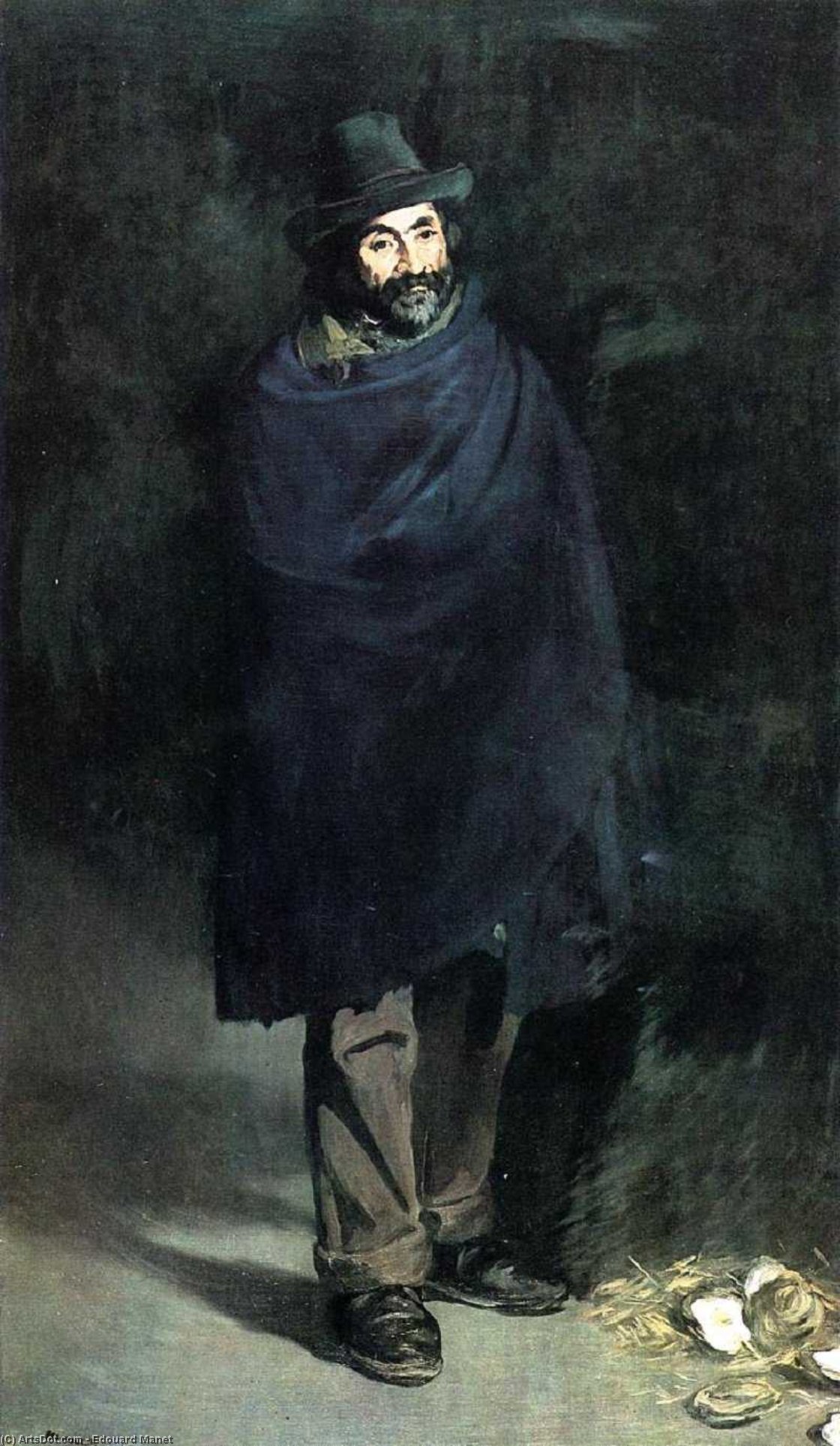
Édouard Manet's 'The Philosopher' (1867) captures a contemplative figure amidst nature, blending Realism and Impressionism. Explore the painting’s symbolism, artistic context, and legacy at The Art Institute of Chicago.
Kunstniku elulugu
Manet ühendas realismist impressionismiga teosega Olympia. Avastage selle Pariisi meistri revolutsioonilised teosed.
Teemal maalid
The Philosopher: A Window into Manet’s Modern Soul
Édouard Manet's *The Philosopher*, painted in 1867, isn’t merely a portrait; it’s a carefully constructed tableau that encapsulates the burgeoning spirit of modern art. This oil-on-canvas work, measuring a substantial 187 x 107 cm, invites us into a quiet contemplation, a moment suspended between observation and thought. The subject, a man draped in a long coat and hat – a figure instantly recognizable as embodying intellectualism – stands on a Parisian street, his hands tucked casually into his pockets, radiating an aura of profound introspection. Yet, it’s not the individual that commands our attention entirely, but rather the subtle orchestration of elements surrounding him: the birds perched above, the clock subtly hinting at time's passage, and the carefully chosen background details. These aren’t merely decorative flourishes; they contribute to a layered narrative, inviting us to consider the nature of existence itself. The painting emerged from a pivotal moment in art history – a period of intense transition between Realism and Impressionism. Manet, already known for his provocative works like *Le Déjeuner sur l'herbe* and *Olympia*, was pushing boundaries with each new creation. He deliberately challenged academic conventions by depicting everyday life, often featuring ordinary people in unidealized ways. *The Philosopher* exemplifies this approach, eschewing the polished surfaces and heroic narratives favored by earlier generations of artists. Instead, Manet presents a scene stripped bare of sentimentality, focusing on the raw reality of urban existence. The muted palette – dominated by browns, grays, and ochres – reinforces this sense of understated observation. Notice how he employs loose brushstrokes, characteristic of his style, creating an almost hazy effect that softens the edges and contributes to the painting’s contemplative mood. Manet's stylistic choices are deeply rooted in both Realism and Impressionism. He retains a degree of realism in his depiction of the subject and setting, meticulously rendering the details of the man’s clothing and the streetscape. However, he also embraces the Impressionist emphasis on capturing fleeting moments of light and color. The dappled sunlight filtering through the background suggests movement and atmosphere, while the subtle shifts in tone create a sense of depth and spatial ambiguity. This blending of styles – realism tempered by impressionistic sensitivity – is what makes Manet such a revolutionary figure. He wasn’t simply painting what he saw; he was actively shaping how we perceive the world around us. The inclusion of birds, for instance, adds a layer of symbolic richness. Birds are often associated with freedom and intellect, further reinforcing the subject's philosophical nature. The historical context surrounding *The Philosopher* is crucial to understanding its significance. Manet’s work coincided with a period of rapid social and economic change in Paris – the rise of industrialization, urbanization, and a growing sense of alienation. His paintings reflected this turbulent atmosphere, capturing the anxieties and uncertainties of modern life. The painting's placement within the broader context of Manet's career reveals his deliberate attempt to challenge established artistic norms and pave the way for future generations of artists. *The Philosopher* stands as a testament to Manet’s innovative spirit and his profound impact on the development of modern art, ultimately finding its home in the prestigious Art Institute of Chicago, where it continues to captivate viewers with its quiet intensity and enduring relevance.Artistic Details & Symbolism
Let's delve deeper into the specific details that contribute to *The Philosopher’s* evocative power. The man himself is presented in a state of profound contemplation, his gaze directed towards an unseen horizon. His beard and mustache lend him an air of intellectual authority, solidifying his role as a philosopher. Note the careful rendering of his clothing – the long coat, the hat, the simple pocket watch – each element contributing to a sense of timelessness and dignity. The background is equally significant. The two birds perched above suggest a connection to nature, while the clock subtly reminds us of the relentless passage of time. These seemingly minor details are carefully orchestrated to create a harmonious whole, inviting viewers to engage in their own interpretations.Manet’s Legacy & Influence
Édouard Manet's influence on subsequent generations of artists is undeniable. His willingness to challenge conventions and depict modern life with unflinching honesty paved the way for Impressionism and beyond. Artists like Claude Monet, Pierre-Auguste Renoir, and Edgar Degas were deeply influenced by Manet’s techniques and his approach to subject matter. *The Philosopher*, in particular, demonstrates Manet's ability to capture a fleeting moment of human experience with remarkable sensitivity and insight. His work continues to inspire artists today, reminding us of the power of art to challenge our perceptions and expand our understanding of the world.Reproductions & Viewing Experience
TopImpressionists offers meticulously crafted hand-painted reproductions of *The Philosopher*, capturing the essence of Manet’s original masterpiece with unparalleled fidelity. Our skilled artisans employ traditional oil painting techniques, carefully recreating every brushstroke and nuance of color. These reproductions are not merely copies; they are works of art in their own right, imbued with the same spirit and emotion as the original. Whether you choose a large-scale statement piece for your home or a smaller, more intimate reproduction to adorn your office, our hand-painted versions will bring this iconic artwork into your space, allowing you to appreciate its beauty and complexity for years to come. Explore our collection today and experience *The Philosopher* in a whole new light.Korduvad küsimused
Kes on teose "The philosopher" kunstnik?
Teose "The philosopher" looja on Édouard Manet. Teos on kataloogitud nime Édouard Manet all.
Mis tüüpi teos on „The philosopher“, autor Édouard Manet?
„The philosopher“, autor Édouard Manet on klassifitseeritud kui Seinakunst. See kategooria kirjeldab originaalteose kunstivormi.
Kas Édouard Manet teos "The philosopher" kuulub avalikku omandisse ja miks?
Teose "The philosopher" autoriõiguste staatus - avalikus õiguses – selle autoriõigud onหมดunud - tuleneb kunstniku surma aastast 1883.
Kiirinfo ja kunstiviktoriin
Info Édouard Manet kohta

Édouard Manet
1832 - 1883, Prantsusmaa
Kunstniku elulugu
Varane elu, pere ja õppimisaastad
Édouard Manet sündis Pariisis 23. jaanuaril 1832. Ta kasvas üles jõukasus, olles tema isa, kes istus Prantsuse õiguskogus, vanim poeg. Tema isa oli oma pojale plaaninud täiesti teisi tulevikku – tee, mis viis läbi mereväe või õigusteaduse, sobides nii suurepäraselt nende sotsiaalselt prestiižsese seisule. Poiss üritas seda suunda jälgida, kuid langes kaks korda mereakadeemia vastuvõitluse eksamitel. See ebakindlamus pöördis tema tähelepanu täielikult kunstistuudio suunas. Lõpuks esitas ta oma isale portfeelu maalidest, et tõestada oma pühendumust kunstile, saades nii lõpuks õiguse, et alustada ametlikku õppimist.
Aastatel 1850 kuni 1856 õppis ta Thomas Couture'i stuudioosakonnas. Kuigi ta õppis seal akadeemilise maali kunstitehnika alustalad, pöörduvad tema silmad sageli Louvre'i suunas. Ta veetis suure osa oma ajast seal galeriides, seistes vanade meistrite linate ees ja koopiaides nende meetodeid. Ta uuris, kuidas nad käsitlevad valgust ja vormi, imides omaks minevikult saadud õpetusi, samal ajal kui ta valmistus omaenda tee leidmiseks. See intensiivse õppimise periood andis talle tehnilise aluse, mis toetaks tema hilisemaid kõrvalekäke traditsioonidest.
Tehnika ja kunstiline stiil
Lina pind paljastab teadliku eemaldumise Saleoni nõutavast pehmost ja nähtamatust lõppviimistlusest. Selle asemel, et siluda harja jäljed ära, on nähtav ja energiline pigmendi rakendamine, mida tuntakse kui facture. See lähenemine eelistab värvi füüsilist reaalsust endal. Kasutades alla prima või märja-märjale tehnikat, ladatakse värvid kohe värskeid, püüdes kinni hetke ja vahetu kvaliteedi, mis väldib traditsiooniliste akadeemiliste meetodite aeglust ja kihtide järgnevat ülesehitust. See meetod võimaldab valguse ja atmosfääri ülesmõõtmisel teatud spontaansust.
Vormide ülesehituses on märkav tasapindne olemus. Harja vaba ja lahtine käsitlus väldib rasket modellust, mida tavaliselt kasutatakse sügavate, kolmelelemendiliste illusioonide loomiseks. Selle asemel tundub piktoriaalne ruum sageli kompressitud. Seda efektit tugevdate tugevate ja kontrastsete toonide kasutamine. Selle asemel, et vormide defineerimisel tuganuda aste-astega värvitoonide skaaladele, kasutavad teosed sageli teravaid väärtuste muutumisi, et viidata linna fragmenteerdatud ja moodsasse valgust. See matemaatilise perspektiivi ja ühtlase segamise keeldumine tekitab vahetu tunde, nagu oleks pilt kogutav otseselt vaataja silma ees.
Kaasaegsete teemade skandaal
1860ndate keskel algas Manetiga mitmeid kokkruseid avaliku vaatlemisega. Aastal 1863 pakkus Salon des Refusés lavatund töödele, mille ametlikud lajurid olid tagasi lütnud. Nende hulgas oli Le Déjeuner sur l'herbe, maal, mis tekitas kohese müra. See ei tugenud tavapärasele müütilisele või piiblile põhinevale vabandusele paljastuse esitamiseks; selle asemel asetati paljas naine piknikis olevaid kahte täielikult riietatud meest. See keeldumine pakkuda ajaloolist või jumalalikku konteksti jättis vaatajale vaid kaasaegse elu råba ja ehtmatu kohalolu.
Pinget tõusis veelgi 1865. aastal koos näatuse Olympia esitmisega. Seda teost peeti Saloni šokeerivaimaks teoseks. Ta võttis Tiziani Urbino Venus kompositsiooni, kuid koogustas sellest müütilise kaitsekihi, asendades jumalanna kaasaegse prostituudiga. Ta ei vaatinud eemale ega kutsumud esile imetlevat pilkku; ta vaatas tagasi sellise otsekohesusega, mis paljudele tundus rahutu ja häiriv. Kriitikud suunasid oma viha just selle idealiseerimise puudumise ja teema kireva otsekohesuse poole.
Peale teemade valimise, tekitas tugevat kritikaikat ka viis, kuidas värvi latsid lataldatavaks jäeti. Paljud vaatlejad ründasid nähtavat, energilist pintslitööd ja läbivõimatust saavutada peen, ühtlast lõppviimistlust. Nad nägid perspektiivis vigu ja ebaõiget käitumist traditsiooniliste eetikareglutuste suhtes. Mida mõned pidasid puudulikuseks, teised tunnistasid teadlikuks valikuks näidata värvi tegelikku olemust latal, mitte luua illuusiooni unistuslikust aknast.
Olulised teosed ja suurepärased maalid
Aastal 1861 avastas ta maailma The Spanish Singer, teos, mis tõi talle Salongis aunimenduse. Maal kujutab mudelit andluse rõivas, kes hoiab kitari nii, et helmikamped vajutatakse vasakpoolse mängja poolt, vaatamata sellele, et instrument on seadistatud paremklassi mängija jaoks. See väike, siin on teadlikult tehtud viga on asetatud stereotüüpspärase hispaani vahelöögi kõrvale, mis on mudli jalgade juures.
Tema pintstroke'id puudutasid sageli nii vahetut reaalsust kui ka poliitilist kargeid teemasid. Aastal 1867 kirjastas ta The Execution of the Emperor Maximilian of Mexico. Hiljem, kui 1870ndate lõpus tema tervis hakkas halvenema, pöördugi tema tähelepanu väiksemate ja intiimsemate teemade poole. Kuni 1882. aastani oli ta valmis A Bar at the Folies-Bergère, maal, mis tabab kaasaegse kohvikuõhu psühholoogilise ebakindluse ja ambivalentsuse abil. Eluoja lõpus, umbes aastal 1883, suunas Édouard Manet oma tähelepanu stilleenidele, nagu näiteks Two roses on a tablecloth.
- The Spanish Singer (1861)
- The Execution of the Emperor Maximilian of Mexico (1867)
- A Bar at the Folies-Bergère (1882)
- Two roses on a tablecloth (umbes 1883)
Ring, rivaalid ja mõjud
Tema pintlaosjad kannavad endas Louvre'is õpitud meistrite rasket pärandit. Ta pidas uue tee leidmiseks silma ette Caravaggio dramaatilise valguse ja Velázquezki voolavad, tumedad toonid. Goya käest lahkus ta teatud otsekohesust, mis väikindas vajadust peeneks, akadeemiseks viimistluseks. Need ei olnud pelgalt õppekõikud; need olid tööriistud, mida ta kasutas Saloni ootuste lahtilihkamiseks. Ta eelistas ühe tugeva värvi kohalolu toonide järgradel sulandumisega.
Pariisi kohvikutes ja intellektuaalsetes ringkondades liikus ta keskel samade inimestega, kes olid määramas uut ajasturi. Ta jagas ideid ja pinda Claude Monetiga ja Edgar Degasiga – mehedega, kes samuti surusid piireid sellele, mis võib olla maal. Tema isiklik elu oli samavõrdselt tihedalt Avangardiga seotud; tema õigepere naine oli kunstnik Berthe Morisot. Kuigi ta otsis sageli ametliksete institutsioonide heakju, olid tema true kaaslased need, kes töötasid establishedud akadeemiate varjusustes.
Ta leidis varajase ja hääletava toetaja kirjaniku, kes nägi tulevikku tema vaidluste allast olevatel lerradel. See toetaja avaldas tema töödest kiitust täis artikleid, aidates määratleda tema kohta muutuvas kunstimaailmas. Isegi siis, kui avalikkus reageeris tema kaasaegsetele teemadele vaenulikkusega, pakkus see toetus vajalikku vastukaalupunkti kriitikatele, kes pidasid tema stiili lõputuks või tema teemasid ebasobivaks. Ta jäi figuuriks, kes on stuck (põlvekoos) vana akadeemilise maailma ja uue, rahutul energiaga täidetud tänavate vahel.
Kiirinfo Édouard Manet kohta
- Artistic Movement Or Style: Realism, Impressionism, Avant-garde
- Artists Or Movements Influenced By This Artist:
- Impressionism
- Avant-garde
- Claude Monet
- Berthe Morisot
- Edgar Degas
- Gauguin
- Artists Who Influenced This Artist:
- Caravaggio
- Diego Velázquez
- Francisco Goya
- Titian
- Raphael
- Frans Hals
- Peter Paul Rubens
- Date Of Birth: 1832
- Date Of Death: 1883
- Full Name: Édouard Manet
- Nationality: Prantsuse
- Notable Artworks:
- Olympia
- Le Déjeuner sur l'herbe
- A Bar at the Folies-Bergère
- Place Of Birth: Pariis, Prantsusmaa
Sarnased teosed


Avastage teoseid, mis on koondatud teemade, stiilide ja omaduste kaupa.


Édouard Manet
The philosopher
() ·
koos raamiga: · Käsitööna õliga linale maaldud
Kokkuvõte