Eelvaade
 Saada
Saada Jaga
Jaga
 Teave teose kohta
 Juhend

 Laadi alla
 Sarnased teosed
 Röntgenuuring
 Slaidietendus
 KÜSIMUSED JA VASTUSID
 Statistika
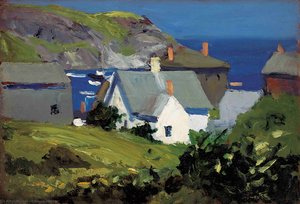
Saltillo rooftops

Edward Hopper's 'Saltillo Rooftops' captures the quiet solitude of a small Mexican village. Explore the painting’s evocative light, architectural details, and subtle sense of isolation – a timeless masterpiece.
 Loe lähemalt
Edward Hopper oli Ameerika reaalismi suurmeister, kelle ikonilised maalid nagu Nighthawks ja Ühispansion jätsid sügavalt jälje kunstiloo maailmale ning pakkusid vaatajatele mõtlevaid pilke.
Sellel lehel kuvatav kunstiteos on kaitstud autoriõigusega, mis tähendab, et meil ei ole seaduslikku õigust luua või müüa identset reproduktsiooni. Seda kaitset rakendatakse rahvusvaheliste kokkulepete alusel, nagu näiteks Berne konventsioon ning riiklike seadustega, sealhulgas nendega, mida on sätestatud USA autoriõiguse seadus – 17. peatükk.
See meetod järgib täielikult autoriõiguse reegleid, kuna see ei põhine kaitstud kunstiteose kopeerimisel või dupliteerimisel. Selle asemel on tegu loova reinterpreetatsiooniga – uue maaldisega, mis on algteosest inspireeritud, kuid ei ole sellest identiline.
Giclée / Kunstiprint
Muuseumikvaliteediga giclée- või kangasprint kiire tootmisega ja paindlikud viimistlusvõimalused. ( Osta käsitsi maalatud teos Lülita digitaalse pildi juurde)




P118B €10

P118H €10

P118W €10

P438Z €10

P508JH €12

P508YH €12

P805H €10

P805Z €10

P919BZ €10

P919G €10

P919XJ €10

P959ZH €10

P968JZ €12

W106C €8

W218G €10

W218JH €8

W218Y €10

W307PJ €10

W316G €10

W316PJ €8

W316Y €10

W398PJ €8

W4111J €10

W500HY €15

W500JH €15

W692G €12

W849H €8

W940BG €15

W953PJ €8




Standardne suurus
kohandatud
CM
INCH
Vali meie eelmääratud suurused, mis vastavad teose algupärastele proportsioonidele.
Loading sizes...

laius
kõrgus
Sisestage vajalik laius ja kõrgus, et see sobiks teie raamile või seinale. Trükki saab ainult lõigata, seda ei saa kunagi pildist suuremaks teha, seega ka erineva mustega suurus kaotab osa pildist. Enne trükkimist saadame teile kinnitamiseks digitaalse näidisprojektsiooni. Sellel lehel näidatud pilt ei kujuta reaalset lõiget — seda näitab ainult näidisprojektsioon.
Ülemaailmne tarne () 2 nädala jooksul, tavalise 4/5 nädala asemel. (7 november)

Tasuta ekspresssaatmine üle maailma

Kõrgekvaliteediline lina-kangas

Täielik transpordikindlustus

Tollimaksude tagastamise garantii

Värvitoime täpsuse garantii

100 päeva tagastusõigus (ainult valmistusdefektide korral)

100% raha tagasi garantii

Hulgusoodustus
 Klaasivalik on saadaval ainult kuni 110 cm suuruses teostes

Saltillo rooftops
Giclée / Kunstiprint
Reproduktsiooni suurus
-


Koguhind
€ 62
Saltillo Rooftops: A Study in Quietude and Urban Isolation
Edward Hopper’s “Saltillo Rooftops,” painted in 1943, isn't merely a depiction of a small Mexican village; it’s a distilled essence of modern American experience – a poignant meditation on solitude, observation, and the subtle alienation inherent in urban life. Born in Nyack, New York, Hopper possessed an innate ability to capture the unspoken narratives within seemingly ordinary scenes, and this painting exemplifies that talent with remarkable precision. The work transports us to Saltillo, a town nestled amidst the rolling hills of Mexico, viewed from the rooftop of a modest hotel – a vantage point offering both a panoramic vista and a profound sense of detachment. Hopper’s signature style—characterized by stark lighting, simplified forms, and an emphasis on geometric composition—is powerfully evident here. The muted palette of ochre, gray, and pale blue evokes a feeling of stillness, while the sharp angles of the rooftops and buildings create a visual rhythm that subtly underscores the painting's underlying sense of isolation.A Glimpse into Hopper’s Process: Inspiration and Context
The genesis of “Saltillo Rooftops” lies in Hopper’s summer sojourn to Mexico with his wife, Josephine. Seeking respite from the bustling energy of New York City, they traveled to Saltillo, a town known for its picturesque setting and cooler climate. Hopper meticulously documented this experience through watercolor and graphite, capturing not just the physical landscape but also the emotional atmosphere he encountered. Interestingly, Hopper’s notes reveal that he initially considered the title “Night Hawks,” referencing the predatory birds often seen circling at dusk – a subtle metaphor for the watchful, perhaps lonely, figures inhabiting the scene. The painting's creation coincided with a period of intense introspection in Hopper’s work, reflecting his growing fascination with themes of urban isolation and the quiet dramas unfolding within everyday life. The influence of Ernest Hemingway’s short stories, particularly “The Killers,” is often cited as a potential source of inspiration, though Hopper himself described the painting as capturing "the loneliness of a large city."Symbolism and Composition: Deconstructing the Scene
Beyond its immediate visual appeal, “Saltillo Rooftops” is rich in symbolic detail. The prominent guns positioned in the foreground—a jarring element within the otherwise peaceful setting—are particularly intriguing. While their exact significance remains open to interpretation, they can be viewed as a commentary on the potential for conflict and violence lurking beneath the surface of seemingly tranquil communities. The church steeple towering over the town serves as a visual anchor, representing faith and tradition amidst the modern landscape. The scattered figures below – a few individuals standing near the church, others further away – suggest a sense of community, yet their distance from one another reinforces the painting’s overarching theme of isolation. Hopper's masterful use of light and shadow creates a dramatic interplay between illumination and darkness, drawing the viewer's eye to key elements while simultaneously emphasizing the emptiness of the scene. The sharp lines of the buildings contrast with the softer curves of the hills in the background, further contributing to the painting’s dynamic composition.The Enduring Legacy: A Masterpiece of American Realism
“Saltillo Rooftops” stands as a quintessential example of Edward Hopper's unique artistic vision—a poignant exploration of the human condition within the context of modern America. Its quiet intensity, evocative atmosphere, and subtle symbolism continue to resonate with viewers today, cementing its place as one of Hopper’s most celebrated works. Reproductions of this painting offer a remarkable opportunity to experience the depth and complexity of Hopper's art firsthand, allowing us to contemplate the beauty and melancholy inherent in everyday moments. Whether displayed in a contemporary interior or studied within an art history classroom, “Saltillo Rooftops” remains a powerful testament to Hopper’s ability to capture the essence of human experience with remarkable clarity and emotional resonance.Korduvad küsimused
Milline ruum sobib kokku teose „Saltillo rooftops“, autor Edward Hopper värvidega?
Olles värvipalett Neutrals, on teos „Saltillo rooftops“, autor Edward Hopper soovitatav ruumideks Living Room. Just needistlikud toonid on üks põhjuseid selle soovituse taga.
Millist meeleolu ja emotsiooni teos "Saltillo rooftops" edastab?
Teoses "Saltillo rooftops" on Calm meeleolu koos Melancholic emotsiooniga.
Kui populaarne on teos "Saltillo rooftops" suunaga American Realism aastal?
Teos „Saltillo rooftops“, autor Edward Hopper on klassifitseeritud tasemele Iconic ning kuulub American Realism suunasse.
Kunstniku elulugu
Edward Hopper: A Master of American Realism
Edward Hopper, a name inextricably linked to the quietude and subtle melancholy that permeated 20th-century American life, wasn’t simply a painter of scenes; he was a poet of light and shadow, a chronicler of modern isolation. Born in Nyack, New York, in 1882, to middle-class parents of Dutch ancestry, Hopper's early years provided a stable upbringing that nurtured his artistic inclinations. From childhood sketches meticulously dated and signed, it became evident that keen observation and an innate talent for drawing were central to his being. Though initially encouraged towards commercial illustration – a pragmatic suggestion from his parents – Hopper’s ambitions leaned toward fine art, leading him to the New York School of Art where he studied under William Merritt Chase and Robert Henri. These formative years instilled not only technical skill but also an appreciation for realism and a commitment to depicting the world as he saw it—unvarnished and honest. The writings of Ralph Waldo Emerson resonated deeply with Hopper, reinforcing his sense of individualism and acute observation – qualities that would become hallmarks of his artistic vision. Early travels to Paris exposed him to Impressionism, yet Hopper quickly diverged from its fleeting brushstrokes, forging a path uniquely his own.Early Life and Artistic Beginnings
Hopper’s formative years were marked by a quiet determination to pursue his passions despite familial expectations. He demonstrated exceptional drawing skills from a young age, capturing landscapes and portraits with remarkable accuracy—a testament to his innate talent for visual representation. Despite initial inclinations toward commercial illustration, Hopper steadfastly adhered to his conviction that true artistic expression demanded engagement with the complexities of fine art. His studies at the New York School of Art under Chase and Henri profoundly shaped his aesthetic sensibilities, fostering a commitment to realism and influencing his stylistic choices throughout his career. These mentors championed observation as paramount to artistic achievement—a principle Hopper embraced wholeheartedly, prioritizing meticulous detail and capturing the essence of reality with unwavering fidelity. William Merritt Chase encouraged Hopper to focus on tonal harmony and expressive brushwork, while Robert Henri instilled in him a rebellious spirit and a desire to challenge conventional artistic norms.Finding His Voice: Realism and the American Scene
Hopper’s artistic journey wasn't immediate or effortless. He grappled with discovering his distinctive voice, experimenting with various styles before settling into the realism that would define his career. This wasn’t mere replication of reality; it was a distillation of its essence, stripping away extraneous detail to reveal underlying emotional truths. His paintings began to focus on everyday scenes – houses, diners, offices, hotel rooms – imbued with a sense of stillness and often, loneliness. He possessed an extraordinary ability to capture the psychological states of his subjects, hinting at narratives without explicitly stating them. The precise rendering of light and shadow became crucial, not merely as descriptive elements but as emotional cues, creating atmospheres that were both captivating and unsettling. House by the Railroad (1925), an early masterpiece, exemplifies this approach—a seemingly simple composition radiating a profound sense of isolation and mystery. Hopper’s printmaking, often overlooked, ran parallel to his painting, sharing similar themes and stylistic qualities, demonstrating his mastery across mediums. He wasn't interested in grand historical narratives or allegorical symbolism; he focused on the mundane, elevating it through careful observation and emotional resonance.Iconic Visions: Nighthawks and Beyond
While Hopper’s career unfolded gradually, certain works catapulted him to widespread recognition. Nighthawks (1942), arguably his most famous painting, became an instant icon of American culture. The late-night diner scene, bathed in stark fluorescent light, perfectly encapsulates the alienation and anonymity of modern urban life. The figures within are lost in their own thoughts, disconnected from one another despite their proximity—a poignant commentary on the human condition. Gas (1940), with its striking portrayal of a roadside gas station, showcases Hopper’s fascination with American landscapes and the burgeoning automobile culture. Other notable works like *Automat*, *Office in a Small City*, and *Summertime* each offer unique insights into the complexities of 20th-century American society. These paintings weren't merely depictions of places; they were explorations of mood, psychology, and the subtle dramas unfolding within ordinary settings. His wife, Josephine Nivison Hopper, played a vital role not only as his lifelong companion but also as a frequent model, contributing significantly to the characterization of his female figures.Legacy and Influence
Edward Hopper’s enduring legacy rests upon his profound contribution to American art history—a contribution characterized by unwavering realism, psychological depth, and an unparalleled sensitivity to capturing the nuances of human experience. His paintings continue to resonate with audiences today because they speak to universal themes of loneliness, isolation, and the search for meaning in a rapidly changing world. Hopper’s stylistic innovations profoundly influenced subsequent artists, establishing him as one of the most important figures in modern American art—a legacy cemented by his iconic works and their enduring presence in museums worldwide. His ability to transform commonplace scenes into evocative explorations of emotion solidified his place as a visionary artist who captured the spirit of his time—and continues to inspire contemplation and wonder generations later. Hopper’s influence extends beyond painting, permeating film and literature, demonstrating the breadth of his artistic impact on cultural expression.
Edward Hopper
1931 - 1967 , USA
Lühikest infot
- Artistic Movement Or Style: Realism
- Artists Who Influenced This Artist:
- William Merritt Chase
- Robert Henri
- Date Of Birth: July 22, 1882
- Date Of Death: May 15, 1967
- Full Name: Edward Hopper
- Nationality: American
- Notable Artworks:
- Nighthawks
- House by the Railroad
- Gas
- Place Of Birth: Nyack, USA
Sarnased artiklid
The Ashcan School: Capturing the Raw, Unfiltered Soul of Urban Life through American Realism
Discover the raw beauty of the Ashcan School. Explore how masters like Bellows and Henri captured the gritty, vibrant soul of early 20th-century New York through profound American Realism and evocative urban landscapes.

The Unvarnished Truth: A Cultural Journey Through the Soul of American Realism
Explore the profound beauty of American Realism. From the Ashcan School's urban grit to intimate portraits, discover how artists captured the authentic soul of a nation through unvarnished truth and masterful observation.
Avastage teoseid, mis on koondatud teemade, stiilide ja omaduste kaupa.