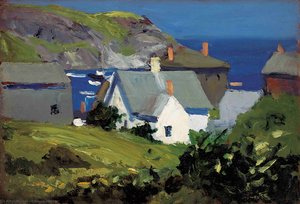
Eelvaade
 Saada
Saada Jaga
Jaga
 Teave teose kohta
 Juhend

 Laadi alla
 Sarnased teosed
 Röntgenuuring
 Slaidietendus
 Q&A
Q&A Statistika
Sunlights in Cafeteria

Edward Hopper's 'Sunlight in a Cafeteria' (1958) captures urban solitude and quiet tension with masterful light & shadow. Explore American Realism’s evocative depiction of modern life – perfect for art lovers.
 Loe lähemalt
Edward Hopper oli Ameerika reaalismi suurmeister, kelle ikonilised maalid nagu Nighthawks ja Ühispansion jätsid sügavalt jälje kunstiloo maailmale ning pakkusid vaatajatele mõtlevaid pilke.
Sellel lehel kuvatav kunstiteos on kaitstud autoriõigusega, mis tähendab, et meil ei ole seaduslikku õigust luua või müüa identset reproduktsiooni. Seda kaitset rakendatakse rahvusvaheliste kokkulepete alusel, nagu näiteks Berne konventsioon ning riiklike seadustega, sealhulgas nendega, mida on sätestatud USA autoriõiguse seadus – 17. peatükk.
See meetod järgib täielikult autoriõiguse reegleid, kuna see ei põhine kaitstud kunstiteose kopeerimisel või dupliteerimisel. Selle asemel on tegu loova reinterpreetatsiooniga – uue maaldisega, mis on algteosest inspireeritud, kuid ei ole sellest identiline.
Giclée / Kunstiprint
Muuseumikvaliteediga giclée- või kangasprint kiire tootmisega ja paindlikud viimistlusvõimalused. ( Osta käsitsi maalatud teos Lülita digitaalse pildi juurde)




P118B €10

P118H €10

P118W €10

P438Z €10

P508JH €12

P508YH €12

P805H €10

P805Z €10

P919BZ €10

P919G €10

P919XJ €10

P959ZH €10

P968JZ €12

W106C €8

W218G €10

W218JH €8

W218Y €10

W307PJ €10

W316G €10

W316PJ €8

W316Y €10

W398PJ €8

W4111J €10

W500HY €15

W500JH €15

W692G €12

W849H €8

W940BG €15

W953PJ €8




Standardne suurus
kohandatud
CM
INCH
Vali meie eelmääratud suurused, mis vastavad teose algupärastele proportsioonidele.
Loading sizes...

laius
kõrgus
Sisestage vajalik laius ja kõrgus, et see sobiks teie raamile või seinale. Trükki saab ainult lõigata, seda ei saa kunagi pildist suuremaks teha, seega ka erineva mustega suurus kaotab osa pildist. Enne trükkimist saadame teile kinnitamiseks digitaalse näidisprojektsiooni. Sellel lehel näidatud pilt ei kujuta reaalset lõiget — seda näitab ainult näidisprojektsioon.
Ülemaailmne tarne () 2 nädala jooksul, tavalise 4/5 nädala asemel. (1 november)

Tasuta ekspresssaatmine üle maailma

Kõrgekvaliteediline lina-kangas

Täielik transpordikindlustus

Tollimaksude tagastamise garantii

Värvitoime täpsuse garantii

100 päeva tagastusõigus (ainult valmistusdefektide korral)

100% raha tagasi garantii

Hulgusoodustus
 Klaasivalik on saadaval ainult kuni 110 cm suuruses teostes

Sunlights in Cafeteria
Giclée / Kunstiprint
Reproduktsiooni suurus
-


Koguhind
€ 61
A Moment Frozen: The Poignant Realism of *Sunlight in a Cafeteria*
Edward Hopper's 1958 painting, *Sunlight in a Cafeteria*, isn’t merely a depiction of a diner scene; it’s a distilled essence of modern American loneliness. Captured with his signature mastery of light and shadow, the work transports us to a quiet corner of urban life, where unspoken anxieties and the subtle dance between strangers hang heavy in the air. The painting immediately draws the eye – not towards grand spectacle or dramatic action, but toward the carefully constructed stillness of the interior, bathed in the warm, diffused glow of afternoon sunlight streaming through the large window. Hopper’s deliberate choice to frame the scene through this glass creates a sense of voyeurism, inviting us into a private moment that we are both observers and, perhaps, subtly implicated within.
The composition itself is deceptively simple yet profoundly effective. A man and a woman occupy separate tables, their postures suggesting an awareness of each other’s presence without any overt interaction. The man, clad in a dark suit and holding a cigarette, gazes out the window – a gesture that simultaneously conveys contemplation and detachment. His back is turned to the woman, who sits quietly, her attention focused on a sandwich, her hands folded neatly in her lap. This arrangement immediately establishes a palpable tension—a feeling of potential connection thwarted by an unspoken barrier. Hopper’s use of color further amplifies this mood; the warm yellows and browns of the diner contrast sharply with the cooler tones of the street outside, reinforcing the sense of isolation within the brightly lit space.
The Language of Light and Shadow: Hopper's Technique
Hopper’s technical skill is paramount to the painting’s impact. He was a master of capturing the subtle nuances of light, using it not just to illuminate form but also to evoke mood and atmosphere. Notice how he renders the sunlight – not as a harsh, direct beam, but as a diffused glow that softens edges and casts long shadows. This technique creates a sense of depth and realism while simultaneously contributing to the painting’s melancholic tone. The meticulous detail with which Hopper depicts the diner's interior—the chrome accents, the checkered floor, the worn wood of the tables—adds to the feeling of authenticity and invites us to linger in this carefully constructed world.
Furthermore, Hopper’s use of perspective is particularly noteworthy. The slightly skewed angles of the furniture and the placement of the figures create a sense of unease and disorientation, mirroring the emotional state of the subjects themselves. He employed a technique known as “atmospheric perspective,” subtly blurring details in the distance to suggest depth and recession, further enhancing the painting’s realism and drawing the viewer into the scene.
Echoes of Isolation: Context and Symbolism
*Sunlight in a Cafeteria* is deeply rooted in Hopper's broader exploration of American loneliness and urban alienation. Born in 1882, Hopper witnessed significant social and cultural shifts during his lifetime – the rise of industrialization, urbanization, and the increasing sense of anonymity in modern life. His paintings often reflect these anxieties, portraying individuals adrift in vast cities, struggling to connect with one another. This painting is part of a larger body of work that examines the quiet desperation of the American experience.
The diner itself becomes a potent symbol—a temporary refuge from the outside world, yet also a space of isolation and detachment. It’s a place where strangers briefly encounter one another, but rarely forge lasting connections. The painting's title, *Sunlight in a Cafeteria*, is particularly evocative, suggesting both warmth and an underlying sense of melancholy—a reminder that even in the brightest light, loneliness can persist.
A Timeless Masterpiece: Reproduction and Beyond
TopImpressionists offers meticulously crafted hand-painted reproductions of *Sunlight in a Cafeteria*, allowing you to bring this iconic work into your home or office. Our artists replicate Hopper’s masterful use of light, shadow, and composition with exceptional detail, ensuring that the painting's emotional impact is fully preserved. Whether you are an art collector, an interior designer seeking to create a sophisticated atmosphere, or simply someone who appreciates the beauty of American realism, a TopImpressionists reproduction of *Sunlight in a Cafeteria* is a timeless addition to any collection. Explore our gallery today and discover the perfect way to experience this poignant masterpiece.
Korduvad küsimused
Millises suunand ja millises ajastu kontekstis on „Sunlights in Cafeteria“, autor Edward Hopper paikati?
Teos „Sunlights in Cafeteria“, autor Edward Hopper kuulub American Realism suunasse ning on loodud autori Modernism ajastul.
Kust leian juhendi teose "Sunlights in Cafeteria" kohta?
Juhend teose "Sunlights in Cafeteria" kohta on selle Õppekasutusjuhend leht – trükkiv infoleht, mis esitab teose koos pealkirja, autori ja identifiekatsioonitabeliga (kunstnik, kuupäevad, tehnika, algne suurus, kollektsioon).
Mida „Sunlights in Cafeteria“, autor Edward Hopper kujutab?
Teemad, mis teoses „Sunlights in Cafeteria“, autor Edward Hopper esinevad, hõlmavad urban solitude, diner interior, night scene, american life, isolation, light and shadow, quiet contemplation. Koos need kokkuvõtavad teose sisu.
Kunstniku elulugu
Edward Hopper: A Master of American Realism
Edward Hopper, a name inextricably linked to the quietude and subtle melancholy that permeated 20th-century American life, wasn’t simply a painter of scenes; he was a poet of light and shadow, a chronicler of modern isolation. Born in Nyack, New York, in 1882, to middle-class parents of Dutch ancestry, Hopper's early years provided a stable upbringing that nurtured his artistic inclinations. From childhood sketches meticulously dated and signed, it became evident that keen observation and an innate talent for drawing were central to his being. Though initially encouraged towards commercial illustration – a pragmatic suggestion from his parents – Hopper’s ambitions leaned toward fine art, leading him to the New York School of Art where he studied under William Merritt Chase and Robert Henri. These formative years instilled not only technical skill but also an appreciation for realism and a commitment to depicting the world as he saw it—unvarnished and honest. The writings of Ralph Waldo Emerson resonated deeply with Hopper, reinforcing his sense of individualism and acute observation – qualities that would become hallmarks of his artistic vision. Early travels to Paris exposed him to Impressionism, yet Hopper quickly diverged from its fleeting brushstrokes, forging a path uniquely his own.Early Life and Artistic Beginnings
Hopper’s formative years were marked by a quiet determination to pursue his passions despite familial expectations. He demonstrated exceptional drawing skills from a young age, capturing landscapes and portraits with remarkable accuracy—a testament to his innate talent for visual representation. Despite initial inclinations toward commercial illustration, Hopper steadfastly adhered to his conviction that true artistic expression demanded engagement with the complexities of fine art. His studies at the New York School of Art under Chase and Henri profoundly shaped his aesthetic sensibilities, fostering a commitment to realism and influencing his stylistic choices throughout his career. These mentors championed observation as paramount to artistic achievement—a principle Hopper embraced wholeheartedly, prioritizing meticulous detail and capturing the essence of reality with unwavering fidelity. William Merritt Chase encouraged Hopper to focus on tonal harmony and expressive brushwork, while Robert Henri instilled in him a rebellious spirit and a desire to challenge conventional artistic norms.Finding His Voice: Realism and the American Scene
Hopper’s artistic journey wasn't immediate or effortless. He grappled with discovering his distinctive voice, experimenting with various styles before settling into the realism that would define his career. This wasn’t mere replication of reality; it was a distillation of its essence, stripping away extraneous detail to reveal underlying emotional truths. His paintings began to focus on everyday scenes – houses, diners, offices, hotel rooms – imbued with a sense of stillness and often, loneliness. He possessed an extraordinary ability to capture the psychological states of his subjects, hinting at narratives without explicitly stating them. The precise rendering of light and shadow became crucial, not merely as descriptive elements but as emotional cues, creating atmospheres that were both captivating and unsettling. House by the Railroad (1925), an early masterpiece, exemplifies this approach—a seemingly simple composition radiating a profound sense of isolation and mystery. Hopper’s printmaking, often overlooked, ran parallel to his painting, sharing similar themes and stylistic qualities, demonstrating his mastery across mediums. He wasn't interested in grand historical narratives or allegorical symbolism; he focused on the mundane, elevating it through careful observation and emotional resonance.Iconic Visions: Nighthawks and Beyond
While Hopper’s career unfolded gradually, certain works catapulted him to widespread recognition. Nighthawks (1942), arguably his most famous painting, became an instant icon of American culture. The late-night diner scene, bathed in stark fluorescent light, perfectly encapsulates the alienation and anonymity of modern urban life. The figures within are lost in their own thoughts, disconnected from one another despite their proximity—a poignant commentary on the human condition. Gas (1940), with its striking portrayal of a roadside gas station, showcases Hopper’s fascination with American landscapes and the burgeoning automobile culture. Other notable works like *Automat*, *Office in a Small City*, and *Summertime* each offer unique insights into the complexities of 20th-century American society. These paintings weren't merely depictions of places; they were explorations of mood, psychology, and the subtle dramas unfolding within ordinary settings. His wife, Josephine Nivison Hopper, played a vital role not only as his lifelong companion but also as a frequent model, contributing significantly to the characterization of his female figures.Legacy and Influence
Edward Hopper’s enduring legacy rests upon his profound contribution to American art history—a contribution characterized by unwavering realism, psychological depth, and an unparalleled sensitivity to capturing the nuances of human experience. His paintings continue to resonate with audiences today because they speak to universal themes of loneliness, isolation, and the search for meaning in a rapidly changing world. Hopper’s stylistic innovations profoundly influenced subsequent artists, establishing him as one of the most important figures in modern American art—a legacy cemented by his iconic works and their enduring presence in museums worldwide. His ability to transform commonplace scenes into evocative explorations of emotion solidified his place as a visionary artist who captured the spirit of his time—and continues to inspire contemplation and wonder generations later. Hopper’s influence extends beyond painting, permeating film and literature, demonstrating the breadth of his artistic impact on cultural expression.
Edward Hopper
1931 - 1967 , USA
Lühikest infot
- Artistic Movement Or Style: Realism
- Artists Who Influenced This Artist:
- William Merritt Chase
- Robert Henri
- Date Of Birth: July 22, 1882
- Date Of Death: May 15, 1967
- Full Name: Edward Hopper
- Nationality: American
- Notable Artworks:
- Nighthawks
- House by the Railroad
- Gas
- Place Of Birth: Nyack, USA
Sarnased artiklid
The Ashcan School: Capturing the Raw, Unfiltered Soul of Urban Life through American Realism
Discover the raw beauty of the Ashcan School. Explore how masters like Bellows and Henri captured the gritty, vibrant soul of early 20th-century New York through profound American Realism and evocative urban landscapes.

The Unvarnished Truth: A Cultural Journey Through the Soul of American Realism
Explore the profound beauty of American Realism. From the Ashcan School's urban grit to intimate portraits, discover how artists captured the authentic soul of a nation through unvarnished truth and masterful observation.
Avastage teoseid, mis on koondatud teemade, stiilide ja omaduste kaupa.