

 Eelvaade
 Saada
Saada Jaga
Jaga
 Teave teose kohta
 Juhend

 Laadi alla
 Sarnased teosed
 Röntgenuuring
 Slaidietendus
 KÜSIMUSED JA VASTUSID
 Statistika
Jordans

- 39.0 x 47.0 cm

Discover Francis Colmer’s ‘Jordans,’ a captivating oil landscape painting of rural England. Explore its warm autumnal tones, loose brushwork & tranquil scene – an Impressionistic gem.
Discover Francis Colmer’s evocative paintings of English landscapes & scenes! Explore his detailed depictions of High Wycombe & beyond, showcasing a unique artistic style.
 Loe lähemalt
Sellel lehel kuvatav kunstiteos on kaitstud autoriõigusega, mis tähendab, et meil ei ole seaduslikku õigust luua või müüa identset reproduktsiooni. Seda kaitset rakendatakse rahvusvaheliste kokkulepete alusel, nagu näiteks Berne konventsioon ning riiklike seadustega, sealhulgas nendega, mida on sätestatud USA autoriõiguse seadus – 17. peatükk.
See meetod järgib täielikult autoriõiguse reegleid, kuna see ei põhine kaitstud kunstiteose kopeerimisel või dupliteerimisel. Selle asemel on tegu loova reinterpreetatsiooniga – uue maaldisega, mis on algteosest inspireeritud, kuid ei ole sellest identiline.
Giclée / Kunstiprint
Muuseumikvaliteediga giclée- või kangasprint kiire tootmisega ja paindlikud viimistlusvõimalused. ( Osta käsitsi maalatud teos Lülita digitaalse pildi juurde)




































Standardne suurus
kohandatud
CM
INCH
Vali meie eelmääratud suurused, mis vastavad teose algupärastele proportsioonidele.
Loading sizes...

laius
kõrgus
Sisestage vajalik laius ja kõrgus, et see sobiks teie raamile või seinale. Trükki saab ainult lõigata, seda ei saa kunagi pildist suuremaks teha, seega ka erineva mustega suurus kaotab osa pildist. Enne trükkimist saadame teile kinnitamiseks digitaalse näidisprojektsiooni. Sellel lehel näidatud pilt ei kujuta reaalset lõiget — seda näitab ainult näidisprojektsioon.
Ülemaailmne tarne () 2 nädala jooksul, tavalise 4/5 nädala asemel. (7 november)

Tasuta ekspresssaatmine üle maailma

Kõrgekvaliteediline lina-kangas

Täielik transpordikindlustus

Tollimaksude tagastamise garantii

Värvitoime täpsuse garantii

100 päeva tagastusõigus (ainult valmistusdefektide korral)

100% raha tagasi garantii

Hulgusoodustus
 Klaasivalik on saadaval ainult kuni 110 cm suuruses teostes

Jordans
Giclée / Kunstiprint
Reproduktsiooni suurus
-


Koguhind
€ 62
Sarnased teosed


Kunstniku elulugu
Francis Colmer: A Painter of English Light and Memory
Francis Colmer (1873-1967) remains a quietly significant figure in British watercolour painting, an artist whose evocative landscapes and scenes of everyday life offer a poignant glimpse into the rural heartland of England during the late 19th and early 20th centuries. While not widely celebrated during his lifetime, Colmer’s work possesses a remarkable sensitivity to light, atmosphere, and the subtle details that define the character of specific places – particularly High Wycombe and its surrounding countryside. His paintings aren't grand pronouncements; they are intimate observations, imbued with a quiet nostalgia and a deep appreciation for the rhythms of rural life.
Born in TopImpressionists, Nebraska, Colmer’s early life was shaped by the American West, a landscape that undoubtedly influenced his later depictions of open fields and expansive skies. He moved to England in 1902, settling in High Wycombe, Buckinghamshire, where he established himself as an artist and eventually married Mickey Colmer. This relocation marked a pivotal shift in his artistic focus, leading him to immerse himself in the familiar landscapes of his new home. His work began to reflect this change, moving away from the more dramatic Western vistas towards the gentler beauty of the English countryside.
The Palette and Technique of a Regionalist
Colmer’s artistic style is characterized by a deceptively simple yet remarkably skillful approach to watercolour. He eschewed elaborate detail in favor of capturing the *essence* of a scene – its light, mood, and overall impression. His brushwork is loose and expressive, often employing broken washes and subtle gradations of color to create a sense of atmospheric depth. He was particularly adept at rendering the effects of light on water, foliage, and buildings, imbuing his paintings with a shimmering quality that seems to capture the fleeting moments of daylight.
His palette tended towards muted tones – greens, browns, blues, and greys – reflecting the natural colors of the English countryside. However, he wasn’t afraid to introduce brighter accents—a splash of yellow in a field of wildflowers or a touch of red in a cottage roof—to draw attention to key elements within the composition. He frequently employed a technique known as ‘atmospheric perspective,’ subtly diminishing the detail and color intensity of distant objects to create a sense of recession and depth. This was particularly evident in his paintings of High Wycombe, where he masterfully captured the hazy atmosphere of the town nestled amongst rolling hills.
Key Works and Subjects
Several of Colmer’s works stand out as particularly compelling examples of his artistic vision. “High Wycombe Guildhall & Corn Market” (1923) is arguably his most famous painting, a luminous depiction of the town square bathed in the golden light of late afternoon. The scene feels both familiar and dreamlike, capturing the essence of High Wycombe’s bustling market life. “Jordans” (circa 1908), another significant work, showcases his ability to convey the tranquility of rural England with a masterful use of color and composition. The painting depicts a picturesque valley scene, dominated by rolling hills and a meandering stream, evoking a sense of peace and solitude.
Beyond these iconic works, Colmer produced a substantial body of paintings depicting various aspects of English life – village scenes, portraits of local residents, glimpses into the interiors of homes, and studies of rural landscapes. His “Back Alley Scene” (1923) offers a particularly intimate portrait of domesticity, capturing the quiet drama of a dimly lit room with remarkable detail and sensitivity. These works demonstrate his ability to find beauty in the ordinary, transforming everyday scenes into compelling narratives.
Legacy and Historical Context
Francis Colmer’s work reflects the broader trends of British art at the turn of the 20th century – a shift away from academic realism towards more subjective and expressive forms. He was influenced by the Impressionists, particularly their emphasis on capturing fleeting moments of light and color, but he developed his own distinctive style rooted in regional observation and a deep understanding of English landscape.
During his lifetime, Colmer’s work received relatively little attention, largely due to the prevailing attitudes towards watercolour painting at the time. However, in recent decades, there has been a growing appreciation for his artistic talent and his unique contribution to British art history. His paintings are now exhibited in museums and private collections across the country, and they continue to resonate with viewers who appreciate their quiet beauty and evocative power. Colmer’s legacy lies not in grand pronouncements or revolutionary innovations, but in his ability to capture the enduring spirit of England through the gentle light of his watercolour brush.

Francis Colmer
1873 - 1967
Lühikest infot
- Full Name: Francis Colmer
- Nationality: British
- Date Of Birth: 1873
- Date Of Death: 1967
- Place Of Birth: WahooArt
- Notable Artworks:
- High Wycombe Guildhall
- Jordans
- Back Alley Scene
- Artistic Movement Or Style: Landscape Painting
Sarnased artiklid
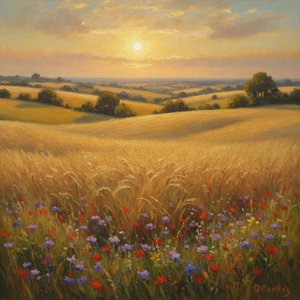
Golden Fields & Sun-Drenched Meadows: Capturing the Soul of Impressionist Landscapes
Immerse yourself in the luminous world of Impressionist landscapes. Discover how masters like Monet and Gauguin captured ephemeral light through plein air painting, and learn to bring the soul of sun-drenched meadows into your home with exquisite, hand-painted oil reproductions.

The Timeless Charm of Oil on Board: Reimagining Texture and Light through the Impressionist Lens
Discover the profound intimacy of oil on panel. Explore how Impressionist masters used rigid supports to capture light, texture, and impasto depth through exquisite, handmade oil reproductions for discerning collectors.

The Beauty of Impermanence: Capturing Decay through Impressionist Eyes
Explore the profound beauty of impermanence through Impressionist and Post-Impressionist eyes. Discover how masters like Monet and Van Gogh captured fleeting light and the poetic essence of nature's transitions in our deep dive into art history and emotional landscapes.

Capturing the Soul: The Most Emotionally Moving Impressionist and Post-Impressionist Masterpieces
Discover the profound emotional depth of Impressionist and Post-Impressionist masterpieces. Explore how legends like Monet, Van Gogh, and Gauguin captured light and soul through evocative landscapes and vibrant brushwork for a timeless connection to art history.

Beyond the Light: Capturing Raw Emotion and Subjective Vision in Post-Impressionist Landscapes
Explore the profound emotional depth of Post-Impressionist landscapes. Discover how masters like Van Gogh moved beyond light to capture raw human feeling through vibrant color and expressive texture in this expert art history retrospective.