


 Vaata sisu
 Jaga teost
 Jaga
Jaga
 Detailid
 Õppekate juhend

 Laadi alla
 Sarnased teosed
 Röntgenuuring
 Slaidietendus
 Statistika
Indian Power


A powerful depiction of a man on horseback with raised arms captures the dynamic energy of Fritz Scholder's 1972 masterpiece Indian Power, inviting you to explore this iconic piece of modern Native American art.
 Loe lähemalt
Fritz Scholder (1937-2005) was a pivotal Native American artist known for his Abstract Expressionist paintings challenging stereotypes & Pop Art depictions of modern Indian life. Explore his iconic series and legacy.
Käsitsi valmistatud õlimaalireproduktsioon
Meie kunstnike poolt tellimusel valmistatud käsitsi maalitud õli-kainaste teos teie soovitud suuruses ja raamis. ( Lülita trükkitoodetele Ülemineku digitaalse pildi müügi kanalisse)




P118B €10

P118H €10

P118W €10

P438Z €10

P508JH €12

P508YH €12

P805H €10

P805Z €10

P919BZ €10

P919G €10

P919XJ €10

P959ZH €10

P968JZ €12

W106C €8

W218G €10

W218JH €8

W218Y €10

W307PJ €10

W316G €10

W316PJ €8

W316Y €10

W398PJ €8

W4111J €10

W500HY €15

W500JH €15

W692G €12

W849H €8

W940BG €15

W953PJ €8




Standardne suurus
kohandatud
CM
INCH
Vali meie eelmääratud suurused, mis vastavad teose algupärastele proportsioonidele.
Loading sizes...

laius
kõrgus
Sa võite sisestada oma mõõtmed konkreetse raami või ruumi sobivuse tagamiseks. Kui teie valitud suurus ei vasta originaalpildi proportsioonidele, siis kärvime kunstiteost või laiendame maali täiendavate käsitsi maalitud elementidega. Enne tootmise algust saadetakse teile heakskiitmiseks digitaalne eelvaade.
Palun pidage meeles, et ekraanil kuvatav eelvaade ei kajasta tegelikku kärpimist või laiendamist. Ainult eelvaade näitab täpselt lõplikku kompositsiooni.
Kuigi on saadaval kohandatud suurused, soovitame originaalproportsioonide säilimiseks valida mõõdud eelmääratletud nimekirjast.
Näited muudetavatest elementidest: asenda nägu kliendi fotoga; lisa lemmikloom (nt asenda kass koeraga); lisa taustale peidetud sõnum; muuda tausta maastikku või elemente.
Pärast tellimust saadab TopImpressionists.com meeskond kliendile e-posti juhised ning esitab eelvaate kavandi
Pärast tellimust saadab TopImpressionists.com meeskond kliendile e-posti juhised ning esitab eelvaate kavandi
Maailmline tarne 3–4 nädala jooksul tavalise 5 nädala asemel. (4 oktoober). Kvaliteedis kompromisse ei tehta.

Tasuta ekspresssaatmine üle maailma

Kõrgekvaliteediline lina-kangastest muld

Täielik transpordikindlustus

Tollimaksude tagastamise garantii

Värvitoime täpsuse garantii

100 päeva tagastusõigus (ainult defektide korral)

100% raha tagasi garantii

Hulgusoodustus
 Klaasivalik on saadaval ainult kuni 110 cm suuruses teostes

Indian Power
Reproduktsiooni materjal
Reproduktsiooni mõõtmed
-


Lõppsumma
€ 232
A Vision of Unbridled Spirit
In the powerful strokes of Indian Power, created in 1972, we encounter a moment of profound kinetic energy that transcends the canvas. Fritz Scholder, a master of reimagining the Native American narrative, presents us with a figure that is both grounded in history and soaring in spirit. The painting captures a man atop a horse, his arm thrust toward the heavens in a gesture of triumph or perhaps a call to ancestral strength. This is not merely a portrait of a rider; it is an exploration of sovereignty and the indomitable will. The composition is masterfully balanced, with the horse occupying a commanding presence on the right, its form suggesting a rhythmic movement that mirrors the heartbeat of the plains. Against a backdrop of a vast, crystalline blue sky, the vibrant red of the man's shirt serves as a visual heartbeat, pulling the viewer’s eye into the center of this dramatic encounter.
The technique employed in this oil on canvas reflects Scholder’s unique ability to blend the raw emotion of Abstract Expressionism with a striking, almost Pop Art-inspired clarity. The brushwork is deliberate and bold, creating textures that give life to the horse's musculature and the flowing movement of the rider's hair. There is a magnificent contrast at play here—the stillness of the infinite sky clashing with the dynamic, muscular tension of the subject. This interplay of color and form creates a sense of depth that invites the observer to step into the scene, feeling the wind and the heat of the sun. For the collector or interior designer, such a piece offers more than just decoration; it provides a focal point of intense character that can anchor a room with its commanding presence.
The Legacy of a Renegade Perspective
To understand the emotional weight of Indian Power, one must look toward the revolutionary context in which Fritz Scholder worked. Moving away from the romanticized, often static depictions of Native life that dominated the early 20th century, Scholder utilized his art to interrogate and deconstruct stereotypes. He brought a modern, often gritty honesty to his subjects, refusing to let them be trapped in a nostalgic past. In this work, we see the culmination of that mission: a depiction of strength that is contemporary and vital. The symbolism of the raised arm suggests a reclamation of agency—a refusal to be silenced or relegated to the margins of history.
For those seeking to adorn a space with art that sparks conversation and evokes deep reflection, this reproduction serves as a window into a pivotal era of American art history. It is a piece that resonates with themes of resilience, identity, and the enduring power of the human spirit. Whether placed in a sophisticated gallery setting or a curated residential collection, Indian Power stands as a testament to Scholder's legacy—a legacy that continues to challenge, inspire, and captivate the modern eye.
Küsimused ja vastused
Kui vana oli Fritz Scholder, kui ta loos 1972 aastal teose "Indian Power"?
Kui teos "Indian Power" loodi aastal 1972, oli Fritz Scholder (sündinud aastal 1937) 35 aastane.
Kes lõi "Indian Power"?
Teose "Indian Power" loovis Fritz Scholder. Selle lehe info kirjeldab Fritz Scholder algteost.
Mis on teose „Indian Power“, autor Fritz Scholder loomisaeg?
Teos "Indian Power" on pärit aastast 1972. See ajastu aitab mõistust seda teost Fritz Scholder karjääri ja selle ajastu kontekstis.
Millal ja millistest materjalidest teos "Indian Power" on valmistatud?
Teos "Indian Power" loodi aastal 1972, kasutades Oil On Canvas tehnikat. Materjal ja kuupäev kirjeldavad, kuidas ja millal originaal valminud on.
Kas saan teose "Indian Power" näha täiskuunil slideshowina?
Teost „Indian Power“, autor Fritz Scholder saab vaadata diapositena teose Slideshow lehel.
Milliseid ühiseid elemente jagab teos "Indian Power" ümbri mõeldu "Fritz Scholder loominguga"?
Teos "Indian Power" jagab koos Fritz Scholder teistega Pop Art stiili ja korduvaid teemasid: abstract expressionism influence, pop art style, challenging native stereotypes, modern indian life themes, iconic mid-career work.
Milleks on „Indian Power“, autor Fritz Scholder mõeldud?
Teose „Indian Power“, autor Fritz Scholder reproduktsiooni kasutamist on soovitatav Focal jaoks. See soovituse on tulenev teose motiivist, meelelojast ja värvigabast.
Kunstniku elulugu
Fritz Scholder: A Renegade Voice in Native American Art
Fritz Scholder (1937-2005) wasn’t born into a world of tradition or steeped in the lore of his ancestry. He was, in many ways, an outsider—a European-American raised in Minnesota and California, with only a quarter Luiseno bloodline connecting him to the California Mission tribes. Yet, this very distance became the cornerstone of his revolutionary approach to Native American art, forging a path that challenged established stereotypes and offered a brutally honest, often uncomfortable, portrayal of modern Indian life. Scholder’s legacy isn't one of romanticized depictions; it’s a testament to the power of perspective—a refusal to simply observe but instead to actively interrogate and deconstruct the narratives surrounding Native Americans in American culture.
Scholder’s early artistic development was shaped by a confluence of influential figures. His initial exposure to art came through his high school teacher, Oscar Howe, a prominent Yanktonai Dakota artist who instilled in him an appreciation for traditional forms and storytelling. This foundation was further strengthened during the summer of 1955 at the Mid-West Art and Music Camp, where he encountered Robert B. Green and James Grittner. Later, his move to Sacramento in 1957 brought him into contact with Wayne Thiebaud, a pivotal figure in Abstract Expressionism, who introduced Scholder to the possibilities of modern abstraction. This exposure proved crucial, laying the groundwork for his later stylistic innovations.
The “Real Indian” Series and Controversy
Scholder’s most significant contribution to Native American art arrived in 1967 with the launch of his controversial "Indian Image" series. Rejecting the prevalent romanticized depictions of Native Americans—the stoic warrior, the noble savage—Scholder presented a starkly different reality. He depicted Indians engaging in everyday activities: drinking beer, smoking cigarettes, driving cars, and even wearing Western clothing. These images, rendered in bold acrylics with a textured surface reminiscent of folk art, were deliberately provocative, confronting viewers with the uncomfortable truth that Native Americans were not relics of the past but modern individuals grappling with contemporary issues.
The series ignited immediate controversy within the art world and among Native American communities. Some viewed it as disrespectful and exploitative, accusing Scholder of appropriating a culture he didn’t fully understand. Others recognized its power—its unflinching honesty and its challenge to ingrained prejudices. Despite the criticism, the "Indian Image" series cemented Scholder's reputation as a daring and uncompromising artist who refused to shy away from difficult subjects. It marked a turning point in Native American art, shifting the focus from traditional representations to explorations of contemporary identity.
Technique and Influences
Scholder’s artistic style evolved significantly throughout his career. Initially influenced by Abstract Expressionism, he gradually developed a distinctive approach characterized by bold colors, layered textures, and a flattened perspective—a technique that echoed the visual language of folk art and advertising. He was particularly adept at using acrylic paint to create thick, impasto surfaces, imbuing his canvases with a sense of physicality and immediacy.
Beyond painting, Scholder explored various mediums, including monotypes, lithographs, and sculpture. His work was deeply influenced by the teachings of Lloyd Kiva New, a Cherokee designer who encouraged him to embrace Native American aesthetics and storytelling traditions. He also drew inspiration from Hopi jeweler Charles Loloma, incorporating elements of indigenous craftsmanship into his artistic practice. His time at the Institute of American Indian Arts in Santa Fe exposed him to a diverse range of Native American artists and perspectives, further broadening his creative horizons.
Legacy and Historical Significance
Fritz Scholder’s impact on Native American art is undeniable. He shattered conventional representations, forcing viewers to confront uncomfortable truths about the relationship between Native Americans and mainstream America. His work paved the way for a new generation of artists who dared to explore complex issues of identity, culture, and history with honesty and vulnerability.
Scholder’s legacy extends beyond his individual artworks. He was a dedicated teacher and mentor, shaping the careers of numerous Native American artists. His willingness to challenge established norms and embrace unconventional approaches continues to inspire artists today. Fritz Scholder wasn't simply an artist; he was a catalyst for change—a voice that refused to be silenced and a testament to the power of art to provoke dialogue and foster understanding.

Fritz Scholder
1937 -
Lühikest infot
- Full Name: Fritz William Scholder V
- Nationality: American (Luiseño)
- Date Of Birth: 1937
- Date Of Death: February 10, 2005
- Place Of Birth: Breckenridge, Minnesota
- Notable Artworks:
- Indian Image
- Indian and Storefront
- Indian Power
- Artistic Movement Or Style: Abstract Expressionism, Pop Art
- Artists Who Influenced This Artist:
- Oscar Howe
- Wayne Thiebaud
- Artists Or Movements Influenced By This Artist: ['T.C. Cannon']
Sarnased artiklid

Crimson Threads of Narrative: Exploring Symbolism & Representation in Artworks Featuring the Red Dress
Explore the rich symbolism of the red dress in art history! From ancient power displays to iconic portraits like Cézanne’s 'Madame Cezanne', discover the cultural and artistic significance behind this captivating color. Expert analysis & insights.

Azure Visions: Exploring Representations of the Blue Dress in Western Art History
Explore the rich history of the blue dress in Western art! Discover its symbolism, from Renaissance masterpieces to modern interpretations by artists like Martin & Schiele. Uncover cultural meanings and artistic techniques.
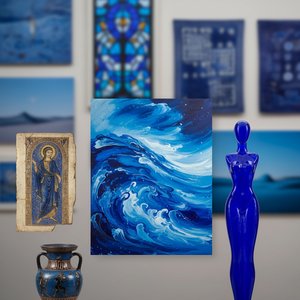
The Allure of Azure: Exploring the Symbolic & Aesthetic Depths of Blue in Art History
Explore the rich history of blue in art! Discover its symbolism, from ancient pigments to modern masterpieces by Kandinsky & Seurat. Uncover the psychological impact and cultural meanings behind this captivating hue.

Slate Blue Masterpieces: 10 Iconic Paintings & Timeless Home Decor Ideas
Immerse yourself in the captivating world of slate blue! Explore 10 iconic paintings by Monet, Van Gogh & Renoir. Discover their stories, techniques & find museum-quality art reproductions for your home at .

Henri Matisse: 25 meistriteost värviküllase kunsti maailmast | TopImpressionists
Avastage Henri Matisse 25 ikoonilist teost! Sukelduge värviküllase Fauvismi maailma, modernse kunsti ajaloosse ja inspireerige oma interjööri. Kvaliteetsed kunstireprodutsioonid TopImpressionists.com-is. Avasta kogu kollektsioon online!