

Näidatud: · koos raamiga:
 Eelvaade
 Saada
Saada Jaga
Jaga
 Teave teose kohta
 Juhend

 Laadi alla
 Sarnased teosed
 Röntgenuuring
 Slaidietendus
 KÜSIMUSED JA VASTUSID
 Statistika
- 49.0 x 61.0 cm


€ 240
Käsitsi valmistatud õlimaalireproduktsioon
Meie kunstnike poolt tellimusel valmistatud käsitsi maalitud õli-kainaste teos teie soovitud suuruses ja raamis. ( Lülita trükkitoodetele Lülita digitaalse pildi juurde)
See teos on autoriõigusega kaitstud
Sellel lehel kuvatav kunstiteos on kaitstud autoriõigusega, mis tähendab, et meil ei ole seaduslikku õigust luua või müüa identset reproduktsiooni. Seda kaitset rakendatakse rahvusvaheliste kokkulepete alusel, nagu näiteks Berne konventsioon ning riiklike seadustega, sealhulgas nendega, mida on sätestatud USA autoriõiguse seadus – 17. peatükk.
Austasena ja seaduslikuna alternatiivina pakume originaalist inspireeritud, käsitsi maalitud isikupärastatud teoseid. Meie osutavad ja professionalsed kunstnikud uurivad hoolikalt originaali stiili, meelemoi ja kunstilist olemust, et luua uus, ainulaadne teos, mis tekitab sama tunnet – olles samal ajal omaette originaalne looming.
See meetod järgib täielikult autoriõiguse reegleid, kuna see ei põhine kaitstud kunstiteose kopeerimisel või dupliteerimisel. Selle asemel on tegu loova reinterpreetatsiooniga – uue maaldisega, mis on algteosest inspireeritud, kuid ei ole sellest identiline.
 Loe lähemalt
Suurus
·Standardne suurus
kohandatud
CM
INCH
Vali meie eelmääratud suurused, mis vastavad teose algupärastele proportsioonidele.
Suuruste laadimine...

laius
kõrgus
Sisestage vajalik laius ja kõrgus, et teos sobiks teie raamile või seinale. Kuna tegu on käsipainatud teosega, siis erineva kujuga suuruse korral võib kunstnik jätta pildi ümber veidi rohkem marginaali või lõigata osa ära — valik on teie. Enne maali alustamist saadame teile kinnitamiseks digitaalse näidisprojektsiooni. Sellel lehel näidatud pilt ei kajasta tegelikku tulemust — seda näitab ainult näidisprojektsioon.
Lõpuleviimine
·
Valge serv €1

häguse servaga lõppviimistlus €1

Laiendatud €1

P118B €10

P118H €10

P118W €10

P438Z €10

P508JH €12

P508YH €12

P805H €10

P805Z €10

P919BZ €10

P919G €10

P919XJ €10

P959ZH €10

P968JZ €12

W106C €8

W218G €10

W218JH €8

W218Y €10

W307PJ €10

W316G €10

W316PJ €8

W316Y €10

W398PJ €8

W4111J €10

W500HY €15

W500JH €15

W692G €12

W849H €8

W940BG €15

W953PJ €8

H24-GOLD €30

H24-SILVER €30

H36-GOLD €45

H36-SILVER €45
Saadetakse kaitsetorus, et te võiksite selle ise raamida.
Üle 105 cm suurust raami saadetakse komplektina professionaalse raamija jaoks — lugeege lisainfot.
Lisateenused
valikulineMida lisad sisaldavad?
Näited sellest, mida saab muuta: asendage nägu kliendi fotoga; lisage lemmikloom (nt asendage kass koega); lisage taustale peidetud sõnum; muutke tausta maastikku või elemente.
Pärast tellimust saadetab TopImpressionists.com meeskond klientile e-posti juhised ning esitab ette tasandatud eelvaate
Pärast tellimust saadetab TopImpressionists.com meeskond klientile e-posti juhised ning esitab ette tasandatud eelvaate
Maailmline tarne 3–4 nädala jooksul tavalise 5 nädala asemel. (7 november). Kvaliteedis kompromisse ei tehta.
Kaitsevärnitsus
Nimesildikiri
Graveeritud pronksplaadi üksikasjad
This elegant plaque features the artist's name and the title of the artwork, finely engraved for a timeless presentation.
It is made from bronze with a refined, elegant finish. The text is precisely laser-engraved for a sharp and permanent result. Measuring 9x2 cm, the plaque is compact yet easy to read. It's built to be durable and scratch-resistant, offering a professional, museum-quality look. Mounting is simple thanks to the included adhesive backing.
Läbipaistva akrüülplaadi üksikasjad
The plaque includes essential engraved details such as the artist's name, the title of the artwork, the date it was created, the type of media used-like oil on canvas or watercolor-a brief description of the piece, and a QR code that links to the complete artwork information.
It is crafted from clear acrylic, offering a sleek, modern appearance. The text is UV-engraved in black to ensure strong visual contrast. With a size of 10x15 cm, it ensures optimal readability. It comes equipped with two metal hooks for secure wall mounting. The plaque is designed to be weather-resistant, making it suitable for various environments, and it includes interactive features that work seamlessly with smartphone scanning.
Musta akrüülplaadiรายละเอียด (Note: The user provided "Musta akrüülplaadi detailid" as the current translation and asked for an improved version. Since "Musta akrüülplaadi
This elegant plaque includes engraved information such as the artist's name, the title of the artwork, the date it was created, the type of media used (like oil on canvas or watercolor), a short description of the artwork, and a QR code for quick access to more information.
The plaque itself is made from refined black acrylic with a premium finish. The text is laser-engraved in white for high contrast and readability. Its size is 10x15 cm, designed to be easy to read. It comes with two metal hooks for professional mounting. The design is sleek and fits any interior style. It is also weather-resistant and durable, with built-in digital integration for mobile compatibility.
Klaasivalik on saadaval ainult kuni 110 cm suuruses teostes
 Klaasivalik on saadaval ainult kuni 110 cm suuruses teostes
- Tasuta ekspresssaatmine üle maailma
- Kõrgekvaliteediline lina-kangas
- Täielik transpordikindlustus
- Tollimaksude tagastamise garantii
- Värvitoime täpsuse garantii
- 100 päeva tagastusõigus (ainult valmistusdefektide korral)
- 100% raha tagasi garantii
- Hulgusoodustus


Kogumisobjekti kirjeldus
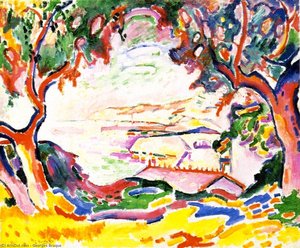
Georges Braque’s serene Landscape at L’Estaque captures the tranquil beauty of Provence in 1906 Cubist style, depicting a picturesque beach scene with boats and canoes—a masterful exploration of form and color that invites you to bring this iconic artwork home.
Kunstniku elulugu
Georges Braque oli kubismi üks rajajaid ja fauvismiga tuntud kunstnik. Tema suurimad teosed hõivatakse L’Estaque maja maalidega ning tänu koostöösele Pablo Picasso'ga jäi ta kunstiloo tähtsamaks esindajaks.
Teemal maalid
A Window into the Dawn of Modernity
In the quiet coastal reaches of Provence, where the Mediterranean sun warms the earth, Georges Braque captured a moment that would forever alter the trajectory of Western art. Landscape at L’Estaque, completed in 1906, is far more than a serene depiction of a sun-drenched beach; it is a profound intellectual exploration of perception itself. At first glance, the viewer is greeted by a picturesque vista of boats resting upon the water and the gentle presence of figures along the shore. Yet, beneath this tranquil surface lies the restless energy of a revolution. This work serves as a pivotal snapshot of the very genesis of Cubism, capturing the precise moment when the artist began to dismantle the traditional boundaries of reality to reconstruct them through a more complex, multi-dimensional lens.
The painting invites us into a world where the familiar is subtly transformed. The boats, some drifting near the shoreline and others anchored further out, act as anchors for the eye within a composition that begins to experiment with fragmentation and simultaneity. Braque does not merely aim to mirror the world as seen by the naked eye; he seeks to convey the artist’s deeper understanding of the subject. Through this lens, the landscape becomes an arrangement of geometric planes and facets, hinting at the revolutionary movement that would soon emerge from his collaboration with Pablo Picasso.
The Alchemy of Earth and Light
Technically, Braque demonstrates a masterful command over texture and tone, creating a piece that is as much a tactile experience as it is a visual one. The color palette is intentionally subdued, dominated by a soulful array of earthy tones—ochre, umber, and terracotta. These hues evoke the warmth of the Provençal landscape, grounding the composition in a tangible, Mediterranean reality. However, Braque elevates the medium through the use of impasto, applying paint with enough thickness to render the hulls of the boats and the sandy beach with a palpable sense of materiality.
This interplay between light and heavy texture creates a rhythmic depth that captivates the observer. The subtle variations in the brushwork allow light to dance across the surface, suggesting the shimmering quality of water and the ruggedness of the coast. For the collector or interior designer, this technical mastery offers a sophisticated aesthetic; the painting possesses a quiet strength that can anchor a room, providing a sense of historical weight and artistic prestige without overwhelming its surroundings.
A Legacy of Visionary Thought
To possess or display a reproduction of Landscape at L’Estaque is to hold a piece of art history's most transformative era. The painting stands as a bridge between the fleeting, light-obsessed impressions of the past and the structured, intellectual rigor of the Cubist future. It embodies a period of immense cultural upheaval, where the air was thick with the scent of change and the studios of Paris were ablaze with new ideas. Braque’s ability to blend his heritage—the disciplined hand of a decorator’s son—with an insatiable hunger for the avant-garde results in a work that is both structurally sound and emotionally resonant.
For those seeking inspiration, this artwork offers a meditative retreat into a world of stability and discovery. It evokes a sense of peace through its subject matter, yet challenges the mind with its evolving form. Whether placed in a contemporary gallery setting or a classic study, this masterpiece continues to whisper the secrets of a revolution, reminding us that even the most familiar landscapes can be reimagined into something entirely extraordinary.
Korduvad küsimused
Kas teoses "Landscape at L'Estaque" on nähtav tugev kerge-tume kontrast?
Teose „Landscape at L'Estaque“, autor Georges Braque kontrastivaimustus on Statement.
Millale Georges Braque karjääri etapile vastab teose "Landscape at L'Estaque" kuupäev 1906?
Kuna teos on pärinev aastast 1906, kuulub "Landscape at L'Estaque" Georges Braque loomingulisse perioodile Cubist Phase.
Kas on "Landscape at L'Estaque" kuulus Analytical Cubism suunaga teos?
Analytical Cubism suunnas on teos "Landscape at L'Estaque" Iconic populaarsusega.
Kiirinfo ja kunstiviktoriin
Info Georges Braque kohta

Georges Braque
1882 - 1963, Prantsusmaa
Kunstniku elulugu
Varajärgi ja kunstiline alus
Georges Braque, kes sündis 1882. aastal Prantsusmaal Argenteuilis, astus ette teele, mis oli sügavalt seotud moderniseeruva kunstimaastikuga. Tema kasvupõlved majaülesehajatest ja dekoratoridest pärines enough tehniline meisterlikkus materjalide suhtes, kuid ka varajane arusaatus vormist ja struktuurist. Kuigi alguses järgnes ta oma isa kutsetööle, viisid Braque loomulikud kunstilised kalduseid teda kiiresti Le Havre'i École des Beaux-Arts koolituse juurde, tähistades algust teekonnal, mille lõpus sai temast üks 20. sajandi mõjuvaimaid maalareid. See alus – praktilise käsitöö ja akadeemilise õppimise kooslus – osutuks määravaks, kui ta hiljem dekonstrueeris ja re-imagineeris traditsioonilisi kunstiline konventsioone.
Pärast Pariisi asumist 1902. aastal jätkas Braque oma õpinguid Académie Humbertis, süvenedes linna vibratil kunstilisse keskkonda. Just siin kohtus ta Marie Laurencin ja Francis Picabia sarnasuste ja sidemetega kunstnikega, mis kujundasin tema varajast arengut. Tema esialgsed teosed peegeldasid valitsevaid mõjudest impressionismi ja postimpressionismi, kuid 1eks võtupunktiks sai 1905. aastal toimunud kohtumine fauvismiga, mille julge värvikasus ja ekspressiivne vabadus süütele uue suunale tema kunstilises uurimistöös.
Fauvismi omaksimine ja kubismi koit
Braque võtmine fauvistlikud printipeed – mida iseloomustavad intensiivne, mitte-naturalistlik värv ja emotsionaalne avaldus – on selgelt nähtav nii nagu maalides The Patience. Sel perioodil töötas ta koos Henri Matisse ja André Derainiga, eksperimenteerides kirevate palettide ja lihtsustatud vormidega. Kuid Braque kaasamine fauvismis ei olnud pelgalt imiteerimine; ta infuseeris seda unikaalse tundlikkusega, pehmendades liikumise piiramatu lopsakuse kontrollitudma ja analüütilisema lähenemise.
Murdepunkt saabus 1907. aastal, kui ta puutus Paul Cézanne'i retrospektiivsembaga. Cézanne'i rõhuasetus geomeetrilistele vormidele ja mitmele perspektiivile mõjutas Braque'i sügavalt, ette valmistades lavast tema murdiliku koostöö Pablo Picasso'ga. Alates 1908. aastast alustasid need kaks kunstilist titaanit intensiivset intellektuaalset vahetust, mis andis elu kubismile – revolutsioonile, mis purustas traditsioonilised esituse mõisted.
Koos arendasid Braque ja Picasso analüütilist kubismi, lahendades objektid fragmenteritud geomeetilisteks kujudeks ja esitades mitmeid vaatepunktid korraga. Teosed nagu Houses at L'Estaque demonstreerivad seda varajast faasi, näidates radikaalset kõrvalekaldet tavalistest perspektiividest ja keskendumist vormide alusstruktuurile. Nende palett muutus teadlikult vaigendatudks, eelistades vormi värvi üle, kuna nad püüdisid esitada objekti oleku tervikut rather enn vaid selle välimust.
Innovatsioon fragmentatsiooni ja kollaasite kaudu
Braque'i ja Picasso partnerlus jätkas kunstilise avalduse piiride laiendamist, viies umbes 1912. aastal sündinud sümmeetrilise kubismi arenguni. See faas tõi kaasa kollaasi – reaalsetest materjalidest koosneva elemendi lisamise maalidele, nagu ajalehefragmentid, tapeet ja kangas. See innovatsioon väljakutsus traditsioonilist hierarhiat maali ja skulptuuri vahel, hämarustades piire kunsti ja elu vahel.
Braque'i uuenduslik *papier collé* (liimatud paber) tähistas olulist pöördet tema kunstilises evolutsioonis. Integreerides igapäevaste esemete fragmente oma kompositsioonidesse, rikkus ta traditsioonilise maali illusioonilist ruumi ja lisas uue taseme materjaalsusele ja tekstuurile. See tehnika ei laiendanud mitte ainult kunsti vormilisi võimalusi, vaid peegeldas ka kasvavat huvi esituse ja reaalsuse vahelise suhte vastu.
Esmase maailmasõja puhkemine 1914. aastal tõi selle intensiivse koostöö lõpu, kuna Braque kutsuti sõjalisele teenistusele. Tema sõjakogemused mõjutasid sügavalt tema kunstilist visiooni, suunates teda pärast sõda uurima isiklikumaid ja lyrilisemaid teemasid.
Hilised aastad ja püsiv pärand
Pärast sõda arenes Braque'i stiil kaugemale kubismi rangest piiridest, sisaldades klassikalise kompositsiooni elemente ja uuenenud huvi hüviku (still life) vastu. Hoides kõrgil geomeetrilisi mõjud, mis olid tema varasemaid teoseid iseloomustanud, arendas ta peenetuma ja mõttelise lähenemise maalile. Tema hilisema ajastu maastikud ja interjöörid on tuntud oma rahustava atmosfääri ja värvide peenete harmooniate poolest.
Kogu oma karjääri jooksul püüdles Braque uurima vormi, ruumi ja esituse põhimõlikke väärtusi. Ta jätkas eksperimenteerimist erinevate materjalide ja tehnikatega, lükates kunstilise avalduse piire kuni oma suremiseni 1963. aastal. Tema mõju järgnevatele kunstnikutest on mõõdamatu, kujustades modernkunsti suunda ning inspireerides lugematuid maalareid, skulptoreid ja kollaazkunstnikke.
Georges Braque pärand ulatub kaugemale kui tema üksikud teosed; ta muutis fundamentaalselt meie arusaamat, kuidas me ümbritsevat maailma tajume ja esitame. Tema koostöös Pirricoega, koos tema enda unikaalse kunstilise visiooniga, kinnitas tema koha tõelise modernkunsti pioneerina – meistrina, kes julges väljakutsuda konventsioone ja määrata maalimise uusi võimalusi.
Mõjud ja olulised teosed
- Mõjutajad: Henri Matisse, André Derain, Paul Cézanne
- Olulised teosed: Houses at L'Estaque, The Patience, Violin and Palette, Mandola
- Mõju kunstile: Revolutsioneeruts teaduslikult 20. sajandi kunstis kubismi kaudu; väljakutsus traditsioonilistele perspektiivile ja esituse mõidele.
Kiirinfo Georges Braque kohta
- Artistic Movement Or Style: Kubism ja Fauvism
- Artists Who Influenced This Artist:
- Pablo Picasso
- Henri Matisse
- Date Of Birth: Mai 13, 1882
- Date Of Death: August 31, 1963
- Full Name: Georges Braque
- Nationality: Prantsuse kunstnik
- Notable Artworks:
- Kodud L'Estaque
- Kärged
- Vilja ja violiin
- Place Of Birth: Argenteuil, Prantsusmaa
Sarnased teosed



Avastage teoseid, mis on koondatud teemade, stiilide ja omaduste kaupa.


Georges Braque
Landscape at L'Estaque
() ·
koos raamiga: · Käsitööna õliga linale maaldud
Kokkuvõte