

Shown: · With its frame:
 Eelvaade
 Saada
Saada Jaga
Jaga
 Teave teose kohta
 Juhend

 Laadi alla
 Sarnased teosed
 Röntgenuuring
 Slaidietendus
 Q&A
Q&A Statistika

€ 239
Käsitsi valmistatud õlimaalireproduktsioon
Meie kunstnike poolt tellimusel valmistatud käsitsi maalitud õli-kainaste teos teie soovitud suuruses ja raamis. ( Lülita trükkitoodetele Lülita digitaalse pildi juurde)
Size
·Standardne suurus
kohandatud
CM
INCH
Vali meie eelmääratud suurused, mis vastavad teose algupärastele proportsioonidele.
Loading sizes...

laius
kõrgus
Sisestage vajalik laius ja kõrgus, et teos sobiks teie raamile või seinale. Kuna tegu on käsipainatud teosega, siis erineva kujuga suuruse korral võib kunstnik jätta pildi ümber veidi rohkem marginaali või lõigata osa ära — valik on teie. Enne maali alustamist saadame teile kinnitamiseks digitaalse näidisprojektsiooni. Sellel lehel näidatud pilt ei kajasta tegelikku tulemust — seda näitab ainult näidisprojektsioon.
 Loe lähemalt
Finish
·
White €1

Blurside €1

Extended €1

P118B €10

P118H €10

P118W €10

P438Z €10

P508JH €12

P508YH €12

P805H €10

P805Z €10

P919BZ €10

P919G €10

P919XJ €10

P959ZH €10

P968JZ €12

W106C €8

W218G €10

W218JH €8

W218Y €10

W307PJ €10

W316G €10

W316PJ €8

W316Y €10

W398PJ €8

W4111J €10

W500HY €15

W500JH €15

W692G €12

W849H €8

W940BG €15

W953PJ €8

H24-GOLD €30

H24-SILVER €30

H36-GOLD €45

H36-SILVER €45
Shipped in a protective tube, ready for your own framer.
Above 105 cm the frame is shipped as a kit for a professional framer — read the details.
Extras
optionalWhat do the extras include?
Examples of what can be changed: Replace face with customer photo; Add pet (e.g., replace cat with dog); Include hidden message in background; Change background landscape or elements.
After order, TopImpressionists.com team will email client for instructions and provide a mockup preview
After order, TopImpressionists.com team will email client for instructions and provide a mockup preview
Maailmline tarne 3–4 nädala jooksul tavalise 5 nädala asemel. (1 november). Kvaliteedis kompromisse ei tehta.
Kaitsevärnitsus
Nimesildikiri
Graveeritud pronksplaadi üksikasjad
This elegant plaque features the artist's name and the title of the artwork, finely engraved for a timeless presentation.
It is made from bronze with a refined, elegant finish. The text is precisely laser-engraved for a sharp and permanent result. Measuring 9x2 cm, the plaque is compact yet easy to read. It's built to be durable and scratch-resistant, offering a professional, museum-quality look. Mounting is simple thanks to the included adhesive backing.
Läbipaistva akrüülplaadi üksikasjad
The plaque includes essential engraved details such as the artist's name, the title of the artwork, the date it was created, the type of media used-like oil on canvas or watercolor-a brief description of the piece, and a QR code that links to the complete artwork information.
It is crafted from clear acrylic, offering a sleek, modern appearance. The text is UV-engraved in black to ensure strong visual contrast. With a size of 10x15 cm, it ensures optimal readability. It comes equipped with two metal hooks for secure wall mounting. The plaque is designed to be weather-resistant, making it suitable for various environments, and it includes interactive features that work seamlessly with smartphone scanning.
Musta akrüülplaadiรายละเอียด (Note: The user provided "Musta akrüülplaadi detailid" as the current translation and asked for an improved version. Since "Musta akrüülplaadi
This elegant plaque includes engraved information such as the artist's name, the title of the artwork, the date it was created, the type of media used (like oil on canvas or watercolor), a short description of the artwork, and a QR code for quick access to more information.
The plaque itself is made from refined black acrylic with a premium finish. The text is laser-engraved in white for high contrast and readability. Its size is 10x15 cm, designed to be easy to read. It comes with two metal hooks for professional mounting. The design is sleek and fits any interior style. It is also weather-resistant and durable, with built-in digital integration for mobile compatibility.
Klaasivalik on saadaval ainult kuni 110 cm suuruses teostes
 Klaasivalik on saadaval ainult kuni 110 cm suuruses teostes
- Tasuta ekspresssaatmine üle maailma
- Kõrgekvaliteediline lina-kangas
- Täielik transpordikindlustus
- Tollimaksude tagastamise garantii
- Värvitoime täpsuse garantii
- 100 päeva tagastusõigus (ainult valmistusdefektide korral)
- 100% raha tagasi garantii
- Hulgusoodustus


Kogumisobjekti kirjeldus
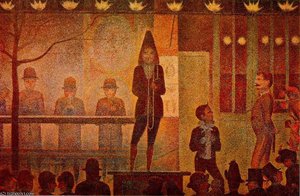
Experience the brilliance of Georges Seurat's "Untitled (372)" – a captivating Pointillist portrait capturing a vibrant stage performance. Explore its luminous precision and discover the legacy of Impressionism’s innovator.
Kunstniku elulugu
Avasta Georges Seurat (1859-1891), punktiilismi ja neoimpressionismi pioneer! Tutvu "La Grande Jatte pühapäevase pärastlõunaga" ning tema revolutsioonilise värviteooriga, mis jäädvustab kaasaegset elu. Tellige käsitööreproduktsioone!
About the painting
A Symphony of Light and Color: The Visionary World of Georges Seurat
In the quiet revolution of late 19th-century Paris, Georges Seurat emerged not merely as a painter, but as a conductor of light. His work, exemplified by the mesmerizing "Untitled (372)," represents a profound departure from the spontaneous, fleeting brushstrokes of his Impressionist contemporaries. While others sought to capture the ephemeral shimmer of a passing moment, Seurat embarked on a meticulous scientific investigation into the very mechanics of human perception. This particular piece invites the viewer into a vibrant stage scene, where a woman stands bathed in radiant hues, delivering a performance that feels both intimate and monumental. Through his eyes, a simple theatrical moment is transformed into a structured exploration of how color and light dance upon the retina.
The magic of this masterpiece lies in its revolutionary technique: Pointillism. Rather than the traditional method of blending pigments on a palette to create smooth transitions, Seurat applied tiny, distinct dots of pure, unadulterated color directly onto the canvas. This method, often referred to as chromoluminarism, relies on the viewer's eye to perform the work of blending. As you stand before the painting, the individual specks of pigment merge in your mind, creating a luminous, vibrating effect that traditional blending could never achieve. This creates a textured, almost breathing surface that captures the shimmering atmosphere of the stage, making the light feel as though it is pulsing with its own internal energy.
A Bridge Between Eras: Historical and Emotional Resonance
To behold "Untitled (37 and 2)" is to witness a pivotal moment in art history, where the subjective beauty of Impressionism met the objective rigor of modern science. Seurat was deeply influenced by contemporary research into optics and color theory, particularly the work of Eugène Chevreuil. By treating the canvas as a laboratory for light, he bridged the gap between the romanticized landscapes of the past and the structured abstraction of the future. The scene itself—a woman performing before an attentive, scattered audience—serves as a beautiful metaphor for this intersection. There is a sense of shared focus, a collective breath held in anticipation, which mirrors the way the viewer must focus to allow the Pointillist dots to coalesce into a coherent image.
For the discerning collector or interior designer, this artwork offers more than just visual splendor; it provides an emotional anchor of sophistication and intellectual depth. The vibrant palette and dynamic composition bring a lively, sophisticated energy to any space, making it an ideal centerpiece for a room designed for contemplation or grand entertaining. Whether placed in a contemporary gallery setting or a classic study, the painting’s ability to evoke both scientific precision and poetic beauty ensures it remains a timeless conversation piece. Owning a high-quality reproduction of such a seminal work allows one to bring the luminous, transformative spirit of Seurat into the modern home, celebrating a legacy of light that continues to captivate the human soul.
Korduvad küsimused
Kas teose „untitled (372)“, autor Žorž Seurat pilt on vabalt reproduseeritav?
Tegijateõiguse osas on teos "untitled (372)" kuuluv klassifikatsiooni alla: avalikus õiguses – selle autoriõigud onหมดunud.
Kuidas materjal ja suund teoses "untitled (372)" kokku saavad?
Teos "untitled (372)" on valmistatud tehnikas Oil ja kuulub Impressionistic Precision stiili.
Kas teose „untitled (372)“, autor Žorž Seurat värvid on kütkestatud või pehmed?
Teose „untitled (372)“, autor Žorž Seurat värvide kütkuse aste on Subtle Color. Kütkus kirjeldab, kui erksad või pehmed värvid on.
Quick facts and art quiz
About Žorž Seurat

Žorž Seurat
1859 - 1891, Prantsusmaa
Kunstniku elulugu
Pioneer Valguse Täpsusega: Georges Seurati Elu ja Kunst
Georges Pierre Seurat, sündinud Pariisis 2. detsembril 1859, kerkis esile võtmekujuna Impressionismist kaasaegse kunsti suunas. Tema lühike, kuid intensiivne karjäär revolutsioneeris maali Pointillismi arendamisega – tehnikaga, mis põhines teaduslikel põhimõtetel ja vankumatu püüdlusel optilise tõe poole. Seurati lugu on täis hoolimatut vaatlust, intellektuaalset rangust ja sügavat tundlikkust valguse ja värvi nüansside suhtes – omadusi, mis eristasid teda omaaegsete kunstnikest ja jätkuvad publiku lummatsemist tänapäevani. Tema varajane elu, kuigi näiliselt tavapärane, pani aluse tulevastele kunstilistele avastustele. Perekond kolis Boulevard de Magenta kohe pärast tema sündi, ja isa, Antoine Chrysostôme Seurat, endine jurist ja hiljem kinnisvara spekulant, pakkus noorele Georgesile mugava kasvatuse, mis võimaldas tal ligipääsu kunstiharidusele. Ta alustas ametlikku õpetamist École Municipale de Sculpture et Dessin’i all skulptor Justin Lequieni juhendamisel, millele järgnes sisseastumine prestiižsesse École des Beaux-Arts’i aastal 1878, kus ta õppis Henri Lehmanni käe all. Need kujunduspärased aastad andsid talle tugeva aluse traditsioonilistes tehnikates, kuid isegi siis hakkas ainulaadne kunstiline isiksus vormustuma – delikatne tundlikkus ja kasvav fanaatikumärkus süstemaatilise analüüsi vastu.Akadeemilisest Alusharidust Chromoluminarismini
Seurati kunstiline areng ei olnud äkki innovatsiooni hüpe, vaid pigem järkjärguline evolutsioon, mis sai hoo sisse intellektuaalse uudishimu ja rangete katsetuste abil. Esialgu peegeldas tema töö tolle aja akadeemilisi standardeid, demonstreerides vilumust joonistamises ja austust kehtivate kompositsiooniprintsiippide vastu. Siiski hakkas ta peaagu neid konventsioone kahtlema, otsides maali suhtes teaduslikumat lähenemist. Ta süvenes kasvavas värviteooriasse, õppides teadlaste nagu Michel Eugène Chevreul ja Ogden Roodi kirjutisi, kes uurisid vastandvärvide optilisi efekte. See uurimine sai tema revolutsioonilise tehnika – chromoluminarismi ehk värviteadus – nurgakiviks ja selle praktilise rakenduse, Pointillismiks. Põhiidee oli lihtne: puhta värvi väikeste, eraldiseisvate täppide kandmine lõuendile, tuginedes vaataja silma peale, et need optiliselt seguneksid ja loovad elava, sädeleva efekti. See ei olnud lihtsalt heledamate värvide saavutamine; see oli arusaamise kohta, kuidas inimvisuaalne süsteem valgust ja värvi tajub ning selle teadmise kasutamine dünaamilisema ja kaasahaarivama maaliprotsessi loomiseks. Ta valmistus hoolikalt oma suurte kompositsioonide jaoks Conté kreidi joonistega karedale paberile, kartograafiliselt kavandades iga täpi asukohta, demonstreerides peaaegu matemaatilist täpsust oma kunstilises protsessis.Innovatsiooni Maamärgid: Peamised Tööd ja Kunstiline Visioon
Seurati uurimistöö ja katsetamise kulminatsioon ilmneb võib-olla kõige paremini A Sunday Afternoon on the Island of La Grande Jatte (1884–1886), monumentaalses teoses, mis tähistas Neoimpressionismi algust. See ikooniline maal, kus kujutatakse pariislasi nautimas rahulikke pärastlõunasööke Seine'i ääres, näitab tema pointillistlikku tehnikat täielikku kasutusse. Figuurid, mis on esitatud hoolikalt asetatud värvitäppudena, tunduvad sädelevat ja vibreerivat valguses, luues õdusa vaikuse atmosfääri. Alfalfa, Saint-Denis (1886–1887) demonstreerib värviteooria rakendamist maalilises maastikus, samas kui varasemad tööd nagu Landscape at Saint-Ouen (1882–1883) paljastavad tema stiili arenemist ja kasvavat huvi valguse ja atmosfääri efektide jäädvustamise vastu. Isegi kaasaegse Pariisi elu kujutised, nagu The Eiffel Tower (1889), muudeti tema ainulaadse tehnikaga, näidates tööstusliku modernsuse ja kunstilise innovatsiooni harmoonilist segu. Bathers at Asnières (1884), teine oluline töö, uuris puhkust ja kaasaegset elu oma eripärase stiili abil, ennustades *La Grande Jatte’i* paremat lähenemist. Need maalijad ei olnud lihtsalt stseenide esitusi; need olid hoolikalt konstrueeritud visuaalsed eksperimendid, mille eesmärk oli uurida värvi ja tajumise võimalusi.Püsiv Pärand: Mõjutus ja Histooline Tähendus
Vaatamata tragiliselt lühikesele elule – Seurat suri 31-aastasena aastal 1891 – oli tema mõju kunstimaailmale suur ja ulatuslik. Tema töö esitas väljakutseid traditsioonilistele kunstikonventsioonidele, pööramine teed arvukatele hilisematele liikumistele. Subjektiivse väljenduse rõhutamine ja uute tehnikate uurimine kõnetas kunstnikele, kes soovisid vabaneda akadeemilistest piirangutest. Seurati mõju on näha Fauvistide töödes, kes kasutasid julgeid värve ja väljendusrikast pintsliköök; Kubistide töös, kes dekonstrueerisid vorme geomeetrilisteks kujutisteks; ja Abstract Expressionistide töös, kes prioriteetselt seadsid emotsionaalse intensiivsuse ja spontaanse žesti. Tema teaduslik lähenemine maalile, kuigi algselt vastuoluline, laiendas lõpuks kunstilise võimalikkuse määratlust. Ta näitas, et kunst võib olla nii intellektuaalselt rangus kui ka emotsionaalselt võrgutav – süntees, mis jätkuvalt inspireerib kunstnikke tänapäevani. Seurati pärand ulatub tema tehniliste innovatsioonide taha; ta jättis maha teoste kogu, mis jäädvustab kaasaegse elu olemuse ületamatu täpsusega ja iluga, kinnistades oma koha tõelise kaasaegse kunsti pioneeri hulgas. Tema maalijad on jätkuvad tunnistused vaatluse, katsetamise ja püüsiva inimsoovi kohta mõista maailma enda ümber kunstilise väljenduse läbi.Quick facts about Žorž Seurat
- Artistic Movement Or Style: Neoimpressionism, Pointillism
- Artists Or Movements Influenced By This Artist:
- Fauvism
- Cubism
- Abstract Expressionism
- Artists Who Influenced This Artist:
- Michel Eugène Chevreul
- Ogden Rood
- Date Of Birth: 2. detsember 1859
- Date Of Death: 29. märts 1891
- Full Name: Georges Pierre Seurat
- Nationality: Prantsuse
- Notable Artworks:
- La Grande Jatte
- Bathers at Asnières
- Alfalfa, Saint-Denis
- Eiffeli torn
- Place Of Birth: Pariis, Prantsusmaa
Sarnased teosed




Avastage teoseid, mis on koondatud teemade, stiilide ja omaduste kaupa.


Žorž Seurat
untitled (372)
() ·
With its frame: · Hand-painted in oil on linen
Total