


 Vaata sisu
 Jaga teost
 Jaga
Jaga
 Detailid
 Õppekate juhend

 Laadi alla
 Sarnased teosed
 Röntgenuuring
 Slaidietendus
 Statistika
Old Sailor
 Surrealism
 Modern
 45.0 x 56.0 cm
 Barjeel Art Foundation
A poignant portrait of an aged man capturing a sense of weathered character, this evocative painting by Inji Efflatoun invites you to explore the profound depth of modern Egyptian art through this timeless masterpiece.
A pioneer of modern Egyptian art and a leading feminist activist, Inji Efflatoun captured the resilience of rural life and political struggle in works like The Worker, inviting you to discover her profound visual legacy.
 Loe lähemalt
Sellel lehel kuvatav kunstiteos on kaitstud autoriõigusega, mis tähendab, et meil ei ole seaduslikku õigust luua või müüa identset reproduktsiooni. Seda kaitset rakendatakse rahvusvaheliste kokkulepete alusel, nagu näiteks Berne konventsioon ning riiklike seadustega, sealhulgas nendega, mida on sätestatud USA autoriõiguse seadus – 17. peatükk.
Austasena ja seaduslikuna alternatiivina pakume originaalist inspireeritud, käsitsi maalitud isikupärastatud teoseid. Meie osutavad ja professionalsed kunstnikud uurivad hoolikalt originaali stiili, meelemoi ja kunstilist olemust, et luua uus, ainulaadne teos, mis tekitab sama tunnet – olles samal ajal omaette originaalne looming.
See meetod järgib täielikult autoriõiguse reegleid, kuna see ei põhine kaitstud kunstiteose kopeerimisel või dupliteerimisel. Selle asemel on tegu loova reinterpreetatsiooniga – uue maaldisega, mis on algteosest inspireeritud, kuid ei ole sellest identiline.
Käsitsi valmistatud õlimaalireproduktsioon
Meie kunstnike poolt tellimusel valmistatud käsitsi maalitud õli-kainaste teos teie soovitud suuruses ja raamis. ( Lülita trükkitoodetele Ülemineku digitaalse pildi müügi kanalisse)




P118B €10

P118H €10

P118W €10

P438Z €10

P508JH €12

P508YH €12

P805H €10

P805Z €10

P919BZ €10

P919G €10

P919XJ €10

P959ZH €10

P968JZ €12

W106C €8

W218G €10

W218JH €8

W218Y €10

W307PJ €10

W316G €10

W316PJ €8

W316Y €10

W398PJ €8

W4111J €10

W500HY €15

W500JH €15

W692G €12

W849H €8

W940BG €15

W953PJ €8




Standardne suurus
kohandatud
CM
INCH
Vali meie eelmääratud suurused, mis vastavad teose algupärastele proportsioonidele.
Loading sizes...

laius
kõrgus
Sisestage vajalik laius ja kõrgus, et teos sobiks teie raamile või seinale. Kuna tegu on käsipainatud teosega, siis erineva kujuga suuruse korral võib kunstnik jätta pildi ümber veidi rohkem marginaali või lõigata osa ära — valik on teie. Enne maali alustamist saadame teile kinnitamiseks digitaalse näidisprojektsiooni. Sellel lehel näidatud pilt ei kajasta tegelikku tulemust — seda näitab ainult näidisprojekttsioon.
Näited muudetavatest elementidest: asenda nägu kliendi fotoga; lisa lemmikloom (nt asenda kass koeraga); lisa taustale peidetud sõnum; muuda tausta maastikku või elemente.
Pärast tellimust saadab TopImpressionists.com meeskond kliendile e-posti juhised ning esitab eelvaate kavandi
Pärast tellimust saadab TopImpressionists.com meeskond kliendile e-posti juhised ning esitab eelvaate kavandi
Maailmline tarne 3–4 nädala jooksul tavalise 5 nädala asemel. (24 oktoober). Kvaliteedis kompromisse ei tehta.

Tasuta ekspresssaatmine üle maailma

Kõrgekvaliteediline lina-kangastest muld

Täielik transpordikindlustus

Tollimaksude tagastamise garantii

Värvitoime täpsuse garantii

100 päeva tagastusõigus (ainult defektide korral)

100% raha tagasi garantii

Hulgusoodustus
 Klaasivalik on saadaval ainult kuni 110 cm suuruses teostes

Old Sailor
Reproduktsiooni materjal
Reproduktsiooni mõõtmed
-


Lõppsumma
€ 236
Sarnased teosed


Kunstniku elulugu
A Vision of Resilience: The Life and Art of Inji Efflatoun
In the vibrant and often turbulent landscape of twentieth-century Egyptian art, few figures command as much respect and profound emotional resonance as Inji Efflatoun. A pioneer of modern Egyptian art, her life was a seamless tapestry woven from the threads of creative brilliance and fierce political activism. Born in Cairo, Egypt, into a family with deep intellectual roots, Efflatoun emerged not merely as a painter, but as a leading spokeswoman for the Marxist-progressive-nationalist-feminist movement during the transformative decades of the 1940s and 1950s. Her work serves as a visceral testament to the struggles of her era, capturing the very soul of a nation in flux.
Her artistic journey was deeply informed by her early exposure to diverse social realities. Growing up in Cairo, she navigated environments ranging from the traditional and bourgeois to the radical intellectual circles of the Art and Freedom Group. Under the mentorship of figures like Kamel El Telmissany, she developed a foundation that allowed her to bridge the gap between aesthetic innovation and social commentary. Her canvases often act as windows into everyday Egyptian life, utilizing earthy tones and intricate patterns to evoke a sense of heritage and connection to the land.
The Canvas as Witness: Themes and Technique
Efflatoun’s oeuvre is characterized by its ability to transcend mere depiction, moving into the realm of the symbolic and the haunting. Her technique often merged the raw, energetic spirit of expressionism with a stark, skeletal minimalism. This approach is perhaps most powerfully realized in her later works, where she stripped away the unnecessary to focus on the essential agony of human existence. In masterpieces such as Workers, one encounters a harrowing scene of figures suspended against bare trees—a tableau that captures the heavy cost of political and social upheaval with a rhythmic yet unsettling movement.
Her subject matter frequently turned toward the dignity of labor and the resilience of the common person. In works like The Worker, she employed an impressionistic style and warm tones to capture the essence of rural labor. Yet, this warmth was often juxtaposed against the darker realities of her lived experience. The following elements define much of her visual language:
- Social Realism: A profound commitment to depicting the struggles of the working class and the impact of political shifts on the populace.
- Symbolic Landscapes: The use of skeletal trees, desolate landscapes, and stark silhouettes to mirror internal and national desolation.
- Textural Depth: An exploration of historical textures and the use of negative space to create a sense of profound depth and emotional gravity.
Artistry Amidst Adversity
The most defining period of Efflatoun’s life, and perhaps the most poignant for her artistic development, was her time in prison. Imprisoned by the Nasserite regime between 1959 and 1963 due to her communist ties, she found herself in a position where her art became a tool for documenting the unrenewable. This period of incarceration produced works that are often considered the highlight of her oeuvre, serving as both a documentary record of the oppression faced by political opponents and a secret window into the reality of women’s prisons.
These paintings from her imprisonment possess an extraordinary intensity, shedding light on a hidden reality through a lens of raw honesty. Her ability to transform the trauma of confinement into profound visual testimony solidified her historical significance. She did not merely paint the world she saw; she painted the weight of existence itself, ensuring that the sacrifices and the resilience of the Egyptian people would be etched into the annals of modern art history.

Inji Efflatoun
1924 - 1989 , Egypt
Lühikest infot
- Artistic Movement Or Style: Modern Egyptian art; Expressionism
- Artists Who Influenced This Artist: ['Kamel El Telmissany']
- Full Name: Inji Efflatoun
- Nationality: Egyptian
- Notable Artworks:
- The Worker
- Workers
- Installation View
- Place Of Birth: Cairo, Egypt
- Date Of Birth: 1924
- Date Of Death: 1989
Sarnased artiklid
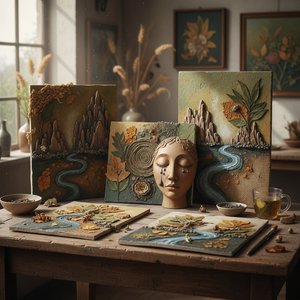
Earthy Tones & Emotional Resonance: Exploring the Vibe of Grounded Artworks
Explore the emotional power of earthy tones in art history! Discover how artists use color to evoke feelings & create grounded spaces. Expert advice on selecting artwork for your home – plus custom reproductions at TopImpressionists.

Sandstone & Sunlight: 10 Masterpieces of Earth-Toned Art |
Journey through 10 iconic paintings bathed in 'sand' tones – from Van Gogh to Monet. Explore the stories, techniques & warm palettes of these timeless masterpieces. Find museum-quality art reproductions at and bring classic beauty home.

Earthy Hues & Masterpieces: Top 10 Paintings Dominated by Clay Tones |
Explore 10 iconic paintings dominated by rich clay tones – from Rembrandt's warmth to Van Gogh’s earthy landscapes. Discover art history, techniques & find museum-quality reproductions at . Explore the full collection online!

Earthy Hues & Masterpieces: Top 10 Paintings with 'Mushroom' Tones |
Explore 10 iconic paintings with captivating 'mushroom' tones! Discover Van Gogh, Monet & Rembrandt’s masterpieces—earthy palettes, rich history & artistic techniques. Find museum-quality art reproductions and curated decor ideas at

Raw Umber's Majesty: 10 Paintings That Define Earth Tones |
Explore 10 iconic paintings where raw umber reigns supreme! Discover Rembrandt, Caravaggio & more – masters of earth tones and chiaroscuro. Find museum-quality art reproductions & elevate your home decor with .