

Näidatud: · koos raamiga:
 Eelvaade
 Saada
Saada Jaga
Jaga
 Teave teose kohta
 Juhend

 Laadi alla
 Sarnased teosed
 Röntgenuuring
 Slaidietendus
 KÜSIMUSED JA VASTUSID
 Statistika


€ 240
Käsitsi valmistatud õlimaalireproduktsioon
Meie kunstnike poolt tellimusel valmistatud käsitsi maalitud õli-kainaste teos teie soovitud suuruses ja raamis. ( Lülita trükkitoodetele Lülita digitaalse pildi juurde)
Suurus
·Standardne suurus
kohandatud
CM
INCH
Vali meie eelmääratud suurused, mis vastavad teose algupärastele proportsioonidele.
Suuruste laadimine...

laius
kõrgus
Sisestage vajalik laius ja kõrgus, et teos sobiks teie raamile või seinale. Kuna tegu on käsipainatud teosega, siis erineva kujuga suuruse korral võib kunstnik jätta pildi ümber veidi rohkem marginaali või lõigata osa ära — valik on teie. Enne maali alustamist saadame teile kinnitamiseks digitaalse näidisprojektsiooni. Sellel lehel näidatud pilt ei kajasta tegelikku tulemust — seda näitab ainult näidisprojektsioon.
 Loe lähemalt
Lõpuleviimine
·
Valge serv €1

häguse servaga lõppviimistlus €1

Laiendatud €1

P118B €10

P118H €10

P118W €10

P438Z €10

P508JH €12

P508YH €12

P805H €10

P805Z €10

P919BZ €10

P919G €10

P919XJ €10

P959ZH €10

P968JZ €12

W106C €8

W218G €10

W218JH €8

W218Y €10

W307PJ €10

W316G €10

W316PJ €8

W316Y €10

W398PJ €8

W4111J €10

W500HY €15

W500JH €15

W692G €12

W849H €8

W940BG €15

W953PJ €8

H24-GOLD €30

H24-SILVER €30

H36-GOLD €45

H36-SILVER €45
Saadetakse kaitsetorus, et te võiksite selle ise raamida.
Üle 105 cm suurust raami saadetakse komplektina professionaalse raamija jaoks — lugeege lisainfot.
Lisateenused
valikulineMida lisad sisaldavad?
Näited sellest, mida saab muuta: asendage nägu kliendi fotoga; lisage lemmikloom (nt asendage kass koega); lisage taustale peidetud sõnum; muutke tausta maastikku või elemente.
Pärast tellimust saadetab TopImpressionists.com meeskond klientile e-posti juhised ning esitab ette tasandatud eelvaate
Pärast tellimust saadetab TopImpressionists.com meeskond klientile e-posti juhised ning esitab ette tasandatud eelvaate
Maailmline tarne 3–4 nädala jooksul tavalise 5 nädala asemel. (3 november). Kvaliteedis kompromisse ei tehta.
Kaitsevärnitsus
Nimesildikiri
Graveeritud pronksplaadi üksikasjad
This elegant plaque features the artist's name and the title of the artwork, finely engraved for a timeless presentation.
It is made from bronze with a refined, elegant finish. The text is precisely laser-engraved for a sharp and permanent result. Measuring 9x2 cm, the plaque is compact yet easy to read. It's built to be durable and scratch-resistant, offering a professional, museum-quality look. Mounting is simple thanks to the included adhesive backing.
Läbipaistva akrüülplaadi üksikasjad
The plaque includes essential engraved details such as the artist's name, the title of the artwork, the date it was created, the type of media used-like oil on canvas or watercolor-a brief description of the piece, and a QR code that links to the complete artwork information.
It is crafted from clear acrylic, offering a sleek, modern appearance. The text is UV-engraved in black to ensure strong visual contrast. With a size of 10x15 cm, it ensures optimal readability. It comes equipped with two metal hooks for secure wall mounting. The plaque is designed to be weather-resistant, making it suitable for various environments, and it includes interactive features that work seamlessly with smartphone scanning.
Musta akrüülplaadiรายละเอียด (Note: The user provided "Musta akrüülplaadi detailid" as the current translation and asked for an improved version. Since "Musta akrüülplaadi
This elegant plaque includes engraved information such as the artist's name, the title of the artwork, the date it was created, the type of media used (like oil on canvas or watercolor), a short description of the artwork, and a QR code for quick access to more information.
The plaque itself is made from refined black acrylic with a premium finish. The text is laser-engraved in white for high contrast and readability. Its size is 10x15 cm, designed to be easy to read. It comes with two metal hooks for professional mounting. The design is sleek and fits any interior style. It is also weather-resistant and durable, with built-in digital integration for mobile compatibility.
Klaasivalik on saadaval ainult kuni 110 cm suuruses teostes
 Klaasivalik on saadaval ainult kuni 110 cm suuruses teostes
- Tasuta ekspresssaatmine üle maailma
- Kõrgekvaliteediline lina-kangas
- Täielik transpordikindlustus
- Tollimaksude tagastamise garantii
- Värvitoime täpsuse garantii
- 100 päeva tagastusõigus (ainult valmistusdefektide korral)
- 100% raha tagasi garantii
- Hulgusoodustus


Kogumisobjekti kirjeldus
Kunstniku elulugu
Avasta James Abbott McNeill Whistler (1834-1903): Tonalismi ja esteetika ameeriklasest kunstnik. Tutvuge 'Whistleri emaga', öömaalidega, portreedega ning tema 'kunstiks kunstina' filosoofia.
Teemal maalid
A Study in Shadow and Silence: Whistler’s Self-Portrait of 1858
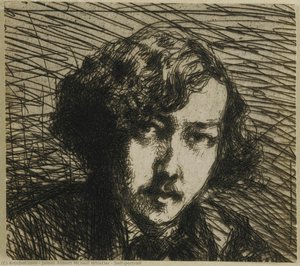
James Abbott McNeill Whistler's "Self-portrait," etched in 1858, isn’t merely a likeness; it’s a carefully constructed meditation on perception, light, and the very nature of artistic expression. This deceptively simple image, rendered in stark black and white, immediately draws the viewer into a world of quiet contemplation – a world that reflects Whistler's burgeoning aesthetic philosophy. The portrait depicts a man with short hair, gazing downward, his features etched with a subtle melancholy. A neatly trimmed mustache adds to an air of restrained formality, while the tie suggests a connection to the social conventions of the time, yet he subtly resists their full embrace.
- The Etching Technique: Whistler was a pioneer in etching, meticulously controlling every line and tonal value. The delicate lines of this portrait demonstrate his mastery of the medium, creating an astonishingly detailed surface despite its monochrome palette. Notice how he uses hatching – closely spaced parallel lines – to build up areas of shadow, suggesting depth and volume with remarkable subtlety.
- Compositional Restraint: The subject occupies a significant portion of the frame, anchoring the image while allowing ample negative space around him. This deliberate emptiness invites the viewer to focus entirely on the figure itself, fostering a sense of intimacy and solitude.
Echoes of Aestheticism
Whistler’s “Self-portrait” is deeply rooted in the aesthetic movement that was gaining momentum throughout Europe during this period. Rejecting the prevailing Victorian emphasis on moralistic narratives and historical subject matter, aesthetes like Whistler sought to elevate art to its purest form – an end in itself. They believed that art should be judged solely on its beauty and sensory impact, divorced from didactic or narrative content. This portrait embodies that philosophy perfectly; it’s not a story being told, but rather an experience of visual contemplation.
The year 1858 was pivotal for Whistler. He was beginning to establish his artistic identity, experimenting with tonal values and exploring the interplay between light and shadow – techniques he would later refine into his signature “Nocturnes.” This self-portrait can be seen as a preliminary study for these future works, a focused investigation of how color (represented here through value) could evoke mood and atmosphere.
Symbolism in Subtlety
While the portrait avoids overt symbolism, there are subtle clues that enrich its meaning. The downward gaze suggests introspection, perhaps even a degree of sadness or weariness. It’s not a triumphant or assertive pose; rather, it conveys a sense of quiet observation and self-awareness. The tie, while present, isn't overly emphasized – it hints at societal expectations without demanding adherence to them. Whistler was deliberately blurring the lines between art and life, suggesting that beauty could be found in the everyday, even in the act of simply looking.
Furthermore, consider the stark contrast between light and shadow. Whistler masterfully uses chiaroscuro – the dramatic interplay of light and dark – to sculpt the man’s face and create a sense of three-dimensionality. This technique not only enhances the visual impact but also contributes to the overall mood of quiet contemplation.
A Timeless Reflection
Whistler's "Self-portrait" of 1858 remains a powerfully evocative work, offering a glimpse into the mind of an artist grappling with his own identity and artistic vision. It’s a testament to Whistler’s innovative approach to etching and his commitment to aesthetic principles. A reproduction of this piece offers more than just a visual representation; it provides a window into a pivotal moment in art history – a moment when the pursuit of beauty was championed above all else. Its quiet intensity continues to resonate with viewers today, inviting us to pause, reflect, and appreciate the subtle power of a carefully crafted image.
Korduvad küsimused
Millises muuseumis on säilitatud originaal "Self-portrait"?
Teos „Self-portrait“, autor Džeims Abbot Mcneil Visler on näitustel The Smithsonian’s National Museum of Asian Art, Washington, D.C., Ameerika Ühendriik. Muuseumi keterangane viitab originaalteosele, mitte reproduktsioonidele.
Miks on teose "Self-portrait" autoriõiguste staatus selline, nagu see on?
„Self-portrait“, autor Džeims Abbot Mcneil Visler on avalikus õiguses – selle autoriõigud onหมดunud. Tegijakeskuse kaitse kestus arvatakse kunstniku surmaajaest, mis toimus aastal 1903.
Kas on "Self-portrait" kuulus Aestheticism and Symbolism suunaga teos?
Teos „Self-portrait“, autor Džeims Abbot Mcneil Visler on klassifitseeritud tasemele Recognized ning kuulub Aestheticism and Symbolism suunasse.
Kiirinfo ja kunstiviktoriin
Info Džeims Abbot Mcneil Visler kohta

Džeims Abbot Mcneil Visler
1834 - 1903, Ameerika Üriikide
Kunstniku elulugu
James Abbott McNeilli Whistler: Esteetika ja Tonalismi Maestro
James Abbott McNeill Whistler, sündinud 1834. aastal Lowellis, Massachusetts'is, oli kunstnik, kes tegi karjääri ümber kujundades Ameerika kunsti ning mõjutades oluliselt nii Euroopa kui ka hilisemat modernismi. Tema elu oli pidev otsing tonaalse harmoonia järele ja esteetilise vabaduse poole, mis viis ta vastuolusse konventsioonidega ja tegi temast võitmatu isiksuse kunstimaailmas. Noorena veetis Whistler aega nii West Point'i sõjakoolis kui ka Ameerika rannikumereme surve- ja geodeetikatöödes, kuid need kogemused ei suutnud talustada tema kasvavat kirge kunsti vastu. Varajased aastad kujundasid tema iseloomu – kohanemisvõimet, uudishimu ning vankumatut soovi teerajaja olla.Pariisi Aastad ja Stüüli Kujunemine
1855. aastal suundus Whistler Pariisi, kus õppis Sébastien Bouré juhendamisel õlimaalimist, vesivärki ja graafikat. See periood oli pöördepunktiks tema kunstilises arengus. Prantsuse realismist ja Barbizon'i koolkonna maalikunstnikest inspireerituna hakkas Whistler arenema ainulaadse stiili poole, mis keskendus toonidele ja atmosfäärilisele mõjule. Ta ei püüdnud reaalsust täpselt jäljendada, vaid pigem tabada selle olemust – lühinäguisi tundeid ja peeni nüansse. Pariisis algas Whistleri veendumus, et kunst peaks olema vaba moraalsetest või sotsiaalsetest kommentaaridest ning hinnata ainult tema esteetiliste kvaliteetide järgi. See filosoofia sai aluseks Esteetika liikumisele ja defineeris tema kunsti."Nocturned", Portreed ja Harmoonia Püüdlus
Whistleri loominguline visioon ilmnes mitmete peamiste teemade ja stiililiste valikute kaudu. Ta propageeris "kunsti enda jaoks", hüljates narratiive, mis olid koormatud moraalse või sotsiaalse kriitika poolest. Tema töö sai harjutuseks valguse, värvi ja atmosfääri peente nüansside tabamisest – püüdlus, mis viis tema ikooniliste "nocturnede" loomiseni. Need atmosfäärilised maalid õhtuste stseenidega, sageli kujutades Seini jõge öösel, ei olnud mõeldud kui otseseid tõetõuse, vaid pigem melanhoolseid muljeid, toonilise harmoonia ja meeleolu uuringuid. Ta kasutas sageli piiratud värvilahendusi ja õrna pintslikäidet, luues eeterliku ilu ja vaikse kontemplatsiooni tunde. Portreed said tema teose keskpunktiks, kuid ta lähenes neile ainulaadselt. Whistler ei püüdnud täiuslikku sarnasust saavutada; pigem keskendus formaalsetele paigutustele ja toonisuhetele, käsitledes oma modifikande kui kompositsioonilisi elemente hoolikalt konstrueeritud esteetilise raamistikus. Teosed nagu "Arrangement in Grey and Black No. 1" – paremini tuntud kui "Whistler's Mother" – näitavad seda lähenemist suurepäraselt, muutes pereportree ikooniliseks kujuks Viktoria ajastu emadusest läbi vormi ja tooni meisterliku kasutuse.Vaidlused, Mõju ja Püsiv Pärand
Whistleri karjäär ei jäänud vaidlusteta. 1878. aastal kunstikriitiku John Ruskinile esitatud õigusnulk "Nocturne in Black and Gold – The Falling Rocket" kohta sai olulise verstaposti kunsti ajaloos. Whistler kaitses edukalt oma kunstilist autonoomiat, väites, et tema maal ei olnud mõeldud realistlikuks kujutiseks, vaid pigem värvi ja vormi esteetiliseks paigutuseks. See kohtuprotsess tõstis tema profiili ning sütitas olulisi arutlusi kunsti kriitika olemuse ja kunstniku vabaduse kohta. Peale selle õigusliku võitluse laienes Whistleri mõju kaugele. Ta oli sügavalt inspireeritud Jaapani puugravüüridest (ukiyo-e), mis aitasid teda kompositsiooniliste põhimõtetega ja dekoratiivsete mustrite rõhutamisega, ning Hispaania maalijate nagu Velázquez toonilise meisterlikkusega. Tema "kunsti enda jaoks" propageerimine mõjutas oluliselt Esteetika liikumist Inglismaal ja Ameerikas, avades tee modernismile ja väljakutsetele konventsionaalsele arusaamale kunstniku eesmärgist. Ta jättis püsiva jälje Ameerika kunsti, inspireerituna põlvkondi kunstnikke formalistlikku lähenemist omaks võtma ning värvi ja kompositsiooni väljendusvõimalusi avastama.- Tuntumad teosed: *The Forge* (1861), *Portrait of Charles Lang Freer* (1873), *Brown and Gold: The Gold Girl—Connie Gilchrist* (1876-77), *Arrangement in Grey and Black No. 1 (Whistler’s Mother)* (1871), *Nocturne in Black and Gold – The Falling Rocket* (1875).
- Mõjud: Jaapani puugravüürid, Velázquez.
Kiirinfo Džeims Abbot Mcneil Visler kohta
- Artistic Movement Or Style: Tonalism, Esteetika
- Artists Or Movements Influenced By This Artist:
- Esteetlik liikumine
- Modernism
- Artists Who Influenced This Artist:
- Velázquez
- Jaapani printsid
- Date Of Birth: 14. juuli 1834
- Date Of Death: 1903
- Full Name: James Abbott McNeill Whistler
- Nationality: Ameerika
- Notable Artworks:
- Whistler’s Mother
- Nocturne in Black & Gold
- The Forge
- Place Of Birth (City And Country): Lowell, USA
Sarnased teosed





Avastage teoseid, mis on koondatud teemade, stiilide ja omaduste kaupa.


Džeims Abbot Mcneil Visler
Self-portrait
() ·
koos raamiga: · Käsitööna õliga linale maaldud
Kokkuvõte