

 Eelvaade
 Saada
Saada Jaga
Jaga
 Teave teose kohta
 Juhend

 Laadi alla
 Sarnased teosed
 Röntgenuuring
 Slaidietendus
 KÜSIMUSED JA VASTUSID
 Statistika
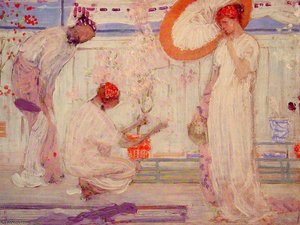
The Violet Note

- 18.0 x 26.0 cm


 Loe lähemalt
Avasta James Abbott McNeill Whistler (1834-1903): Tonalismi ja esteetika ameeriklasest kunstnik. Tutvuge 'Whistleri emaga', öömaalidega, portreedega ning tema 'kunstiks kunstina' filosoofia.
Hankige trükiivaldatav fail, mis on kvaliteedilt palju parem kui veebilehel näidatud eelvaade. Kõik meie müüdavad digitaalsed pildid pärinevad meie arhiivist kõrge resolutsiooniga originaalfailidest — tavaliselt 5000 kuni 15 000 pikslit laiust — nii et saate julgelt trükida suurematsat, lüüdist teha või detailset sisu reproduktsiooni teha.
Meie stuudiost ei lahtu ükski fail puutumatuna. Digiekpert võrdleb värve algsest maalistimusega ja vajadusel korrigeerib neid, seejärel parandab selgust ja detaile professionaalsete retušimisvahendite abil — püüdes alati jääda truudeks kunstniku pintoonile ja stiilile. Tulemuseks on pilt, mis näeb välja nagu maali, mitte nagu filtreeritud skann.
Teet kinnituse enne lõplikku valmimist: meie ekspert saadab pildi 72 tunni jooksul e-posti ülevaatamiseks. Ei ole rahul? Paluge parandusi või korrektsioone ning kui kvaliteet ei vasta ootustele, võite paluda tagastamist.
See on kvaliteet, millele tuguvad väljaandjad, disainistuudiod, galeriid ja trükikojad.
Digitaalne kunstiteos
Laadi alla kõrge resolutsiooniga fail isiklikuks vaatamiseks, trükkimiseks ja loomingulisteks projektideks. ( Lülita trükkitoodetele Osta käsitsi maalatud teos)
Sisse kuulub iga digitaalse pildi tellimusega
Eksperdi digitaalne kohaletoimetamine, garanteeritud
Valides TopImpressionists.com, ei saa sa lihtsalt pilti – saad professionaalselt parandatud digitaalse teose, mida on valmistatud täpsusega ja mis on toetatud rahuldamatusgarantiiga. Siin on kõik, mis sinu tellimusega automaatselt kaasneb:

Kiire digitaalne edastus
Teie kõrge resolutsiooniga digitaalne pildifail saadetakse teile e-posti 72 tunni jooksul pärast tellimist – kohe kasutamiseks valmis.

Tehisintellektiga täiustatud digitaalne fail
Teie teos on professionaalselt optimeeritud arenenud tehisintellekti tööriistade ja käsitsi redigeerimise abil, tagades maksimaalse detailitaseme, selguse ja värvitäpsuse.

Tasuta eluaegne uuesti saatmine
Kas kustutasid faili kogukalu unustamisel või kustutamisel? Puudub mure – saad selle uuesti igal ajal ilma lisatasuta.

Puuduvad importimaksud – alati
Nautige oma teoseid koheselt ilma tolli-, maksude või tarnimaskuludeta – digiletchargused on alati maksuvabadud.

Värvitäpsuse garantii
Me tagame, et teie digitaalne pilt kajastaks originaali värve professionaalsete tööriistade ja värvihalduse abil võimalikult täpselt.

100 päeva rahuldamatuse garantii
Kui te ei ole oma digitaalse pildi eest rahul, siis me parandame seda või tagastame 100% summast 100 päeva jooksul – küsimusteta.

100% raha tagastamise garantii
Ei ole rahul? Saate täielise tagastaja 100 päeva jooksul pärast digitaalse faili kättesaamist – ilma küsimusteta.

Suurema tellimuse soodustused
Osta 3 pilti, säästa 10% - Osta 5, säästa 15% - Osta 10+, säästa 20%. Sobib suurepäraselt loomingulisteks projektideks, galeriideks ja agentuurideks.
A Moment of Quiet Anticipation: Unpacking “The Violet Note”
James Abbott McNeill Whistler’s "The Violet Note," painted in 1886, isn't a grand statement of narrative or dramatic action; it’s a carefully constructed tableau of quiet contemplation and the subtle poetry of everyday life. This intimate portrait captures a woman, her back turned to the viewer, engaged in the seemingly simple act of preparing for travel – a moment frozen in time that speaks volumes about Whistler’s core aesthetic philosophy: “art for art’s sake.” The painting immediately draws us in with its muted palette dominated by blues and greens, creating an atmosphere of subdued elegance and a sense of veiled mystery. It's a deliberate departure from the prevailing Victorian obsession with grand historical scenes or emotionally charged portraits, reflecting Whistler’s commitment to capturing the essence of beauty through form, color, and light rather than storytelling.
The Language of Form and Color: Whistler’s Aesthetic Vision
Whistler was deeply influenced by Japanese prints – particularly *ukiyo-e* – which emphasized flattened perspectives, bold outlines, and a focus on decorative elements. This influence is evident in the painting's composition; the figures are rendered with a sense of detachment, almost as if viewed through a slightly removed lens. The use of color is equally deliberate. Whistler favored a technique he called “tonal harmony,” prioritizing subtle gradations of tone over bright, saturated hues. Notice how the violet – hinted at in the title and subtly reflected in the arrangement of objects – acts as a unifying element, grounding the scene and lending it an air of sophisticated restraint. The careful placement of each object—the vase, the potted plant, the books—contributes to a carefully balanced visual rhythm, suggesting a considered aesthetic rather than a spontaneous one.
Symbolism in the Details: A Journey Within
Beyond its formal qualities, “The Violet Note” is rich with symbolic potential. The woman’s posture, leaning on her suitcase, immediately evokes travel and departure – but it's not a joyous or celebratory departure. There’s a hint of melancholy in her stance, suggesting perhaps a bittersweet farewell or the quiet solitude of a journey undertaken alone. The suitcase itself, placed squarely on the floor, is a potent symbol of both practicality and vulnerability. The books, stacked neatly together, could represent knowledge, experience, or even a longing for intellectual stimulation during her travels. Even the vase with its single bloom – a violet, no doubt – speaks to beauty, fragility, and the transient nature of life. Whistler wasn’t simply depicting a scene; he was layering it with subtle suggestions and inviting the viewer to project their own interpretations onto the canvas.
Historical Context: The Rise of Aestheticism
“The Violet Note” emerged during a pivotal moment in art history – the height of the Aesthetic movement. Whistler, along with figures like Oscar Wilde, rejected the didactic and moralistic tendencies of much 19th-century art, arguing that art should exist solely for its own beauty and pleasure. This philosophy challenged the established conventions of the time, leading to considerable controversy and criticism. Whistler’s work was often dismissed as “mere decoration,” but his insistence on prioritizing formal qualities over narrative content paved the way for modernism and profoundly influenced subsequent generations of artists. Understanding this context illuminates why "The Violet Note" is not a painting about *what* is happening, but rather about *how* it's being seen – a testament to Whistler’s dedication to capturing the essence of visual experience.
Bringing “The Violet Note” Home: A Reproduction for Your Space
TopImpressionists.com offers meticulously crafted hand-painted reproductions of "The Violet Note," allowing you to bring this evocative masterpiece into your own home or office. Our skilled artisans replicate Whistler’s tonal harmony and subtle details with exceptional precision, ensuring that the painting's atmosphere and symbolic depth are faithfully preserved. Whether you appreciate Whistler’s pioneering aestheticism or simply admire its quiet beauty, a reproduction of “The Violet Note” is a timeless addition to any collection – a reminder of the power of art to evoke emotion and inspire contemplation.
Korduvad küsimused
Kuidas teos „The Violet Note“, autor Džeims Abbot Mcneil Visler seob Aestheticism and Symbolism kunstniku kodumaaga?
Teose "The Violet Note" on loonud Ameerika Üriikide-s sündinud Džeims Abbot Mcneil Visler, tuginedes Aestheticism and Symbolism suunale. Kunstniku päritolu seob teose Aestheticism and Symbolism stiiliga, mida praktiseerivad Ameerika Üriikide kunstnikud.
Kuidas teose "The Violet Note" motiiv seobub Džeims Abbot Mcneil Visler tavalistega teemadega?
Džeims Abbot Mcneil Visler korduvad teemad hõlmavad aestheticism, european avant-garde, sensibility, mood, atmosphere, travel, preparation, journey; teos "The Violet Note" keskendub woman, travel, packing, suitcase, vase, books, anticipation.
Kust leian juhendi teose "The Violet Note" kohta?
Teosele „The Violet Note“, autor Džeims Abbot Mcneil Visler on saadaval Õppekasutusjuhend leht: trüvitav infoleht teose kohta, mis on loodud õpilasteks ja klassiruumis kasutamiseks.
Sarnased teosed



Kunstniku elulugu
James Abbott McNeilli Whistler: Esteetika ja Tonalismi Maestro
James Abbott McNeill Whistler, sündinud 1834. aastal Lowellis, Massachusetts'is, oli kunstnik, kes tegi karjääri ümber kujundades Ameerika kunsti ning mõjutades oluliselt nii Euroopa kui ka hilisemat modernismi. Tema elu oli pidev otsing tonaalse harmoonia järele ja esteetilise vabaduse poole, mis viis ta vastuolusse konventsioonidega ja tegi temast võitmatu isiksuse kunstimaailmas. Noorena veetis Whistler aega nii West Point'i sõjakoolis kui ka Ameerika rannikumereme surve- ja geodeetikatöödes, kuid need kogemused ei suutnud talustada tema kasvavat kirge kunsti vastu. Varajased aastad kujundasid tema iseloomu – kohanemisvõimet, uudishimu ning vankumatut soovi teerajaja olla.Pariisi Aastad ja Stüüli Kujunemine
1855. aastal suundus Whistler Pariisi, kus õppis Sébastien Bouré juhendamisel õlimaalimist, vesivärki ja graafikat. See periood oli pöördepunktiks tema kunstilises arengus. Prantsuse realismist ja Barbizon'i koolkonna maalikunstnikest inspireerituna hakkas Whistler arenema ainulaadse stiili poole, mis keskendus toonidele ja atmosfäärilisele mõjule. Ta ei püüdnud reaalsust täpselt jäljendada, vaid pigem tabada selle olemust – lühinäguisi tundeid ja peeni nüansse. Pariisis algas Whistleri veendumus, et kunst peaks olema vaba moraalsetest või sotsiaalsetest kommentaaridest ning hinnata ainult tema esteetiliste kvaliteetide järgi. See filosoofia sai aluseks Esteetika liikumisele ja defineeris tema kunsti."Nocturned", Portreed ja Harmoonia Püüdlus
Whistleri loominguline visioon ilmnes mitmete peamiste teemade ja stiililiste valikute kaudu. Ta propageeris "kunsti enda jaoks", hüljates narratiive, mis olid koormatud moraalse või sotsiaalse kriitika poolest. Tema töö sai harjutuseks valguse, värvi ja atmosfääri peente nüansside tabamisest – püüdlus, mis viis tema ikooniliste "nocturnede" loomiseni. Need atmosfäärilised maalid õhtuste stseenidega, sageli kujutades Seini jõge öösel, ei olnud mõeldud kui otseseid tõetõuse, vaid pigem melanhoolseid muljeid, toonilise harmoonia ja meeleolu uuringuid. Ta kasutas sageli piiratud värvilahendusi ja õrna pintslikäidet, luues eeterliku ilu ja vaikse kontemplatsiooni tunde. Portreed said tema teose keskpunktiks, kuid ta lähenes neile ainulaadselt. Whistler ei püüdnud täiuslikku sarnasust saavutada; pigem keskendus formaalsetele paigutustele ja toonisuhetele, käsitledes oma modifikande kui kompositsioonilisi elemente hoolikalt konstrueeritud esteetilise raamistikus. Teosed nagu "Arrangement in Grey and Black No. 1" – paremini tuntud kui "Whistler's Mother" – näitavad seda lähenemist suurepäraselt, muutes pereportree ikooniliseks kujuks Viktoria ajastu emadusest läbi vormi ja tooni meisterliku kasutuse.Vaidlused, Mõju ja Püsiv Pärand
Whistleri karjäär ei jäänud vaidlusteta. 1878. aastal kunstikriitiku John Ruskinile esitatud õigusnulk "Nocturne in Black and Gold – The Falling Rocket" kohta sai olulise verstaposti kunsti ajaloos. Whistler kaitses edukalt oma kunstilist autonoomiat, väites, et tema maal ei olnud mõeldud realistlikuks kujutiseks, vaid pigem värvi ja vormi esteetiliseks paigutuseks. See kohtuprotsess tõstis tema profiili ning sütitas olulisi arutlusi kunsti kriitika olemuse ja kunstniku vabaduse kohta. Peale selle õigusliku võitluse laienes Whistleri mõju kaugele. Ta oli sügavalt inspireeritud Jaapani puugravüüridest (ukiyo-e), mis aitasid teda kompositsiooniliste põhimõtetega ja dekoratiivsete mustrite rõhutamisega, ning Hispaania maalijate nagu Velázquez toonilise meisterlikkusega. Tema "kunsti enda jaoks" propageerimine mõjutas oluliselt Esteetika liikumist Inglismaal ja Ameerikas, avades tee modernismile ja väljakutsetele konventsionaalsele arusaamale kunstniku eesmärgist. Ta jättis püsiva jälje Ameerika kunsti, inspireerituna põlvkondi kunstnikke formalistlikku lähenemist omaks võtma ning värvi ja kompositsiooni väljendusvõimalusi avastama.- Tuntumad teosed: *The Forge* (1861), *Portrait of Charles Lang Freer* (1873), *Brown and Gold: The Gold Girl—Connie Gilchrist* (1876-77), *Arrangement in Grey and Black No. 1 (Whistler’s Mother)* (1871), *Nocturne in Black and Gold – The Falling Rocket* (1875).
- Mõjud: Jaapani puugravüürid, Velázquez.

Džeims Abbot Mcneil Visler
1834 - 1903 , Ameerika Üriikide
Lühikesed faktid
- Artistic Movement Or Style: Tonalism, Esteetika
- Artists Or Movements Influenced By This Artist:
- Esteetlik liikumine
- Modernism
- Artists Who Influenced This Artist:
- Velázquez
- Jaapani printsid
- Date Of Birth: 14. juuli 1834
- Date Of Death: 1903
- Full Name: James Abbott McNeill Whistler
- Nationality: Ameerika
- Notable Artworks:
- Whistler’s Mother
- Nocturne in Black & Gold
- The Forge
- Place Of Birth (City And Country): Lowell, USA