


 Vaata sisu
 Jaga teost
 Jaga
Jaga
 Detailid
 Õppekate juhend

 Laadi alla
 Sarnased teosed
 Röntgenuuring
 Slaidietendus
 Statistika
Petites chinoiseries bleues

Discover James Ensor's 'Petites Chinoiseries Bleues,' a captivating still life brimming with symbolic objects and masks, reflecting the artist’s unique vision of beauty and unsettling charm.
 Loe lähemalt
James Ensor oli Belgia maalikunstnik ja graafik, kes tunnetaan erityisesti häikäisevästä groteskista kuvastuksestaan sekä karnevaalimaskeista että luurangosta. Hän oli ekspressionismi ja surrealismi liikkeen varhainen pioneeri ning jätkus kunstilinnakena maailmale suurteoseksi.
Käsitsi valmistatud õlimaalireproduktsioon
Meie kunstnike poolt tellimusel valmistatud käsitsi maalitud õli-kainaste teos teie soovitud suuruses ja raamis. ( Lülita trükkitoodetele Ülemineku digitaalse pildi müügi kanalisse)




P118B €10

P118H €10

P118W €10

P438Z €10

P508JH €12

P508YH €12

P805H €10

P805Z €10

P919BZ €10

P919G €10

P919XJ €10

P959ZH €10

P968JZ €12

W106C €8

W218G €10

W218JH €8

W218Y €10

W307PJ €10

W316G €10

W316PJ €8

W316Y €10

W398PJ €8

W4111J €10

W500HY €15

W500JH €15

W692G €12

W849H €8

W940BG €15

W953PJ €8




Standardne suurus
kohandatud
CM
INCH
Vali meie eelmääratud suurused, mis vastavad teose algupärastele proportsioonidele.
Loading sizes...

laius
kõrgus
Sisestage vajalik laius ja kõrgus, et teos sobiks teie raamile või seinale. Kuna tegu on käsipainatud teosega, siis erineva kujuga suuruse korral võib kunstnik jätta pildi ümber veidi rohkem marginaali või lõigata osa ära — valik on teie. Enne maali alustamist saadame teile kinnitamiseks digitaalse näidisprojektsiooni. Sellel lehel näidatud pilt ei kajasta tegelikku tulemust — seda näitab ainult näidisprojekttsioon.
Näited muudetavatest elementidest: asenda nägu kliendi fotoga; lisa lemmikloom (nt asenda kass koeraga); lisa taustale peidetud sõnum; muuda tausta maastikku või elemente.
Pärast tellimust saadab TopImpressionists.com meeskond kliendile e-posti juhised ning esitab eelvaate kavandi
Pärast tellimust saadab TopImpressionists.com meeskond kliendile e-posti juhised ning esitab eelvaate kavandi
Maailmline tarne 3–4 nädala jooksul tavalise 5 nädala asemel. (26 oktoober). Kvaliteedis kompromisse ei tehta.

Tasuta ekspresssaatmine üle maailma

Kõrgekvaliteediline lina-kangastest muld

Täielik transpordikindlustus

Tollimaksude tagastamise garantii

Värvitoime täpsuse garantii

100 päeva tagastusõigus (ainult defektide korral)

100% raha tagasi garantii

Hulgusoodustus
 Klaasivalik on saadaval ainult kuni 110 cm suuruses teostes

Petites chinoiseries bleues
Reproduktsiooni materjal
Reproduktsiooni mõõtmed
-


Lõppsumma
€ 236
A World Woven with Masks and Shadows: James Ensor’s “Petites Chinoiseries Bleues”
James Ensor's "Petites Chinoiseries Bleues" isn’t merely a still life; it’s a meticulously constructed tableau of unsettling beauty, a window into the artist’s uniquely fractured vision. Painted in 1906, this work embodies the core of Ensor’s artistic philosophy – a deliberate blurring of reality and dream, a fascination with the grotesque, and an exploration of the human psyche through carefully arranged objects. The painting depicts a tabletop laden with a collection of Chinese artifacts: porcelain bowls, delicate figurines, intricately patterned fans, and a scattering of bottles and cups. Yet, it’s not the objects themselves that hold primary interest, but rather their arrangement, their colors, and the subtle, almost menacing presence of figures lurking just beyond the frame. The dominant hue is a cool, melancholic blue – a color often associated with introspection, mourning, and the uncanny – which permeates the scene, lending it an atmosphere of quiet unease. This deliberate use of color, combined with Ensor’s signature style, immediately establishes a mood far removed from simple representation.The Language of Masks and Exoticism
Ensor's preoccupation with masks is central to understanding his work, and “Petites Chinoiseries Bleues” provides a particularly potent example. The artist’s childhood spent in his parents’ souvenir shop, overflowing with carnival masks and exotic curiosities from around the world, profoundly shaped his artistic sensibility. These objects weren’t simply souvenirs; they were portals into other cultures, representations of hidden identities, and symbols of disguise. In this painting, the Chinese artifacts – particularly the porcelain figurines and the intricately patterned fans – function as metaphorical masks, concealing deeper meanings and inviting speculation about their origins and significance. The inclusion of Japanese elements—the fans and prints—further emphasizes this exoticism, reflecting Ensor’s interest in both Eastern cultures and the allure of the ‘other.’ The arrangement itself suggests a theatrical stage, with the objects positioned to create a narrative, albeit an ambiguous one.Technique and Composition: A Deliberate Discomfort
Ensor's technique is characterized by a bold, expressive brushstroke and a masterful manipulation of color. He employs a broken, almost fragmented approach, layering paint in thick impasto to create texture and depth. The composition is carefully balanced, yet unsettlingly off-kilter. The objects are arranged with a deliberate asymmetry, creating a sense of visual tension. Notice the way the blue dominates, subtly shifting and reflecting light in unexpected ways. The figures glimpsed behind the table – often interpreted as shadowy servants or perhaps even distorted reflections of Ensor himself – contribute to this feeling of unease and suggest a hidden drama unfolding just beyond our perception. The use of light is particularly noteworthy; it’s not naturalistic but rather serves to heighten the painting's emotional impact, casting long shadows and creating areas of darkness that invite the viewer’s imagination.Symbolism and the Artist’s Psyche
“Petites Chinoiseries Bleues” resonates with themes of isolation, mortality, and the anxieties of modern life – concerns that were increasingly prevalent in Ensor's time. The presence of skeletons (implied through the porcelain figurines) subtly references death and decay, while the overall atmosphere evokes a sense of melancholy and introspection. The painting can be interpreted as a meditation on the artificiality of appearances, the illusion of comfort, and the hidden darkness beneath the surface of everyday life. It’s a work that rewards close observation and invites repeated viewing, revealing new layers of meaning with each encounter. The title itself – “Petites Chinoiseries” – suggests a focus on small details, hinting at Ensor's ability to find profound significance in seemingly insignificant objects. Ultimately, "Petites Chinoiseries Bleues" is a testament to Ensor’s unique artistic vision—a hauntingly beautiful and deeply unsettling exploration of the human condition.Küsimused ja vastused
Kui harmoniliselt on teoses „Petites chinoiseries bleues“, autor James Ensor värvid ühendatud?
Teose "Petites chinoiseries bleues" värviharmonia on Softly Mixed Palette.
Milline on teose „Petites chinoiseries bleues“, autor James Ensor värvitoon intensiivsus?
Teose "Petites chinoiseries bleues" värvitoon on Balanced. Intensiivsus kirjeldab värvide sileduse ja tugevuse määra.
Mis tüüpi teos on „Petites chinoiseries bleues“, autor James Ensor?
Kataloogis on teos „Petites chinoiseries bleues“, autor James Ensor liigitatud kui WallArt. See kategooria aitab leida sarnaseid teoseid.


Kunstniku elulugu
James Ensor: A Pioneer of Modernism
James Sidney Edouard, Baron Ensor (Ostend, 13 April 1860 – 19 November 1949) was a Flemish-Belgian painter and printmaker, an important influence on expressionism and surrealism who lived in Ostend for almost his entire life. He was associated with the artistic group Les XX.
Early Life and Artistic Training
James Ensor’s father, James Frederic Ensor, born in Brussels to English parents, was a cultivated man who studied engineering in England and Germany. Ensor's mother, Maria Catharina Haegheman, was Belgian. Ensor himself lacked interest in academic study and left school at the age of fifteen to begin his artistic training with two local painters. From 1876, he attended drawing lessons at the College of the Blessed Virgin in Ostend.
The Impressionist Influence and Initial Works
Ensor’s early paintings reflected a more traditional approach, depicting scenes of everyday life rendered in somber tones. Works like *Russian Music* (1881) and *The Drunkards* (1883) reveal a nascent talent grappling with realism, but even within these early pieces, hints of the unsettling imagery to come are present. A pivotal shift occurred as Ensor’s palette brightened and his subject matter grew increasingly bizarre. He began to populate his canvases with carnivals, skeletons, puppets, and allegorical figures—a world steeped in fantasy and often bordering on the grotesque. This wasn't merely a stylistic change; it was a deliberate exploration of the darker aspects of human existence, a rejection of societal norms, and an embrace of the irrational.
Les XX and Artistic Innovation
In 1883 Ensor, along with a few older students of the Brussels‘ academy, would take leave of the artists‘ association *L'Essor*. They established the artists‘ association* Les Vingt*. This will play an important role in the dissemination of various international *avant-garde* movements. Ensor’s father’s shop in Ostend was a main purveyor of carnival paraphernalia, and this fascination would permeate his artwork.
Major Paintings and Recurring Themes
Throughout his career, Ensor produced a series of works that continue to shock and fascinate audiences today. *The Scandalized Masks* (1883) stands as an early testament to his fascination with the power of disguise and its ability to reveal hidden emotions. Perhaps his most controversial work, *Christ’s Entry into Brussels* (1888-1889), remains a powerful satire of religious hypocrisy and societal indifference—a painting initially met with harsh criticism but now celebrated as a masterpiece. The unsettling image of Christ entering a city teeming with grotesque masked figures is a potent commentary on the disconnect between spiritual ideals and human behavior.
Legacy and Influence
James Ensor was recognized as a pivotal figure in the transition from 19th-century Symbolism to early 20th-century Expressionism and Surrealism—a true pioneer of modern art. His fearless exploration of the subconscious, his embrace of grotesque imagery, and his rejection of academic conventions paved the way for future generations of artists who dared to challenge artistic norms. He is remembered as a visionary artist whose uncompromising vision continues to inspire contemplation and debate.

James Ensor
1860 - 1949 , Belgium
Lühikest infot
- Artistic Movement Or Style: Expressionism, Surrealism
- Artists Who Influenced This Artist:
- Bruegel the Elder
- Francisco Goya
- Whistler
- Date Of Birth: April 13, 1860
- Date Of Death: November 19, 1949
- Full Name: James Sidney Edouard Ensor
- Nationality: Belgian
- Notable Artworks:
- The Scandalized Masks
- Skeletons Fighting...
- Christ's Entry into Brussels
- Place Of Birth: Ostend, Belgium
Sarnased artiklid

James Ensor's Grotesque Visions: Social Commentary & Artistic Innovation
Explore the unsettling yet captivating world of James Ensor, a pioneer of Expressionism. Discover his satirical masterpieces, symbolic imagery & lasting influence on modern art. High-quality reproductions available at TopImpressionists.
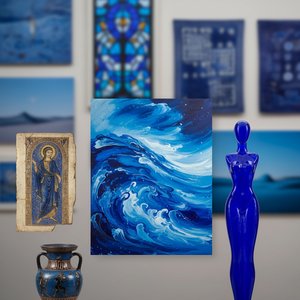
The Allure of Azure: Exploring the Symbolic & Aesthetic Depths of Blue in Art History
Explore the rich history of blue in art! Discover its symbolism, from ancient pigments to modern masterpieces by Kandinsky & Seurat. Uncover the psychological impact and cultural meanings behind this captivating hue.

Sir Alfred Munnings' Masterpieces: 25 Paintings That Define Equine Art | TopImpressionists
Explore 25 iconic Sir Alfred Munnings paintings! Discover the beauty of British Impressionism, equine art & rural England. Find museum-quality reproductions and elevate your home decor with TopImpressionists. Explore the full collection online.

James Abbott McNeill Whistler: 25 meistriteost kunstikollektsioonis | TopImpressionists.com
Avastage James Abbott McNeill Whistler'i 25 võrratut meistriteost! Sukelduge esteetilisse kunstimaailma, õppige tema maalitehnikatest ja leidke täiuslik seina kaunistus TopImpressionists.com-ist. Kunstikollektsioonid & reprodutsioonid.

Slate Blue Masterpieces: 10 Iconic Paintings & Timeless Home Decor Ideas
Immerse yourself in the captivating world of slate blue! Explore 10 iconic paintings by Monet, Van Gogh & Renoir. Discover their stories, techniques & find museum-quality art reproductions for your home at .
Avastage teoseid, mis on koondatud teemade, stiilide ja omaduste kaupa.


