


 Vaata sisu
 Jaga teost
 Jaga
Jaga
 Detailid
 Õppekate juhend

 Laadi alla
 Sarnased teosed
 Röntgenuuring
 Slaidietendus
 Statistika
Venice

Discover James Holland’s ‘Venice’ watercolor – a serene canal scene with Venetian architecture & a framed painting. Explore this romantic Impressionistic artwork.
A master of Romantic landscapes and Venice scenes. Discover the exquisite watercolours and oils of James Holland today.
 Loe lähemalt
Ostke kõrglahutusel ja täiustatud digitaalne pilt, mis on oluliselt parem kui veebilehel näidatud eelvaade.
Iga fail on meie spetsialistide poolt hoolikalt ette valmistatud, kasutades kaasaegseid tööriistu ja professionaalset käsitsi retušeerimist. Tagame, et igal pildil on erakordne selgus, täpne värvitäpsus ja peen detail.
Lõplik fail saadetakse e-posti teel 72 tunni jooksul ning on optimeeritud koheseks kasutamiseks professionaalsetes, toimetuslikes ja trüki keskkondades. See on sama kvaliteet, mida usaldavad tipptasemel disainistuudiod, kirjastused ja galeriid.
Digitaalne pilt
Laadi alla kõrge resolutsiooniga fail isiklikuks vaatamiseks, trükkimiseks ja loomingulisteks projektideks. ( Lülita trükkitoodetele Telli käsitsi maalitud reproduktsioon)
Sisse kuulub iga digitaalse pildi tellimusega
Professionaalne digitaalne kohaletoimetamine, garanteeritud
Valides TopImpressionists.com, ei saa sa lihtsalt pilti – saad professionaalselt parandatud digitaalse teose, mida on valmistatud täpsusega ja mis on toetatud rahuldamatusgarantiiga. Siin on kõik, mis sinu tellimusega automaatselt kaasneb:

Kiire e-posti edastus
Teie kõrge resolutsiooniga digitaalne pildifail saadetakse teile e-posti 72 tunni jooksul pärast tellimist – kohe kasutamiseks valmis.

Tehisintellektiga täiustatud digitaalne fail
Teie teos on professionaalselt optimeeritud arenenud tehisintellekti tööriistade ja käsitsi redigeerimise abil, tagades maksimaalse detailitaseme, selguse ja värvitäpsuse.

Tasuta eluaegne uuesti saatmine
Kas kustutasid faili kogukalu unustamisel või kustutamisel? Puudub mure – saad selle uuesti igal ajal ilma lisatasuta.

Puuduvad importimaksud – alati
Nautige oma teoseid koheselt ilma tolli-, maksude või tarnimaskuludeta – digiletchargused on alati maksuvabadud.

Värvitäpsuse garantii
Me tagame, et teie digitaalne pilt kajastaks originaali värve professionaalsete tööriistade ja värvihalduse abil võimalikult täpselt.

100 päeva rahuldamatuse garantii
Kui te ei ole oma digitaalse pildi eest rahul, siis me parandame seda või tagastame 100% summast 100 päeva jooksul – küsimusteta.

100% raha tagastamise garantii
Ei ole rahul? Saate täielise tagastaja 100 päeva jooksul pärast digitaalse faili kättesaamist – ilma küsimusteta.

Suurema tellimuse soodustused
Osta 3 pilti, säästa 10% - Osta 5, säästa 15% - Osta 10+, säästa 20%. Sobib suurepäraselt loomingulisteks projektideks, galeriideks ja agentuurideks.
Sarnased teosed
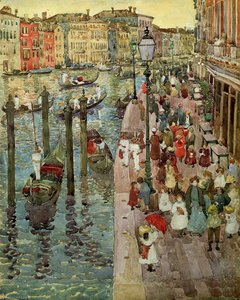


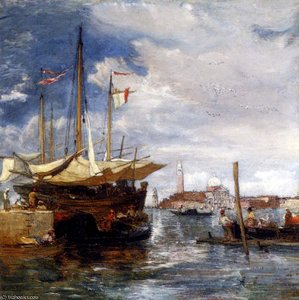


Kunstniku biograafia
The Potter's Precision
To understand the technical rigor of James Holland, one must look past the finished landscapes and toward the industrial grit of his beginnings in Burslem, Staffordshire. He did not emerge from a vacuum of pure theory; he was trained by the repetitive, exacting demands of the Davenport Pottery works. From age twelve, his hands were occupied with painting flowers onto porcelain and pottery. This early apprenticeship instilled a specific discipline regarding color and fine detail that remained present even when he transitioned to much larger canvases. He moved to London in 1819, carrying this decorative precision into a new arena of landscape and marine subjects.
His development was marked by a shift from the small-scale botanical accuracy required for ceramics to the broader atmospheric needs of topographical painting. While he continued to work as a pottery painter to sustain himself, his focus expanded toward architecture and natural history. By 1824, his first exhibition at the Royal Academy signaled that his skills were no longer confined to the surface of a teacup. He was a versatile practitioner, equally capable in oils and watercolours, a fact reflected in his prolific exhibition record across various prestigious societies.
Continental Sightings and Technical Shifts
Holland’s reputation was built on his ability to document the European landscape with structural integrity. His travels were not mere sightseeing; they were systematic studies of light and architecture. Between the 1830s and 1850s, he moved through France, Portugal, Switzerland, Austria, and the Netherlands. These excursions provided the raw material for his most recognized works. In France, specifically during visits to Rouen, he focused on architectural studies that demanded a sharp eye for form. His time in Portugal resulted in published works like The Tourist in Portugal, proving his utility as both an artist and a visual chronicler of the era.
His style underwent a visible transformation over the decades. The early watercolours, heavily influenced by the approach of Richard Parkes Bonington, possessed a certain delicate clarity. However, as time progressed, his technique became looser. He began to utilize bodycolour more extensively, moving away from purely transparent washes toward a more substantial, textured application. This shift allowed him to capture the heavier atmosphere of marine scenes and the complex light of Italian vistas with greater weight.
The Venetian Record
Venice remains the most significant anchor in his body of work. It was not a single visit but a recurring obsession that defined much of his later career. He returned to the city multiple times, notably in 1836, 1857, and throughout the mid-century, finding in its canals a subject that demanded both architectural precision and an understanding of light refraction. His depictions of the Grand Canal and Saint Mark's Basin demonstrate a mastery of the Venetian atmosphere, capturing the movement of gondolas and the play of sun on water without descending into mere sentimentality.
His professional standing was solidified through his involvement with major institutions:
- Royal Watercolour Society: He served as an associate in 1835 and achieved full membership by 1857 or 1858.
- Society of British Artists: He joined this group in 1843, remaining a member until 1848.
- Royal Academy: He exhibited thirty-two works here between 1824 and 1865.
- British Institution: His contributions reached ninety-one pieces at this venue.
Ultimately, Holland’s significance lies in his ability to bridge the gap between the meticulous decorative arts of the Potteries and the expansive, atmospheric demands of Victorian landscape painting. He was a colourist of high caliber, producing works that, while sometimes overlooked during his lifetime, gained substantial value as collectors sought the specific clarity he brought to continental views.

James Holland
1799 - 1870
Kiired faktid
- Artistic Movement Or Style: Romantic Landscape Painting
- Artists Who Influenced This Artist: ['Richard Parkes Bonington']
- Full Name: James Holland
- Nationality: English
- Notable Artworks:
- The Grand Canal, Venice
- Greenwich Hospital as it was in 1837
- Venetian Capriccio
- The Colonnade of Queen Mary Court
- Place Of Birth: Burslem, United Kingdom
- Date Of Birth: 1799
- Date Of Death: 1870