

 Vaata sisu
 Jaga teost
 Jaga
Jaga
 Detailid
 Õppekate juhend

 Laadi alla
 Sarnased teosed
 Röntgenuuring
 Slaidietendus
 Statistika
David and Bathsheba
 Oil On Canvas
- WallArt
- Baroque Renaissance Fusion
 1562
1562- Renaissance
 162.0 x 197.0 cm
 Louvre'i muuseum
Experience the dramatic chiaroscuro of Jan Massys's 1562 David and Bathsheba, a Renaissance masterpiece capturing an intimate biblical moment you will want to own.
 Loe lähemalt
Avastage Jan Massys, 16. sajandi Flandria meister, kelle teosest peegeldavad religioosne pühendumus, sotsiaalne satiir ja Flandria renessanssi täiuslik detailikäekäslus.
Käsitsi valmistatud õlimaalireproduktsioon
Meie kunstnike poolt tellimusel valmistatud käsitsi maalitud õli-kainaste teos teie soovitud suuruses ja raamis. ( Lülita trükkitoodetele Ülemineku digitaalse pildi müügi kanalisse)




P118B €10

P118H €10

P118W €10

P438Z €10

P508JH €12

P508YH €12

P805H €10

P805Z €10

P919BZ €10

P919G €10

P919XJ €10

P959ZH €10

P968JZ €12

W106C €8

W218G €10

W218JH €8

W218Y €10

W307PJ €10

W316G €10

W316PJ €8

W316Y €10

W398PJ €8

W4111J €10

W500HY €15

W500JH €15

W692G €12

W849H €8

W940BG €15

W953PJ €8




Standardne suurus
kohandatud
CM
INCH
Vali meie eelmääratud suurused, mis vastavad teose algupärastele proportsioonidele.
Loading sizes...

laius
kõrgus
Sisestage vajalik laius ja kõrgus, et teos sobiks teie raamile või seinale. Kuna tegu on käsipainatud teosega, siis erineva kujuga suuruse korral võib kunstnik jätta pildi ümber veidi rohkem marginaali või lõigata osa ära — valik on teie. Enne maali alustamist saadame teile kinnitamiseks digitaalse näidisprojektsiooni. Sellel lehel näidatud pilt ei kajasta tegelikku tulemust — seda näitab ainult näidisprojekttsioon.
Näited muudetavatest elementidest: asenda nägu kliendi fotoga; lisa lemmikloom (nt asenda kass koeraga); lisa taustale peidetud sõnum; muuda tausta maastikku või elemente.
Pärast tellimust saadab TopImpressionists.com meeskond kliendile e-posti juhised ning esitab eelvaate kavandi
Pärast tellimust saadab TopImpressionists.com meeskond kliendile e-posti juhised ning esitab eelvaate kavandi
Maailmline tarne 3–4 nädala jooksul tavalise 5 nädala asemel. (23 oktoober). Kvaliteedis kompromisse ei tehta.

Tasuta ekspresssaatmine üle maailma

Kõrgekvaliteediline lina-kangastest muld

Täielik transpordikindlustus

Tollimaksude tagastamise garantii

Värvitoime täpsuse garantii

100 päeva tagastusõigus (ainult defektide korral)

100% raha tagasi garantii

Hulgusoodustus
 Klaasivalik on saadaval ainult kuni 110 cm suuruses teostes

David and Bathsheba
Reproduktsiooni materjal
Reproduktsiooni mõõtmed
-


Lõppsumma
€ 236
A Moment Frozen in Time: The Allure of Jan Massys’s David and Bathsheba
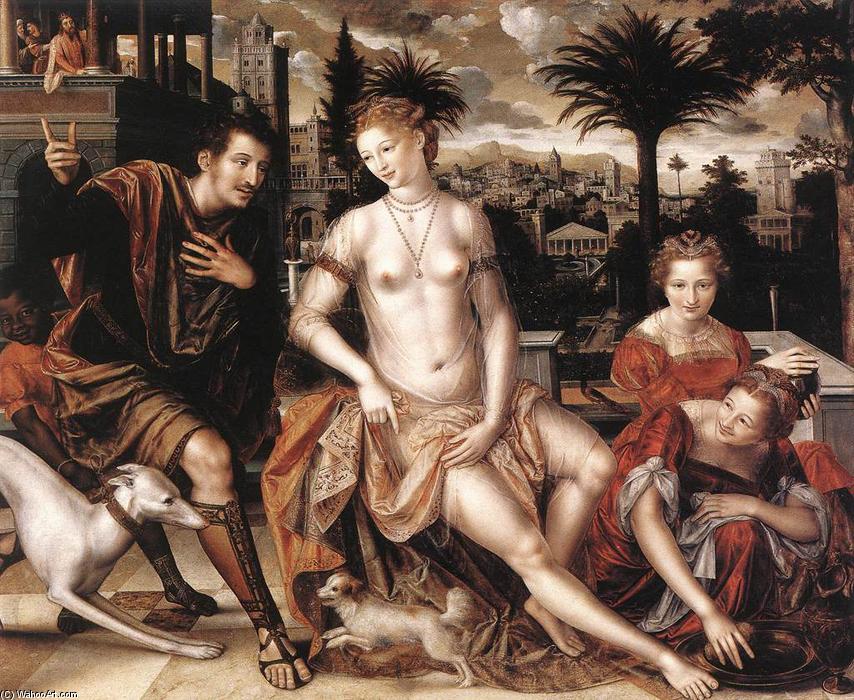
In the heart of Renaissance Antwerp, a period defined by both profound religious devotion and burgeoning worldly curiosity, Jan Massys captured a scene of unparalleled emotional and narrative tension. His 1562 masterpiece, David and Bathsheba, is far more than a mere biblical illustration; it is a window into the human psyche, capturing the exact moment where desire meets consequence. The painting recounts the clandestine encounter between King David and the Moabite woman, Bathsheba, a narrative of illicit passion that has captivated viewers for centuries. As we gaze upon this monumental canvas, we are drawn into an intimate tableau where every gesture and glance speaks of a secret shared between the figures and the observer.
The composition is masterfully orchestrated to guide the eye through a landscape of moral ambiguity. David, positioned with a commanding yet contemplative presence, gestures toward something unseen—perhaps a divine warning or a silent acknowledgment of the gravity of his transgression. Opposite him, Bathsheba lies in a state of palpable vulnerability, her upward gaze creating a powerful diagonal line of tension that connects the two protagonists. This intimacy is not solitary; Massys surrounds the central pair with supporting figures, including a servant attending to Bathsheba’s needs, which serves to remind us of the societal eyes and the inevitable repercussions that follow such private indiscretions. Even the small, quiet presence of a dog nestled near the edge of the scene adds a layer of symbolic depth, perhaps representing the lost innocence or the concept of fidelity amidst a moment of profound betrayal.
Mastery of Light and Texture in the Flemish Tradition
To behold this work is to witness the pinnacle of Renaissance oil technique. Massys utilized the medium of oil on canvas to achieve a level of realism that feels almost tactile. Through the meticulous application of paint, he renders the heavy, intricate folds of David’s robes with such precision that one can almost sense the weight of the fabric. This technical prowess extends to the delicate rendering of Bathsheba’s skin, where subtle glazing effects create a luminous, soft quality that contrasts beautifully with the more structured elements of the background.
Central to the painting's emotional impact is Massys’s use of chiaroscuro. By employing dramatic contrasts between deep shadows and brilliant highlights, the artist sculpts the figures out of the darkness, lending them a three-dimensional presence that commands the room. This manipulation of light does more than just define form; it heightens the atmospheric intensity, casting a somber, reflective mood over the entire scene. For the collector or the interior designer, such a piece offers a profound sense of drama and historical weight, making it an ideal centerpiece for spaces that value sophisticated storytelling and the timeless elegance of the Flemish masters.
Küsimused ja vastused
Millist väripaletti teoses „David and Bathsheba“, autor Jan Massys on kasutatud?
Teose „David and Bathsheba“, autor Jan Massys väripalett on kirjeldatud kui Earthy. See on lühike kirjeldus teose värvide kohta.
Kas teost „David and Bathsheba“, autor Jan Massys hoiustatakse kunstniku kodumaal?
Ei - teos asub välismaal. Jan Massys sündis riigis Belgia ning teose "David and Bathsheba" algorig on säilitatud muuseumis, mis asub riigis France.
Mille kohta teos "David and Bathsheba" on?
Teose "David and Bathsheba" teemad on biblical narrative, royal intrigue, sensuality, allegory, human emotion, renaissance painting, religious iconography.
Kunstniku elulugu
Uus tee uretud flamimaster
Jan Massys, tuntud ka nimega Jan Massijs, on murdrumatu tegel 16. sajandi õitsevates kunstimaastrikes Flanderis. Sündinud umbes 1466. aastal Belgiumi Leuvenis, esindavad tema elu ja looming traditsiooni ning innovatsiooni, religioosuse ning nutika sotsiaalse kommentaari põimumatust. Kuigi legendid on algupäraseks joonistanud pildi rahulisest raudsepadast kunstnikuni — luues narratiivi와 lihtsast päritolust, mida kandes kire —, paljastavad ajaloolised andmed varukat perekonda, viidates sellele, et Massysi pühendumus maalile leidis põhjust kunstilisest kalduma rather than majanduslikust vajadusest. Karel van Mander viitab haigusele, mis sundas teda lahkuma sepadast ja suunas dekoreerima trükke karnavalide pidustusteks, pakkudes varajase väljundit tema kasvavale loovusle. Tõenäoliselt sai ta alustavale koolitusele Leuvenis enne keda 1кру around 1491 Antwerpi asustamist, kus ta tõusis kiiresti Püha Lukiidiga seotud laugas kõrgemale, kinnistades end meistrikunsti loojana ja laidades aluse sellele, mis becomeks tuntud kui Antwerpi kool. Uruga on usutatud, et ka lumavad maastikud tunnust saanud Joachim Patinir õppis Massysi õppetundide all, aitades nii luua atmosfäärilisi taustu mõnele tema teostele — see on tõendus kunstniku töökoda koostöölisest vaimust.Traditsiooni kaja ja tõusev hääl
Massysi kunstiline stiil on sügavalt juurdunud flamandi traditsioonis, ta taastades teadlikult täpsete detailide ja ekspressiivse jõu, mida näit Sid Jan van Eyck ja Rogier van der Weyden. Ta ühendas meisterlikult tugevad kontuurid nüansseeritud modelleringuga, saavutades oma kompositsioonides märkimisväärse selguse ja sügavuse. Tema maalid on iseloomulikud säravale rikkusele, mis saadakse läbipaistvatest pigmentidest, andes nii religioossetele stseenidele kui ka sekulaarsetele portreetidele eeterilise olemuse. Kuid Massys ei olnud pelgalt minevikku kordav; ta infuseeris selle oma isikupärase visiooniga. Tal oli erakordne võime tabada siirast emotsiooni ja minutipilki täpsusega detailid, pöörates erilist tähelepanu tekstuuridele — ehtede säralle, riiete keerulistele servadele ja peenule ornamentikale, mis tõstis tema tööd lihtsalt esitamisest kõrgemale. See hoolikas lähenemine ulatus ka valguse ja varju uurimisele, luues peidetud, kuid lummavad efektid, mis tõid vaatajad iga stseen südamesse. Ta ei kartnud tegeleda keeruliste teemadega, ühendades nahtmatult religiooslused narratiivid inimlooduse ja ühiskondliku dünaamika sügavate tähelepanekutega.Antwerpis valitud pärand
Jan Massysi mõju ulatus kaugele tema oma elu ajast, kinnistades tema positsiooni auast Antwerpi kooli asutajana koos oma poja Quinten Massysiga ja vennaga Cornelis Massysiga. Ta sündis oskuslikult kokku varasemate flamandi meistrite — Dirk Bouts, Hans Memling, Rogier van der Weyden ja Jan van Eyck — mõjudest, integreerides samal ajal elemente Itaaliast ja teistest Madeste riikidest. See sulgumine lõi unikaalse kunstilise identiteedi, mis määris Antwerpi kooli jaoks terveid põlvkondi. Tema rõhuasetus üksikisuse iseloomustamisele ja inimemotioonide realistlikule kujutamisele kõlastas järgnevaid kunstnikke, inspireerides neid uute väljendusviiside otsimisel. Elu lõppupoolil seisid Massysil ees rasked ajad, sealhulgas religioossete uskumuste tõttu Antwerpist pageldamine, mis sundis teda otsima peituspaika Itaalias ja Prantsusmaas enne kodule tagasi pöördumist. Vaatamata neile väljakutsetele jätkas ta tellimuste saamist, demonstreerides oma püsivat mainet ja kunstilist võimekust kuni oma surmuni 1575. Tema pärand on kindel — see on tõendus maalist, kes ei ainult valdatsenud oma esisate tehnikuid, vaid julges ka vastu seista konventsioonidele ja pakkuda ainulaadset, sügavlt arusaatavat visiooni ümbritsevast maailmast.Jan Massysi maailma tänapäeval uurides
- Jan Massysi töökoda: Avastage see lummav 16. sajandi maali, mis kujutab detailsetel inimfiguuridel ja rikkalikus atmosfääris toimuvat sotsiaalset koosolekut.
- Püha pere: Uurige seda vapukat varajase renessanssi õliõlimalet, imetledes selle realistlikke kujusid, luksuslikke detaile, sümbolikat ja tehnikat.
- Quinten Massys: Süvenedes Jani isale, kes oli üks flamandi renessanssi kunstikujundaja, tuntud oma religioossete maalide ja satiiriliste teoste poolest.

Jan Massys
1466 - 1530 , Belgia
Lühikest infot
- Artistic Movement Or Style: Renessanss
- Artists Or Movements Influenced By This Artist: ['Antwerpi kool']
- Artists Who Influenced This Artist:
- Dirk Bouts
- Jan van Eyck
- Rogier van der Weyden
- Date Of Birth: u 1466
- Date Of Death: 1530
- Full Name: Jan Massys
- Nationality: Flandria
- Notable Artworks:
- Ilus puudus hertugas
- Rahavahetaja ja tema naine
- Cythera Venus
- Place Of Birth: Leuven, Belgia
Sarnased artiklid

Drama and Light: Discover the Captivating Grandeur of Baroque Art
Immerse yourself in the dramatic splendor of Baroque art. Explore the profound impact of light, shadow, and the Counter-Reformation through an expert historical lens, celebrating the masters who defined an era of unparalleled grandeur and emotional intensity.
Avastage teoseid, mis on koondatud teemade, stiilide ja omaduste kaupa.
