

Näidatud: · koos raamiga:
 Eelvaade
 Saada
Saada Jaga
Jaga
 Teave teose kohta
 Juhend

 Laadi alla
 Sarnased teosed
 Röntgenuuring
 Slaidietendus
 KÜSIMUSED JA VASTUSID
 Statistika

€ 240
Käsitsi valmistatud õlimaalireproduktsioon
Meie kunstnike poolt tellimusel valmistatud käsitsi maalitud õli-kainaste teos teie soovitud suuruses ja raamis. ( Lülita trükkitoodetele Lülita digitaalse pildi juurde)
See teos on autoriõigusega kaitstud
Sellel lehel kuvatav kunstiteos on kaitstud autoriõigusega, mis tähendab, et meil ei ole seaduslikku õigust luua või müüa identset reproduktsiooni. Seda kaitset rakendatakse rahvusvaheliste kokkulepete alusel, nagu näiteks Berne konventsioon ning riiklike seadustega, sealhulgas nendega, mida on sätestatud USA autoriõiguse seadus – 17. peatükk.
Austasena ja seaduslikuna alternatiivina pakume originaalist inspireeritud, käsitsi maalitud isikupärastatud teoseid. Meie osutavad ja professionalsed kunstnikud uurivad hoolikalt originaali stiili, meelemoi ja kunstilist olemust, et luua uus, ainulaadne teos, mis tekitab sama tunnet – olles samal ajal omaette originaalne looming.
See meetod järgib täielikult autoriõiguse reegleid, kuna see ei põhine kaitstud kunstiteose kopeerimisel või dupliteerimisel. Selle asemel on tegu loova reinterpreetatsiooniga – uue maaldisega, mis on algteosest inspireeritud, kuid ei ole sellest identiline.
 Loe lähemalt
Suurus
·Standardne suurus
kohandatud
CM
INCH
Vali meie eelmääratud suurused, mis vastavad teose algupärastele proportsioonidele.
Suuruste laadimine...

laius
kõrgus
Sisestage vajalik laius ja kõrgus, et teos sobiks teie raamile või seinale. Kuna tegu on käsipainatud teosega, siis erineva kujuga suuruse korral võib kunstnik jätta pildi ümber veidi rohkem marginaali või lõigata osa ära — valik on teie. Enne maali alustamist saadame teile kinnitamiseks digitaalse näidisprojektsiooni. Sellel lehel näidatud pilt ei kajasta tegelikku tulemust — seda näitab ainult näidisprojektsioon.
Lõpuleviimine
·
Valge serv €1

häguse servaga lõppviimistlus €1

Laiendatud €1

P118B €10

P118H €10

P118W €10

P438Z €10

P508JH €12

P508YH €12

P805H €10

P805Z €10

P919BZ €10

P919G €10

P919XJ €10

P959ZH €10

P968JZ €12

W106C €8

W218G €10

W218JH €8

W218Y €10

W307PJ €10

W316G €10

W316PJ €8

W316Y €10

W398PJ €8

W4111J €10

W500HY €15

W500JH €15

W692G €12

W849H €8

W940BG €15

W953PJ €8

H24-GOLD €30

H24-SILVER €30

H36-GOLD €45

H36-SILVER €45
Saadetakse kaitsetorus, et te võiksite selle ise raamida.
Üle 105 cm suurust raami saadetakse komplektina professionaalse raamija jaoks — lugeege lisainfot.
Lisateenused
valikulineMida lisad sisaldavad?
Näited sellest, mida saab muuta: asendage nägu kliendi fotoga; lisage lemmikloom (nt asendage kass koega); lisage taustale peidetud sõnum; muutke tausta maastikku või elemente.
Pärast tellimust saadetab TopImpressionists.com meeskond klientile e-posti juhised ning esitab ette tasandatud eelvaate
Pärast tellimust saadetab TopImpressionists.com meeskond klientile e-posti juhised ning esitab ette tasandatud eelvaate
Maailmline tarne 3–4 nädala jooksul tavalise 5 nädala asemel. (8 november). Kvaliteedis kompromisse ei tehta.
Kaitsevärnitsus
Nimesildikiri
Graveeritud pronksplaadi üksikasjad
This elegant plaque features the artist's name and the title of the artwork, finely engraved for a timeless presentation.
It is made from bronze with a refined, elegant finish. The text is precisely laser-engraved for a sharp and permanent result. Measuring 9x2 cm, the plaque is compact yet easy to read. It's built to be durable and scratch-resistant, offering a professional, museum-quality look. Mounting is simple thanks to the included adhesive backing.
Läbipaistva akrüülplaadi üksikasjad
The plaque includes essential engraved details such as the artist's name, the title of the artwork, the date it was created, the type of media used-like oil on canvas or watercolor-a brief description of the piece, and a QR code that links to the complete artwork information.
It is crafted from clear acrylic, offering a sleek, modern appearance. The text is UV-engraved in black to ensure strong visual contrast. With a size of 10x15 cm, it ensures optimal readability. It comes equipped with two metal hooks for secure wall mounting. The plaque is designed to be weather-resistant, making it suitable for various environments, and it includes interactive features that work seamlessly with smartphone scanning.
Musta akrüülplaadiรายละเอียด (Note: The user provided "Musta akrüülplaadi detailid" as the current translation and asked for an improved version. Since "Musta akrüülplaadi
This elegant plaque includes engraved information such as the artist's name, the title of the artwork, the date it was created, the type of media used (like oil on canvas or watercolor), a short description of the artwork, and a QR code for quick access to more information.
The plaque itself is made from refined black acrylic with a premium finish. The text is laser-engraved in white for high contrast and readability. Its size is 10x15 cm, designed to be easy to read. It comes with two metal hooks for professional mounting. The design is sleek and fits any interior style. It is also weather-resistant and durable, with built-in digital integration for mobile compatibility.
Klaasivalik on saadaval ainult kuni 110 cm suuruses teostes
 Klaasivalik on saadaval ainult kuni 110 cm suuruses teostes
- Tasuta ekspresssaatmine üle maailma
- Kõrgekvaliteediline lina-kangas
- Täielik transpordikindlustus
- Tollimaksude tagastamise garantii
- Värvitoime täpsuse garantii
- 100 päeva tagastusõigus (ainult valmistusdefektide korral)
- 100% raha tagasi garantii
- Hulgusoodustus


Kogumisobjekti kirjeldus
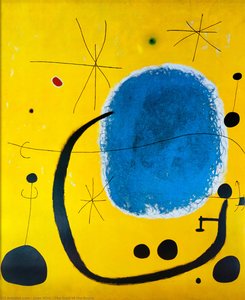
Discover Joan Miró's surreal 'Desnudo,' a captivating black-ground painting featuring stylized figures and vibrant colors. Explore its dreamlike quality, symbolism, and the artist’s unique vision.
Kunstniku elulugu
Avasta Joan Miró maailm! Vaata sürrealistlikke ja abstraktsed meistriteoseid, katalaani sümbolism ja mängulisi kujusid. Kaasaegse kunsti pioneer – vaata teoseid TopImpressionists'is!
Teemal maalid
A Dreamscape Unveiled: Exploring Joan Miró’s “Desnudo”
Joan Miró's "Desnudo" (Naked), painted in 1926, isn’t merely a depiction of the human form; it’s an immersion into a surrealist dreamscape—a vibrant testament to the Catalan artist’s unique vision and his profound engagement with the subconscious. This captivating work, rendered primarily in bold blocks of red, yellow, green, and beige against a stark black backdrop, immediately draws the viewer into a world where familiar forms are playfully distorted and imbued with symbolic weight. It's a piece that whispers of fertility, memory, and the boundless potential of imagination, echoing the spirit of early Surrealism while retaining Miró’s distinctly personal style.
The composition itself is deliberately asymmetrical, guiding the eye through a carefully orchestrated arrangement of abstract shapes. A stylized female figure dominates the left side, her form suggestive yet ambiguous—a potent symbol that could represent femininity, creativity, or perhaps simply the raw energy of life itself. Scattered around this central element are a series of intriguing motifs: a vibrant green shape reminiscent of a fruit or leaf, a striking red circle punctuated by yellow tendrils, and a pear-like form adding to the organic chaos. A subtle, dashed horizontal line bisects the canvas, providing a structural anchor within the otherwise fluid arrangement, preventing the piece from dissolving entirely into pure abstraction. This deliberate balance between order and disorder is characteristic of Miró’s approach – he sought to capture the essence of both logic and intuition.
The Language of Color and Line
Miró's masterful use of color is central to the painting’s impact. The limited palette—primarily reds, yellows, greens, and beiges—is applied with a remarkable directness; there’s little blending or softening of edges. Instead, each shape exists as a distinct entity, radiating its own internal glow against the enveloping darkness. This technique creates a powerful visual texture, emphasizing the materiality of the paint itself and lending the work a graphic, almost childlike quality. The sparing use of lines—primarily in the form of the dashed horizontal line and the outlines of the shapes—further contributes to the painting’s abstract feel, reinforcing its sense of immediacy and spontaneity.
Echoes of Surrealism and Catalan Identity
“Desnudo” firmly places itself within the context of early 20th-century Surrealism, drawing inspiration from artists like Joan Miró himself. However, it’s crucial to recognize that Miró developed a highly individual style, deeply rooted in his Catalan heritage. The organic forms—resembling natural elements but rendered with an element of dreamlike distortion—evoke the rugged landscapes and folklore of Catalonia, a region he consistently revisited throughout his career. The influence of Gaudí's architectural innovations is also subtly present, particularly in the flowing curves and biomorphic shapes that populate the composition. The painting feels both intensely personal and deeply connected to its cultural origins.
Symbolism and Emotional Resonance
Beyond its formal qualities, “Desnudo” resonates with a profound sense of dreamlike wonder and playful abstraction. The scattered shapes can be interpreted as fragments of memory, echoes of the subconscious, or perhaps even representations of primal instincts. The central figure’s ambiguous nature invites multiple readings—a symbol of fertility, creativity, or simply the mystery of human existence. Ultimately, Miró's work resists easy interpretation, encouraging viewers to engage with the painting on a deeply personal level and to construct their own meaning within its evocative space. “Desnudo” is not just a painting; it’s an invitation to step into a world where logic dissolves and imagination reigns supreme.
Korduvad küsimused
Kust saan näha teose "Desnudo" eelvaadet?
Teose „Desnudo“, autor Joan Miró reproduktsiooni eelvaate saamiseks avage teose Eelvaade leht.
Kas „Desnudo“, autor Joan Miró kuulub nõutudud Surrealist Painting teostega?
Surrealist Painting suunnas on teos "Desnudo" Iconic populaarsusega.
Mis on soovitatav trükimõõt teosele "Desnudo"?
Teosele „Desnudo“, autor Joan Miró on soovitatav printida suuruses Large. Suurust saab muuta, säilitades samal ajal proportsioonid.
Kiirinfo ja kunstiviktoriin
Info Joan Miró kohta

Joan Miró
1893 - 1983, Hispaania
Kunstniku elulugu
Katalaani Visionäär: Joan Miró Elu ja Kunst
Joan Miró i Ferrà, sündinud Barcelonas 1893. aastal, seisab kui üks olulisemaid tegelasi 20. sajandi kunstis. Tema tee ei olnud pelgalt stiilide vahel liikumine, vaid sisemiste maailmade uurimine, unistuste, mälude ja katalaani identiteedi tõlgitsemine lõuendile ainulaadse poeetilise visuaalse keelega. Alates tagasihärjustest algusaegadest, mis olid varjatud haigusega ja esialgsete vanemate reservatsioonidega tema kunstipüüdu suhtes, püsis Miró kindlameelsena, juhituna sündiomadusest väljendada mitteilmseid – tundeid, tajusid ja teadvuse alateki voolu, mis peituvad reaalsuse pinna all. Tema varajane elu oli läbi imbunud Barcelon traditsioonidest, linnast, mida täispeab arhitektuuriliste imedega tänu Antoni Gaudí’le, kelle orgaaniliselt kujundatud vormid mõjuksid hiljem Miró abstraheerimisele. Tema isa kuldsepapüstitööstus kasvatas temas meisterlikku käsitöö väärtust, samas kui karmi katalaani maastik sai korduvaks motiiviks ja inspiratsiooniallikaks kogu tema karjääri jooksul.Varased mõjud ja sürrealismi tee
Miró ametlik kunstiline haridus algas La Llotjas Barcelonas, kus ta lihvis oma oskusi traditsioonilistes tehnikates. Kuid just Pariisi katvaid avangardliikumiste nägemine tekitas tõeliselt tema loova evolutsiooni. Fauvism värviküllus ja kubismi fragmenteeritud vormid kõlasid sügavalt, mis viis ta 1920. aastal Pariisse kolima. See periood osutus võtmetähtsusega, kui ta kohtas kunstnikke nagu Pablo Picasso ja hakkas katsetama üha abstraktsemate kompositsioonidega. Siiski ei võtnud Miró neid stiile lihtsalt üle; ta sünteesis need, looma tee oma eripärase esteetika poole. Ta püüdis vorme nende olemuseni destilleerida, hüljates esinduslikke detaile kasuks sümbolilisi kujusid ja melankoolseid värve. See uurimine viis ta 1924. aastal sürrealistide rühma juurde, seostades ta selliste kunstnike nagu Max Ernst ja Salvador Dalíga. Sürrealismi teadlikkust alateki vastu omaks võttes säilitas Miró ainulaadse tundlikkuse – tema töö ei olnud nii šokeerivate kujundite või Freudliku sümbolismiga seotud, kui pigem maailma loomisega mänguliste kujude ja poeetilise vihje abil.Sümbolite keel: peamised teosed ja kunstilised uuendused
1920ndatel ja 30ndatel arendas Miró oma iseloomulikku visuaalset sõnavara – maailma, mida asustavad biomorfseid kujusid, hõljuvaid vorme ja elavaid värve. "Farm" (1922), mida peetakse sageli tema teose nurgakiviks, näitab seda üleminekut. See ei ole pelgalt maal kirikuküla elust, vaid katalaani identiteedi ja loodusmaailma sümbolilise esituse kaudne väljendamine. Tema koostöö vaim viis innovaatiliste tehnikate loomiseni, nagu *grattage*, mille ta 1926. aastal Max Ernstiga Sergei Djagilevi balleti jaoks kavandatud kujunduste puhul pioniirirolli mängis, kus tekstuurid paljastati lõuendile värvi kraabimisega. "Hollandi interjöörid" (1928) näitas tema võimekust reinterpreteerida vanameistreid läbi eriliselt tänapäevase objektiivi, muutes siseruumide stseene unelmaliste abstraheerimisteks. "Maalimine" (1933), mille iseloomustavad julged värvid ja lihtsustatud vormid, kapseldab Miró alateki uurimist ja konventsionaalsete kunstiliste piiride hüljamist. Maalikunstist kaugenev Miró katsetas julgalt skulptuuriga, keraamikaga ja trükisega, laiendades oma loovaid horisone ja demonstreerides märkimisväärset mitmekülgsust.Pärand ja jätkuv mõjutus
Joan Miró mõju 20. sajandi kunstile on eeldav. Ta ei olnud pelgalt maalija; ta oli visionäär, kes esitas küsimusi ise kunsti väljenduse definitsioonist. Tema töö rajas tee abstraktsele ekspressionismile ja jätkab kunstnike inspireerimist erinevates valdkondades. Ta asutas kaks fondi – Fundació Joan Miró Barcelonas (1975) ja Fundació Pilar i Joan Miró Mallorcas saarel Palma de Mallorca (1981), tagades, et tema pärand kestab, pakkudes ruume kunstilise uurimistöö ja hariduse jaoks. Kogu oma pikka karjääri vältel jäi ta truuks piiride ületamisele, konventsioonide kahtlustamisele ja inimkonna kujutlusvõime sügavuste uurimisele. Miró kunst on tunnistus abstraheerimise, sümbolismi ja poeetilise väljenduse võimsast jõust – elava tähistuse kohta elust, unistustest ja katalaani kultuuri kestes püsimajavast vaimust. Tema töö kõnetakse jätkuvalt kogu maailmas asuvate publikutele, kutsudes meid sisaldama maailma, kus kõik on võimalik ja reaalsuse ja fantaasia piirid ähmistuvad värvide ja kujude võluvas tantsus.Kiirinfo Joan Miró kohta
- Artistic Movement Or Style: Sürrealism, Abstraktsus
- Artists Or Movements Influenced By This Artist:
- Sürrealism
- Abstraktsus
- Artists Who Influenced This Artist:
- Van Gogh
- Cézanne
- Date Of Birth: 1893-04-20
- Date Of Death: 1983-12-25
- Full Name: Joan Miró i Ferrà
- Nationality: Hispaanlane
- Notable Artworks:
- The Farm
- Dutch Interiors
- Painting
- Place Of Birth: Barcelona, Hispaania
Avastage teoseid, mis on koondatud teemade, stiilide ja omaduste kaupa.



Joan Miró
Desnudo
() ·
koos raamiga: · Käsitööna õliga linale maaldud
Kokkuvõte