
Shown: · With its frame:
 Eelvaade
 Saada
Saada Jaga
Jaga
 Teave teose kohta
 Juhend

 Laadi alla
 Sarnased teosed
 Röntgenuuring
 Slaidietendus
 Q&A
Q&A Statistika
 Graphite
- WallArt
- Renaissance
 Renaissance
 22.0 x 15.0 cm
 Acción Cultural Española
€ 239
Käsitsi valmistatud õlimaalireproduktsioon
Meie kunstnike poolt tellimusel valmistatud käsitsi maalitud õli-kainaste teos teie soovitud suuruses ja raamis. ( Lülita trükkitoodetele Lülita digitaalse pildi juurde)
Size
·Standardne suurus
kohandatud
CM
INCH
Vali meie eelmääratud suurused, mis vastavad teose algupärastele proportsioonidele.
Loading sizes...

laius
kõrgus
Sisestage vajalik laius ja kõrgus, et teos sobiks teie raamile või seinale. Kuna tegu on käsipainatud teosega, siis erineva kujuga suuruse korral võib kunstnik jätta pildi ümber veidi rohkem marginaali või lõigata osa ära — valik on teie. Enne maali alustamist saadame teile kinnitamiseks digitaalse näidisprojektsiooni. Sellel lehel näidatud pilt ei kajasta tegelikku tulemust — seda näitab ainult näidisprojektsioon.
 Loe lähemalt
Finish
·
White €1

Blurside €1

Extended €1

P118B €10

P118H €10

P118W €10

P438Z €10

P508JH €12

P508YH €12

P805H €10

P805Z €10

P919BZ €10

P919G €10

P919XJ €10

P959ZH €10

P968JZ €12

W106C €8

W218G €10

W218JH €8

W218Y €10

W307PJ €10

W316G €10

W316PJ €8

W316Y €10

W398PJ €8

W4111J €10

W500HY €15

W500JH €15

W692G €12

W849H €8

W940BG €15

W953PJ €8

H24-GOLD €30

H24-SILVER €30

H36-GOLD €45

H36-SILVER €45
Shipped in a protective tube, ready for your own framer.
Above 105 cm the frame is shipped as a kit for a professional framer — read the details.
Extras
optionalWhat do the extras include?
Examples of what can be changed: Replace face with customer photo; Add pet (e.g., replace cat with dog); Include hidden message in background; Change background landscape or elements.
After order, TopImpressionists.com team will email client for instructions and provide a mockup preview
After order, TopImpressionists.com team will email client for instructions and provide a mockup preview
Maailmline tarne 3–4 nädala jooksul tavalise 5 nädala asemel. (30 oktoober). Kvaliteedis kompromisse ei tehta.
Kaitsevärnitsus
Nimesildikiri
Graveeritud pronksplaadi üksikasjad
This elegant plaque features the artist's name and the title of the artwork, finely engraved for a timeless presentation.
It is made from bronze with a refined, elegant finish. The text is precisely laser-engraved for a sharp and permanent result. Measuring 9x2 cm, the plaque is compact yet easy to read. It's built to be durable and scratch-resistant, offering a professional, museum-quality look. Mounting is simple thanks to the included adhesive backing.
Läbipaistva akrüülplaadi üksikasjad
The plaque includes essential engraved details such as the artist's name, the title of the artwork, the date it was created, the type of media used-like oil on canvas or watercolor-a brief description of the piece, and a QR code that links to the complete artwork information.
It is crafted from clear acrylic, offering a sleek, modern appearance. The text is UV-engraved in black to ensure strong visual contrast. With a size of 10x15 cm, it ensures optimal readability. It comes equipped with two metal hooks for secure wall mounting. The plaque is designed to be weather-resistant, making it suitable for various environments, and it includes interactive features that work seamlessly with smartphone scanning.
Musta akrüülplaadiรายละเอียด (Note: The user provided "Musta akrüülplaadi detailid" as the current translation and asked for an improved version. Since "Musta akrüülplaadi
This elegant plaque includes engraved information such as the artist's name, the title of the artwork, the date it was created, the type of media used (like oil on canvas or watercolor), a short description of the artwork, and a QR code for quick access to more information.
The plaque itself is made from refined black acrylic with a premium finish. The text is laser-engraved in white for high contrast and readability. Its size is 10x15 cm, designed to be easy to read. It comes with two metal hooks for professional mounting. The design is sleek and fits any interior style. It is also weather-resistant and durable, with built-in digital integration for mobile compatibility.
Klaasivalik on saadaval ainult kuni 110 cm suuruses teostes
 Klaasivalik on saadaval ainult kuni 110 cm suuruses teostes
- Tasuta ekspresssaatmine üle maailma
- Kõrgekvaliteediline lina-kangas
- Täielik transpordikindlustus
- Tollimaksude tagastamise garantii
- Värvitoime täpsuse garantii
- 100 päeva tagastusõigus (ainult valmistusdefektide korral)
- 100% raha tagasi garantii
- Hulgusoodustus


Kogumisobjekti kirjeldus
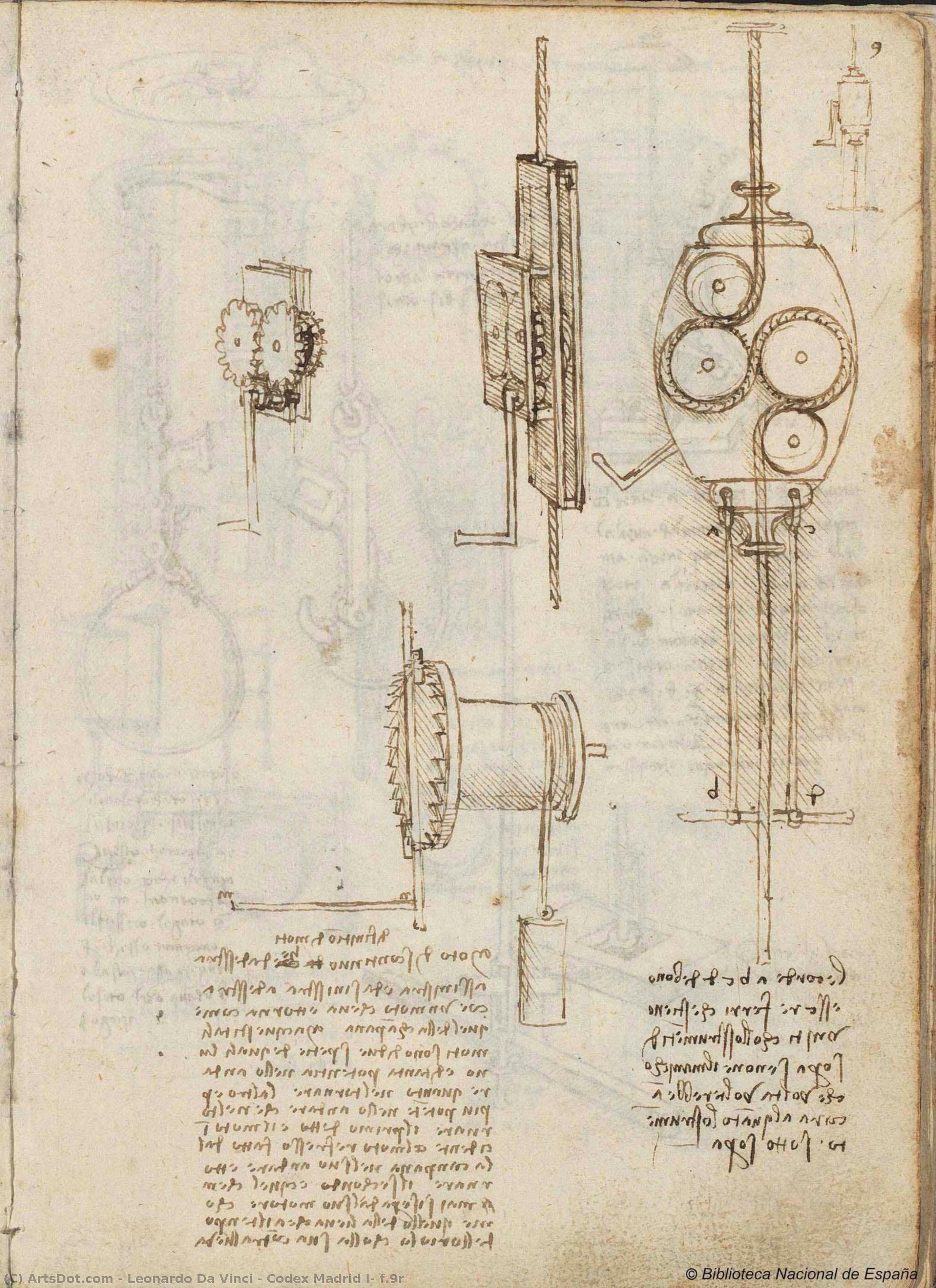
Explore Leonardo da Vinci's Codex Madrid I, f.9r – a meticulously detailed drawing of an ingenious mechanical device schematics labeled in Latin. Admire the Renaissance master’s scientific curiosity and artistic brilliance.
Kunstniku elulugu
Avastage Leonardo da Vinci (1452-1519): Mona Lisa ja Viimase õhtusöögi renessanssgenius! Avastage tema sfumato tehnika, anatoomiauuringud ja murdilavad leiutised.
About the painting
A Mechanical Revelation: Decoding Leonardo’s Vision
To gaze upon the Codex Madrid I, folio 9r is to witness a profound moment of intellectual transcendence, where the boundaries between scientific inquiry and artistic mastery dissolve into a single, breathtaking vision. This singular drawing by Leonardo da Vinci serves as much more than a mere technical schematic; it is a window into the very soul of the Renaissance mind. Within these delicate graphite lines, we find the restless spirit of a polymath who refused to accept the limits of the known world. The folio presents an intricate, detailed illustration of an experimental hydraulic device, a complex machine that whispers of Da Vinci’s relentless pursuit of understanding the natural world through the lens of practical engineering and geometric precision.
The subject matter itself is a testament to Leonardo's fascination with the mechanics of life and motion. The drawing portrays a detailed schematic of what appears to be an experimental hydraulic device, perhaps conceived as a method for lifting heavy objects or channeling the raw power of water. Each component is rendered with such meticulous care that one can almost sense the movement of fluid through its channels. There is a quiet, rhythmic beauty in the way the machine's parts are laid out, suggesting a harmony between human ingenuity and the elemental forces of nature. For the collector or the admirer of fine art, this piece offers a rare glimpse into the "pre-industrial" imagination—a blueprint for a future that Leonardo was already dreaming of centuries before its time.
The Mastery of Line and Light
Technically, the folio is a masterclass in observational drawing. Executed with graphite on paper, the work demonstrates Da Vinci's unparalleled ability to use simple tools to convey profound structural integrity. The lines are not merely marks on a page; they are carefully calculated strokes designed to communicate accurate proportions and weight. Through subtle yet effective shading, Leonardo creates a sense of three-dimensional depth, allowing the various mechanical components to emerge from the paper with a palpable presence. This interplay of light and shadow does more than define shape—it breathes life into the inanimate, transforming a technical diagram into a work of evocative fine art.
The aesthetic appeal of this piece lies in its deceptive simplicity. While the content is scientific, the execution is deeply artistic. The way the text—labels written in Latin—intertwines with the mechanical drawings creates a beautiful, organic texture across the parchment. This integration of language and image reflects the Renaissance ideal that art and science are not separate disciplines, but rather two sides of the same coin. For an interior designer, such a piece provides a sophisticated focal point, offering a sense of intellectual depth and historical gravity to any curated space.
A Legacy of Infinite Curiosity
The historical context of the Codex Madrid I places it within the heart of Leonardo’s most prolific era. During this period, Da Vinci was actively engaged in developing technologies that would bridge the gap between medieval tradition and modern innovation. This drawing is a tangible manifestation of his belief that by documenting our observations, we can unlock the secrets of the universe for future generations. It represents a period of significant advancement in engineering and mechanics, where the artist’s eye was just as vital to discovery as the scientist's logic.
Beyond its mechanical utility, the folio carries a profound emotional impact. There is an inherent sense of wonder embedded in every stroke—a feeling of standing on the precipice of discovery. It evokes a sense of nostalgia for the era of the "universal man," reminding us of a time when human potential seemed limitless. Owning or displaying a high-quality reproduction of this work is not merely about decorating a wall; it is about inviting the spirit of innovation, curiosity, and timeless genius into one's personal environment. It serves as a constant reminder that through observation and imagination, we can decode the very mechanics of our existence.
Korduvad küsimused
Kas teose „Codex Madrid I, f.9r“, autor Leonardo Da Vinci pilt on vabalt reproduseeritav?
Autoriõiguse teave teose „Codex Madrid I, f.9r“, autor Leonardo Da Vinci kohta: teos kuulub luba ala avalikus õiguses – selle autoriõigud onหมดunud. See määrab, kas kujundist on lubatud vabadelt reproduktsioone teha.
Kui tuntud on Leonardo Da Vinci teos "Codex Madrid I, f.9r"?
Teose „Codex Madrid I, f.9r“, autor Leonardo Da Vinci registreeritud populaarsusaste on Iconic.
Kuidas teose "Codex Madrid I, f.9r" värvid omavahel koos toimivad?
Teose „Codex Madrid I, f.9r“, autor Leonardo Da Vinci värvid kujutavad Unified Palette harmooniat. Harmoonia kirjeldab, kuidas värvid omavahel seotud on.
Quick facts and art quiz
About Leonardo Da Vinci

Leonardo Da Vinci
1452 - 1519, Itaalia
Kunstniku elulugu
Leonardo da Vincini elu ja pärand
Leonardo di ser Piero da Vinci, kes sündis 1452. aastal Itaalias, Toscana küla Vinci lähedal, on tõlgistatav kui renessanssiaja universaalselt tuntudim tegelane – tõeline polühistor, kelle ardamatu uudishimu tõuked viisid teda läbi erinevate valdkondade, jättides tematu jälje kunstile, teadusele ja inseneri-tehnikale. Tema nimi on muutunud geniaalsuse sümboliks, olles tunnistus tema erakordsele talendi laiusele ja visionäärsele mõttemustile. Sündinud abieluvälise lapseks notar Piero da Vincile ja talupojale Caterinale, oli Leonardo varajane elu ebatavaline, kuid pakkus talle samas ligipääsu nii praktilisele maailmale kui ka looduse hindamisele, mis kujundas sügavalt tema kunstilist visiooni. Ta sai algõpetust lugemise, kirjutamise ja arvutamise osas, kuid just tema õppeesitlus Andrea del Verrocchio juures Floreentses linnas tekitas tõeliselt tema loovsuse sädeme. Verrocchio töökojas ei õppinud Leonardo mitte ainult maalima või skulptoriks saama; ta oli kastetud tehniliste oskuste maailma, omandades metalltöötluse, viilimise, joonistamise ja kunstilise loomise keerukuste meisterlikkuse – see oli alus, millele ta ehitas oma mitmekülgse geniaalsuse. Isegi selle kujundaval perioodil ringlesid kuulupäratused tema erakordse talendi kohta, viidates isegi sellele, et Verrocchio ise loobis maalamist pärast Leonardo ülemuse nägemist.
Milano uuendused ja kunstiline õitsemine
1482. aastal alustas Leonardo uut peatükki, astudes Milano hertogi Ludovico Sforza teenistusse. See ei olnud pelgalt kunstiline ametikoht; Leonardo tegeles hovil sotsiaalselt oluliste rollidena kui sõjamehaanikeer, arhitekt, skulptor ja disainer – see on tõestus tema mitmekülgsuse kohta. Ta loovitas uuenduslikke kindlustusi, projekteeris elaboraatseid lavakujundusi ja joonistas isegi plaanid fantaasiapäraste masinate jaoks. Kuid just sellel perioodil alustas ta töötamist ühe oma ikoonilisema meistriteose üle: Viimane õhtusöök. See fresko, mis asub Santa Maria delle Grazie kloostri refektööris, ületab peldaalt puhtalt esitavat funktsiooni; see on sügav uurimine inimemotioonide ja psühholoogilise drama kohta, tabades täpselt hetke, mil Krist kuulutab välja oma reetmise. Kompositsioon, mis oli oma ajale uuanduslik, ning perspektiivi meisterlik kasutus mõjutaksid Lääne kunsti sagedust sajandeid.
Tagasipöördemine Floreentsa ja täiuslikkuse otsimine
Pärast Prantsuse invasiooni Milanos 1499. aastal pöördus Leonardo tagasi Floreentsa, linna, mis koges oma kunstilise arengu tipphetke. Kuigi sel ajal valmis tema teoseid vähem, oli nende mõju hiiglaslik. Just siin alustas ta töö sellega, mis sai maailma kuulsaimaks maaliduks: Mona Lisa (La Giudonda). Teema salapärane naer ja vangitsev pilk on võlustanud vaatajategas genetsioni, samas kui Leonarda revolutsiooniline sfumato tehnika – pehme üleminek valgusest varjule, et luua hämarad kontuurid ja atmosfäärne perspektiiv – aitas oluliselt maali etereelist olemust. See periood nägi ka tema anatoomiatööde pidevat tärakujundamist, mida juhtis vankumatu soov mõista inimvormi teadusliku täpsusega. Ta lahkas kadavre, dokumenteerides hoolikalt lihaseid, luusid ja elundid ühes sarjas uskumatult üksikasjalikke joonistusi, mis olid oma ajast sajandeid ees.
Pärand beyond kunsti: Teadus, leiutised ja igavene mõju
Leonarda hiljumad aastad marksitud reisidega Floreentsa, Milanosse ja Roomasse; teda otsiti alati tema ekspertiisi pärast, kuid sageli jäid projektid lõpetamata – see on ehk peegeldus tema rahutu intellekti ja huvide tohutustest ulatusest. 1516. aastal võttis ta vastu kuningas Francis I kutse elada ja töötada Prantsusmaal, Amboise lähedal asuvas Château du Clos Lucé lossis, kus ta veetas oma viimased aastad. Ta surmas seal 1519. aastal, jättes järele tohutut pärandit, mis ulatub kaugele kunsti valdkonnast. Tema märkmikud paljastavad pioneerset tööd anatoomias, optikas, hüdraulikas, geoloogias ja kartograafias ning konseptualiseeritud leiutisi, mis olid oma ajast sajandeid ees, sealhulgas lendumasinad, tankid ja edasioptunud relvastust. Leonardo da Vincini mõju kunstile on mõõdamatu. Ta tõi kunstnike staatuse oskuslikest käsitöölistest intellektuaalseteks tegelasteks, demonstreerides, et kunstiline loovus võib olla teadusliku uurimise ja looduse sügava arusaamuse alusel. Tema maaleid tähistatakse nende realismi, psühholoogilise sügavuse ja uuenduslikkuse eest. Ta jääb inimliku uudishimu, loovuse ja teadmiste vankumatute otsingute sümboliks – renessantsi vaimu tõeline kehastus, kelle pärand jätkub meid inspireerimas ka sajandeid pärast tema surma.
Olulised saavutused ja igavene mõju
- Maalimine: Mona Lisa, Viimane õhtusöök, Kivid seas Neitsi, Teatuse ilmumine
- Joonistamine ja sketsid: Laialdased anatoomilised uuringud, Inženeritehnilised projektid (lendumasinad, relvad), Botaanilised illustratsioonid
- Teadus ja inseneritehnika: Pioneerne töö anatoomias, optikas, hüdraulikas, geoloogias ja kartograafias. Konseptualiseeritud leiutised, mis olid oma ajast sajandeid ees.
Quick facts about Leonardo Da Vinci
- Artistic Movement Or Style: Reenessanss
- Artists Or Movements Influenced By This Artist: ['Reenessanssikunst']
- Artists Who Influenced This Artist: ['Andrea del Verrocchio']
- Date Of Birth: 15. aprill 1452
- Date Of Death: 2. mai 1519
- Full Name: Leonardo da Vinci
- Nationality: Itaalia
- Notable Artworks:
- Mona Lisa
- Viimane õhtusöök
- Vitruviuse mees
- Place Of Birth: Vinci, Itaalia
Avastage teoseid, mis on koondatud teemade, stiilide ja omaduste kaupa.


Leonardo Da Vinci
Codex Madrid I, f.9r
() ·
With its frame: · Hand-painted in oil on linen
Total