

 Vaata sisu
 Jaga teost
 Jaga
Jaga
 Detailid
 Õppekate juhend

 Laadi alla
 Sarnased teosed
 Röntgenuuring
 Slaidietendus
 Statistika
Crucifixion
 Oil On Canvas
- WallArt
- Renaissance Dutch
 1545
1545- Renaissance
 101.0 x 58.0 cm
 Hermitage muuseum
Experience the dramatic realism of Van Heemskerck's 1545 Crucifixion triptych, blending Dutch detail with Italian grandeur; discover this masterpiece today.
 Loe lähemalt
Maerten van Heemskerck (1498-1574) oli holland renaissance maalari, kes tuntuses innovaatsete portretemu ja Itaalia mõjutega. Avastage tema meistriteoseid, sealhulum 'Samson pilareid purustamas', ning tema mõju hollandi kunstile.
Käsitsi valmistatud õlimaalireproduktsioon
Meie kunstnike poolt tellimusel valmistatud käsitsi maalitud õli-kainaste teos teie soovitud suuruses ja raamis. ( Lülita trükkitoodetele Ülemineku digitaalse pildi müügi kanalisse)




P118B €10

P118H €10

P118W €10

P438Z €10

P508JH €12

P508YH €12

P805H €10

P805Z €10

P919BZ €10

P919G €10

P919XJ €10

P959ZH €10

P968JZ €12

W106C €8

W218G €10

W218JH €8

W218Y €10

W307PJ €10

W316G €10

W316PJ €8

W316Y €10

W398PJ €8

W4111J €10

W500HY €15

W500JH €15

W692G €12

W849H €8

W940BG €15

W953PJ €8




Standardne suurus
kohandatud
CM
INCH
Vali meie eelmääratud suurused, mis vastavad teose algupärastele proportsioonidele.
Loading sizes...

laius
kõrgus
Sisestage vajalik laius ja kõrgus, et teos sobiks teie raamile või seinale. Kuna tegu on käsipainatud teosega, siis erineva kujuga suuruse korral võib kunstnik jätta pildi ümber veidi rohkem marginaali või lõigata osa ära — valik on teie. Enne maali alustamist saadame teile kinnitamiseks digitaalse näidisprojektsiooni. Sellel lehel näidatud pilt ei kajasta tegelikku tulemust — seda näitab ainult näidisprojekttsioon.
Näited muudetavatest elementidest: asenda nägu kliendi fotoga; lisa lemmikloom (nt asenda kass koeraga); lisa taustale peidetud sõnum; muuda tausta maastikku või elemente.
Pärast tellimust saadab TopImpressionists.com meeskond kliendile e-posti juhised ning esitab eelvaate kavandi
Pärast tellimust saadab TopImpressionists.com meeskond kliendile e-posti juhised ning esitab eelvaate kavandi
Maailmline tarne 3–4 nädala jooksul tavalise 5 nädala asemel. (26 oktoober). Kvaliteedis kompromisse ei tehta.

Tasuta ekspresssaatmine üle maailma

Kõrgekvaliteediline lina-kangastest muld

Täielik transpordikindlustus

Tollimaksude tagastamise garantii

Värvitoime täpsuse garantii

100 päeva tagastusõigus (ainult defektide korral)

100% raha tagasi garantii

Hulgusoodustus
 Klaasivalik on saadaval ainult kuni 110 cm suuruses teostes

Crucifixion
Reproduktsiooni materjal
Reproduktsiooni mõõtmed
-


Lõppsumma
€ 236
A Window Into Faith: Maerten van Heemskerck’s Crucifixion Triptych
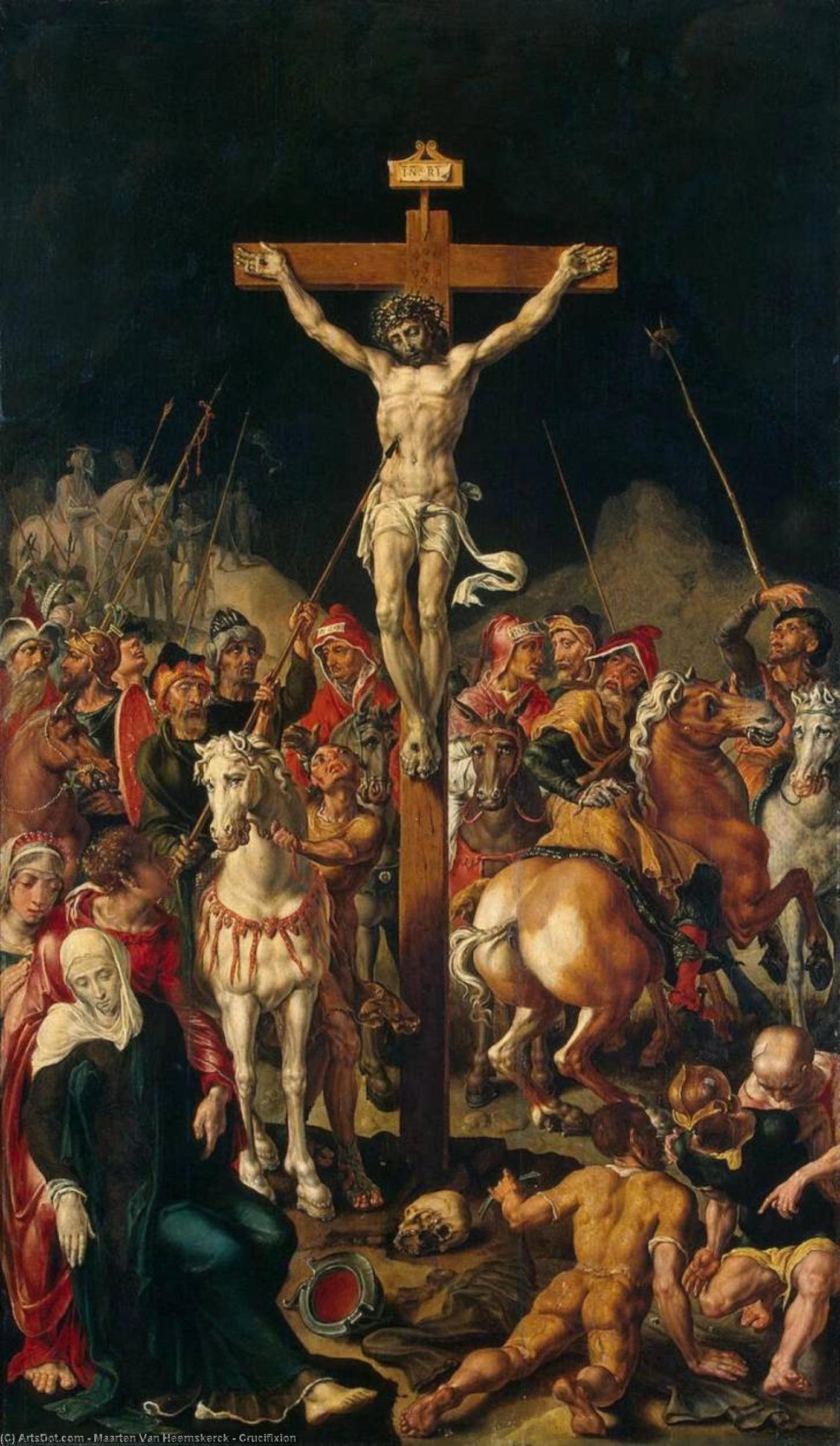
The Crucifixion by Maerten van Heemskerck, completed in 1545, stands as a monumental achievement of the Dutch Renaissance and a testament to the enduring power of religious iconography. More than just a depiction of Christ's suffering – though undeniably poignant – this triptych transcends mere representation, immersing viewers in a meticulously crafted tableau that speaks volumes about humanist ideals and artistic innovation. Painted during a period marked by fervent piety and intellectual curiosity, it embodies the spirit of its time while simultaneously securing its place as one of the most influential artworks of the era.Style and Technique: Bridging Italian Renaissance Grandeur with Dutch Realism
Van Heemskerck skillfully blended elements of Italian Renaissance grandeur with the burgeoning realism characteristic of Dutch art. Influenced by artists like Michelangelo and Raphael, he adopted a pyramidal composition – a technique favored in monumental religious paintings – to convey stability and solemnity. However, unlike many Italian counterparts that prioritized idealized beauty, Van Heemskerck’s approach embraced meticulous detail and naturalistic observation. The artist painstakingly rendered textures—the rough linen of Christ's robe, the weathered stone of the cross—creating a palpable sense of physicality that distinguishes it from more stylized depictions. This careful attention to realism was further enhanced by his masterful use of chiaroscuro – dramatic contrasts between light and shadow – which sculptured form and imbued the scene with emotional depth.Historical Context: Rome Under Charles V and the Reformation’s Influence
The Crucifixion's creation coincided with a pivotal moment in European history: the reign of Charles V, Holy Roman Emperor, and the escalating tensions surrounding the Protestant Reformation. The Habsburg monarch championed Catholicism fiercely, commissioning artworks like this to reaffirm papal authority and bolster religious faith. Yet, Van Heemskerck’s work wasn’t solely driven by political considerations; it reflected a broader humanist preoccupation with human suffering and mortality – themes explored extensively in classical literature and philosophy. The triptych served as part of a larger project to decorate the Porta San Sebastiano in Rome, commemorating Charles V's victory over Protestant forces—a visual declaration of imperial piety amidst religious upheaval.Symbolism: Layers of Meaning Beyond Visual Representation
The Crucifixion’s symbolism is rich and multifaceted. The central panel depicts Jesus Christ crucified on the cross, a universally recognized emblem of sacrifice and redemption. His outstretched arms symbolize humility and acceptance of divine judgment, while his gaze directs upward towards God—a gesture signifying hope and spiritual aspiration. Surrounding him are figures representing Mary Magdalene, Nicodemus, Joseph of Arimathea, and others who witnessed Christ’s death – each embodying compassion and devotion. The inclusion of a horse on the right panel reinforces the imagery of royalty and divine majesty, mirroring the emperor's patronage. Furthermore, the cup positioned at the bottom left corner symbolizes the Eucharist—the sacrament commemorating Jesus’s sacrifice—underscoring the theological significance of the artwork.Emotional Impact: A Profound Reflection on Suffering and Faith
Ultimately, Maerten van Heemskerck’s Crucifixion transcends mere visual spectacle; it evokes a profound emotional response in viewers. The subdued palette – dominated by earthy tones – contributes to an atmosphere of solemn contemplation. Yet, the artist's masterful manipulation of light and shadow intensifies the drama of the scene, conveying the agony of Christ’s torment and eliciting empathy for his suffering. It compels us to confront questions about faith, mortality, and divine compassion—themes that continue to resonate across centuries. The Crucifixion remains a powerful reminder of humanity's capacity for sorrow and its unwavering belief in redemption – an enduring masterpiece that secures its place as one of the most poignant expressions of Renaissance spirituality.Küsimused ja vastused
Kuidas on "Crucifixion" ajalooliselt positsioneeritud?
Teos „Crucifixion“, autor Maerten Van Heemskerck kuulub Renaissance Dutch suunale, mis on osa Renaissance ajastust. Koos annavad need teosele selle koha kunstiajas.
Kust koht sellest teosest "Crucifixion" on Maerten Van Heemskerck laupikus?
Teos "Crucifixion" jagab koos Maerten Van Heemskerck teistega Renaissance Dutch stiili ja korduvaid teemasid: italian renaissance style, christian faith, royal patronage, classical inspiration, dutch golden age legacy.
Kui tugev on kontrasst teoses „Crucifixion“, autor Maerten Van Heemskerck?
Teose „Crucifixion“, autor Maerten Van Heemskerck kontrastivaimustus on Balanced.
Kunstniku elulugu
varase elu ja õppimine
maerten van heemskerck, silmapaistva hollandi portreedi- ja religioospintur, sündis 1. juunil 1498 Heemskerki külas, Põhja-Hollandis. Tema kunstiline teekond algas Haarlemis Cornelius Willemszi juhendamisel, jättes järeposse lühikese perioodi Delftis koos Jan Lucasziga. Lõpuks sai ta jan van scoreli õpilaseks, omastades oma õpetaja itaalsia mõjutustega stiili.karjääri tippsaavutused
- maerten van heemskercki töö on iseloomulik oma innovaativalisele hollandi ja itaalia mõjudete segunemisele, nagu nähtub tema kuulsas familiaportreelis, mida peetakse esimeseks sellise tüüpi teoseks pikas hollandi familiapiltide sarjas.
- Tema koostöö antonio da sangallo nooremaga, battista franco ja francesco de' rossiga (il salviati) Rooma Porta San Sebastianiano ümberkorustamisel — triumfikaarel karolus V auks — demonstreerib tema kiiret oskust dekoratiivmaalajana.
- Heemskercki klassikalise skulptuuri ja arhitektuuri joonised, mis on praegu säilitatud kahes skitsiraamatus berliini kupferstichkabinettis, tõendavad tema võimekust tabada itaalia kunsti olemust.
olulised teosed ja pärand
- annustaja ja madonna sveta madalene (vaata TopImpressionists-is)
- neitsi ja sveta juhan evangeeliumist (vaata TopImpressionists-is)
- samson lammamas templi sambad, maarten van heemskerck (vaata TopImpressionists-is)
joht sõna
maerten van heemskercki sügav mõju kunstimaailmale on vaieldamatu. Tema teosed, mis kuuluvad nüüd erinevate muuseumik betterit, sealhulgas Rijksmuseumi, jätkavad inspiratsiooni jagamist nii kunstnikele kui ka kunstuhudustele. Tema meistriteoste põhjalikumaks uurimiseks külastage maerten van heemskercki lehte TopImpressionists-is. Tema elu ja loomingut sügavamaks mõistmiseks vaadake tema biografiat wikipedias.
Maerten Van Heemskerck
1498 - 1574 , Madalinest
Lühikest infot
- Artistic Movement Or Style: Manierism
- Artists Who Influenced This Artist:
- Jan van Scorel
- Antonio da Sangallo noorem
- Date Of Birth: 1. juun 1498
- Date Of Death: 1. oktoober 1574
- Full Name: Maerten Jacobsz van Heemskerck
- Nationality: Hollandi
- Notable Artworks:
- Kristuse surma murendamine
- Pieter Jan Foppeszoon ja tema pere
- Kristus kui kurbuse mees
- Place Of Birth: Heemskerk, Holland
Sarnased artiklid

Golden Light & Dutch Skies: The Timeless Magic of Dutch Golden Age Landscapes
Discover the breathtaking beauty of Dutch Golden Age landscapes. Explore the mastery of light, chiaroscuro, and 17th-century realism through an expert art history lens, celebrating the enduring legacy of the Dutch Masters for discerning collectors and art lovers.

Mastering Light & Shadow: A Journey Through the Dutch Golden Age's Luminous Legacy
Embark on a cultural journey through the Dutch Golden Age. Explore the masterful interplay of light and shadow in 17th-century masterpieces, from Rembrandt to Vermeer, and discover how this era of profound realism continues to inspire fine art collectors today.