
 Eelvaade
 Saada
Saada Jaga
Jaga
 Teave teose kohta
 Juhend

 Laadi alla
 Sarnased teosed
 Röntgenuuring
 Slaidietendus
 Q&A
Q&A Statistika
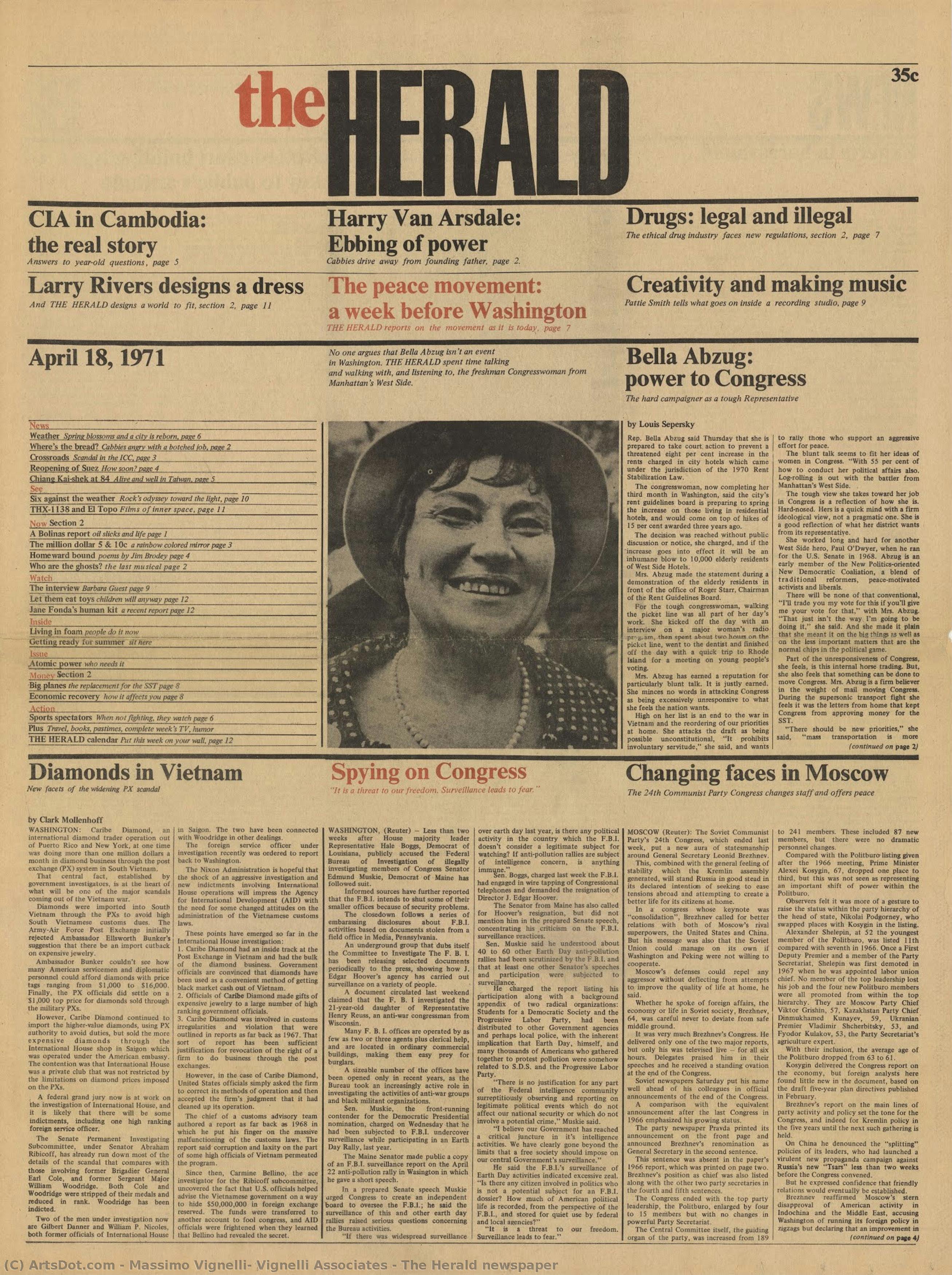
The Herald newspaper

- 43.0 x 57.0 cm


Experience the modernist grid design of The Herald newspaper by Massimo Vignelli (1971), showcasing vintage graphic communication art; discover this iconic piece today.
 Loe lähemalt
Massimo Vignelli (1931-2014): Itaalia disainiklassik, kes on tuntud minimalistliku graafilise disaini poolest, sealhul NYC metrookaart ja korporatiividentiteed. Avastage tema pärand!
Sellel lehel kuvatav kunstiteos on kaitstud autoriõigusega, mis tähendab, et meil ei ole seaduslikku õigust luua või müüa identset reproduktsiooni. Seda kaitset rakendatakse rahvusvaheliste kokkulepete alusel, nagu näiteks Berne konventsioon ning riiklike seadustega, sealhulgas nendega, mida on sätestatud USA autoriõiguse seadus – 17. peatükk.
See meetod järgib täielikult autoriõiguse reegleid, kuna see ei põhine kaitstud kunstiteose kopeerimisel või dupliteerimisel. Selle asemel on tegu loova reinterpreetatsiooniga – uue maaldisega, mis on algteosest inspireeritud, kuid ei ole sellest identiline.
Giclée / Kunstiprint
Muuseumikvaliteediga giclée- või kangasprint kiire tootmisega ja paindlikud viimistlusvõimalused. ( Osta käsitsi maalatud teos Lülita digitaalse pildi juurde)




P118B €10

P118H €10

P118W €10

P438Z €10

P508JH €12

P508YH €12

P805H €10

P805Z €10

P919BZ €10

P919G €10

P919XJ €10

P959ZH €10

P968JZ €12

W106C €8

W218G €10

W218JH €8

W218Y €10

W307PJ €10

W316G €10

W316PJ €8

W316Y €10

W398PJ €8

W4111J €10

W500HY €15

W500JH €15

W692G €12

W849H €8

W940BG €15

W953PJ €8




Standardne suurus
kohandatud
CM
INCH
Vali meie eelmääratud suurused, mis vastavad teose algupärastele proportsioonidele.
Loading sizes...

laius
kõrgus
Sisestage vajalik laius ja kõrgus, et see sobiks teie raamile või seinale. Trükki saab ainult lõigata, seda ei saa kunagi pildist suuremaks teha, seega ka erineva mustega suurus kaotab osa pildist. Enne trükkimist saadame teile kinnitamiseks digitaalse näidisprojektsiooni. Sellel lehel näidatud pilt ei kujuta reaalset lõiget — seda näitab ainult näidisprojektsioon.
Ülemaailmne tarne () 2 nädala jooksul, tavalise 4/5 nädala asemel. (1 november)

Tasuta ekspresssaatmine üle maailma

Kõrgekvaliteediline lina-kangas

Täielik transpordikindlustus

Tollimaksude tagastamise garantii

Värvitoime täpsuse garantii

100 päeva tagastusõigus (ainult valmistusdefektide korral)

100% raha tagasi garantii

Hulgusoodustus
 Klaasivalik on saadaval ainult kuni 110 cm suuruses teostes

The Herald newspaper
Giclée / Kunstiprint
Reproduktsiooni suurus
-


Koguhind
€ 61
The Grid of Modern Communication: Vignelli's The Herald
To encounter this piece is to step directly into the vibrant, structured chaos of mid-century New York journalism. This reproduction of The Herald newspaper from April 1971, conceived by Massimo Vignelli and his associates, is far more than mere ephemera; it is a meticulously designed artifact of visual communication history. It captures a moment when design principles—simplicity, functionality, and rigorous structure—were being aggressively applied to the seemingly unruly medium of print journalism. The very act of presenting this newspaper front page transforms what might be considered disposable media into a profound study in modernist graphic discipline.
A Masterclass in Structured Design
Vignelli’s genius, always rooted in an almost architectural understanding of space, is on full display here. The description notes the structure: a rigid grid of six columns and sixteen modules per column. This underlying skeleton dictates every element—the placement of headlines like "Diamonds in Vietnam," the accompanying portrait of the smiling woman, and the smaller articles detailing everything from spying congress to changing leaves in Moscow. Vignelli’s commitment to using a single typeface, Times Roman, across various weights and sizes, speaks volumes about his belief in universal legibility. It is a powerful testament to the idea that restraint—the disciplined use of negative space and consistent typography—can generate an overwhelming sense of order and sophistication.
Historical Resonance and Materiality
The year 1971 places this work within a fascinating cultural nexus, post-war modernism grappling with the burgeoning media landscape. While the paper itself ultimately folded due to distribution issues, its surviving design remains potent. For the collector or designer, understanding this context is key. This piece speaks to an era obsessed with efficiency and clarity in information transfer. When considering a reproduction for your space, you are not just acquiring art; you are curating a dialogue about how we consume knowledge—a conversation between the fleeting headline and the enduring power of good design.
Symbolism of the Grid
The grid itself functions as the primary symbolic element. In an age where digital information often feels overwhelming, this physical manifestation of order offers a visual anchor. It symbolizes control, but not oppressive control; rather, it suggests that even complex narratives—the confluence of international events and local interest—can be organized into digestible, beautiful patterns. The interplay between the large, arresting photograph and the tightly packed textual modules creates a dynamic tension, mirroring the very energy of a bustling city like New York in that era.
Bringing Modernist Precision Home
For interior design or gallery display, this piece offers an unparalleled opportunity to inject intellectual rigor into a space. It pairs beautifully with minimalist furniture, mid-century modern accents, or any setting that appreciates the clean lines of 20th-century industrial aesthetics. Owning this reproduction is an homage to Massimo Vignelli’s lifelong dedication to elevating the mundane—the daily newspaper—into something enduringly beautiful and intellectually stimulating.
Korduvad küsimused
Millissele stiilile kuulub "The Herald newspaper"?
Teosest „The Herald newspaper“, autor Massimo Vignelli, Vignelli Associates tuntud kunstisuuna on Modernism. See klassifikatsioon aitab teost paigutada sarnaste kunstnike ja teoste hulka.
Milleks on soovitatav kasutada teose "The Herald newspaper" trükistes?
Prindi "The Herald newspaper" soovituslik kasutus on Statement.
Millised on teose „The Herald newspaper“, autor Massimo Vignelli, Vignelli Associates proportsioonid ja millised on selle mõõdud?
Teose "The Herald newspaper" vorming on Portrait ning originaali mõõdud on 43 x 57 cm. Mõlemad on kasulikud reproduktsiooni planeerimisel.
Kunstniku elulugu
Formile pühendatud elu: Massimo Vignelli maailm
Sündinud Itaalias Milanos aastal 1931, oli Massimo Vignelli teekond vankumatu pühendumuse sümbol modernistliku disaini põhimõtetele. Alates nooredast näitas ta visuaalse kommunikatsiooni loomulikku arusaama, alustades oma ametlikku arhitektuuri õpet Politecnico di Milanos ja jätkates hiljem Università Iuav di Venetsias. Kuid just õpilikkus austatud Castiglioni vennadega – Itaalia tööstusdisaini pioneeridega – süütele tema kire maailma kujundamiseks läbi hoolikalt läbi mõeldud loovuse. See varajane kogemus sisaldas temas usku funktsionaalsusele, lihtsustusele ja elegantsete lahenduste jõul lõpetada igapäevased probleemid. Ta ei disaininud pelgalt objekte; ta lõi kogemusi, optimeeris interaktsioone ja tõi ülevusest igapäevase märkmatuse meeldejäävaks kunstiks. See kujundav periood pani aluse karjäärile, mis redefineeris visuaalse kultuuri üle kontinentide.Itaaliast New Yorkini: Transatlantiline visioon
Vignelli tee juhtis teda 1966. aastal Ameerikasse, kus ta mängis rolli Unimark Internationali New Yorki kontori loomisel. See oli murdepunkt mitte ainult tema karjääris, vaid ka kogu Ameerika disaini maastikul. Unimark tõusis kiiresti esile ning Vignelli panused – eriti püsiv logo American Airlinesile – kinnitasid tema mainet korporatiivse identiteedi meistrina. Kuid kasvav erineda loovas filosoofias tõi teda uue iseseisva ettevõtluse juurde. Aastaks 1971, koos oma naise ja eluaegse koostööpartneri Lella Vignelliga, asutas ta Vignelli Associates. See partnerlus osuts erakordselt viljakaks, muutudes sümboliks sofisteeritud disainilahendustele, mis hõlmasid graafilist disaini, interjööri disaini, tootedesigni ja arhitektuuri. Ettevõtte eetika oli juurdunud veendumuses, et hea disain peaks olema kättesaadav, ajatuhe ja sügavalt kasulik – põhimõtted, mida nad kaitsid kogu oma karjääri vältel.Ikoonilised loomingud: Selguse pärand
Massimo Vignelli mõju on sisse henitud modernset elu kanga. Võib-olla tema kõige tuntum saavutus on New Yorki metrookaardi ümberdisain 1972. aastal. Kuigi alguses oli see kontroversiaalne täpsest geograafilisest täpsusest kõrvalleminekuga, oli see julge kündemus selguse ja kasutatavuse eest. Vignelli eelistas loetavust ja intuitiivset navigeerimist asemel täpse geograafilise esituse, luues diagrammatilise kaardi, mis juhib edasi miljonid reisijad iga päev. See projekt on tema põhiline disainifilosoofia näidis: prioriteedi andmine kommunikatsioonile üle kõige muu. Lisaks metrookaardile jättis Vignelli Associates temblamat jälje arvukatele brändidele ja institutsioonidele. Nende töö Bloomingdale’s jaoks – sealhulgas ikooniline pruun paberikott lihtsa valge logoga – muuts ostukogemuse stiilseks avalduseks. Nad disainisid mööble Knollile, pakendid Hellerile ja korporatiivsed identiteedikes, mis said koheselt tuntud kvaliteedi ja innovatsiooni sümbolid. Tema Heller Rainbow Dinnerware seisab tema minimalistliku esteetika tunnistusena, näidates vibrantseid värve puhtates geomeetrilistes vormides. Tredicesima Triennale di Milano poster demonstreerib tema julget värvi ja kujundite kasutamist, samas kui Knoll Design ülekorral näitab tema võimet luua silmapistävat visuaalsust kuulsatele brändidele.Püsiv mõju: Esile tõstetud estetiika taga
Massimo Vignelli mõju ulatub kaugele üksikestest projektidest; ta muuts fundamentaalselt seda, kuidas me tajume disaini enda. Ta oli tippklassiga tipptypograafiline dissipliin, soovides piiratud valiku kirjatüüpe – uskudes, et tõeline loovus ei peitu lõpututes valikutes, vaid meistralikul tähendusega tööriistadega teostamisel. Tema raamat The Vignelli Canon sai disajnerite manifestiks, säilitades tema põhimõtted selguse, lihtsuse ja püsiva elegantsi kohta. Ta ei loonud lihtsalt visuaalselt meelutavaid objekte; ta püüdis luua korda kaosist, suhtlust tõhusalt ja tõsta inimlik kogemus läbi hoolikalt läbi mõeldud disaini. Tema töö inspireerib edasi genetsioone, tuletades neile meelde, et tõeline innovatsioon peitub mittevajaliku eemaldamises ja olulise keskendumises. Rochester Institute of Technologyi Vignelli disainiuuringute keskus toimib tema pärandi püsiva austustena, säilitades laia arhiivi tema tööst ja edendades jätkuvat uurimist tema murdilistest ideidest. Ta lahkus sellest maailmast 201 0 aastal, kuid tema disainid on võimsalt olemas, kujundades meie maailma oma igavene elegantsi ja vankumatut pühendumusega selgusele.
Massimo Vignelli, Vignelli Associates
1931 - 2014 , Italia
Lühikest infot
- Artistic Movement Or Style: Modernism, minimalism
- Date Of Birth: 10. jaanuar 1931
- Date Of Death: 27. mail 2014
- Full Name: Massimo Vignelli
- Nationality: Itaalia
- Notable Artworks:
- Heller Rainbow Dinnerware
- Tredicesima Triennale di Milano
- Knoll Design (ülemlaid)
- Place Of Birth: Milano, Itaalia
Sarnased artiklid

TopImpressionists.com F.A.Q.: Discover the Vibrant Beauty of Our Premium Art Poster Prints
Explore the technical excellence of TopImpressionists.com's premium art poster prints. Discover how our 12-color pigment system and archival inks capture the luminous beauty of Impressionist masterpieces with unmatched color fidelity and museum-grade durability for the discerning collector.
Avastage teoseid, mis on koondatud teemade, stiilide ja omaduste kaupa.


