

Shown: · With its frame:
 Eelvaade
 Saada
Saada Jaga
Jaga
 Teave teose kohta
 Juhend

 Laadi alla
 Sarnased teosed
 Röntgenuuring
 Slaidietendus
 Q&A
Q&A Statistika
 Chalk
Chalk- Northern Renaissance
 1520
1520 316.0 x 215.0 cm
 Staatliche Museen zu Berlin
€ 239
Käsitsi valmistatud õlimaalireproduktsioon
Meie kunstnike poolt tellimusel valmistatud käsitsi maalitud õli-kainaste teos teie soovitud suuruses ja raamis. ( Lülita trükkitoodetele Lülita digitaalse pildi juurde)
Size
·Standardne suurus
kohandatud
CM
INCH
Vali meie eelmääratud suurused, mis vastavad teose algupärastele proportsioonidele.
Loading sizes...

laius
kõrgus
Sisestage vajalik laius ja kõrgus, et teos sobiks teie raamile või seinale. Kuna tegu on käsipainatud teosega, siis erineva kujuga suuruse korral võib kunstnik jätta pildi ümber veidi rohkem marginaali või lõigata osa ära — valik on teie. Enne maali alustamist saadame teile kinnitamiseks digitaalse näidisprojektsiooni. Sellel lehel näidatud pilt ei kajasta tegelikku tulemust — seda näitab ainult näidisprojektsioon.
 Loe lähemalt
Finish
·
White €1

Blurside €1

Extended €1

P118B €10

P118H €10

P118W €10

P438Z €10

P508JH €12

P508YH €12

P805H €10

P805Z €10

P919BZ €10

P919G €10

P919XJ €10

P959ZH €10

P968JZ €12

W106C €8

W218G €10

W218JH €8

W218Y €10

W307PJ €10

W316G €10

W316PJ €8

W316Y €10

W398PJ €8

W4111J €10

W500HY €15

W500JH €15

W692G €12

W849H €8

W940BG €15

W953PJ €8

H24-GOLD €30

H24-SILVER €30

H36-GOLD €45

H36-SILVER €45
Shipped in a protective tube, ready for your own framer.
Above 105 cm the frame is shipped as a kit for a professional framer — read the details.
Extras
optionalWhat do the extras include?
Examples of what can be changed: Replace face with customer photo; Add pet (e.g., replace cat with dog); Include hidden message in background; Change background landscape or elements.
After order, TopImpressionists.com team will email client for instructions and provide a mockup preview
After order, TopImpressionists.com team will email client for instructions and provide a mockup preview
Maailmline tarne 3–4 nädala jooksul tavalise 5 nädala asemel. (30 oktoober). Kvaliteedis kompromisse ei tehta.
Kaitsevärnitsus
Nimesildikiri
Graveeritud pronksplaadi üksikasjad
This elegant plaque features the artist's name and the title of the artwork, finely engraved for a timeless presentation.
It is made from bronze with a refined, elegant finish. The text is precisely laser-engraved for a sharp and permanent result. Measuring 9x2 cm, the plaque is compact yet easy to read. It's built to be durable and scratch-resistant, offering a professional, museum-quality look. Mounting is simple thanks to the included adhesive backing.
Läbipaistva akrüülplaadi üksikasjad
The plaque includes essential engraved details such as the artist's name, the title of the artwork, the date it was created, the type of media used-like oil on canvas or watercolor-a brief description of the piece, and a QR code that links to the complete artwork information.
It is crafted from clear acrylic, offering a sleek, modern appearance. The text is UV-engraved in black to ensure strong visual contrast. With a size of 10x15 cm, it ensures optimal readability. It comes equipped with two metal hooks for secure wall mounting. The plaque is designed to be weather-resistant, making it suitable for various environments, and it includes interactive features that work seamlessly with smartphone scanning.
Musta akrüülplaadiรายละเอียด (Note: The user provided "Musta akrüülplaadi detailid" as the current translation and asked for an improved version. Since "Musta akrüülplaadi
This elegant plaque includes engraved information such as the artist's name, the title of the artwork, the date it was created, the type of media used (like oil on canvas or watercolor), a short description of the artwork, and a QR code for quick access to more information.
The plaque itself is made from refined black acrylic with a premium finish. The text is laser-engraved in white for high contrast and readability. Its size is 10x15 cm, designed to be easy to read. It comes with two metal hooks for professional mounting. The design is sleek and fits any interior style. It is also weather-resistant and durable, with built-in digital integration for mobile compatibility.
Klaasivalik on saadaval ainult kuni 110 cm suuruses teostes
 Klaasivalik on saadaval ainult kuni 110 cm suuruses teostes
- Tasuta ekspresssaatmine üle maailma
- Kõrgekvaliteediline lina-kangas
- Täielik transpordikindlustus
- Tollimaksude tagastamise garantii
- Värvitoime täpsuse garantii
- 100 päeva tagastusõigus (ainult valmistusdefektide korral)
- 100% raha tagasi garantii
- Hulgusoodustus


Kogumisobjekti kirjeldus
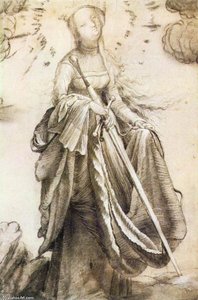
Admire Matthias Grünewald's 'St Catherine,' a captivating chalk drawing from 1520. Explore the Northern Renaissance master’s unique style, featuring a serene saint and symbolic details – available as a hand-painted replica.
Kunstniku elulugu
Avastage Matthias Grünewaldi dramaatilist Saksamaa renessansi kunsti! Tuntud Isenheimi altarimaali ja emotsionaalselt võimsa religioosse maalimise poolest. Tutvuge tema unikaalse stiiliga saidil TopImpressionists.
About the painting
The Enigmatic Saint: Matthias Grünewald’s St Catherine
Matthias Grünewald's 1520 chalk drawing, “St Catherine,” is more than just a portrait; it’s a profound meditation on faith, scholarship, and the enduring power of medieval symbolism. This remarkable work, currently residing in the Staatliche Museen zu Berlin, offers a captivating glimpse into the artist’s unique vision – a synthesis of late Gothic sensibilities with nascent Renaissance influences. Grünewald, a pivotal figure in German art, deliberately eschewed the prevailing Italian humanist trends, instead drawing deeply from the rich traditions of Central European religious painting, resulting in an intensely personal and emotionally resonant style.
The image depicts St Catherine from the waist up, her head tilted slightly downwards as if lost in contemplation. Her posture exudes a quiet dignity, while the subtle turn of her neck invites us into her inner world. She’s dressed in a gown with voluminous sleeves – a detail that speaks to both the formality of her status and the luxurious fabrics favored by wealthy patrons during the period. Crucially, she holds two objects: an open book or manuscript, symbolizing her role as a learned scholar, and a sword raised upright, representing her martyrdom and unwavering faith. These symbols aren’t merely decorative; they are potent visual statements about Catherine's life and devotion.
A Study in Northern Renaissance Technique
Grünewald’s masterful technique is immediately apparent. The drawing is executed with exquisite detail using chalk on paper, a medium that allowed for the delicate shading and fine lines characteristic of his work. Notice the subtle gradations of tone – the way light catches on her dress, the modeling of her face, and the atmospheric haze in the background. This meticulous attention to texture and form creates a remarkable sense of depth and realism, despite the relatively small scale of the piece. The artist’s use of chalk also lends a slightly ethereal quality to the image, contributing to its contemplative mood.
Furthermore, Grünewald's style deviates significantly from the prevailing Renaissance aesthetic. Unlike the idealized figures favored by artists like Albrecht Dürer, Catherine is rendered with a certain distortion – her proportions aren’t perfectly symmetrical, and her features possess an expressive intensity. This deliberate departure from classical ideals reflects Grünewald’s commitment to conveying emotional truth rather than purely visual accuracy. The background, deliberately minimalistic, consists of only a few suggestive lines—perhaps hinting at a cloudy sky or an abstract representation of the heavens – further emphasizing the saint's presence and drawing our focus entirely onto her.
Historical Context and Symbolic Resonance
Created in 1520, “St Catherine” exists within a fascinating transitional period in art history. Grünewald was working at a time when the influence of Italian Renaissance humanism was beginning to spread across Europe, yet he remained firmly rooted in the traditions of late medieval Central European painting. The saint herself holds significant religious importance – she is venerated as a martyr and patron saint of scholars, librarians, and translators. Her story, recounted in early Christian hagiographies, details her conversion after being saved from execution by St Peter, who recognized her divine calling.
Interestingly, the figure of Catherine has been associated with intellectual pursuits for centuries. Her association with learning stems from her devotion to scripture and her role as a translator of the Bible. The book she holds in the drawing symbolizes this scholarly dedication, while the sword represents her willingness to defend her faith against persecution. The combination of these symbols creates a powerful image of a woman who embodies both spiritual strength and intellectual prowess.
A Legacy of Emotion and Innovation
“St Catherine” is a testament to Matthias Grünewald’s artistic genius – a work that seamlessly blends technical skill with profound emotional depth. It's a poignant reminder of the artist’s ability to capture not just the likeness of his subject, but also her inner world. The drawing’s enduring appeal lies in its ability to evoke a sense of quiet contemplation and spiritual yearning. As a significant example of Northern Renaissance art, it continues to inspire artists and scholars alike, offering a valuable window into the artistic and intellectual landscape of 16th-century Germany.
Korduvad küsimused
Mis on teose „St Catherine“, autor Matthias Grünewald orientatsioon?
Teose "St Catherine" vorming on Portrait. See on kasulik reproduktsiooni paigaldamise planeerimisel.
Millises muuseumis on säilitatud originaal "St Catherine"?
Originaalteost "St Catherine" saab vaadata Staatliche Museen zu Berlin, Berlin, Germany-is.
Millest on teos "St Catherine" valmistatud?
Teose "St Catherine" loomisel kasutas Matthias Grünewald Chalk tehnikat. See tehnika määrab originaalteose materjalilise olemuse.
Quick facts and art quiz
About Matthias Grünewald

Matthias Grünewald
1480 - 1528, Saksamaa
Kunstniku elulugu
Matthias Grünewaldi Elu ja Pärand
Matthias Grünewald, kodanikunimega Mathis Gothart Neithardt, sündis umbes 1470-1475. aastal Würzburgis Saksamaal ning oli Saksa renessansi oluline figuur. Aastatel, mil Itaalia renessanssi ideed üha rohkem levisid, jäi Grünewald sügavalt juurdunud Kesk-Euroopa hiliskeskaajase kunstipärandisse. Tema varasest elust on vähe teada, kuid on teada, et ta sai kunstniku väljaõppe, tõenäoliselt kohalikes töötubades. Ta ei olnud lihtsalt maalija; Grünewald oli tunnetuste ja vaimsete pingete väljendaja, kes oma loomingus otsis uusi viise religioossete ideede edasiandmiseks.
Kunstiline Areng ja Mõjutused
Grünewaldi kunstilist arengut kujundas valdav Põhja-Euroopa traditsioon, mis rõhutati realism, emotsionaalset intensiivsust ja detailset tähelepanu. Tema tööle on avaldanud mõju Albrecht Dürer ja Martin Schongauer, kuid ta rajas oma unikaalse tee, mida iseloomustas dramaatiline väljendus ja elav värvipalett. Ta ei olnud otseselt seotud Itaalias valitsenud humanismi ringkondadega; tema kunst teenis peamiselt religioosseid eesmärke, peegeldades oma aja vaimseid ärevusi. Tema loomingus puudub itaalia renessansi idealiseeritud ilu ja proportsioonide täiuslikkus – selle asemel leidub ausat inimliku kannatuse ja usu võitlust.
Peamised Teosed ja Kunstiline Stiil
- Isenheimi altarimaal (1512-1516): See meistriteos, mis asub Colmari Musée d'Unterlindenis, peetakse Grünewaldi suurimaks saavutuseks. Maal kujutab Kristuse elu stseene vapustava realismiga, keskendudes eriti kannatusele ja lunastusele.
- Ristilöömine (umbes 1502-1503): Varane teos, mis demonstreerib tema arenevat stiili, näidates intensiivset emotsiooni ja anatoomilisi detaile.
- Neitsi Maarja kuulutus (1512-14): Isenheimi altarimaali jaoks tehtud uuring, mis paljastab tema hoolikat planeerimisprotsessi.
- Mooses (1511): Joonistus, mis rõhutab Grünewaldi oskust tabada väljendusrikkaid figuure ja dramaatilisi poose.
Grünewaldi stiili iseloomustavad:
- Dramaatiline kompositsioon: Ta kasutas dünaamilist paigutust emotsionaalse mõju suurendamiseks.
- Elav värvipalett: Tema intensiivse, sageli kontrastsete värvide kasutamine lõi võimsa visuaalse kogemuse.
- Kannatuse realistlik kujutamine: Grünewald ei kartnud kujutada religioossete narratiividega seotud füüsilist ja emotsionaalset valu. Tema teosed on ausad, kohati šokeerivad oma otsekohesuselt.
- Väljendusrikkad figuurid: Tema figuuridel on tugevad emotsioonid ja psühholoogiline sügavus.
Ajalooline Tähtsus ja Pärand
Grünewaldi töö on tunnistuseks Kesk-Euroopa kunstitraditsiooni püsivast jõust Saksamaal renessansi ajal. Ta sillutas lüüni hiliskeskaajase stiili ja tekkiva renessansi vahel, luues unikaalse visuaalse keele, mis resoneeris tema kaasaegsetega. Tema mõju on näha hilisemates saksa kunstnikes, kes jätkasid religioosse innukuse ja emotsionaalse intensiivsuse teemasid. Kuigi sajandeid pärast tema surma 1528. aastal oli ta suurel määral unustatud, koges Grünewald 19. sajandil renessansi ning tänapäeval tunnustatakse teda kui Saksa renessansi olulist maalikunstnikku. Tema kunst võlub jätkuvalt vaatajaid oma toore emotsiooni, tehnilise briljantsi ja sügava vaimse sügavusega.
Lisalugemist
Avastage rohkem Matthias Grünewaldi elu ja teoseid aadressil: TopImpressionists
Quick facts about Matthias Grünewald
- Kunstiliikumine: Saksa renessanss
- Mõjutanud Kunstnikud:
- Albrecht Dürer
- Martin Schongauer
- Rahvus: Saksa
- Surma Aeg: 1528
- Sünniaeg: umbes 1470-1475
- Sünnikoht: Würzburg, Saksamaa
- Tuntud Teosed:
- Isenheim Altar
- Ristilöömine
- Täisnimi: Matthias Grünewald
- Väljamõjutatud Kunstnikud: Hilised saksa kunstnikud
Avastage teoseid, mis on koondatud teemade, stiilide ja omaduste kaupa.


Matthias Grünewald
St Catherine
() ·
With its frame: · Hand-painted in oil on linen
Total