

Näidatud: · koos raamiga:
 Eelvaade
 Saada
Saada Jaga
Jaga
 Teave teose kohta
 Juhend

 Laadi alla
 Sarnased teosed
 Röntgenuuring
 Slaidietendus
 KÜSIMUSED JA VASTUSID
 Statistika
- 16.0 x 25.0 cm


€ 240
Käsitsi valmistatud õlimaalireproduktsioon
Meie kunstnike poolt tellimusel valmistatud käsitsi maalitud õli-kainaste teos teie soovitud suuruses ja raamis. ( Lülita trükkitoodetele Lülita digitaalse pildi juurde)
Suurus
·Standardne suurus
kohandatud
CM
INCH
Vali meie eelmääratud suurused, mis vastavad teose algupärastele proportsioonidele.
Suuruste laadimine...

laius
kõrgus
Sisestage vajalik laius ja kõrgus, et teos sobiks teie raamile või seinale. Kuna tegu on käsipainatud teosega, siis erineva kujuga suuruse korral võib kunstnik jätta pildi ümber veidi rohkem marginaali või lõigata osa ära — valik on teie. Enne maali alustamist saadame teile kinnitamiseks digitaalse näidisprojektsiooni. Sellel lehel näidatud pilt ei kajasta tegelikku tulemust — seda näitab ainult näidisprojektsioon.
 Loe lähemalt
Lõpuleviimine
·
Valge serv €1

häguse servaga lõppviimistlus €1

Laiendatud €1

P118B €10

P118H €10

P118W €10

P438Z €10

P508JH €12

P508YH €12

P805H €10

P805Z €10

P919BZ €10

P919G €10

P919XJ €10

P959ZH €10

P968JZ €12

W106C €8

W218G €10

W218JH €8

W218Y €10

W307PJ €10

W316G €10

W316PJ €8

W316Y €10

W398PJ €8

W4111J €10

W500HY €15

W500JH €15

W692G €12

W849H €8

W940BG €15

W953PJ €8

H24-GOLD €30

H24-SILVER €30

H36-GOLD €45

H36-SILVER €45
Saadetakse kaitsetorus, et te võiksite selle ise raamida.
Üle 105 cm suurust raami saadetakse komplektina professionaalse raamija jaoks — lugeege lisainfot.
Lisateenused
valikulineMida lisad sisaldavad?
Näited sellest, mida saab muuta: asendage nägu kliendi fotoga; lisage lemmikloom (nt asendage kass koega); lisage taustale peidetud sõnum; muutke tausta maastikku või elemente.
Pärast tellimust saadetab TopImpressionists.com meeskond klientile e-posti juhised ning esitab ette tasandatud eelvaate
Pärast tellimust saadetab TopImpressionists.com meeskond klientile e-posti juhised ning esitab ette tasandatud eelvaate
Maailmline tarne 3–4 nädala jooksul tavalise 5 nädala asemel. (9 november). Kvaliteedis kompromisse ei tehta.
Kaitsevärnitsus
Nimesildikiri
Graveeritud pronksplaadi üksikasjad
This elegant plaque features the artist's name and the title of the artwork, finely engraved for a timeless presentation.
It is made from bronze with a refined, elegant finish. The text is precisely laser-engraved for a sharp and permanent result. Measuring 9x2 cm, the plaque is compact yet easy to read. It's built to be durable and scratch-resistant, offering a professional, museum-quality look. Mounting is simple thanks to the included adhesive backing.
Läbipaistva akrüülplaadi üksikasjad
The plaque includes essential engraved details such as the artist's name, the title of the artwork, the date it was created, the type of media used-like oil on canvas or watercolor-a brief description of the piece, and a QR code that links to the complete artwork information.
It is crafted from clear acrylic, offering a sleek, modern appearance. The text is UV-engraved in black to ensure strong visual contrast. With a size of 10x15 cm, it ensures optimal readability. It comes equipped with two metal hooks for secure wall mounting. The plaque is designed to be weather-resistant, making it suitable for various environments, and it includes interactive features that work seamlessly with smartphone scanning.
Musta akrüülplaadiรายละเอียด (Note: The user provided "Musta akrüülplaadi detailid" as the current translation and asked for an improved version. Since "Musta akrüülplaadi
This elegant plaque includes engraved information such as the artist's name, the title of the artwork, the date it was created, the type of media used (like oil on canvas or watercolor), a short description of the artwork, and a QR code for quick access to more information.
The plaque itself is made from refined black acrylic with a premium finish. The text is laser-engraved in white for high contrast and readability. Its size is 10x15 cm, designed to be easy to read. It comes with two metal hooks for professional mounting. The design is sleek and fits any interior style. It is also weather-resistant and durable, with built-in digital integration for mobile compatibility.
Klaasivalik on saadaval ainult kuni 110 cm suuruses teostes
 Klaasivalik on saadaval ainult kuni 110 cm suuruses teostes
- Tasuta ekspresssaatmine üle maailma
- Kõrgekvaliteediline lina-kangas
- Täielik transpordikindlustus
- Tollimaksude tagastamise garantii
- Värvitoime täpsuse garantii
- 100 päeva tagastusõigus (ainult valmistusdefektide korral)
- 100% raha tagasi garantii
- Hulgusoodustus


Kogumisobjekti kirjeldus
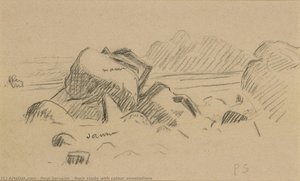
Discover Paul Sérusier's detailed rock study capturing a serene beach scene with evocative color annotations; own a piece of Post-Impressionist mastery today.
Kunstniku elulugu
Avastage Paul Sérusieri (1864-1927) loomingut – prantsuse postimpressionisti ja abstraktse kunsti pioneeri töid! Tutvuge tema kloisonismi stiili, Les Nabise mõjuga ning võtmetöödega nagu "Talisman".
Teemal maalid
A Study in Coastal Serenity: Paul Sérusier's Rock Composition
Paul Sérusier’s Rock study with colour annotations invites the viewer into a moment suspended between the permanence of nature and the fleeting passage of human experience. This piece is more than just a depiction of a beach; it is an intimate meditation on form, shadow, and the interplay between raw geological structure and gentle life. The composition centers around a magnificent foreground rock, its contours meticulously rendered, suggesting hours spent observing the tide’s slow artistry. Scattered around this anchor are smaller stones, each possessing its own unique character, inviting the eye to wander across the textured plane of the shore.
Mastery in Tone and Dimension
Technically, the painting showcases Sérusier's remarkable ability to build depth using subtle gradations of gray. The artist has employed a sophisticated tonal palette, allowing the various shades of gray to carve out dimension and volume within the seemingly simple subject matter. This careful handling of value gives the rocks an almost sculptural presence, making them feel tangible beneath one’s fingertips. While the core focus remains on this study in stone—a testament to observation—the inclusion of distant figures subtly anchors the scene in reality. They are witnesses to the quiet drama unfolding between the water and the enduring rock.
Echoes of Post-Impressionist Innovation
To appreciate this work is to understand its context within the vibrant currents of early 20th-century French art. Paul Sérusier, a pivotal figure associated with Les Nabis, was an artist constantly pushing boundaries toward abstraction. Though this piece retains a strong connection to observable reality—the beach, the rocks—it carries the intellectual weight of his later explorations. His journey, particularly his time under Gauguin’s influence, pushed him towards synthesizing color and form in revolutionary ways. Here, even within the seemingly academic study, one senses that underlying commitment to expressive structure, a hallmark of an artist pioneering modern vision.
Symbolism of Place and Time
The beach itself has always been a potent symbol—a liminal space where land meets sea, where solid ground dissolves into endless motion. The rocks, enduring against the ceaseless wash of the tide, symbolize resilience and permanence amidst change. The annotations visible within the study suggest an intellectual process at work; art here is not merely imitation but annotation, interpretation, and scholarly engagement with nature’s grammar. It speaks to a quiet contemplation—a moment where the artist pauses the rush of life to truly see.
Bringing Coastal Calm Home
For the collector or designer seeking an object that whispers sophistication rather than shouting for attention, this reproduction offers profound depth. The muted, earthy tones and the subject matter evoke immediate tranquility. Imagine this piece gracing a sunlit study or a coastal-inspired living space; it acts as a visual anchor, grounding the room with its quiet dignity. It is an invitation to slow down, to observe the subtle beauty in the overlooked details, making it a timeless acquisition that marries academic rigor with emotional resonance.
Korduvad küsimused
Kas teos „Rock study with colour annotations“, autor Paul Sérusier on värvitoonilt kerge või tumenev?
Teose "Rock study with colour annotations" üldine ere on brilliant ning selle luminants on Bright Balance.
Kas ma saan teost „Rock study with colour annotations“, autor Paul Sérusier enne tellimist eelvaatata?
Teose „Rock study with colour annotations“, autor Paul Sérusier reproduktsiooni eelvaate saamiseks avage teose Eelvaade leht.
Kuidas leida teoseid, mis on stiilis sarnased teosele „Rock study with colour annotations“, autor Paul Sérusier?
Teosed, mis sarnanevad teosega „Rock study with colour annotations“, autor Paul Sérusier, on koondatud selle teose lehel Sarnased teosed.
Kiirinfo ja kunstiviktoriin
Info Paul Sérusier kohta

Paul Sérusier
1864 - 1927, Prantsusmaa
Kunstniku elulugu
Varajane Elu Ja Haridus
Paul Sérusier, prantsuse maalikunstnik, sündis 9. novembril 1864. aastal Pariisis. Tema kunstiline tee algas Académie Julian’is õppimisega, kus ta keskel 1880ndatel sai ka monitoriks. See oli tema kunstilise karjääri algus, mis viiski teda hiljem abstraktsiooni pioneerina ja avantgardse Nabis liikumise inspireerijana tuntuks saama. Sérusier ei olnud kunagi tavaline õpilane; ta otsis pidevalt uusi väljendusviise ning soovis katsetada värviga ja vormiga, et leida oma ainulaadne kunstiline hääl.
Kunstiline Karjäär Ja Pont-Aveni Grupp
Suvel 1888. aastal suundus Sérusier Pont-Aveni, väikesse linnakesse, kus koondus Paul Gauguini ümber grupp maalikunstnikke. Just seal, Gauguini range juhendamisel, valmis “Talisman”, erakordne teos, mis oli äärmiselt kloisonistlik ja lähenes puhtale abstraktsioonile. See maal ei olnud lihtsalt värvide ja kujundite kombinatsioon; see oli manifest, julge katse loobuda traditsioonilisest perspektiivist ja realistlikust esitusest. “Talisman” demonstreeris Sérusieri uuenduslikku stiili ning valmisolekut eksperimenteerida uute tehnikatega. Postimpressionismi vaimus tegutsenud Sérusier oli osa Les Nabise grupi liikmestest, kuhu kuulusid ka Pierre Bonnard, Édouard Vuillard ja Maurice Denis. Kuigi ta ei saanud sama tuntuks kui mõned tema kolleegid, on Sérusieri panus abstraktsiooni arendamisse vaieldamatult suur.
Olulised Teosed Ja Pärand
Sérusieri loomingu hulgas leidub mitmeid silmapaistvaid teoseid:
- L’Averse (1893), Musée d'Orsay, Pariis – maal, mis kujutab vihmast päeva ja on täis melanhooliat ning peenust.
- Portree Paul Ransonist (1890), Musée d'Orsay, Pariis – portree, mis näitab Sérusieri oskust tabada inimese iseloomu ja emotsioone.
- Melancholy (1890) – teos, mis peegeldab kunstniku sisemisi tundeid ja mõtteid.
- Madude sööjad (1894), Muzeum Narodowe, Varssavi – maal, mis on täis sümboolikat ning näitab Sérusieri huvi müstiliste teemade vastu.
Sérusieri hilisemad eluaastad möödusid Académie Ransoni õpetajana ja 1921. aastal ilmunud raamatu “ABC de la peinture” autorina. Ta suri 7. oktoobril 1927. aastal Morlaix’s.
Kloisonism Ja Mõju Kaasaegsele Kunstile
Sérusieri loomingut mõjutas kloisonism, stiil, mida iseloomustavad julged ja lamedad vormid, mis on eraldatud tumedate kontuuridega. See liikumine, mis tekkis 19. sajandi lõpus, mängis olulist rolli kaasaegse kunsti arendamisel. Kloisonism ei olnud lihtsalt tehnika; see oli filosoofia, katse lihtsustada vorme ja rõhutada värvi autonoomiat. Sérusieri maal “Talisman” on suurepärane näide kloisonistlikust stiilist ning sellel teosel on oluline koht kunstiajaloo raamatus. Tema töö avas uued võimalused kunstnikele, kes soovisid katsetada abstraktsiooni ja loobuda traditsioonilisest realistlikust esitusest.
Peamisteks võtmetähtedeks on:
- Paul Sérusier oli prantsuse maalikunstnik, kes oli abstraktsiooni pioneer ja inspireeris Nabise liikumist.
- Ta õppis Académie Julian’is ja hiljem töötas Académie Ransoni õpetajana.
- Sérusieri loomingut mõjutas kloisonism, stiil, mida iseloomustavad julged ja lamedad vormid.
Sérusieri kunst on jätkuvalt inspireeriv ning tema teosed pakuvad vaatajale võimaluse sukelduda värvide ja kujundite maailma, mis on täis sümboolikat ja emotsioone. Tema panus kaasaegsele kunstile on hindamatu ning ta jääb üheks oluliseks figuuriks kunstiajaloo raamatus.
Kiirinfo Paul Sérusier kohta
- Kunstiliikumine: Postimpressionism
- Mõjutanud Kunstnikud: ['Paul Gauguin']
- Mõjutatud Kunstnikud: ['Nabis']
- Rahvus: Prantslane
- Surmapäev: 7. oktoober 1927
- Sündimiskoht: Pariis, Prantsusmaa
- Sünnipäev: 9. november 1864
- Tuntud Teosed:
- The Talisman
- L'averse
- Täisnimi: Louis-Paul-Henri Sérusier
Sarnased teosed


Paul Sérusier
Rock study with colour annotations
() ·
koos raamiga: · Käsitööna õliga linale maaldud
Kokkuvõte