

Shown: · With its frame:
 Eelvaade
 Saada
Saada Jaga
Jaga
 Teave teose kohta
 Juhend

 Laadi alla
 Sarnased teosed
 Röntgenuuring
 Slaidietendus
 Q&A
Q&A Statistika
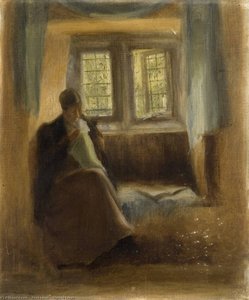
Man in a Smock
 51.0 x 40.0 cm
€ 237
Käsitsi valmistatud õlimaalireproduktsioon
Meie kunstnike poolt tellimusel valmistatud käsitsi maalitud õli-kainaste teos teie soovitud suuruses ja raamis. ( Lülita trükkitoodetele Lülita digitaalse pildi juurde)
See teos on autoriõigusega kaitstud
Sellel lehel kuvatav kunstiteos on kaitstud autoriõigusega, mis tähendab, et meil ei ole seaduslikku õigust luua või müüa identset reproduktsiooni. Seda kaitset rakendatakse rahvusvaheliste kokkulepete alusel, nagu näiteks Berne konventsioon ning riiklike seadustega, sealhulgas nendega, mida on sätestatud USA autoriõiguse seadus – 17. peatükk.
Austasena ja seaduslikuna alternatiivina pakume originaalist inspireeritud, käsitsi maalitud isikupärastatud teoseid. Meie osutavad ja professionalsed kunstnikud uurivad hoolikalt originaali stiili, meelemoi ja kunstilist olemust, et luua uus, ainulaadne teos, mis tekitab sama tunnet – olles samal ajal omaette originaalne looming.
See meetod järgib täielikult autoriõiguse reegleid, kuna see ei põhine kaitstud kunstiteose kopeerimisel või dupliteerimisel. Selle asemel on tegu loova reinterpreetatsiooniga – uue maaldisega, mis on algteosest inspireeritud, kuid ei ole sellest identiline.
 Loe lähemalt
Size
·Standardne suurus
kohandatud
CM
INCH
Vali meie eelmääratud suurused, mis vastavad teose algupärastele proportsioonidele.
Loading sizes...

laius
kõrgus
Sisestage vajalik laius ja kõrgus, et teos sobiks teie raamile või seinale. Kuna tegu on käsipainatud teosega, siis erineva kujuga suuruse korral võib kunstnik jätta pildi ümber veidi rohkem marginaali või lõigata osa ära — valik on teie. Enne maali alustamist saadame teile kinnitamiseks digitaalse näidisprojektsiooni. Sellel lehel näidatud pilt ei kajasta tegelikku tulemust — seda näitab ainult näidisprojektsioon.
Finish
·
White €1

Blurside €1

Extended €1

P118B €10

P118H €10

P118W €10

P438Z €10

P508JH €12

P508YH €12

P805H €10

P805Z €10

P919BZ €10

P919G €10

P919XJ €10

P959ZH €10

P968JZ €12

W106C €8

W218G €10

W218JH €8

W218Y €10

W307PJ €10

W316G €10

W316PJ €8

W316Y €10

W398PJ €8

W4111J €10

W500HY €15

W500JH €15

W692G €12

W849H €8

W940BG €15

W953PJ €8

H24-GOLD €30

H24-SILVER €30

H36-GOLD €45

H36-SILVER €45
Shipped in a protective tube, ready for your own framer.
Above 105 cm the frame is shipped as a kit for a professional framer — read the details.
Extras
optionalWhat do the extras include?
Examples of what can be changed: Replace face with customer photo; Add pet (e.g., replace cat with dog); Include hidden message in background; Change background landscape or elements.
After order, TopImpressionists.com team will email client for instructions and provide a mockup preview
After order, TopImpressionists.com team will email client for instructions and provide a mockup preview
Maailmline tarne 3–4 nädala jooksul tavalise 5 nädala asemel. (29 oktoober). Kvaliteedis kompromisse ei tehta.
Kaitsevärnitsus
Nimesildikiri
Graveeritud pronksplaadi üksikasjad
This elegant plaque features the artist's name and the title of the artwork, finely engraved for a timeless presentation.
It is made from bronze with a refined, elegant finish. The text is precisely laser-engraved for a sharp and permanent result. Measuring 9x2 cm, the plaque is compact yet easy to read. It's built to be durable and scratch-resistant, offering a professional, museum-quality look. Mounting is simple thanks to the included adhesive backing.
Läbipaistva akrüülplaadi üksikasjad
The plaque includes essential engraved details such as the artist's name, the title of the artwork, the date it was created, the type of media used-like oil on canvas or watercolor-a brief description of the piece, and a QR code that links to the complete artwork information.
It is crafted from clear acrylic, offering a sleek, modern appearance. The text is UV-engraved in black to ensure strong visual contrast. With a size of 10x15 cm, it ensures optimal readability. It comes equipped with two metal hooks for secure wall mounting. The plaque is designed to be weather-resistant, making it suitable for various environments, and it includes interactive features that work seamlessly with smartphone scanning.
Musta akrüülplaadiรายละเอียด (Note: The user provided "Musta akrüülplaadi detailid" as the current translation and asked for an improved version. Since "Musta akrüülplaadi
This elegant plaque includes engraved information such as the artist's name, the title of the artwork, the date it was created, the type of media used (like oil on canvas or watercolor), a short description of the artwork, and a QR code for quick access to more information.
The plaque itself is made from refined black acrylic with a premium finish. The text is laser-engraved in white for high contrast and readability. Its size is 10x15 cm, designed to be easy to read. It comes with two metal hooks for professional mounting. The design is sleek and fits any interior style. It is also weather-resistant and durable, with built-in digital integration for mobile compatibility.
Klaasivalik on saadaval ainult kuni 110 cm suuruses teostes
 Klaasivalik on saadaval ainult kuni 110 cm suuruses teostes
- Tasuta ekspresssaatmine üle maailma
- Kõrgekvaliteediline lina-kangas
- Täielik transpordikindlustus
- Tollimaksude tagastamise garantii
- Värvitoime täpsuse garantii
- 100 päeva tagastusõigus (ainult valmistusdefektide korral)
- 100% raha tagasi garantii
- Hulgusoodustus


Kunstniku elulugu
Rosa Lucas: German Renaissance painter & printmaker. Court artist to Saxony, known for portraits & Reformation art. Explore her legacy at the National Academy of San Luca.
About the painting
Quick facts and art quiz
About Rosa Lucas
Kunstniku elulugu
Rosa Lucas: A Renaissance of Light and Emotion
Rosa Lucas, a name perhaps less heralded than some of her contemporaries within the grand halls of 16th-century art, nevertheless carved out a significant and deeply personal space for herself as a painter and printmaker. Born in Germany during a period of immense artistic ferment – the tail end of the Northern Renaissance and the burgeoning influence of Italian Mannerism – Lucas’s work offers a unique blend of meticulous technique and intensely felt emotion. Her legacy isn't one of monumental commissions or courtly grandeur, but rather a quiet testament to her ability to capture fleeting moments of beauty, domestic tranquility, and profound human connection.
Lucas’s early life remains somewhat shrouded in the mists of historical record, though it is generally accepted that she received a solid artistic education within the workshops of prominent artists in Saxony. This training instilled in her a rigorous understanding of perspective, anatomy, and color theory – hallmarks of the Renaissance tradition. However, unlike many of her peers who diligently replicated established styles, Lucas quickly developed a distinctive approach, prioritizing emotional resonance over strict adherence to convention. Her subjects often centered on intimate scenes: portraits of women engaged in quiet contemplation, glimpses into domestic interiors bathed in soft light, and evocative depictions of everyday life.
The Court Artist of Saxony
Lucas’s career truly flourished during her tenure as a court artist for the Electorate of Saxony. This appointment, a considerable achievement for a woman in that era, afforded her access to influential patrons – including members of the ruling family and prominent nobility. Her commissions primarily consisted of portraiture, but these were not merely formal representations; they aimed to capture the inner lives and personalities of her subjects. She skillfully employed subtle gestures, expressive glances, and carefully chosen attire to convey a sense of character and mood. Her portraits frequently featured women – often members of the court or their families – rendered with remarkable sensitivity and psychological depth.
Beyond portraiture, Lucas also produced a substantial body of work in the medium of woodcut printmaking. These prints, characterized by their crisp lines and vibrant colors, served as both independent artworks and illustrations for devotional texts and illuminated manuscripts. Her prints frequently depicted religious scenes, but always with an emphasis on human emotion and experience rather than purely theological dogma. The influence of German Expressionism, a movement that would not emerge until centuries later, is subtly present in her use of color and the heightened emotional intensity of her compositions.
Technique and Style
Lucas’s artistic style can be described as a harmonious blend of Northern Renaissance realism and Italianate elegance. She possessed a remarkable command of oil paint, utilizing layering techniques to create rich textures and luminous effects. Her use of light is particularly noteworthy – she masterfully employed chiaroscuro (the contrast between light and dark) to sculpt forms, define volumes, and evoke a sense of atmosphere. Her compositions are typically balanced and harmonious, but never static; there’s always a feeling of movement or anticipation.
In her woodcuts, Lucas demonstrated an exceptional ability to render intricate detail with minimal lines. She skillfully manipulated the grain of the wood to create subtle tonal variations and achieve a remarkable sense of depth. Her prints are not simply reproductions of images; they are carefully crafted works of art in their own right.
Legacy and Influence
Despite her considerable talent, Rosa Lucas’s work has often been overshadowed by that of her male contemporaries. However, recent scholarship is beginning to recognize the unique contributions she made to the artistic landscape of 16th-century Germany. Her paintings and prints offer a valuable glimpse into the lives and experiences of women during this period – a perspective that is often missing from traditional art historical narratives.
Her work continues to be exhibited in museums across Europe, and her paintings are highly sought after by collectors. Rosa Lucas’s legacy lies not only in her artistic achievements but also in her quiet determination to forge a path for herself as an artist in a world dominated by men. She stands as a testament to the enduring power of individual creativity and the importance of recognizing the contributions of all artists, regardless of gender or social status.
Notable Works
- Dining Room at Stanegarth, Cumbria: A captivating impressionistic oil painting capturing a cozy, atmospheric interior.
- Hitchin Market: An evocative watercolor depicting a bustling European market scene.
- Matilda Lucas: Oil painting by Rosa Lucas depicting an elderly woman’s quiet contemplation.
Further Exploration
For more information about Rosa Lucas, we recommend visiting the National Academy of San Luca in Rome, where her work is prominently displayed. The museum's collection offers a comprehensive overview of her artistic career and provides valuable context for understanding her place within the broader history of art.
Lühikest infot
- Artistic Movement Or Style: Renaissance Painting
- Artists Or Movements Influenced By This Artist: ['Italian Renaissance']
- Artists Who Influenced This Artist: ['Lucas Cranach Elder']
- Full Name: Rosa Lucas
- Nationality: German
- Notable Artworks:
- Dining Room at Stanegarth
- Hitchin Market
- Matilda Lucas
- Place Of Birth: WahooArt

Man in a Smock
·