

 Eelvaade
 Saada
Saada Jaga
Jaga
 Teave teose kohta
 Juhend

 Laadi alla
 Sarnased teosed
 Röntgenuuring
 Slaidietendus
 KÜSIMUSED JA VASTUSID
 Statistika
Poppies

- 132.0 x 96.0 cm


Vibrant red and yellow poppies dance across a blue sky in this stunning painting by Stefano Arienti that captures the natural essence of a floral field, inviting you to bring this colorful masterpiece into your home.
 Loe lähemalt
Stefano Arienti: Italian artist known for arte povera & conceptual works using found materials. Minimal actions transform magazines, postcards & more – explore his innovative style.
Sellel lehel kuvatav kunstiteos on kaitstud autoriõigusega, mis tähendab, et meil ei ole seaduslikku õigust luua või müüa identset reproduktsiooni. Seda kaitset rakendatakse rahvusvaheliste kokkulepete alusel, nagu näiteks Berne konventsioon ning riiklike seadustega, sealhulgas nendega, mida on sätestatud USA autoriõiguse seadus – 17. peatükk.
See meetod järgib täielikult autoriõiguse reegleid, kuna see ei põhine kaitstud kunstiteose kopeerimisel või dupliteerimisel. Selle asemel on tegu loova reinterpreetatsiooniga – uue maaldisega, mis on algteosest inspireeritud, kuid ei ole sellest identiline.
Giclée / Kunstiprint
Muuseumikvaliteediga giclée- või kangasprint kiire tootmisega ja paindlikud viimistlusvõimalused. ( Osta käsitsi maalatud teos Lülita digitaalse pildi juurde)




P118B €10

P118H €10

P118W €10

P438Z €10

P508JH €12

P508YH €12

P805H €10

P805Z €10

P919BZ €10

P919G €10

P919XJ €10

P959ZH €10

P968JZ €12

W106C €8

W218G €10

W218JH €8

W218Y €10

W307PJ €10

W316G €10

W316PJ €8

W316Y €10

W398PJ €8

W4111J €10

W500HY €15

W500JH €15

W692G €12

W849H €8

W940BG €15

W953PJ €8




Standardne suurus
kohandatud
CM
INCH
Vali meie eelmääratud suurused, mis vastavad teose algupärastele proportsioonidele.
Loading sizes...

laius
kõrgus
Sisestage vajalik laius ja kõrgus, et see sobiks teie raamile või seinale. Trükki saab ainult lõigata, seda ei saa kunagi pildist suuremaks teha, seega ka erineva mustega suurus kaotab osa pildist. Enne trükkimist saadame teile kinnitamiseks digitaalse näidisprojektsiooni. Sellel lehel näidatud pilt ei kujuta reaalset lõiget — seda näitab ainult näidisprojektsioon.
Ülemaailmne tarne () 2 nädala jooksul, tavalise 4/5 nädala asemel. (5 november)

Tasuta ekspresssaatmine üle maailma

Kõrgekvaliteediline lina-kangas

Täielik transpordikindlustus

Tollimaksude tagastamise garantii

Värvitoime täpsuse garantii

100 päeva tagastusõigus (ainult valmistusdefektide korral)

100% raha tagasi garantii

Hulgusoodustus
 Klaasivalik on saadaval ainult kuni 110 cm suuruses teostes

Poppies
Giclée / Kunstiprint
Reproduktsiooni suurus
-


Koguhind
€ 63
A Symphony of Crimson and Light
In the breathtaking canvas of Poppies, the viewer is immediately swept into a vibrant, sun-drenched meadow where nature performs its most brilliant concerto. The painting serves as a masterful exploration of color, centering on a lush field of poppies rendered in an array of intoxicating reds, from deep, velvety crimsons to bright, translucent scarlets. Interspersed among these fiery blooms are delicate splashes of yellow, acting as golden highlights that dance across the composition. This interplay of warm tones creates a rhythmic vitality, pulling the eye through a dense thicket of petals and stems that seem to sway with an invisible breeze. The artist’s ability to balance the intense heat of the red blossoms against the serene, expansive blue of the sky background provides a sense of profound equilibrium, making the scene feel both energetic and deeply peaceful.
The technique employed in this work speaks to a sophisticated understanding of depth and dimension. Rather than presenting a flat floral arrangement, the painting utilizes a layered approach where certain poppies emerge with striking clarity while others recede into a soft, impressionistic haze. This variation in focus—where some stems appear long and commanding while others nestle low within the greenery—creates a tactile quality that invites the observer to step into the field. The brushwork captures the delicate texture of the petals and the organic irregularity of the meadow, suggesting a moment captured in time where light and shadow perform their eternal dance. It is an impressive display of detail that honors the natural habitat of these iconic flowers, elevating a simple botanical subject into a complex study of light and form.
Beyond its visual splendor, Poppies carries a profound emotional resonance and symbolic weight that makes it a captivating choice for discerning collectors and interior designers alike. Historically, the poppy has long been a symbol of both sleep and remembrance, representing a bridge between the waking world and the realm of dreams. In this particular composition, the vibrancy of the red blooms evokes themes of passion, vitality, and the fleeting beauty of life. For an interior space, such a piece acts as a powerful focal point; its bold palette can breathe life into a neutral room, while its natural subject matter brings a sense of organic tranquility to modern or classical settings. Whether placed in a sunlit gallery or a sophisticated living area, this reproduction serves as a window into a perennial summer, offering an enduring sense of joy and botanical elegance.
Korduvad küsimused
Kuidas teose "Poppies" stiil seotub selle looja ajaga?
Teos „Poppies“, autor Stefano Arienti kuulub Contemporary Realism suunasse ning on loodud autori Contemporary ajastul.
Millist emotsiooni „Poppies“, autor Stefano Arienti edastab?
Teos "Poppies" on seotud Joyful tundega. Emotsionaalne toon kirjeldab teose tekitavat muljet.
Kuidas teose "Poppies" värvid omavahel koos toimivad?
Teos „Poppies“, autor Stefano Arienti kujutab esile Softly Mixed Palette värviharmooniat.
Kunstniku elulugu
Rembrandt Gladys Schmitt: A Pioneer of Color and Form in the Early 1960s
The year 1961 marks a pivotal moment, not just for the art world, but for the burgeoning movement of abstract expressionism that was rapidly redefining visual language. It’s within this dynamic landscape that Rembrandt Gladys Schmitt emerged as a significant, though often overlooked, figure – an artist deeply engaged with color theory, geometric abstraction, and a uniquely personal approach to form. Born in 1923, Schmitt's artistic journey unfolded primarily during the early to mid-1960s, a period of intense experimentation and challenging established norms within American painting.
Schmitt’s formative years were steeped in European art history, particularly the vibrant hues and dynamic compositions of Fauvism and the geometric precision of Constructivism. These influences, coupled with her exposure to the avant-garde scene of post-war New York – a city pulsating with creativity and intellectual ferment – shaped her distinctive style. Unlike some of her contemporaries who embraced purely gestural abstraction, Schmitt’s work is characterized by a deliberate control over color and line, creating compositions that are both visually arresting and intellectually stimulating. She wasn't interested in simply expressing emotion; rather, she sought to explore the inherent relationships between color, shape, and space.
The Palette as Language: Color Theory and Composition
Central to Schmitt’s artistic practice was a rigorous investigation of color theory. She meticulously studied the interactions of hues – their complementary pairings, analogous sequences, and the subtle shifts in tone that could evoke specific moods or sensations. Her canvases are often built around carefully considered color schemes, employing techniques borrowed from both Matisse and Albers, but always filtered through her own unique sensibility. Schmitt wasn’t simply applying colors; she was using them as a language, each hue carrying a deliberate weight and significance within the overall composition.
Her compositions frequently feature interlocking geometric forms – circles, squares, triangles – arranged in dynamic, often asymmetrical arrangements. These shapes aren't merely decorative elements; they are actively engaged in creating visual tension and balance. Schmitt’s use of negative space is particularly noteworthy, allowing the colors to breathe and interact with each other, preventing the compositions from feeling overly dense or cluttered. The interplay between positive and negative forms creates a sense of depth and movement, drawing the viewer's eye across the canvas.
Key Works and Exhibitions
While Schmitt’s output wasn’t vast – she primarily focused on painting during her active period – several works stand out as particularly significant. “Untitled (Red, Yellow, Blue)” from 1962 is a prime example of her color-driven approach, utilizing a bold triad of primary colors to create a vibrant and energetic composition. “Composition in Turquoise and Ochre” (1963) demonstrates her mastery of subtle tonal variations and the way she could use seemingly simple color combinations to evoke complex emotional responses. These works were exhibited at several key venues during this period, including the Huysman Gallery in Los Angeles, a hub for experimental art in the early 1960s.
Notably, her work appeared alongside that of other prominent figures of the era – Joe Goode, Larry Bell, and Ed Bereal – within the “War Babies” exhibition at the Huysman Gallery. This show, though controversial due to its poster design, served as a crucial platform for showcasing emerging abstract artists pushing the boundaries of traditional painting.
Legacy and Historical Context
Rembrandt Gladys Schmitt’s contribution to American art history is often overshadowed by more commercially successful or widely recognized names. However, her work deserves recognition as an important voice within the vibrant experimental scene of the early 1960s. She represents a crucial bridge between the emotional intensity of abstract expressionism and the intellectual rigor of geometric abstraction – a synthesis that reflects the broader cultural shifts taking place in America at the time.
Her exploration of color theory, combined with her deliberate use of form, anticipates many of the developments in color field painting that would emerge in the late 1960s and early 1970s. Schmitt’s legacy lies not only in her individual artworks but also in her embodiment of a spirit of experimentation and intellectual curiosity – qualities that continue to inspire artists today.

Stefano Arienti
1961 - , Italy
Lühikest infot
- Artistic Movement Or Style: Arte Povera and Conceptual art
- Full Name: Stefano Arienti
- Nationality: Italian
- Notable Artworks:
- Cassetto con strisce
- Library
- natura, natura, natura
- Place Of Birth: Asolo, Italy
- Date Of Birth: 1961
Sarnased artiklid

The Golden Hue: Exploring Symbolism & Emotion in Yellow Art
Explore the rich symbolism & emotional power of yellow in art history! From Van Gogh to Kandinsky, discover how artists used this vibrant hue. Expert analysis & high-quality reproductions at TopImpressionists.

Crimson Threads of Narrative: Exploring Symbolism & Representation in Artworks Featuring the Red Dress
Explore the rich symbolism of the red dress in art history! From ancient power displays to iconic portraits like Cézanne’s 'Madame Cezanne', discover the cultural and artistic significance behind this captivating color. Expert analysis & insights.

Slate Blue Masterpieces: 10 Iconic Paintings & Timeless Home Decor Ideas
Immerse yourself in the captivating world of slate blue! Explore 10 iconic paintings by Monet, Van Gogh & Renoir. Discover their stories, techniques & find museum-quality art reproductions for your home at .
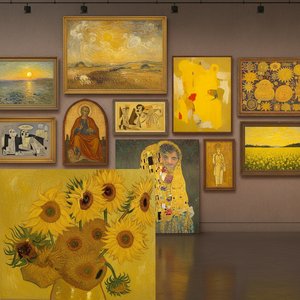
Golden Hues: 10 Masterpieces Dominated by Chrome Yellow | TopImpressionists
Immerse yourself in golden light! Explore 10 famous paintings dominated by 'Chrome Yellow', from Van Gogh’s Sunflowers to Monet's Haystacks. Discover the stories behind these iconic Impressionist & Post-Impressionist masterpieces and find museum-quality art reproductions at TopImpressionists.com.
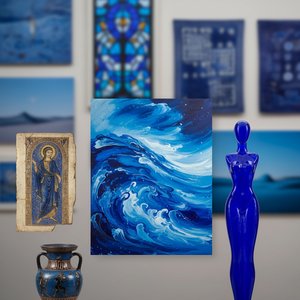
The Allure of Azure: Exploring the Symbolic & Aesthetic Depths of Blue in Art History
Explore the rich history of blue in art! Discover its symbolism, from ancient pigments to modern masterpieces by Kandinsky & Seurat. Uncover the psychological impact and cultural meanings behind this captivating hue.