

 Eelvaade
 Saada
Saada Jaga
Jaga
 Teave teose kohta
 Juhend

 Laadi alla
 Sarnased teosed
 Röntgenuuring
 Slaidietendus
 Q&A
Q&A Statistika
Seascape


Experience Theo van Rysselberghe's 'Seascape,' a captivating Neo-Impressionist oil painting of a serene coastal scene. Admire the vibrant colors, dreamy atmosphere, and masterful brushwork in this iconic masterpiece.
 Loe lähemalt
Avastage Théo van Rysselberghe elavad neoimpressionistlikud maalid! Uurige tema maastikke, portreid ja Maroko stseene – Les XX võtmeisik, kes ühendab valgust ja värvi. Belgia kunstniku teed murdja.
Giclée / Kunstiprint
Muuseumikvaliteediga giclée- või kangasprint kiire tootmisega ja paindlikud viimistlusvõimalused. ( Osta käsitsi maalatud teos Lülita digitaalse pildi juurde)




P118B €10

P118H €10

P118W €10

P438Z €10

P508JH €12

P508YH €12

P805H €10

P805Z €10

P919BZ €10

P919G €10

P919XJ €10

P959ZH €10

P968JZ €12

W106C €8

W218G €10

W218JH €8

W218Y €10

W307PJ €10

W316G €10

W316PJ €8

W316Y €10

W398PJ €8

W4111J €10

W500HY €15

W500JH €15

W692G €12

W849H €8

W940BG €15

W953PJ €8




Standardne suurus
kohandatud
CM
INCH
Vali meie eelmääratud suurused, mis vastavad teose algupärastele proportsioonidele.
Loading sizes...

laius
kõrgus
Sisestage vajalik laius ja kõrgus, et see sobiks teie raamile või seinale. Trükki saab ainult lõigata, seda ei saa kunagi pildist suuremaks teha, seega ka erineva mustega suurus kaotab osa pildist. Enne trükkimist saadame teile kinnitamiseks digitaalse näidisprojektsiooni. Sellel lehel näidatud pilt ei kujuta reaalset lõiget — seda näitab ainult näidisprojektsioon.
Ülemaailmne tarne () 2 nädala jooksul, tavalise 4/5 nädala asemel. (1 november)

Tasuta ekspresssaatmine üle maailma

Kõrgekvaliteediline lina-kangas

Täielik transpordikindlustus

Tollimaksude tagastamise garantii

Värvitoime täpsuse garantii

100 päeva tagastusõigus (ainult valmistusdefektide korral)

100% raha tagasi garantii

Hulgusoodustus
 Klaasivalik on saadaval ainult kuni 110 cm suuruses teostes

Seascape
Giclée / Kunstiprint
Reproduktsiooni suurus
-


Koguhind
€ 61
A Symphony of Light and Sea: Theo van Rysselberghe’s “Seascape”
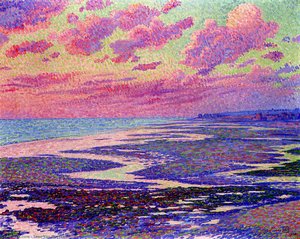
Theo van Rysselberghe's "Seascape," painted in 1893, isn’t merely a depiction of the ocean; it’s an immersion into a world where light dances upon water and tranquility reigns supreme. This oil on canvas, currently residing within the Indianapolis Museum of Art, embodies the heart of Post-Impressionism – a movement characterized by its vibrant color palettes, subjective perspectives, and a deliberate departure from strict realism. Van Rysselberghe, a pivotal figure bridging Impressionism and Neo-Impressionism, masterfully captures not just the visual elements of the seascape but also an elusive sense of mood and atmosphere, inviting the viewer into a contemplative space.
The painting immediately draws the eye to its luminous sky – a wash of yellows and blues that suggest both dawn and dusk. These aren’t the sharp, defined colors of traditional landscape art; instead, they bleed into one another with remarkable fluidity, creating an ethereal quality. Below this celestial expanse unfolds a deep azure ocean, punctuated by the gentle whitecaps of waves. The artist's brushstrokes are loose and expressive, avoiding meticulous detail in favor of conveying the *feeling* of movement and light. Two small boats navigate these waters, their forms subtly rendered against the vastness of the sea, hinting at human presence without dominating the scene.
Neo-Impressionism’s Dance with Light
Van Rysselberghe's approach aligns perfectly with the tenets of Neo-Impressionism. This movement, emerging in the late 19th century, built upon Impressionism but sought to introduce a more scientific and deliberate method to color theory. Artists like Van Rysselberghe employed “pointillism” – applying tiny dots of pure color to create an optical mixture when viewed from a distance. While not as rigorously executed as in works by Seurat or Signac, the influence is evident in the layering of colors and the overall effect of shimmering light. The painting’s vibrancy isn't achieved through blending on the palette but through the careful juxtaposition of individual hues.
The inclusion of a solitary figure near the left center adds an intriguing layer to the composition. This individual, seemingly lost in contemplation against the backdrop of the expansive sea, serves as a focal point for the viewer’s gaze. It's not a portrait in the traditional sense; rather, it represents humanity’s smallness and vulnerability when confronted with the immensity of nature. The figure’s presence subtly elevates the painting beyond a simple seascape, transforming it into a meditation on scale, perspective, and the human condition.
A Moroccan Echo & Belgian Roots
Van Rysselberghe's artistic journey was profoundly shaped by his extensive travels, particularly his sojourns in Morocco between 1882 and 1883. These experiences ignited a passion for capturing the intense light and vibrant colors of the North African landscape. The influence of these travels is palpable in “Seascape,” evident in the warm tones and the evocative depiction of the sea’s surface. His time in Morocco also fostered an appreciation for the interplay between color, shadow, and atmosphere – elements that he skillfully integrates into this painting.
Born in Ghent, Belgium, Van Rysselberghe's early training instilled a grounding in traditional realism. However, his travels and engagement with contemporary artistic movements propelled him toward a more expressive and subjective style. “Seascape” represents a harmonious synthesis of these influences – a testament to the artist’s ability to blend technical skill with emotional depth.
Capturing Tranquility: A Reproduction for Your Space
Reproductions of "Seascape" offer a remarkable opportunity to bring this evocative artwork into your home or office. The meticulous detail and vibrant colors are faithfully recreated, allowing you to experience the painting’s serene atmosphere firsthand. Whether displayed in a coastal room, a study, or a gallery wall, this reproduction serves as a constant reminder of the beauty and tranquility found within nature – a timeless piece that speaks to the soul.
Consider commissioning a hand-painted replica from TopImpressionists.com for an authentic experience, capturing the nuances of Van Rysselberghe’s technique and ensuring a treasured addition to your collection. The painting's legacy continues through these reproductions, allowing its beauty to be shared with a wider audience.
Korduvad küsimused
Millist tunnet edastab „Seascape“, autor Théo Van Rysselberghe?
Teoses "Seascape" on Calm meeleolu koos Tranquil emotsiooniga.
Kas „Seascape“, autor Théo Van Rysselberghe on maalid, joonis või etsing?
Kataloogis on teos „Seascape“, autor Théo Van Rysselberghe liigitatud kui WallArt. See kategooria aitab leida sarnaseid teoseid.
Kui harmoniliselt on teoses „Seascape“, autor Théo Van Rysselberghe värvid ühendatud?
Teos „Seascape“, autor Théo Van Rysselberghe kujutab esile Strong Color Unity värviharmooniat.
Sarnased teosed





Kunstniku elulugu
Valguse pioneer: Théo van Rysselberghe elu ja kunst
Théophile “Théo” van Rysselberghe, sündinud Gentis Belgias 1862. aastal, kerkis esile olulise kujuna Impressionismi ja Neo-Impressionismi vahelisel sillal. Tema teekond ei olnud kohese stiililise veendumuse tee, vaid pigem arenev uurimine, mis sai alguse reisidest, intellektuaalsest vahetusest ning kirest tabada valguse olemust. Van Rysselberghe kasvas mugavas prantsuskeelses kodanlikus perekonnas ja sai esialgsed kunstiharidused Genti Akadeemias Theo Canneeli juhendamisel, seejärel prestiižses Kuninglike Kunstide Akadeemias Brüsselis. Need kujundavad aastad andsid talle aluse traditsioonilises realismis, mis ilmneb varajastes töödes nagu *Autoportree pipetiga* (1880), mida iseloomustab sombune toon ja täpne detail – peegeldus valitsevas Belgia kunstikliimas. Kuid ka nende varajaste teoste sees hakkasid ilmnema idanevad tundlikkused valguse ja värvi suhtes, mis viitasid tema tulevasele suunale. Oluline töö sel perioodil, *Laps avatud metsalagudes* (1880), tähistas peent lahknevust, vihjates heledamale paletile ja vabemale pintslikäigule, mis defineerisid hilisemad stiilid.Maroko muljed ja Les XX sünd
Transformatiivne peatükk avanes van Rysselberghe reisidega Marokosse aastatel 1882–1888. Need pikemad viibimised sukeldasid ta maailma elavates värvides, intensiivses päikesevalguses ja eksootilistes maastikes – teravas kontrastis tema varasemates töödes valitsevate sumedate toonidega. Maalid nagu *Araabia tänavasaapasepp* (1882), *Araabia poiss* (1882) ja *Puhkav valvur* (1883) demonstreerivad kasvavat fassineerumist valguse mõju tabamisest vormile, liikudes rangest realismist impressionistlikuma tundlikkuseni. Maroko kogemus ei olnud pelgalt visuaalne vaatlus; see oli sukeldumine erineksesse kultuuri, mis avardas tema kunstilisi horisonte ja andis talle elupikkuse armastuse reiside vastu. Brüsselisse naastes sai van Rysselberghe Belgia kunstimaailma vedav jõud, kaasasutades mõjukat rühmitust *Les XX* (Kakskümmend) 1883. aastal koos Octave Mausiga ja Émile Verhaereniga. See kollektiiv oli platvorm avangardkunsti esitlemiseks, tutvustades uusi liikumisi nagu Impressionism ja Sümbolism Belgia publikule, kes polnud selliste uuendustega suures osas tuttav. *Araabia fantaasia* (1884), suuremahuline eksootiline maal, sai tema kõige tuntuimaks tööks sel perioodil, demonstreerides tema meisterlikkust valguse ja kompositsiooni vallas.Neo-Impressionismi omaksvõtt: teaduslik lähenemine värvile
Tõeline pöördepunkt van Rysselberghe kunstilises arengus saabus tema kohtumisel Georges Seurati maaliga *Pühapäev La Grande Jatte’i saarel* kaheksandal impressionistide näitusel Pariisis 1886. aastal. Esialgu oli ta skeptiline Seurati täpse “pointillistliku” tehnika suhtes – puhtate värvipunktide süstemaatiline rakendamine ja vaataja silma võimalus neid optiliselt segada –, kuid järk-järgult hakkas ta hindama selle teaduslikku alust ja potentsiaali saavutada valgustusefekte. Ta hakkas katsetama divisionismiga, Neo-Impressionistliku meetodiga eraldada värvid nende koostisosadeks ja lasta vaataja silmal need optiliselt segada. See ei olnud lihtsalt tehniline muutus; see tähistas fundamentaalset muutust tema lähenemises maalimis – liikumist analüütlikuma ja objektiivsema esituse suunas valguse ja värvi osas. Ta sõbrunes tihedalt teiste Neo-Impressionistlike maalikunstnikega nagu Paul Signac, reisides temaga Prantsuse Rivieral ja vahetades ideid tehnika ja teooria kohta. Van Rysselberghe eristas end liikumises selle poolest, et rakendas pointillismi mitte ainult maastikele, vaid ka portreekunstile, luues hämmastavalt elavaid ja psühholoogiliselt tabavaid sarnasusi oma perekonnale ja sõpradele – töö nagu *Madame Charles Maus* (1890) on peamine näide.Pointillismi piiridest kaugemale: püsiv pärand
Kuigi ta oli Neo-Impressionismile pühendunud pikema perioodi jooksul, liikus van Rysselberghe hilistel 1890ndatel selle rangetest printsiipidest kaugemale. Ta otsis suuremat vabadust oma pintslikäigus ja kompositsioonis, uurides uusi viise emotsioonide ja atmosfääri väljendamiseks. Ta jäi viljakaks kunstnikuks, töötades erinevates meediumites, sealhulgas mööblidisainis, raamatuillustratsioonis ja dekoratiivkunsti vallas. Tema mõju ulatus kaugele Belgia piiridest, mõjutades kunstnikke nagu Piet Mondrian ja Jan Toorop, kes olid inspireeritud tema uuenduslikust värvi- ja valguskasutusest. Van Rysselberghe pärand ei seisne mitte ainult tema kaunites maalidess, vaid ka tema rollis kunstilise muutuse katalüsaatorina – modernismi pooldajana, kes aitas tuua uusi ideid ja tehnikaid Belgia kunstimaailma. Tema teoseid hoitakse nüüd silmapaistvates muuseumikollektsioonides üle maailma, sealhulgas Musée du Luxembourg Pariisis ja Museum voor Schone Kunsten Gentis, tagades, et tema panus kunsti ajalukku jääb tähistatuks ja hinnatuks põlvedeks. Tema pühendumine valguse, värvi ja vormi vahelise koosmõju uurimisele kinnistas ta koha tõeliseks kaasaegse maalikunsti pioneeriks.
Théo Van Rysselberghe
1862 - 1926 , Belgia
Lühikest infot
- Artistic Movement Or Style: Neo-Impressionism
- Artists Or Movements Influenced By This Artist:
- Neo-Impressionism
- Piet Mondrian
- Jan Toorop
- Artists Who Influenced This Artist:
- Jean-François Portaels
- Georges Seurat
- Paul Signac
- Date Of Birth: 23. november 1862
- Date Of Death: 13. detsember 1926
- Full Name: Théo van Rysselberghe
- Nationality: Belgia
- Notable Artworks:
- Arabian Phantasia
- Spanish Woman
- Sevillan Woman
- Place Of Birth: Gent, Belgia
Sarnased artiklid

The Soul of Impressionism: Why Oil on Canvas Captures Eternal Light and Timeless Emotion
Discover the enchanting alchemy of Impressionism. Explore how the mastery of oil on canvas, through glazing and impasto, captures eternal light and emotion. Perfect for lovers of Monet and Van Gogh seeking the profound depth of hand-painted fine art.
Avastage teoseid, mis on koondatud teemade, stiilide ja omaduste kaupa.

