


 Vaata sisu
 Jaga teost
 Jaga
Jaga
 Detailid
 Õppekate juhend

 Laadi alla
 Sarnased teosed
 Röntgenuuring
 Slaidietendus
 Statistika
Black Rationality-Pathology Analysis
 Oil On Canvas
- WallArt
- Contemporary Art
 Contemporary
 70.0 x 95.0 cm
 Today Art Museum
A dramatic black and white painting by Wang Guangyi captures two figures sitting back-to-back in a profound study of isolation and depth, inviting you to explore this evocative piece for your collection.
 Loe lähemalt
Avastage Hiina juhtiva kaasaegse kunstniku Wang Guangyi Political Pop kunsti. Tuntud oma 'Great Criticism' sarjast, mis ühendab kultuurip revolutsiooni propaganda ja Lääne logod, ulatub võimu ja tarbimismustrite kriitika põhjal.
Sellel lehel kuvatav kunstiteos on kaitstud autoriõigusega, mis tähendab, et meil ei ole seaduslikku õigust luua või müüa identset reproduktsiooni. Seda kaitset rakendatakse rahvusvaheliste kokkulepete alusel, nagu näiteks Berne konventsioon ning riiklike seadustega, sealhulgas nendega, mida on sätestatud USA autoriõiguse seadus – 17. peatükk.
See meetod järgib täielikult autoriõiguse reegleid, kuna see ei põhine kaitstud kunstiteose kopeerimisel või dupliteerimisel. Selle asemel on tegu loova reinterpreetatsiooniga – uue maaldisega, mis on algteosest inspireeritud, kuid ei ole sellest identiline.
Giclée / Kunstiprint
Muuseumikvaliteediga giclée- või kangasprint kiire tootmisega ja paindlikud viimistlusvõimalused. ( Telli käsitsi maalitud reproduktsioon Ülemineku digitaalse pildi müügi kanalisse)




P118B €10

P118H €10

P118W €10

P438Z €10

P508JH €12

P508YH €12

P805H €10

P805Z €10

P919BZ €10

P919G €10

P919XJ €10

P959ZH €10

P968JZ €12

W106C €8

W218G €10

W218JH €8

W218Y €10

W307PJ €10

W316G €10

W316PJ €8

W316Y €10

W398PJ €8

W4111J €10

W500HY €15

W500JH €15

W692G €12

W849H €8

W940BG €15

W953PJ €8




Standardne suurus
kohandatud
CM
INCH
Vali meie eelmääratud suurused, mis vastavad teose algupärastele proportsioonidele.
Loading sizes...

laius
kõrgus
Sisestage vajalik laius ja kõrgus, et see sobiks teie raamile või seinale. Trükki saab ainult lõigata, seda ei saa kunagi pildist suuremaks teha, seega ka differentse vormiga suurus kaotab osa pildist. Enne trükkimist saadame teile kinnitamiseks digitaalse näidisprojektsiooni. Sellel lehel näidatud pilt ei kujuta reaalset lõiget — seda näitab ainult näidisprojekttsioon.
Ülemaailmne tarne () 2 nädala jooksul, tavalise 4/5 nädala asemel. (27 oktoober)

Tasuta ekspresssaatmine üle maailma

Kõrgekvaliteediline lina-kangastest muld

Täielik transpordikindlustus

Tollimaksude tagastamise garantii

Värvitoime täpsuse garantii

100 päeva tagastusõigus (ainult defektide korral)

100% raha tagasi garantii

Hulgusoodustus
 Klaasivalik on saadaval ainult kuni 110 cm suuruses teostes

Black Rationality-Pathology Analysis
Giclée / Kunstiprint
Reproduktsiooni mõõtmed
-


Lõppsumma
€ 61
A Study in Solitude and Contrast
In the evocative masterpiece Black Rationality-Pathology Analysis, the viewer is immediately drawn into a profound psychological landscape. The painting presents two figures seated in chairs, their backs turned toward one another in a silent, heavy dialogue of separation. This composition, rendered with a striking black and white color scheme, strips away the distractions of the natural world to focus entirely on the raw tension between the subjects. The deliberate use of blue for the chair seats provides the only departure from the monochromatic drama, acting as a subtle anchor that draws the eye into the center of this interpersonal void. It is a scene that feels both intimate and infinitely distant, inviting anyone who gazki it to contemplate the invisible barriers that exist even in our closest connections.
The technique employed here speaks to a mastery of depth and atmospheric weight. Through the careful manipulation of light and shadow, the artist creates a sense of three-dimensional space that feels almost tactile. The starkness of the monochrome palette does not merely simplify the image; rather, it intensifies the emotional resonance of every brushstroke. For collectors and interior designers, this piece offers a sophisticated focal point that commands attention through its minimalist elegance. The interplay of light against the dark, brooding tones creates a dramatic chiaroscuro effect that can transform a modern living space or a curated gallery wall into a site of deep intellectual reflection.
The Weight of Modernity and Symbolism
To understand this work, one must look toward the artistic lineage of Wang Guangyi. Emerging from the complex socio-political landscape of China, Wang has long been a pioneer in exploring the friction between ideology and existence. In Black Rationality-Pathology Analysis, we see a departure from his famous Great Criticism series—which often utilized bold commercial logos—toward a more introspective, philosophical inquiry. The title itself suggests a clinical examination of human behavior, perhaps dissecting the "pathology" of modern isolation. The figures, by turning away from each other, become symbols of the fragmented nature of contemporary identity, where rationality and emotion are often at odds.
The emotional impact of the painting lies in its ability to evoke a sense of mystery and quiet melancholy. There is an undeniable intrigue in the unknown relationship between these two souls; are they estranged lovers, or perhaps representatives of conflicting ideologies? This ambiguity is precisely what makes the piece so enduringly captivating. For those seeking to decorate a space with art that provokes thought and conversation, this reproduction serves as a window into the complexities of the human condition. It is more than just a visual arrangement; it is an invitation to sit within the silence and find meaning in the shadows.
Küsimused ja vastused
Kui harmoniliselt on teoses „Black Rationality-Pathology Analysis“, autor Wang Guangyi värvid ühendatud?
Teose „Black Rationality-Pathology Analysis“, autor Wang Guangyi värvid kujutavad Balanced Harmony harmooniat. Harmoonia kirjeldab, kuidas värvid omavahel seotud on.
Mis on teose "Black Rationality-Pathology Analysis" vorming ja suurus?
Teose „Black Rationality-Pathology Analysis“, autor Wang Guangyi mõõtmed on 70 x 95 cm ja selle formaat on Landscape.
Millist tehnikat teose „Black Rationality-Pathology Analysis“, autor Wang Guangyi valmistamisel kasutati?
Teose "Black Rationality-Pathology Analysis" tehnika on Oil On Canvas."
Kunstniku elulugu
Wang Guangyi: Biograafia
Varajane elu ja haridus
- Sündinud: Harbin, Hiina (1957)
- Kogemusi Hiina kultuurip revolutsioonist ja töö ajal maapiirkonades enne kunstipositsiooni võtmist.
- Õppis Zhejiangi kunstiakadeemias, lõpetades õlimaalimise osakonna 1984. aastal.
Kunstiline areng ja peateosed
- Varajased teosed (1980. aastad): Uurimas Lääne filosoofiat läbi sarjade nagu "Poliitiline pop" ja "Post-klassikaline", kasutades sageli halli toone ning viidates ikoonilistele Lääne kunstiteostele, et erineda klassikalisest stiilist.
- Suure kritiika sarj (199 Auk-2007): See on Wang Guangyi kõige kuulsam teoskompleks, mis ühendab kultuurip revolutsiooni sotsialistlikud pildid Lääne tarbekaupme brändide logodega. Sari kritiseerib konfliktit poliitilise ideoloogia ja kommertsialismi vahel. Näiteks "Suur kritika: Coca-Cola".
- VISA, Pass ja Viiruse kandjad sarjad (1990. aastad): Need installatsioonid kujutavad inimesi koos bürokraatilise infoga, kommenteerides riiklikku kontrolli ja individuaalset identiteeti.
- Materialistlik sari (2001-2005): Uurimas ülevaldavaid teemasid, kasutades skulptuure, mis on tuletatud propaganda piltidest, peegeldades huvi dialektika materialismile.
Sisemustused ja kunstiline stiil
- Ernst Gombrich: Wang viitab Gombrichi teooriale pärlitest "skeemidest" kui mõjutile oma kunstilises lähenemisviisis kultuurilisele revisioonile ja pidevusele.
- Andy Warhol ja Joseph Beuys: Nimede mõjutustel arendas Wang "Political Pop" stiili, mis seguneb sotsialistlikud pildid tarbekultuuri viidetega.
- Political Pop: Wangi peetakse Political Pop liikumise juhtfiguresks, kasutades kunsti tööriistana poliitiliste ja kommertsiliste võimustruktuuride kritiseerimiseks.
Ajalooline tähendus ja pärand
- Uue kunstiliikumine (pärast 1989): Wang Guangyi mängis olulist rolli kaasaegse Hiina kunsti kujundamisel pärast aastat 198rend.
- Propagandakritika: Tema töö kutsub vaatajat kritiliselt uurima propaganda võimalusi nii sotsialistlikus kui ka kapitalistlikus süsteemis.
- Globaalne tunnustus: Tema teosed on näitunud üle maailma ja kuuluvad rahvusvaalistel suurlev muuseumikollektsioonid, kinnistades tema positsiooni olulise isikuna kaasaegses kunstis.

Wang Guangyi
1957 - , Hiina
Lühikest infot
- Artistic Movement Or Style: Politiline pop
- Artists Who Influenced This Artist:
- Andy Warhol
- Joseph Beuys
- Ernst Gombrich
- Date Of Birth: 1957
- Full Name: Wang Guangyi
- Nationality: Hiina
- Notable Artworks:
- Poliarvode sarja
- Postklassistiline sarja
- Suure kriitika sarja
- VISA sarja
- Passi sarja
- Place Of Birth: Harbin, Hiina
Sarnased artiklid

Shadow & Soul: Why Black & White Photography Remains the Ultimate Power Move in Modern Art
Discover why black & white photography remains a powerful force in contemporary art. Explore the impact of light, shadow, and texture through a visual journey of monochrome mastery and learn how to elevate your space with timeless grayscale aesthetics.

Slate Blue Masterpieces: 10 Iconic Paintings & Timeless Home Decor Ideas
Immerse yourself in the captivating world of slate blue! Explore 10 iconic paintings by Monet, Van Gogh & Renoir. Discover their stories, techniques & find museum-quality art reproductions for your home at .

White on Canvas: 10 Masterpieces & Timeless Elegance for Your Home Decor
Explore 10 iconic white paintings by Monet, Whistler & Rothko! Discover the stories behind these serene masterpieces and their impact on art history. Find museum-quality reproductions for your home decor at .

Dark Masterpieces: 10 Iconic Paintings Dominated by Black Tones |
Explore 10 iconic paintings dominated by black tones, from Rembrandt’s chiaroscuro to Goya's dark expressions. Discover the stories behind these masterpieces & find museum-quality art reproductions for your home at .
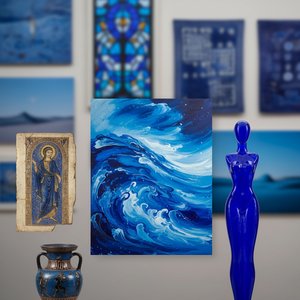
The Allure of Azure: Exploring the Symbolic & Aesthetic Depths of Blue in Art History
Explore the rich history of blue in art! Discover its symbolism, from ancient pigments to modern masterpieces by Kandinsky & Seurat. Uncover the psychological impact and cultural meanings behind this captivating hue.