


 Vaata sisu
 Jaga teost
 Jaga
Jaga
 Detailid
 Õppekate juhend

 Laadi alla
 Sarnased teosed
 Röntgenuuring
 Slaidietendus
 Statistika
At The Well

Discover "At The Well" by Charles William Oliver – a captivating 19th-century pastoral scene. Explore Impressionistic British art & timeless beauty. #art #landscape #painting
Discover Charles William Oliver’s captivating portraits & landscapes from 1805-1853. British artist known for detailed realism, royal commissions & scenes of Victorian life.
 Loe lähemalt
Käsitsi valmistatud õlimaalireproduktsioon
Meie kunstnike poolt tellimusel valmistatud käsitsi maalitud õli-kainaste teos teie soovitud suuruses ja raamis. ( Lülita trükkitoodetele Ülemineku digitaalse pildi müügi kanalisse)




P118B €10

P118H €10

P118W €10

P438Z €10

P508JH €12

P508YH €12

P805H €10

P805Z €10

P919BZ €10

P919G €10

P919XJ €10

P959ZH €10

P968JZ €12

W106C €8

W218G €10

W218JH €8

W218Y €10

W307PJ €10

W316G €10

W316PJ €8

W316Y €10

W398PJ €8

W4111J €10

W500HY €15

W500JH €15

W692G €12

W849H €8

W940BG €15

W953PJ €8




Standardne suurus
kohandatud
CM
INCH
Vali meie eelmääratud suurused, mis vastavad teose algupärastele proportsioonidele.
Loading sizes...

laius
kõrgus
Sisestage vajalik laius ja kõrgus, et teos sobiks teie raamile või seinale. Kuna tegu on käsipainatud teosega, siis erineva kujuga suuruse korral võib kunstnik jätta pildi ümber veidi rohkem marginaali või lõigata osa ära — valik on teie. Enne maali alustamist saadame teile kinnitamiseks digitaalse näidisprojektsiooni. Sellel lehel näidatud pilt ei kajasta tegelikku tulemust — seda näitab ainult näidisprojekttsioon.
Näited muudetavatest elementidest: asenda nägu kliendi fotoga; lisa lemmikloom (nt asenda kass koeraga); lisa taustale peidetud sõnum; muuda tausta maastikku või elemente.
Pärast tellimust saadab TopImpressionists.com meeskond kliendile e-posti juhised ning esitab eelvaate kavandi
Pärast tellimust saadab TopImpressionists.com meeskond kliendile e-posti juhised ning esitab eelvaate kavandi
Maailmline tarne 3–4 nädala jooksul tavalise 5 nädala asemel. (15 oktoober). Kvaliteedis kompromisse ei tehta.

Tasuta ekspresssaatmine üle maailma

Kõrgekvaliteediline lina-kangastest muld

Täielik transpordikindlustus

Tollimaksude tagastamise garantii

Värvitoime täpsuse garantii

100 päeva tagastusõigus (ainult defektide korral)

100% raha tagasi garantii

Hulgusoodustus
 Klaasivalik on saadaval ainult kuni 110 cm suuruses teostes

At The Well
Reproduktsiooni materjal
Reproduktsiooni mõõtmed
-


Lõppsumma
€ 234
Sarnased teosed


Kunstniku elulugu
A Life Painted in Light: The Story of William Oliver
William Oliver, a name perhaps less heralded than some of his contemporaries, nevertheless occupies a significant place within the tapestry of 19th-century British art. Born in Sudbury, Suffolk, around 1804 – though precise details remain elusive – Oliver dedicated his life to capturing the beauty of the English countryside and the quiet dignity of its people through both oil and watercolour. He was an artist deeply attuned to the nuances of light and atmosphere, a skill that would define his career and earn him recognition amongst discerning collectors and art societies. While biographical information is somewhat fragmented, piecing together accounts from exhibition records, auction catalogues, and recent scholarship reveals a dedicated painter who travelled extensively across Europe, honing his craft and developing a distinctive style rooted in detailed realism yet imbued with a romantic sensibility.Early Career and Artistic Development
Oliver first exhibited at the Society of British Artists in 1829, presenting scenes that immediately showcased his talent for landscape painting. These early works, like *A Beach Scene in Kent* and *Fish Boat*, were not merely topographical representations; they hinted at a deeper engagement with the emotional resonance of place. Over the following decades, he consistently contributed to the Society’s exhibitions, building a reputation for meticulous observation and skillful execution. He wasn't confined to his native England, however. Oliver embarked on journeys that took him through France, Spain, Italy, Switzerland, and Germany, each location offering new subjects and challenges. The Pyrenees mountains held particular allure, inspiring numerous paintings characterized by dramatic vistas and evocative lighting. This period of travel was crucial in shaping his artistic vision, broadening his palette and refining his technique. He became known for painting views in oils but chiefly in watercolours, a medium that allowed him to capture the fleeting effects of light with remarkable sensitivity.Influences and Artistic Style
While Oliver developed a unique voice, he wasn’t working in isolation. The influence of John Constable, the master of English landscape painting, is readily apparent in his work – particularly in Oliver's dedication to capturing the natural world with scientific accuracy and emotional depth. However, Oliver diverged from Constable’s more overtly dramatic compositions, favouring a quieter, more contemplative approach. He shared an affinity for Romanticism, but tempered its grand gestures with a meticulous attention to detail that aligned him with the prevailing aesthetic sensibilities of Victorian Britain. His paintings are characterized by a sense of tranquility and harmony, inviting viewers to immerse themselves in the beauty of the scenes depicted. The artist’s skill lay not just in replicating what he saw, but in conveying the feeling of being *in* those landscapes – the crispness of the air, the warmth of the sun, the stillness of the water.Royal Commissions and Recognition
Oliver's talent didn’t go unnoticed by the upper echelons of British society. He received royal commissions, a testament to his skill in portraiture as well as landscape painting. These portraits, while less widely known than his landscapes, demonstrate his ability to capture not only physical likeness but also the character and personality of his sitters. His success with these commissions further solidified his position within the art world and provided him with financial stability. In 1834, he was elected a full member of the New Society (later the Royal Institute) of Painters, a prestigious honour that acknowledged his artistic achievements and cemented his standing amongst his peers.Legacy and Historical Significance
William Oliver’s life ended prematurely in November 1853 at Langley Mill House, Halstead, Essex, due to hypertrophy of the heart. Despite his relatively short career, he left behind a substantial body of work that continues to captivate audiences today. While not as widely celebrated as some of his contemporaries, Oliver's paintings offer a valuable glimpse into the Victorian appreciation for landscape and portraiture. His dedication to detailed realism, combined with his sensitivity to light and atmosphere, makes him a significant figure in the history of British art. He represents a bridge between the Romantic tradition and the more refined aesthetic sensibilities of the Victorian era, offering a unique perspective on the beauty and tranquility of 19th-century life. The rediscovery of his work continues to shed light on a talented artist whose contributions deserve greater recognition.
William Oliver
1805 - 1853 , United Kingdom
Lühikest infot
- Full Name: William Oliver
- Nationality: British
- Date Of Birth: 1805
- Date Of Death: 1853
- Place Of Birth: United Kingdom
- Notable Artworks:
- Pyrenean Views
- West Country Landscapes
- Artistic Movement Or Style: Victorian Landscape Painting
- Artists Who Influenced This Artist: ['John Constable']
- Artists Or Movements Influenced By This Artist: ['Romanticism']
Sarnased artiklid
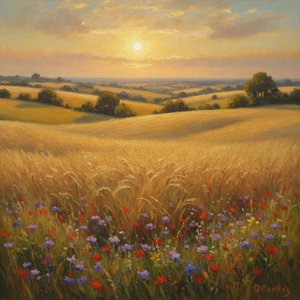
Golden Fields & Sun-Drenched Meadows: Capturing the Soul of Impressionist Landscapes
Immerse yourself in the luminous world of Impressionist landscapes. Discover how masters like Monet and Gauguin captured ephemeral light through plein air painting, and learn to bring the soul of sun-drenched meadows into your home with exquisite, hand-painted oil reproductions.

Capturing the Soul: The Most Emotionally Moving Impressionist and Post-Impressionist Masterpieces
Discover the profound emotional depth of Impressionist and Post-Impressionist masterpieces. Explore how legends like Monet, Van Gogh, and Gauguin captured light and soul through evocative landscapes and vibrant brushwork for a timeless connection to art history.

Beyond the Light: Capturing Raw Emotion and Subjective Vision in Post-Impressionist Landscapes
Explore the profound emotional depth of Post-Impressionist landscapes. Discover how masters like Van Gogh moved beyond light to capture raw human feeling through vibrant color and expressive texture in this expert art history retrospective.